
Loading, please wait...
LOT 1836
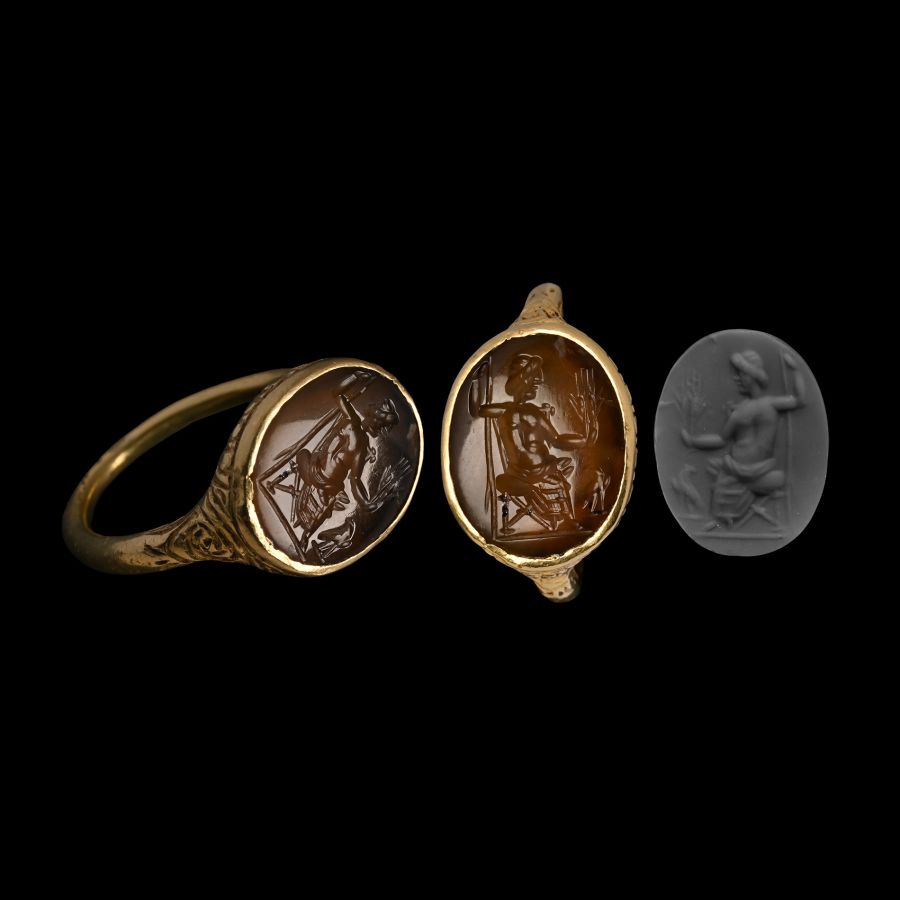
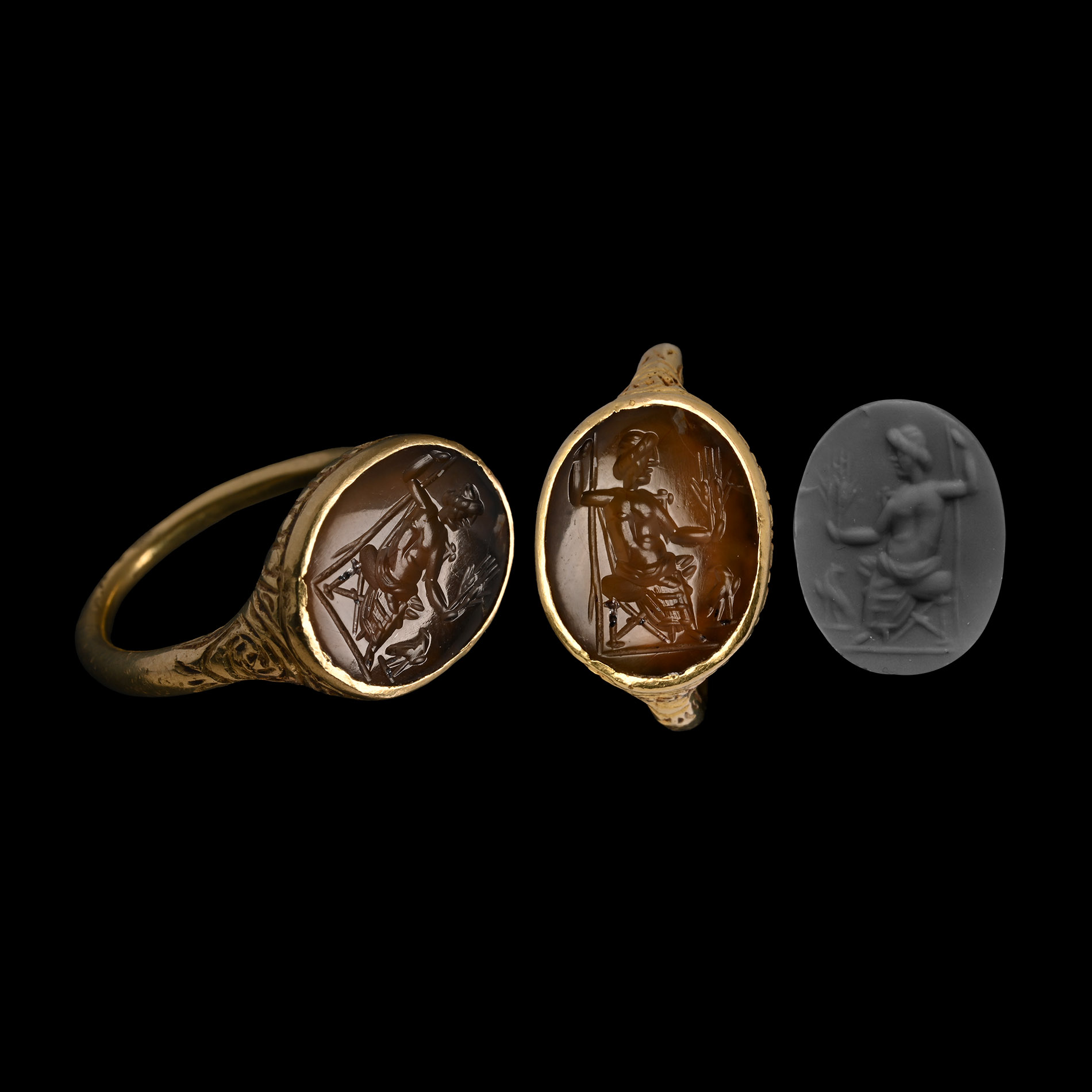
Stuart Period Gold Ring with Jupiter Gemstone
17TH CENTURY A.D.
1 in. (7.64 grams, 24.67 mm overall, 17.09 mm internal diameter (approximate size British N 1/2, USA 6 3/4, Europe 14.35, Japan 13)).
Bezel with petal detailing extending to the underside and shoulders, inset onyx intaglio with figure of Jupiter seated on a throne with perching eagle and flame in his extended hand; supplied with a museum-quality impression.
ProvenanceAcquired on the London art market in the late 1980s-1990s.
From the family collection of an East London, UK, gentleman.
This lot has been checked against the Interpol Database of stolen works of art and is accompanied by a search certificate no.12349-222567.
This lot has been cleared against the Art Loss Register database, and is accompanied by an illustrated lot declaration signed by the Head of the Antiquities Department, Dr Raffaele D'Amato.
Exhibited at the Harwich Museum, Harwich, Essex, UK, 12th March-9th June 2025; accompanied by a copy of a photograph of the artefacts on display.
LiteratureCf. Chadour, A.B., Rings. The Alice and Louis Koch Collection, volume I, Leeds, 1994, items 787,790; Scarisbrick, D., Rings, Jewelry of Power, Love and Loyalty, London, 2013, figs.253,254, for the type.
CONDITIONTimeLine Auctions follows a vetting process to ensure the authenticity and legality of all items, reinforcing our commitment to integrity and responsible trading. Each antiquity, antique, and coin lot undergoes thorough examination by a vetting committee of at least ten external specialists, professional trade association members, scientists, and archaeologists: Our Vetting Process
AUCTIONS:
TimeLine is a leading auction house specialising in antiquities, ancient art, collectables, natural history, coins, medals, and books. Our auctions offer museums, collectors, historians, and enthusiasts the opportunity to acquire unique and historically significant pieces.
LOT 1836
Stuart Period Gold Ring with Jupiter Gemstone
Estimate £3,000 - 4,000€3,480 - 4,640 (for guidance only)$4,050 - 5,400 (for guidance only)
-
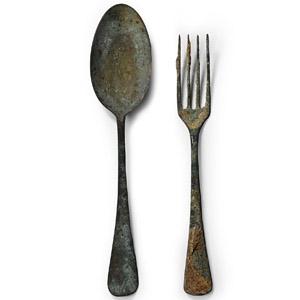
d 'Nuestra Senora de la Luz' Shipwreck Fork and Spoon Set
Sunk 1752 A.D.Sold for (Inc. bp): £65
Comprising a four-pronged table fork and a spoon with ovoid bowl. 53 grams total, 16.7-18.5 cm
Salvaged by Ruben Collado Amatriain in 1992. Accompanied by original signed declarations in both English and Spanish from Ms Mariana Faine Collado, daughter of Mr Ruben Collado Amatriain. This lot is accompanied by an illustrated lot declaration signed by the Head of the Antiquities Department, Dr Raffaele D'Amato. -
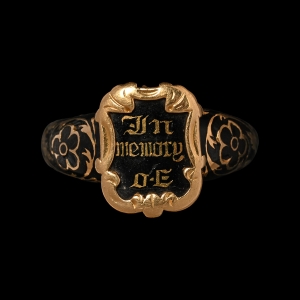
Engraved Gold and Black Enamel Memento Mori Ring
19th century A.D.Estimate: £700 - 900 (+bp*)
Opening Bid: £389
With D-section tapering hoop, black enamel finish with reserved rosettes and tendrils, the bezel an ornate heater shield with reserved text 'In memory OE' and copperplate engraving to the inner face '1852 / obt.63', 'Mrs.Sarah Hems, obt.26 May' and stamped assay marks: crown, '18', leopard's head, gothic 'k' in octagonal panel (dated to 1845). 4.14 grams, 22.74 mm overall, 17.43 mm internal diameter (approximate size British O, USA 7, Europe 14.98, Japan 14)
Acquired on the UK art market. Property of an East Sussex collector. This lot is accompanied by an illustrated lot declaration signed by the Head of the Antiquities Department, Dr Raffaele D’Amato. This lot is accompanied by an illustrated lot declaration signed by the Head of the Antiquities Department, Dr Raffaele D'Amato. -
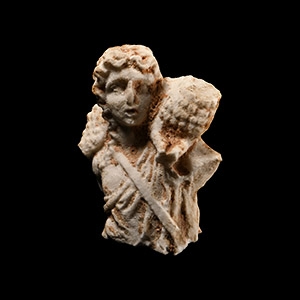
Post Medieval Marble Statuette Fragment
19th-20th century A.D.Sold for (Inc. bp): £143
Showing a shepherd carrying a sheep on his back, possibly depicting the Good Shepherd. 34 grams, 55 mm high
Acquired early 1990s. Ex private American collection; thence by descent. Private collection since 1998. This lot is accompanied by an illustrated lot declaration signed by the Head of the Antiquities Department, Dr Raffaele D'Amato.
