
Loading, please wait...
LOT 1885
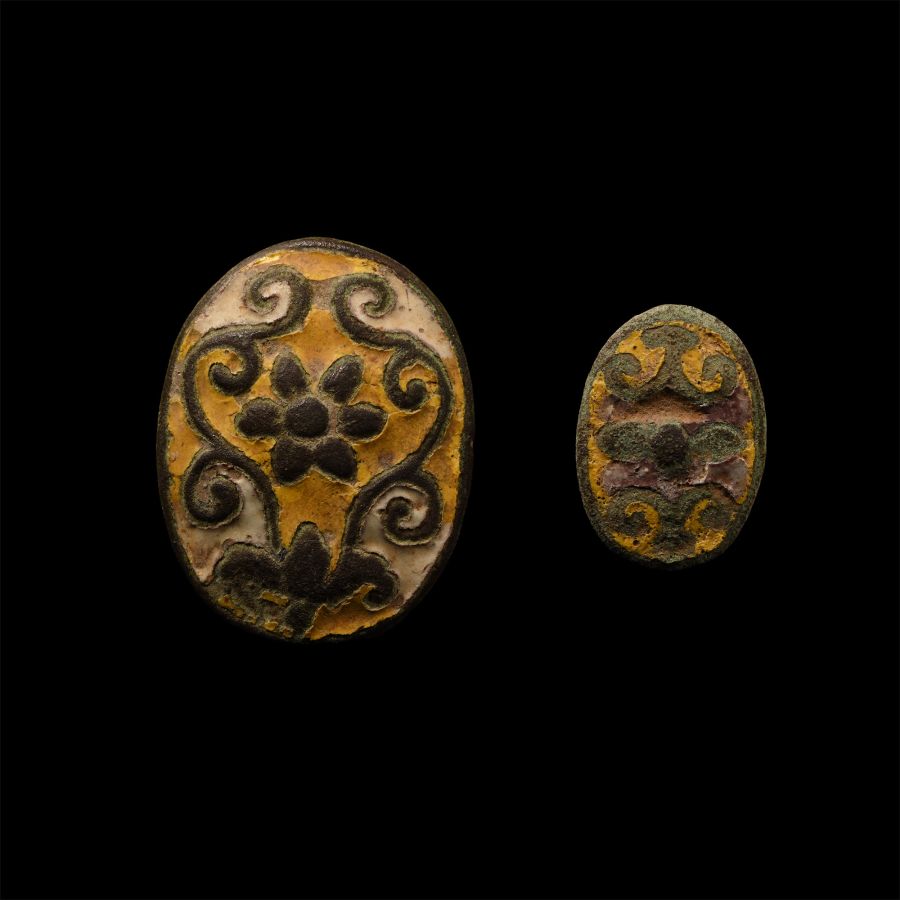
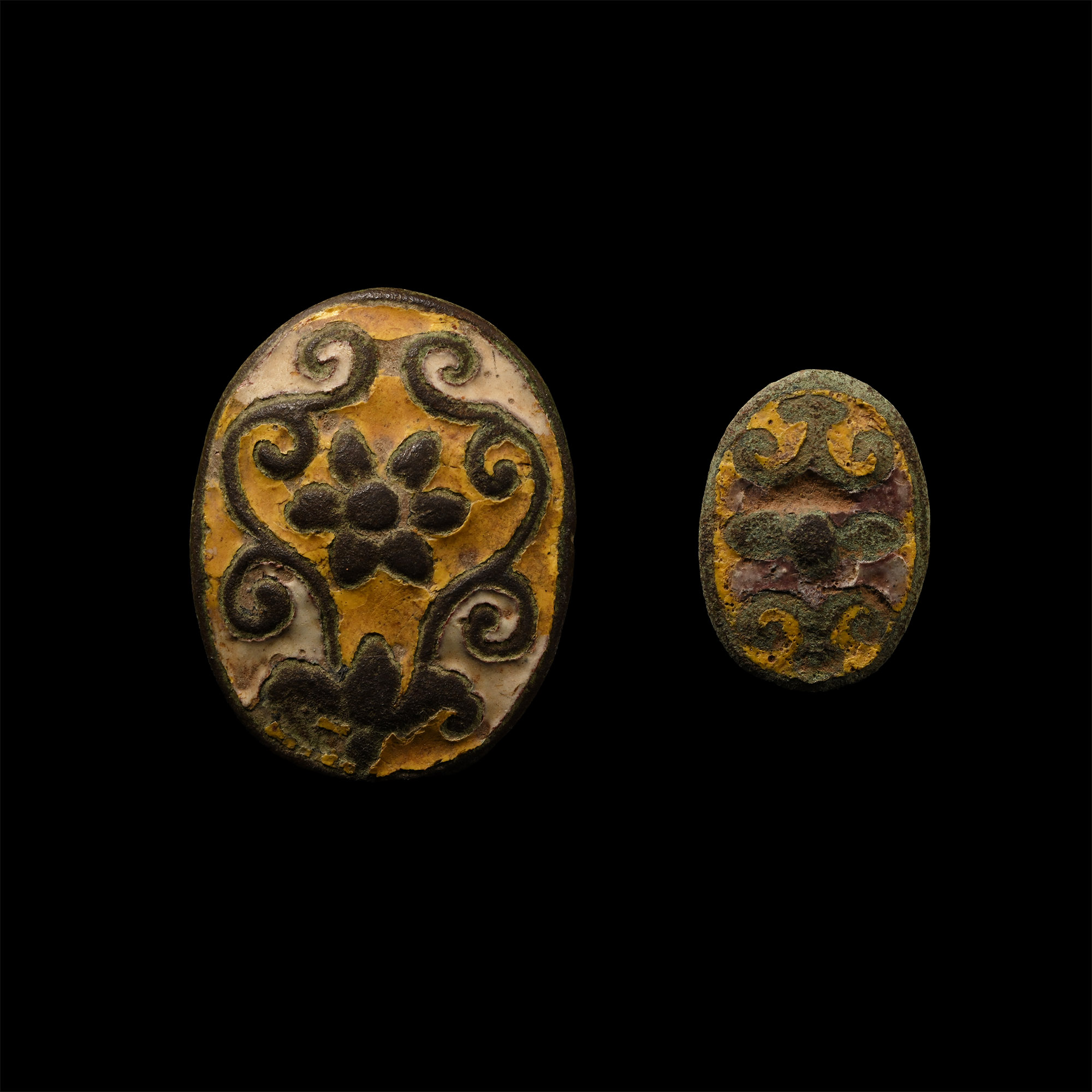
Stuart Enamelled Bronze Mount Pair
CIRCA 1600-1700 A.D.
3/4 - 1 1/4 in. (18.3 grams total, 21-32 mm).
Each oval in plan and slightly convex on the outer face, the larger one with a central sexfoil with tendrils either side and a lis below, the smaller one with petals and scrolls. [2, No Reserve]
ProvenanceFound Hallow, Malvern Hills, Worcestershire, UK.
Accompanied by copies of the British Museum's Portable Antiquities Scheme (PAS) report nos.WAW-D1633D and WAW-D14AE3.
This lot is accompanied by an illustrated lot declaration signed by the Head of the Antiquities Department, Dr Raffaele D'Amato.
TimeLine Auctions follows a vetting process to ensure the authenticity and legality of all items, reinforcing our commitment to integrity and responsible trading. Each antiquity, antique, and coin lot undergoes thorough examination by a vetting committee of at least ten external specialists, professional trade association members, scientists, and archaeologists: Our Vetting Process
AUCTIONS:
TimeLine is a leading auction house specialising in antiquities, ancient art, collectables, natural history, coins, medals, and books. Our auctions offer museums, collectors, historians, and enthusiasts the opportunity to acquire unique and historically significant pieces.
-
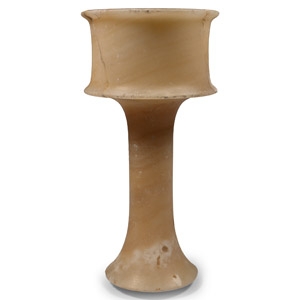
Western Asiatic Style Alabaster Vessel
20th century A.D.Sold for (Inc. bp): £130
Comprising a socketted base, columnar handle and domed finial. 1.6 kg, 25 cm
From a West London, UK, collection. This lot is accompanied by an illustrated lot declaration signed by the Head of the Antiquities Department, Dr Raffaele D'Amato. -
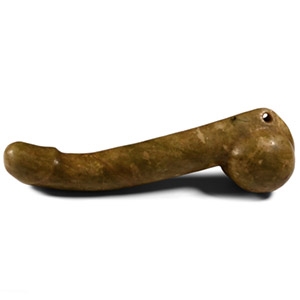
Large Chinese Style Green Stone Phallus
20th century A.D. or earlierSold for (Inc. bp): £195
Carved in the round with pierced lug to rear. 1.13 kg, 27 cm
From the family collection of a Hampstead gentleman; formerly acquired in the 1980s. This lot is accompanied by an illustrated lot declaration signed by the Head of the Antiquities Department, Dr Raffaele D'Amato. -
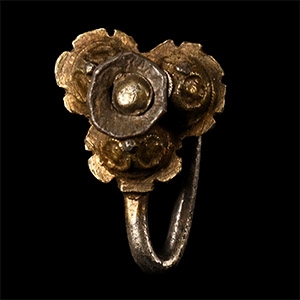
Tudor Silver Hooked Tag Clothes Fastener
1500-1600 A.D.Sold for (Inc. bp): £85
Comprising three domes decorated with filigree surrounding a central pellet, hook to the reverse; Read Class D, Type 6. 2.28 grams, 19 cm
Found Uttlesford, Essex, UK, declared as Treasure and disclaimed by the Crown with Treasure case tracking number: 2022T941. Accompanied by a copy of the British Museum's Portable Antiquities Scheme (PAS) report no.ESS-491A58. This lot is accompanied by an illustrated lot declaration signed by the Head of the Antiquities Department, Dr Raffaele D'Amato.
