
Loading, please wait...
LOT 1414
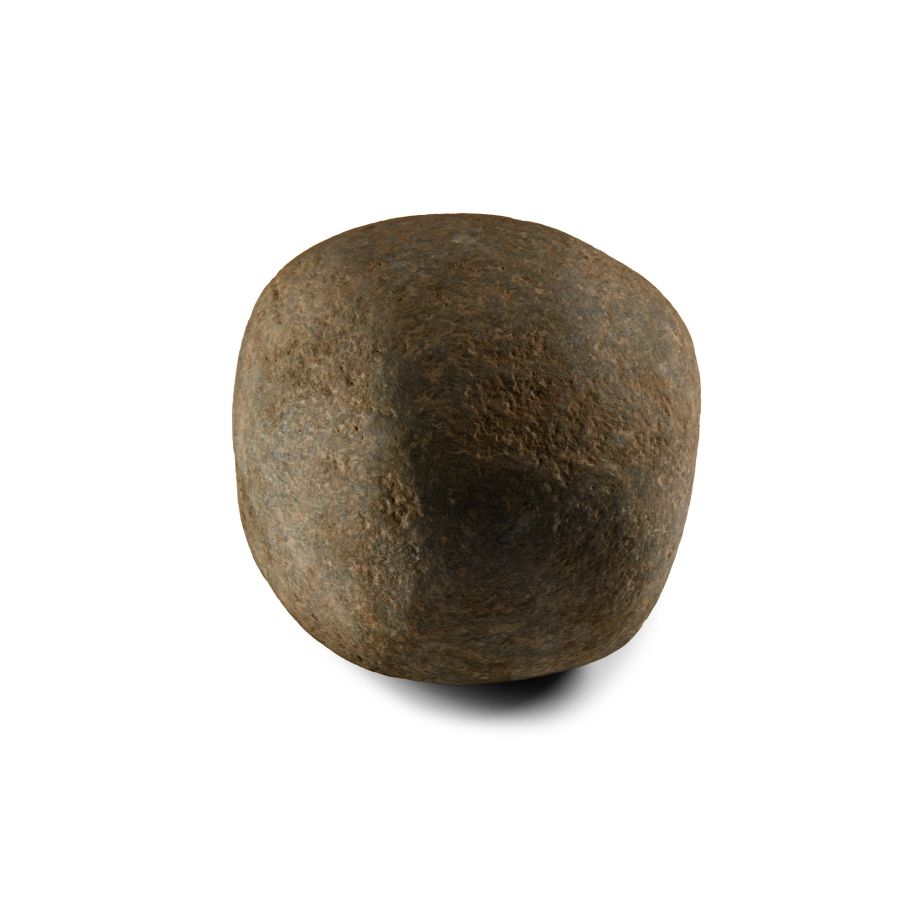
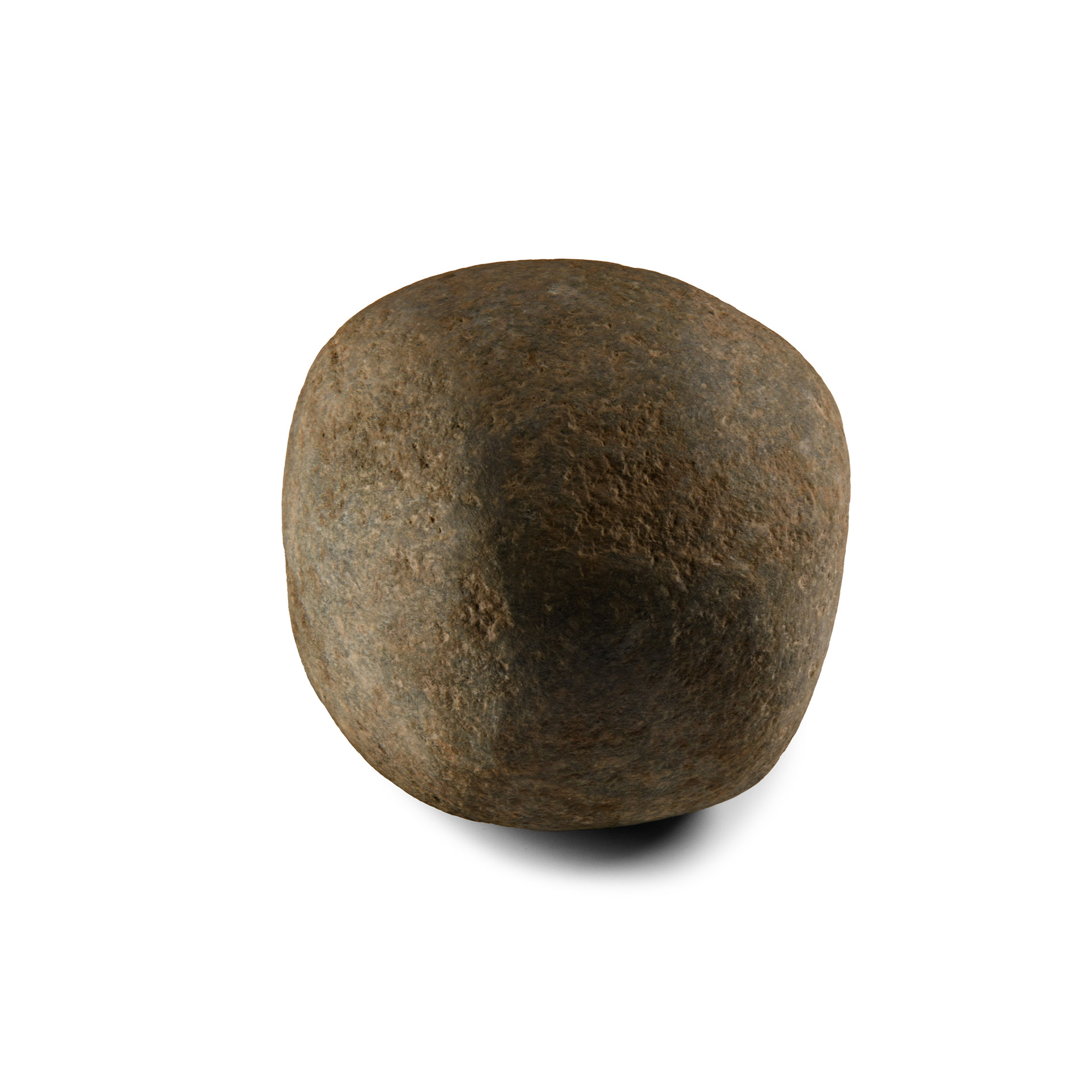
Stone Ballista Catapult Shot
ROMAN, 1ST-3RD CENTURY A.D. OR LATER
3 1/8 in. (973 grams, 81 mm).
Roughly spherical stone cobble with impact scar. [No Reserve]
ProvenanceFrom a collection acquired on the UK art market from various auction houses and collections mostly before 2000.
From an important Cambridgeshire estate; thence by descent.
See Wilkins, A., Roman Imperial Artillery, Solway Print, 2017.
FootnotesThe operation of the onager (Latin for 'wild ass') is first mentioned in 353 A.D. by Ammianus Marcellinus in his Res Gestae and more fully in Vegetius's Epitoma Rei Militaris probably written in the reign of Emperor Theodosius I (378-395 A.D.).
CONDITIONTimeLine Auctions follows a vetting process to ensure the authenticity and legality of all items, reinforcing our commitment to integrity and responsible trading. Each antiquity, antique, and coin lot undergoes thorough examination by a vetting committee of at least ten external specialists, professional trade association members, scientists, and archaeologists: Our Vetting Process
AUCTIONS:
TimeLine is a leading auction house specialising in antiquities, ancient art, collectables, natural history, coins, medals, and books. Our auctions offer museums, collectors, historians, and enthusiasts the opportunity to acquire unique and historically significant pieces.
-
.jpg)
Migration Period Iron Spatha Sword with Garnet Inlaid Hilt
5th-7th century A.D.Estimate: £5,000 - 7,000 (+bp*)
Opening Bid: £1,800
Comprising a double-edged parallel-sided blade showing battle nicks on both cutting edges, medium length tapering tang; lentoid-shaped lower-guard with inset garnets to one side; accompanied by an amber sword bead with a bronze stud with garnet inlay. 753 grams total, 1.9-80 cm
From the private collection of a London gentleman, from his grandfather's collection formed before the early 1970s. Accompanied by an academic report by Dr Raffaele D’Amato. This lot has been checked against the Interpol Database of stolen works of art and is accompanied by a search certificate no. 12063-217911.
This type of swords (cf. Lebedinsky 2001, p.117) usually had stones hanging from the pommel or hilt, like the one preserved here. This typology was widespread in central Europe by the Huns and there are also specimens attested in Gaul in the 5th century. -
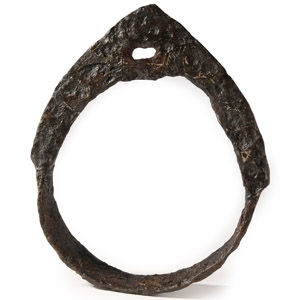
Viking Age Iron Stirrup with Silver Inlay
9th-11th century A.D.Sold for (Inc. bp): £85
Comprising an ovoid body with a rectangular void to accept a strap; the lower section broad with a rib to the underside, the upper flat in section with silver inlay in geometric forms to one face. 244 grams, 16 cm
From the private collection of a London gentleman, from his grandfather's collection formed before the early 1970s. -
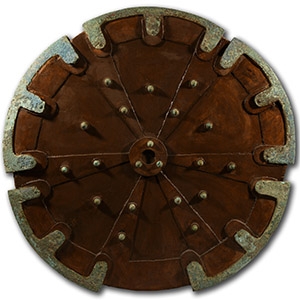
Elamite War Chariot Wheel Fittings
Late 3rd-early 2nd millennium B.C.Sold for (Inc. bp): £6,240
Comprising five large wheel clamps and twenty conical rivets; each C-section clamp with tongue-shaped later lugs with rivets to both sides; mounted on a custom-made wheel-shaped display mount. 19.35 kg, 98 cm diameter
Acquired before 1983. Ex London gallery, 1990s. Accompanied by an academic report by Dr Raffaele D’Amato. This lot has been checked against the Interpol Database of stolen works of art and is accompanied by a search certificate number no.12038-216335.
The custom of burying the deceased with chariots and the respective yoked animals has been documented since the 3rd millennium B.C. Bronze wheel clamps similar to these have been found in Elamite and Urartian graves, and are consistent with Assyrian and Elamite models. These clamps have important parallels, including those found from the Susa region which show an affinity with Assyrian iconography.
