
Loading, please wait...


LOT 2042
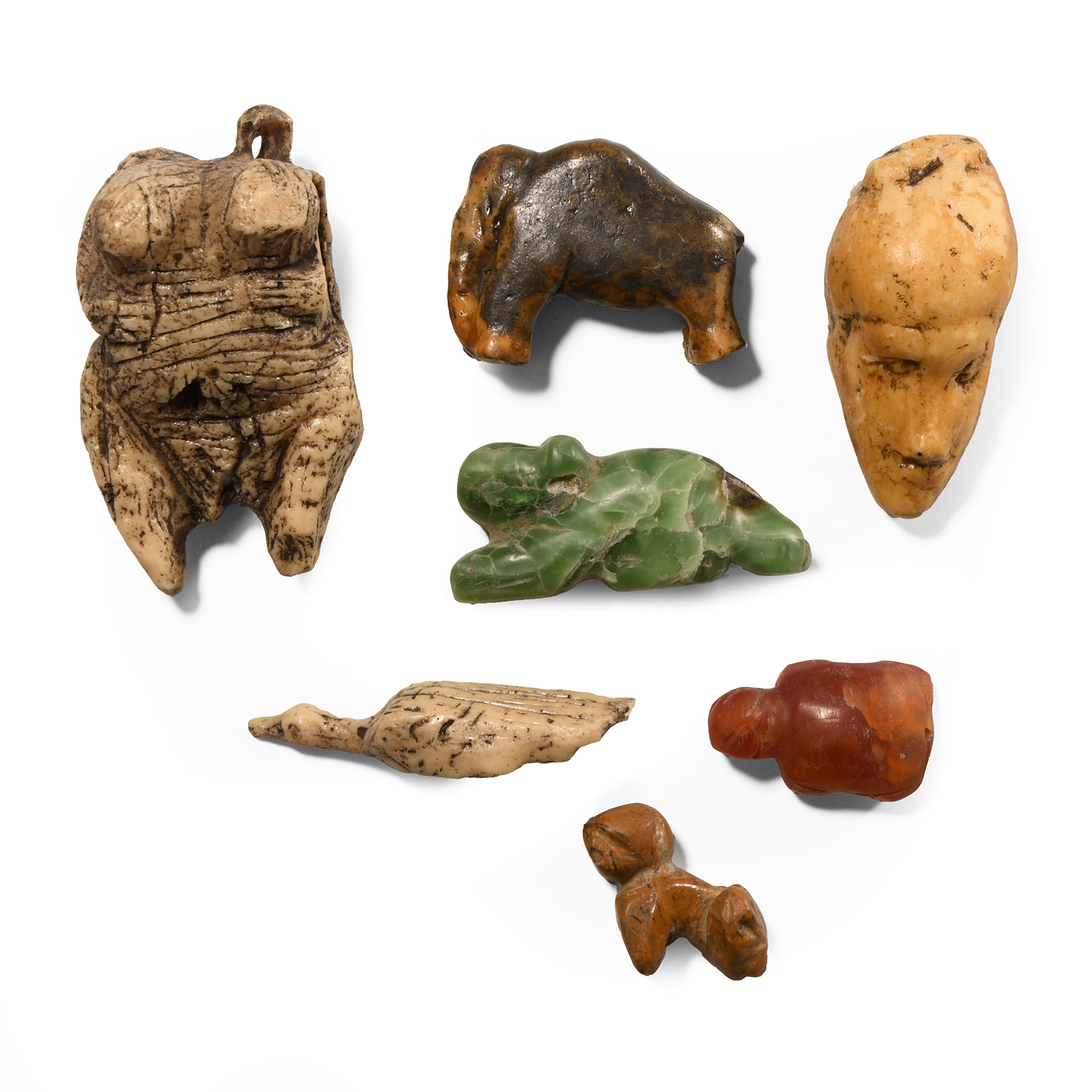
Stone and Other Amulet Group
20TH CENTURY A.D.
1 - 3/4 in. (75 grams total, 26-50 mm).
Including a carnelian anthropomorphic bead, carved elephant, bone female head and other items. [7, No Reserve]
ProvenanceFrom a collection acquired on the UK art market from various auction houses and collections mostly before 2000.
From an important Cambridgeshire estate; thence by descent.
TimeLine Auctions follows a vetting process to ensure the authenticity and legality of all items, reinforcing our commitment to integrity and responsible trading. Each antiquity, antique, and coin lot undergoes thorough examination by a vetting committee of at least ten external specialists, professional trade association members, scientists, and archaeologists: Our Vetting Process
AUCTIONS:
TimeLine is a leading auction house specialising in antiquities, ancient art, collectables, natural history, coins, medals, and books. Our auctions offer museums, collectors, historians, and enthusiasts the opportunity to acquire unique and historically significant pieces.
-
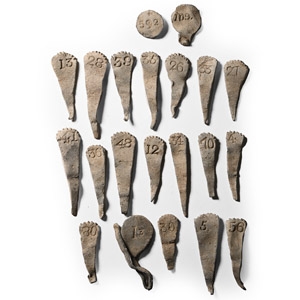
Post Medieval Lead Agricultural Tag Collection
Circa 19th century A.D.Sold for (Inc. bp): £20
Including triangular and discoid types, the former with stamped numerals and dentilled upper edge; many of these objects are published in the Detector Finds book series. 240 grams total, 22-71 mm
From the collection of the famous author, writer and speaker, Gordon Bailey, Essex, UK; formed since 1968. -
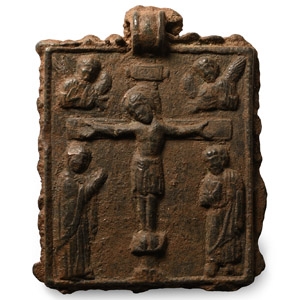
Post Byzantine Bronze Pendant with Crucifixion Scene
15th-16th century A.D.Sold for (Inc. bp): £156
A portable icon depicting the Crucifixion, Mary and Saint John the Theologian flanking the cross, angels in the upper corners, Golgotha skull under the cross and inscription I.N.R.I. to the upper part of the cross; crenelated frame with hanging loop to the top. 92 grams, 67 mm
UK private collection before 2000. Acquired on the UK art market. Property of a London gentleman.
The scene corresponds to John's Gospel: 'Here is your son.' 'Here is your mother.' (John 19:25-27). Portable icons of this kind were often carried by soldiers or by the travellers during a war, to assure the Divine protection and journey's safety. -
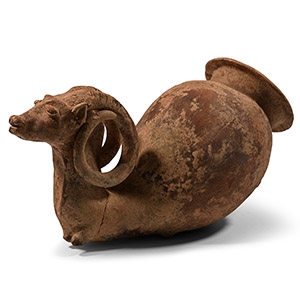
Anatolian Style Terracotta Rhyton
20th century A.D.Sold for (Inc. bp): £85
With trumpet-shaped mouth and barrel-shaped body, ibex-shaped finial with coiled horns and legs folded beneath the body, spout to the chest, repaired; after the antique. 1 kg, 31 cm
Acquired on the UK art market. Property of a North London, UK, gentleman.
