
Loading, please wait...
LOT 1489
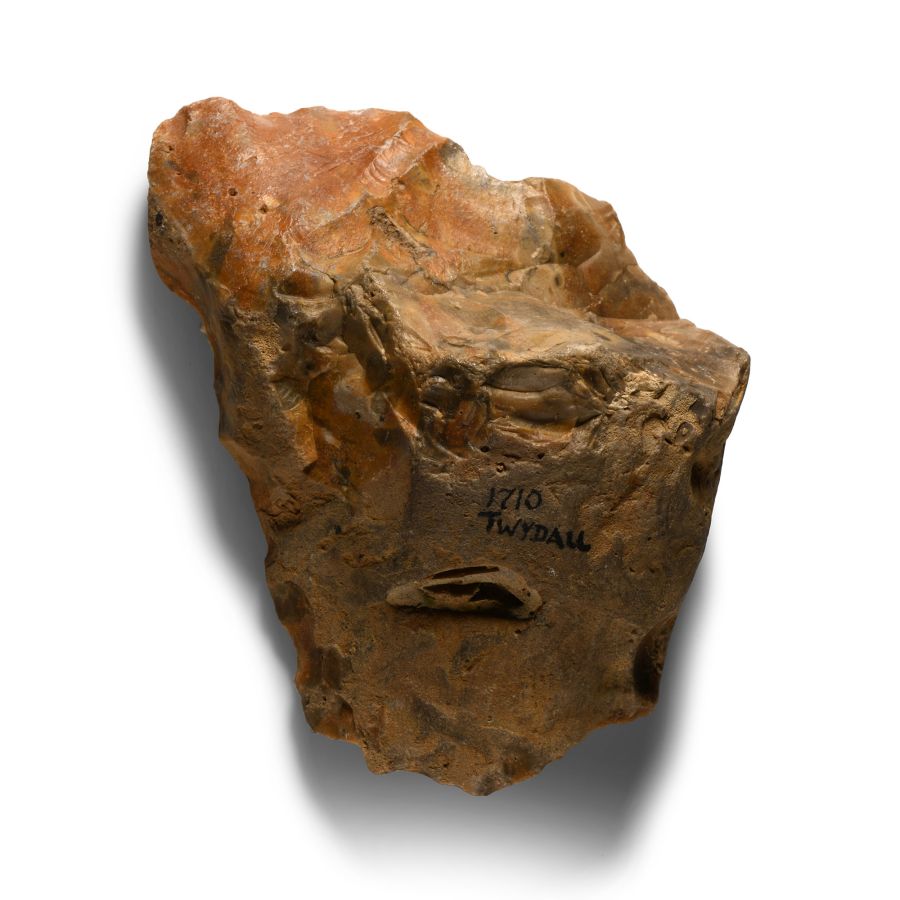
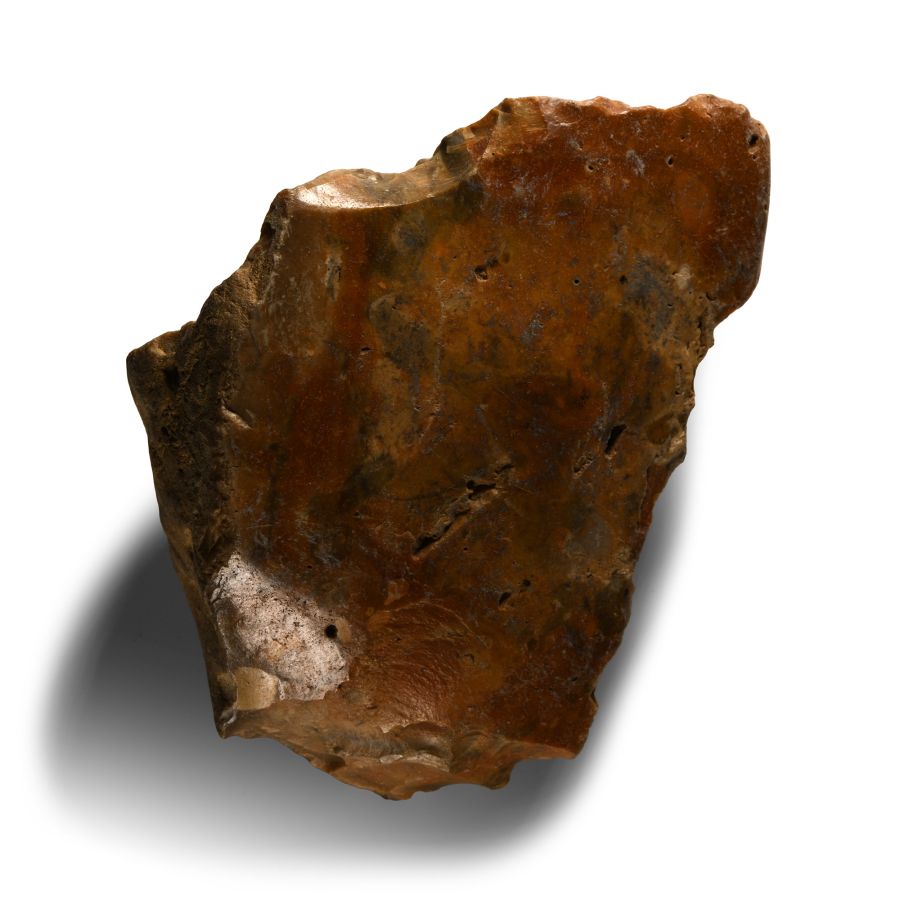
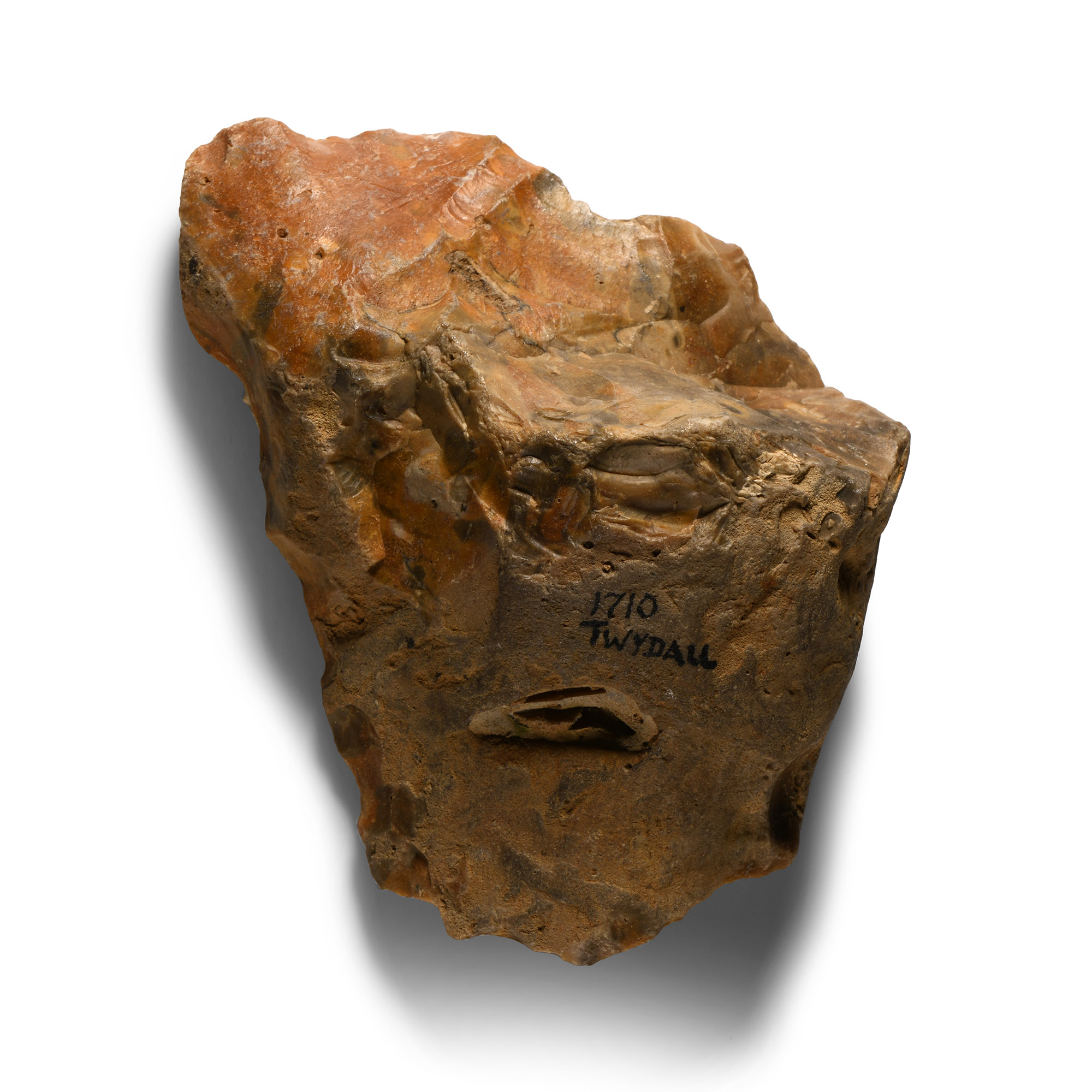
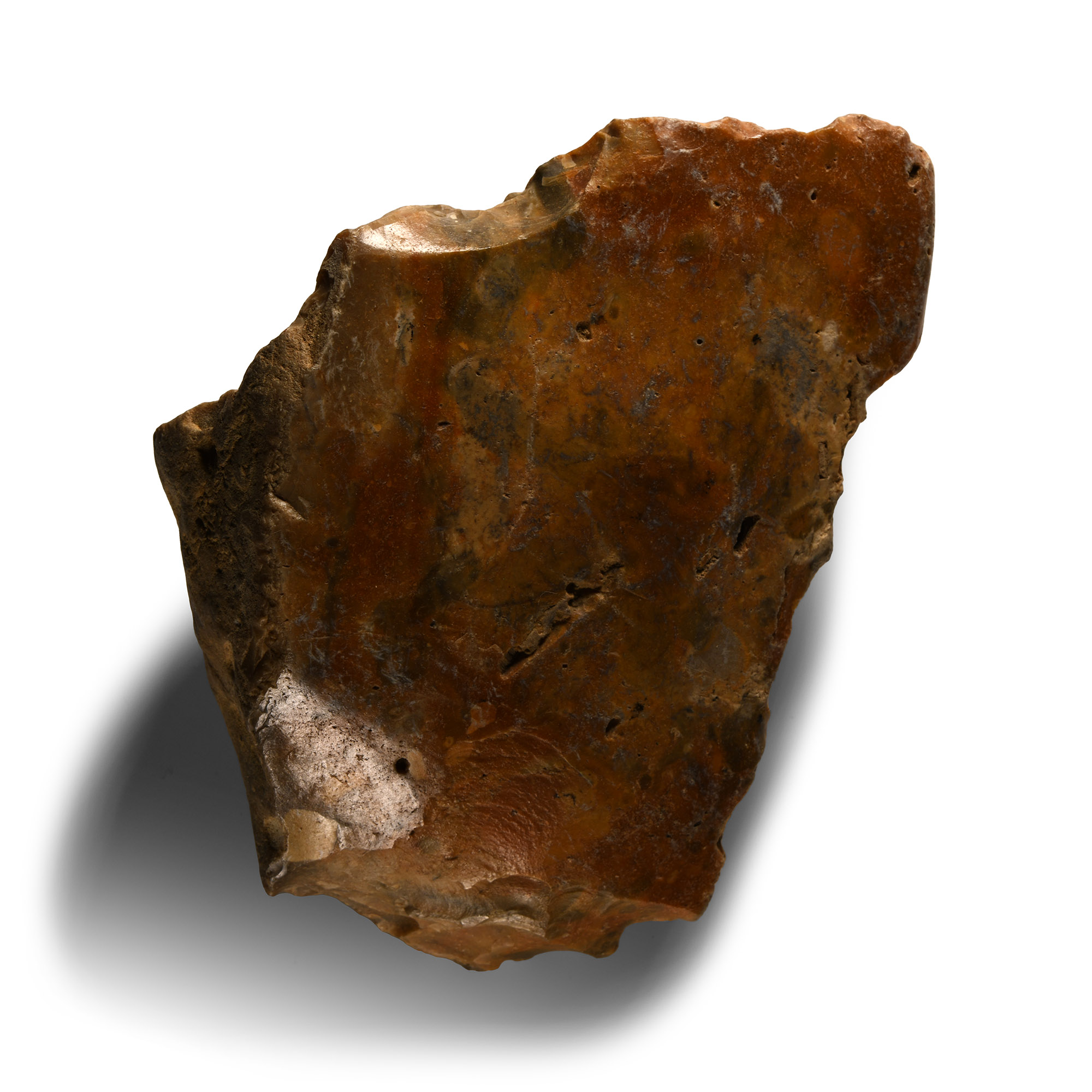
Stone Age Twydall Knapped Flint Proto-Handaxe
LOWER PALAEOLITHIC PERIOD, CIRCA 400,000 B.P.
5 1/4 in. (560 grams, 13.5 cm).
Irregular-shaped cleaver with some cortex remaining; with an old inked inscription: '1710 / Twydall'. [No Reserve]
ProvenanceFound Twydall, Kent, UK.
Richard Jones collection, Welling, Kent, UK, 1912-1915.
Ex Rochester Museum, Kent collections.
Specialist collection of J Edwin Jarvis.
Ex Martin Schoyen collection, London, UK.
Accompanied by a copy of an article on the site at Twydall.
The Twydall finds are discussed in Beresford, F.R., Palaeolithic Material From Lower Twydall Chalk Pit In Kent: The Cook And Killick Collection, in Lithics, Vol.39, 2021.
CONDITIONTimeLine Auctions follows a vetting process to ensure the authenticity and legality of all items, reinforcing our commitment to integrity and responsible trading. Each antiquity, antique, and coin lot undergoes thorough examination by a vetting committee of at least ten external specialists, professional trade association members, scientists, and archaeologists: Our Vetting Process
AUCTIONS:
TimeLine is a leading auction house specialising in antiquities, ancient art, collectables, natural history, coins, medals, and books. Our auctions offer museums, collectors, historians, and enthusiasts the opportunity to acquire unique and historically significant pieces.
-
.jpg)
Extremely Large Stone Age 'Melton Constable' Knapped Flint Axe Head
Neolithic Period, circa 4000 years B.P.Sold for (Inc. bp): £312
Biconvex in section with square butt and broad cutting edge, regular in shape. 1.3 kg, 22 cm
Found whilst fieldwalking in the Melton Constable area, Norfolk, UK, in the 1960s; thence by descent to the finder's daughter. From the collection of a Norfolk, UK, lady collector. -
Stone Age Leaf-Shaped Flint Arrowhead Group
Neolithic Period, circa 8th-5th millennium B.C.Sold for (Inc. bp): £85
Comprising mostly bifacial and uniface leaf-shaped flint and chert arrowheads; probably from the Sahara region of North Africa. 132 grams total, 22-61 mm
UK gallery, early 2000s.
Most of these Western desert arrowheads found in the area of North Africa, from East Sahara to Fayum, fall in the first half of the 6th millennium B.C. and some may be dated back to the late 7th millennium B.C. In addition, the tanged arrowheads and leaf-shaped arrowheads, similar to the Fayum examples, are well-known in the Pottery Neolithic Culture of the southern Levant during the late 7th-early 6th millennia B.C. -
Stone Age 'French' Knapped Grey Flint Axehead
Neolithic Period, 4000-3000 B.C.Sold for (Inc. bp): £72
Rectangular with broad butt and rounded edge, old handwritten collector's label. 499 grams, 17.5 cm
Acquired 1940s-1960s from older collections, thence by descent. From the collection of Guy Dubois, Rouen, France. Ex Helios Gallery, Wiltshire, UK. From the collection of a South West London, UK, specialist Stone Age collector.
