
Loading, please wait...
LOT 1603
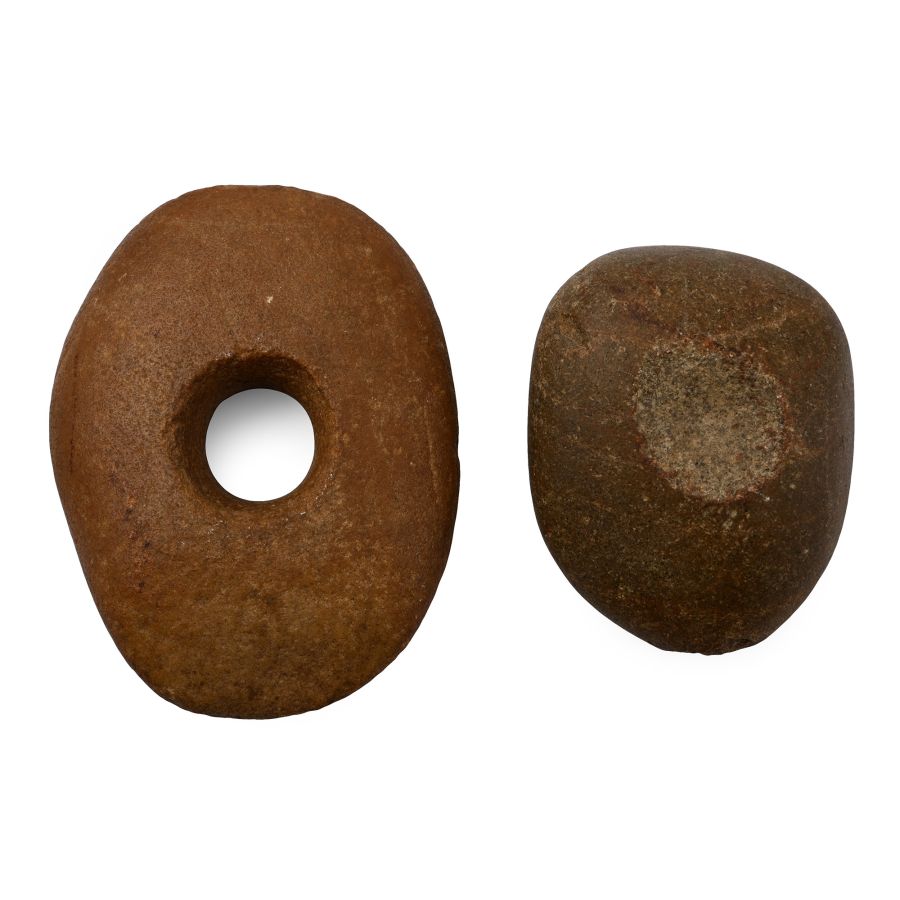
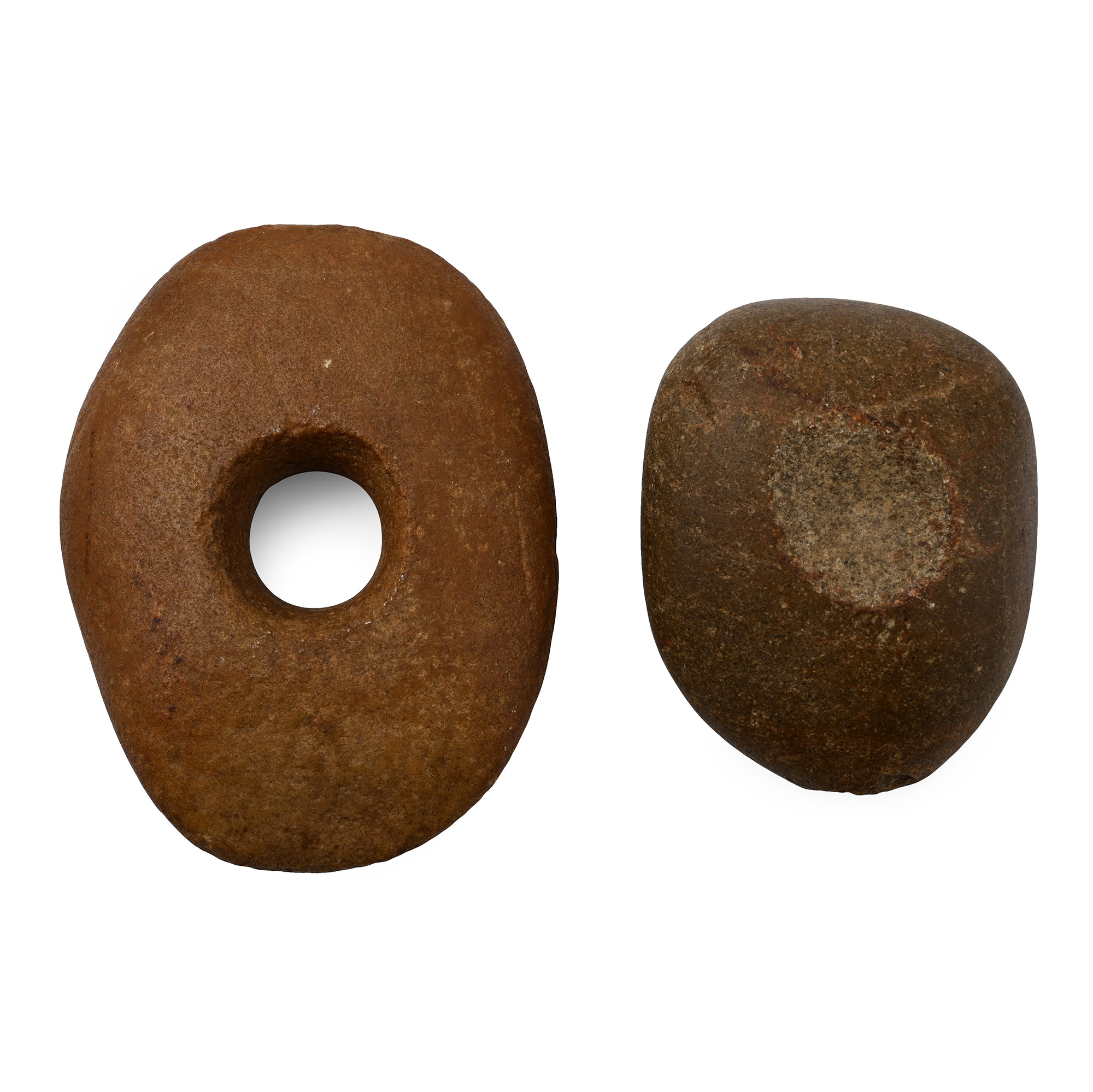
Stone Age Polished Macehead Group
NEOLITHIC PERIOD, 6TH-4TH MILLENNIUM B.P.
2 7/8 - 3 3/4 in. (502 grams total, 73-97 mm).
Comprising: one ellipsoid in plan with usage wear to the string face; one oblate in form with ground depression to each face where the shaft-hole has been started. [2, No Reserve]
ProvenanceAcquired on the UK art market in the 1980s.
From an East Anglian private collection.
TimeLine Auctions follows a vetting process to ensure the authenticity and legality of all items, reinforcing our commitment to integrity and responsible trading. Each antiquity, antique, and coin lot undergoes thorough examination by a vetting committee of at least ten external specialists, professional trade association members, scientists, and archaeologists: Our Vetting Process
AUCTIONS:
TimeLine is a leading auction house specialising in antiquities, ancient art, collectables, natural history, coins, medals, and books. Our auctions offer museums, collectors, historians, and enthusiasts the opportunity to acquire unique and historically significant pieces.
-
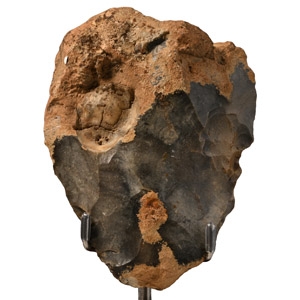
French Stone Age 'Neanderthal' Handaxe with Fossil Echinoid
Middle Palaeolithic Period, circa 300,000-150,000 B.P.Sold for (Inc. bp): £1,040
Triangular in profile and biconvex in section with some cortex and embedded fossil to one face; mounted on a custom-made stand. 458 grams, 12.1 cm (516 grams total, 16 cm including stand)
Found Dordogne, France. From the collection of Jean-Claude Debenne (1936-2020), an amateur prehistorian and former member of the French Society of Prehistory and the Prehistoric Association of the South-West; also a Honorary Member of the Geological Club of Ile-de-France; his collection of flints formed between the 1950s and 1990s, and coming from Ile-de-France, Oise, Val-d’Oise and the Dordogne.
An extremely rare artefact due to the fossil Echinoid being retained on the front of the handaxe and utilised during its creation. Dual silky patina from being sat within nutrient-rich soil, which contrasts against the remaining golden orange cortex. Attributed to Neanderthal - Mousterian in the form of the Acheulean (MTA). -
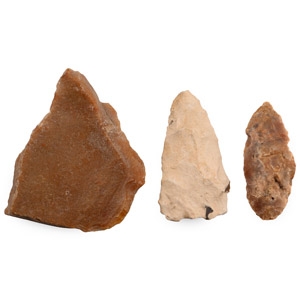
Knapped Arrowhead and Mousterian Chert Borer Group
Mousterian-Neolithic Period, 80,000-5000 B.P.Sold for (Inc. bp): £7
Including a broad burin, a scaphoid and a triangular arrowhead. 64 grams total, 49-65 mm
The borer found Le Grand Pressigny, France and from an old French collection; the arrowheads found Central France and from an old German collection amassed in the early 20th century. From the family collection of a South East London collector. From the property of a late Lincolnshire, UK, gentleman. -
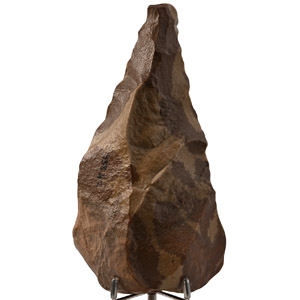
Large Stone Age 'Homo Erectus Ficron Handaxe
Lower Palaeolithic Period, circa 500,000 B.P.Sold for (Inc. bp): £338
Triangular in profile with broad butt; old inked legend '25854'; mounted on a custom-made stand. 793 grams, 17.2 cm (850 grams, 22 cm including stand)
Found North West Africa. Formally part of a French collection built up in the mid 1900s and sold via a European auction house. Acquired on the UK art market from Mr P M based in Kent.
