
Loading, please wait...


LOT 1549
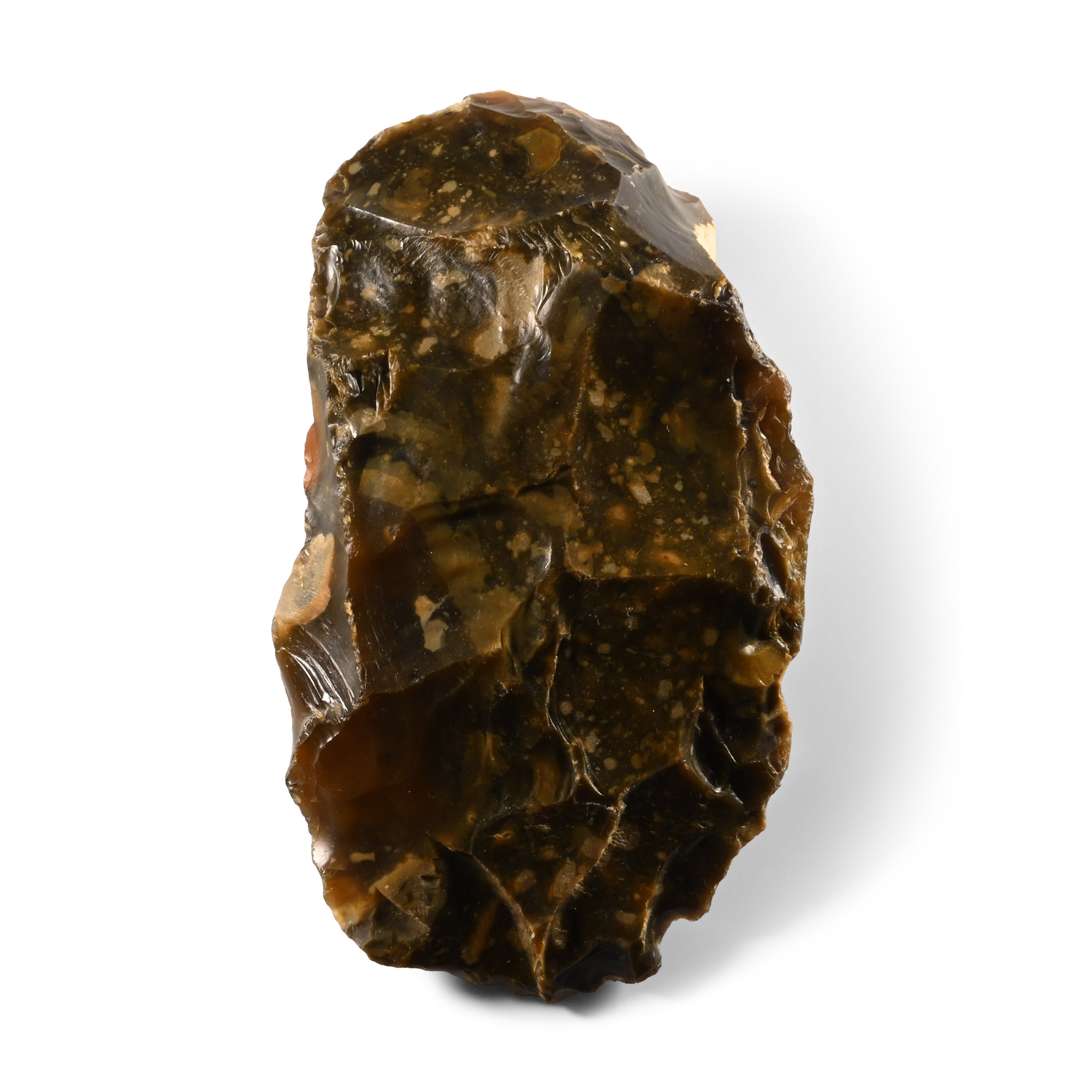
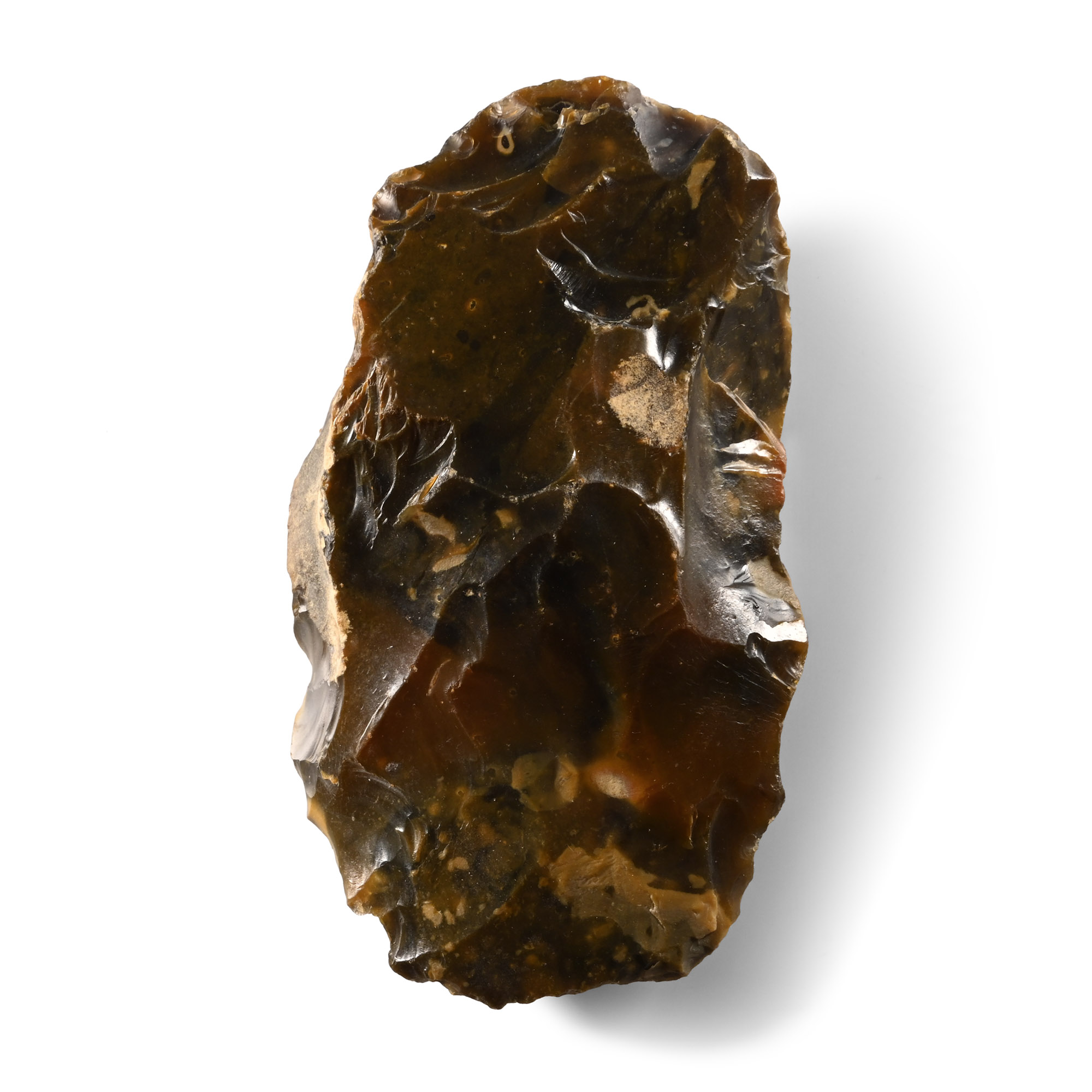
Stone Age Knapped Flint Handaxe
LOWER PALAEOLITHIC PERIOD, 480,000-250,000 B.C.
4 3/4 in. (278 grams, 11.9 cm).
Cleaver with broad butt and rounded cutting edge chipped through usage, remains of cortex to lateral edge. [No Reserve]
ProvenanceFrom the collection of Jean-Claude Debenne (1936-2020), an amateur prehistorian and former member of the French Society of Prehistory and the Prehistoric Association of the South-West, as well as an Honorary Member of the Geological Club of Ile-de-France.
This collection of flints was assembled between the 1950s and 1990s and originates from Ile-de-France, Oise, and Val-d'Oise.
Cf. MacGregor, A. (ed.), Antiquities from Europe and the Near East in the Collection of Lord McAlpine of West Green, Oxford, 1987, item 1.11, for type.
CONDITIONTimeLine Auctions follows a vetting process to ensure the authenticity and legality of all items, reinforcing our commitment to integrity and responsible trading. Each antiquity, antique, and coin lot undergoes thorough examination by a vetting committee of at least ten external specialists, professional trade association members, scientists, and archaeologists: Our Vetting Process
AUCTIONS:
TimeLine is a leading auction house specialising in antiquities, ancient art, collectables, natural history, coins, medals, and books. Our auctions offer museums, collectors, historians, and enthusiasts the opportunity to acquire unique and historically significant pieces.
-
Stone Age Pecked Hammerstone
Neolithic Period, 6th-4th millennium B.C.Sold for (Inc. bp): £72
Drum-shaped in profile and slightly tapering, rounded percussion face. 407 grams, 78 mm
Ex Simmons Gallery, 1990s. -
Stone Age Knapped Flint Handaxe
Lower Palaeolithic Period, 480,000-250,000 B.C.Sold for (Inc. bp): £169
Substantial cleaver, ovate in profile with rounded cutting edge, chipped from usage; grey flint with soft tan patination. 370 grams, 12.6 cm
From the collection of Jean-Claude Debenne (1936-2020), an amateur prehistorian and former member of the French Society of Prehistory and the Prehistoric Association of the South-West, as well as an Honorary Member of the Geological Club of Ile-de-France. This collection of flints was assembled between the 1950s and 1990s and originates from Ile-de-France, Oise, and Val-d'Oise. -
.jpg)
Stone Age 'Wanel' Flint Axehead
Neolithic Period, circa 3000-2000 B.C.Sold for (Inc. bp): £26
Irregular rectangle in plan with squared ends, old inked legend 'WANEL' to one face. 166 grams, 94 mm
Found Wannel, France. Ex old French collection. Acquired prior to 2000. From a private Norfolk, UK, collection. From the collection of a South West London, UK, specialist Stone Age collector.
