
Loading, please wait...


LOT 1514
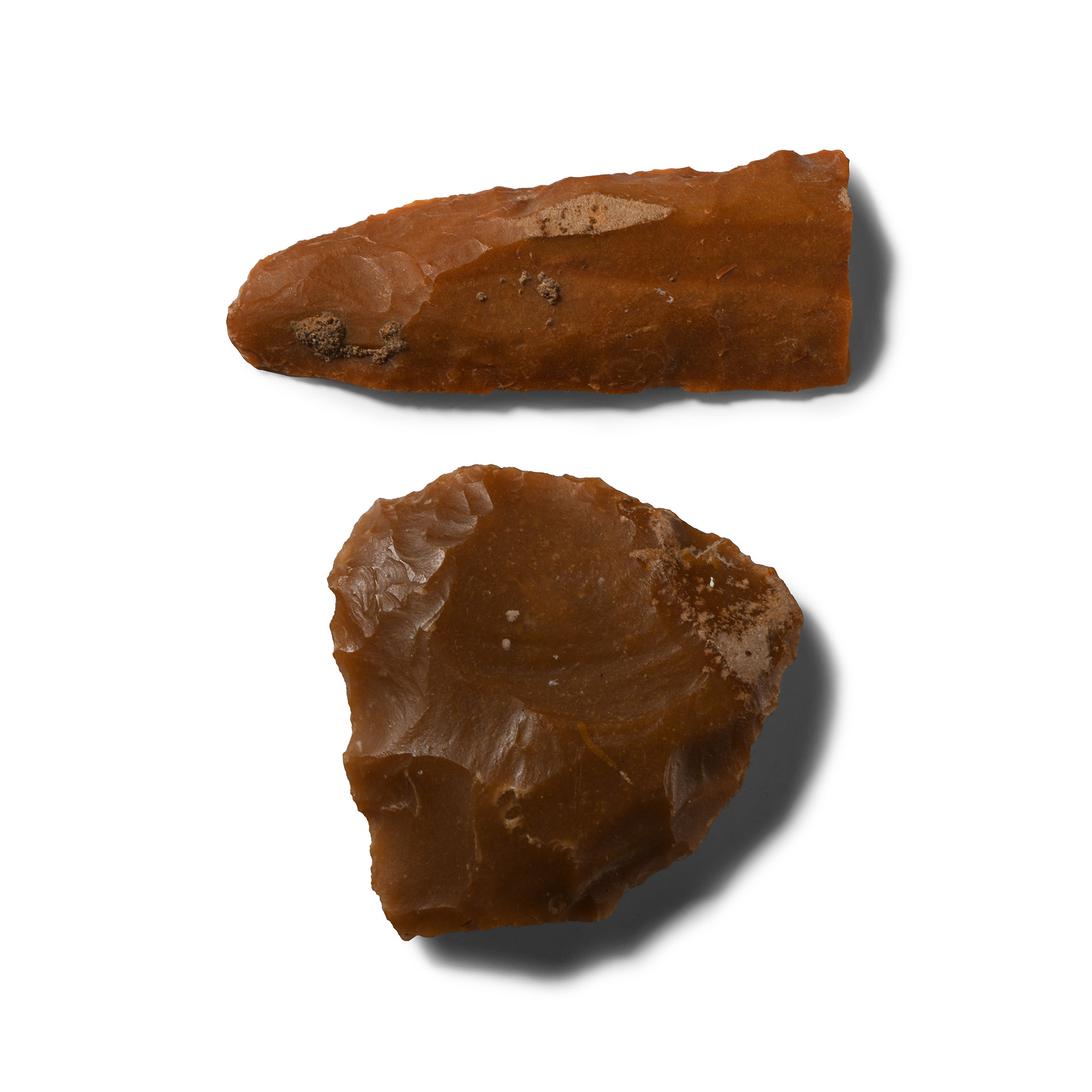
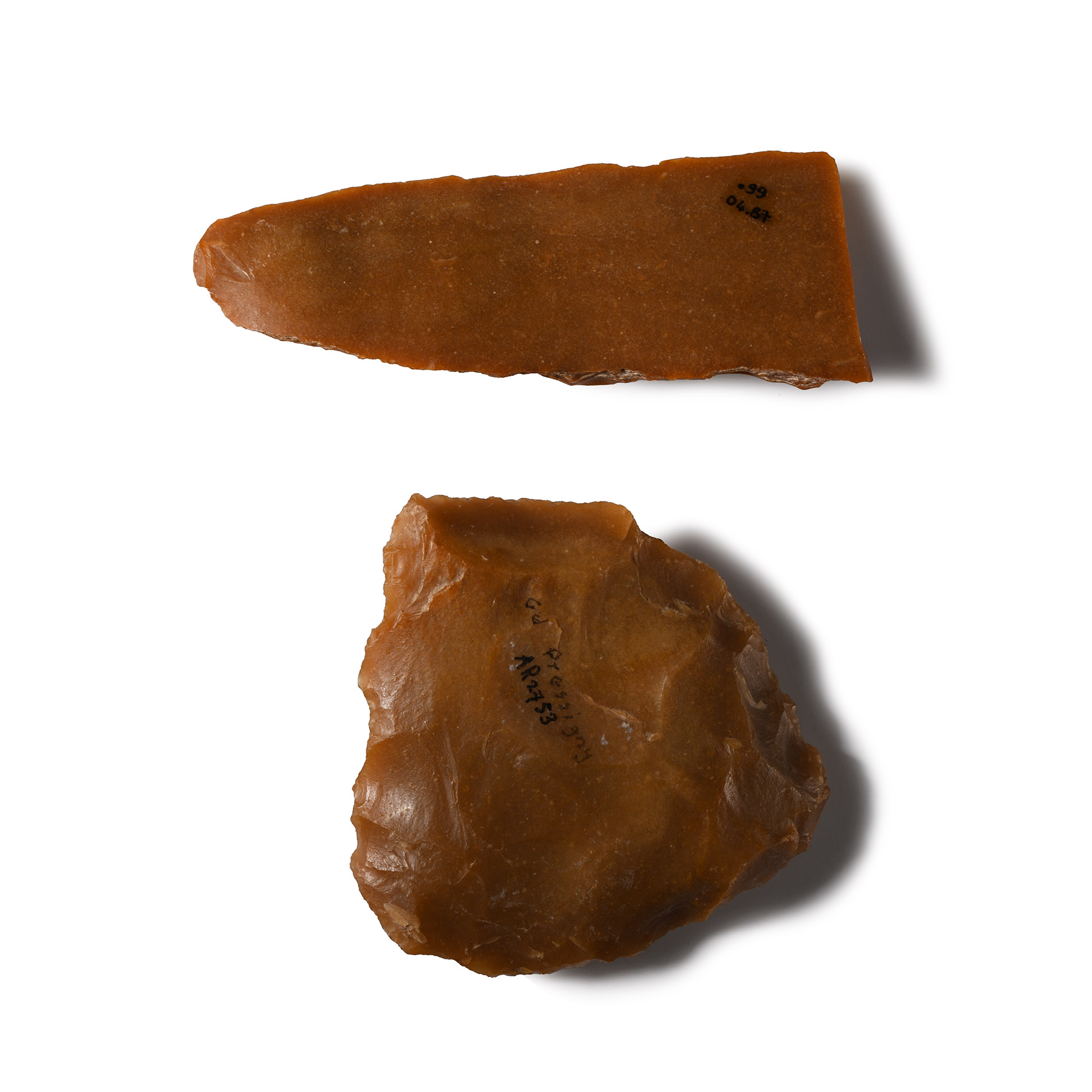
Stone Age Handaxe and Neolithic Long Blade Dagger from Le Grand Pressigny
MIDDLE PALAEOLITHIC PERIOD, CIRCA 150,000-60,000 YEARS B.P.
3 3/8 - 4 1/2 in. (276 grams total, 8.5-11.6 cm).
Group comprising a rounded handaxe with inked number 'AR2753' and indistinct reference above; dagger with inked reference '.9904.87'; with beautiful workmanship to each side and the tip. [2, No Reserve]
ProvenanceFound Le Grand Pressigny, France.
Acquired on the European art market.
From the private collection of an East Anglian, UK, collector.
TimeLine Auctions follows a vetting process to ensure the authenticity and legality of all items, reinforcing our commitment to integrity and responsible trading. Each antiquity, antique, and coin lot undergoes thorough examination by a vetting committee of at least ten external specialists, professional trade association members, scientists, and archaeologists: Our Vetting Process
AUCTIONS:
TimeLine is a leading auction house specialising in antiquities, ancient art, collectables, natural history, coins, medals, and books. Our auctions offer museums, collectors, historians, and enthusiasts the opportunity to acquire unique and historically significant pieces.
LOT 1514
Stone Age Handaxe and Neolithic Long Blade Dagger from Le Grand Pressigny
Sold for (Inc. bp): £143
-
Stone Age 'Swanscombe' Classic Pointed Flint Handaxe
Palaeolithic Period, circa 425,000-362,000 B.P.Sold for (Inc. bp): £364
Classic pointed handaxe from the type-site at Swanscombe, Kent; mainly hard hammer struck with two small areas of cortex remaining near the butt. 121 grams, 88 mm
Found Swanscombe, Kent, UK. From a private Norfolk, UK, collection. From the collection of a South West London, UK, specialist Stone Age collector.
The middle gravels from which this axe most likely came date to the Hoxnian Interglacial period at MIS 11 (425-362 B.C.) and are associated with the only known hominin remains from the Hoxnian which had features of both Neanderthal and modern humans. (Wymer 1999, p.77.) -
Stone Age Knapped Flint Handaxe Group
Lower Palaeolithic Period, 480,000-250,000 B.C.Sold for (Inc. bp): £72
Comprising three flakes: a small triangular arrowhead, a lanceolate blade and a piriform blade; small worked piriform handaxe with indistinct inked inscription to the base 'Langdon's C[...]' (perhaps Langdon's Cliff, Dover, Kent). 210 grams total, 4.8-11 cm
From the collection of François Bigot (1950-2009). with Auction Art Rémy Le Fur & Associés, 28th September 2021. -
.jpg)
Stone Age Polished Axehead
Neolithic Period, circa 4th-3rd millennium B.C.Sold for (Inc. bp): £416
With broad curved cutting edge tapering body and narrow tip, polished surfaces. 164 grams, 14 cm
From a collection acquired on the UK art market from various auction houses and collections mostly before 2000. From an important Cambridgeshire estate; thence by descent.
