
Loading, please wait...
LOT 0343
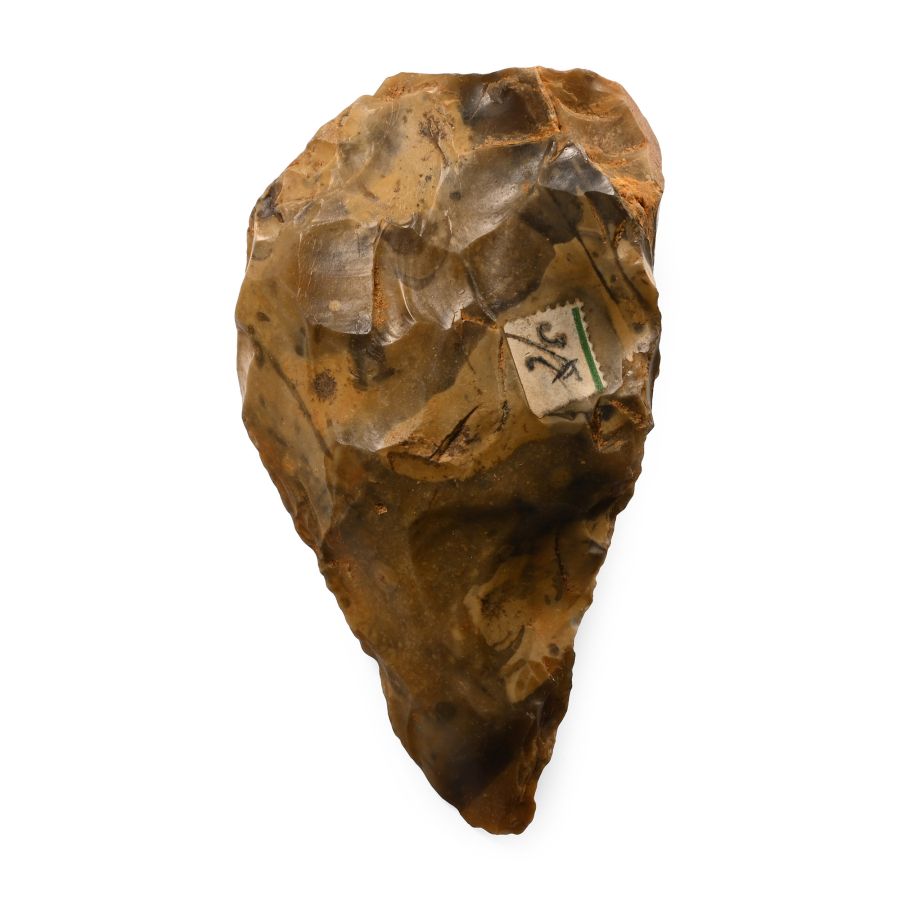
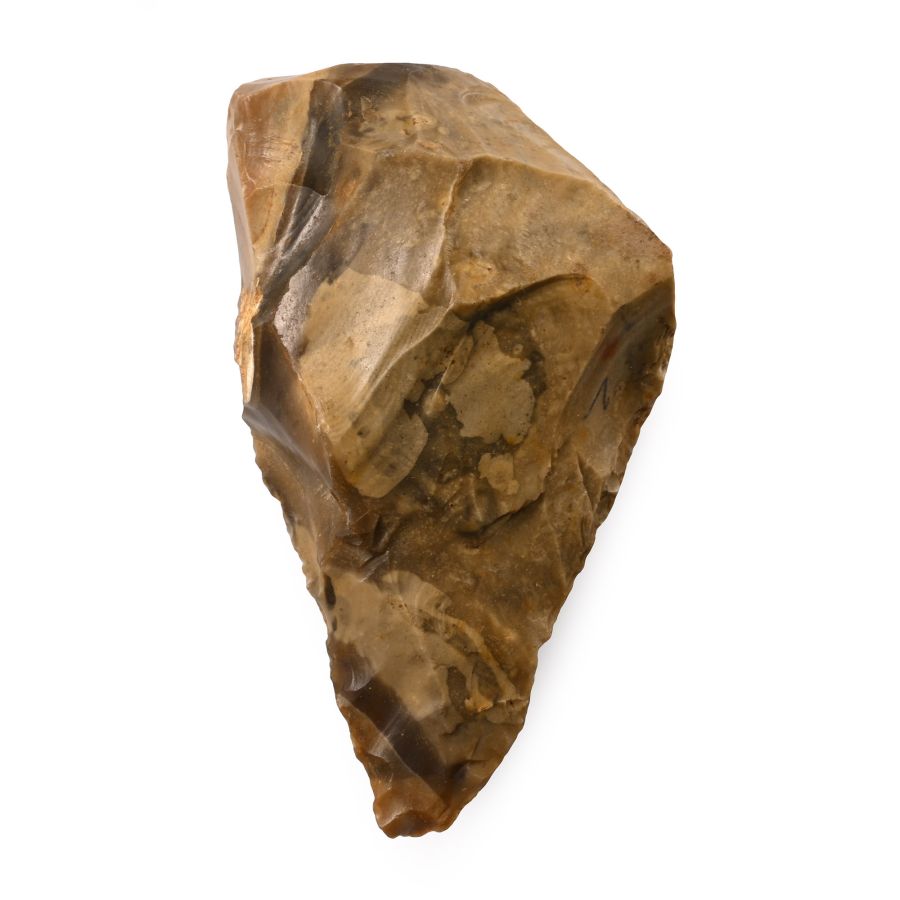
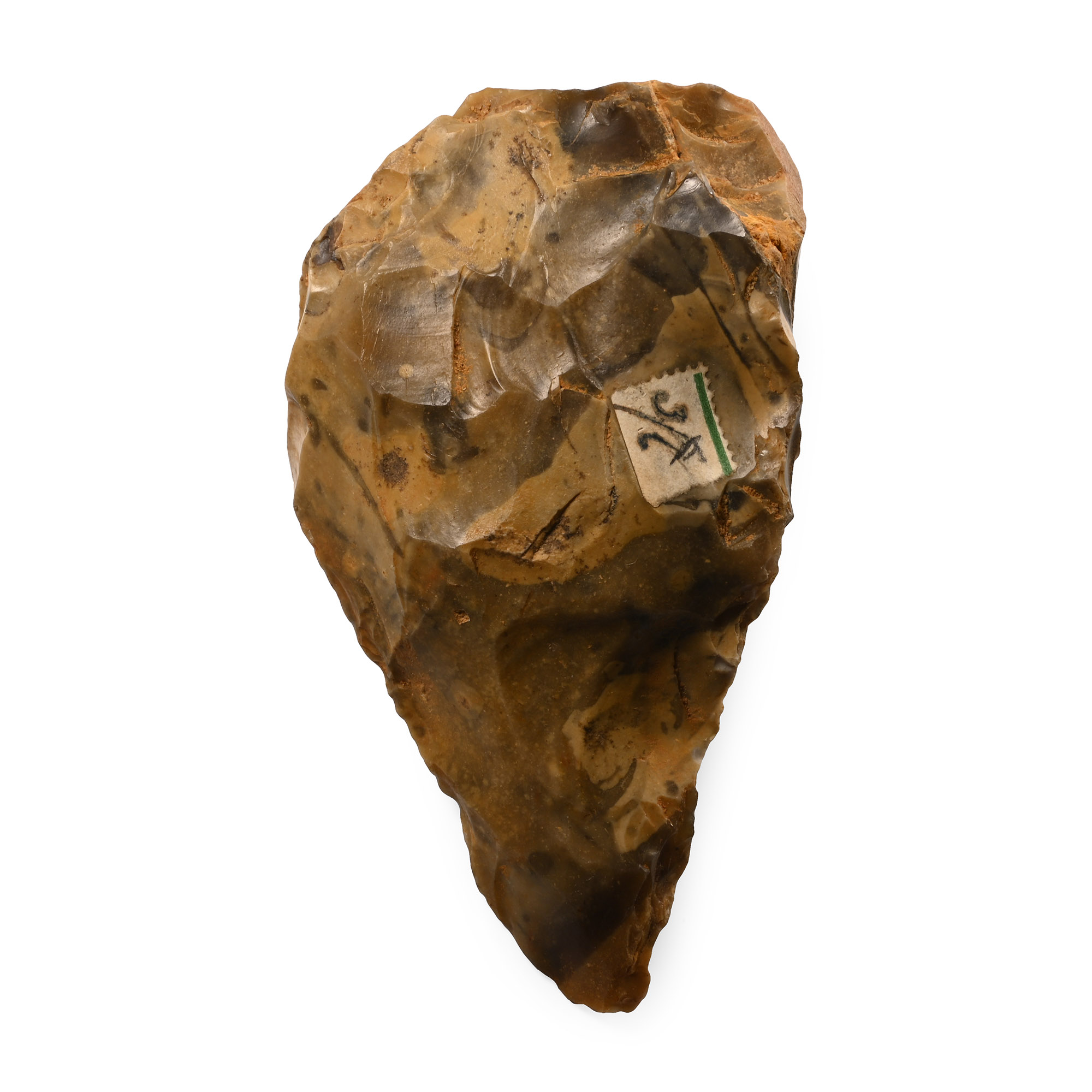
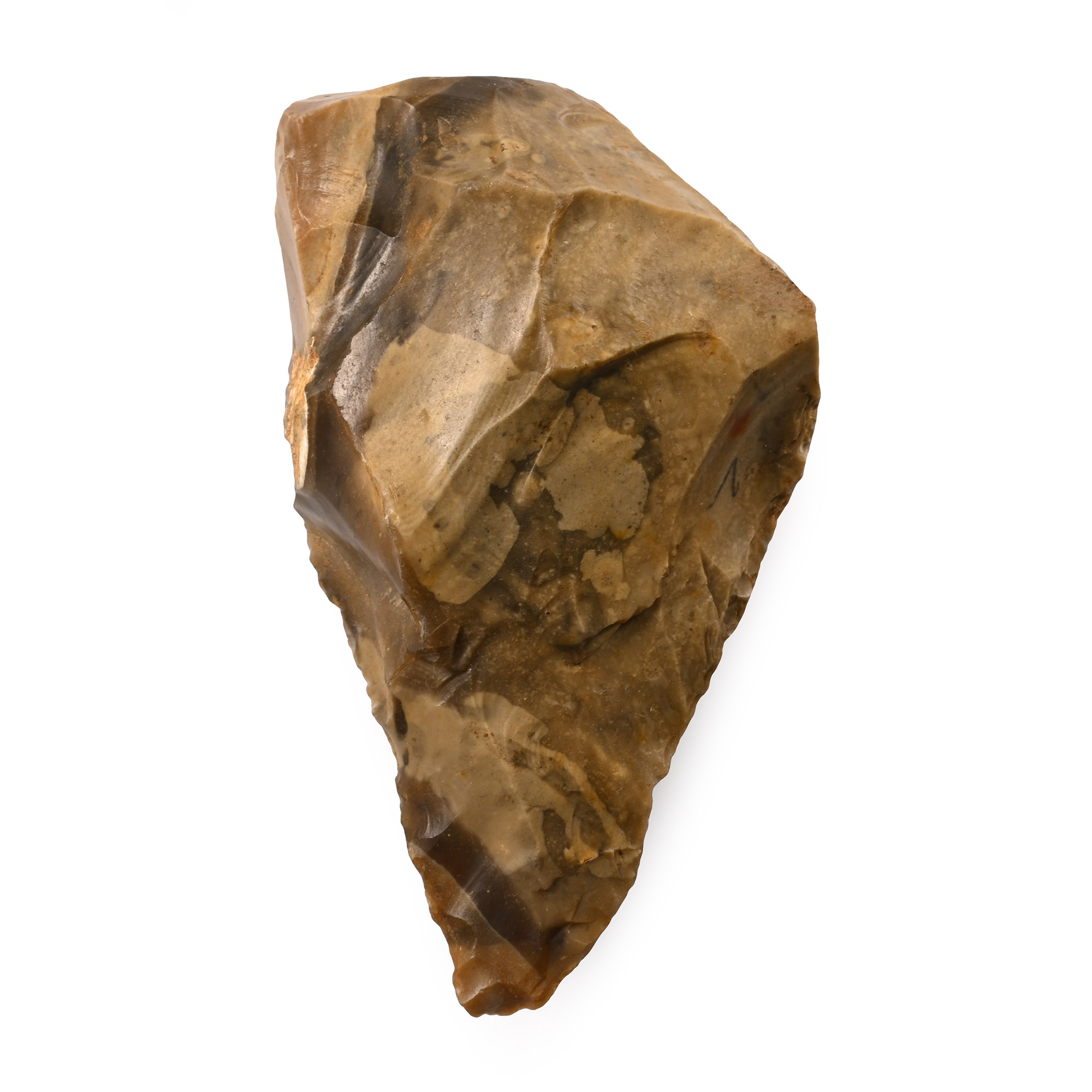
Stone Age Flint Bifacial 'Ficron' Handaxe from Swanscombe
LOWER PALAEOLITHIC PERIOD, CIRCA 450,000-300,000 B.P
4 in. (227 grams, 10.4 cm).
Flint ficron in form with still-sharp cutting edges and the famous mottled patina from Barnfield Pit; old collector's label with '3/6'` legend.
ProvenanceFound at Barnfield Pit, Swanscombe, Kent, UK.
From the collection of John Sharp, a former well known archaeologist.
Acquired on the UK art market.
From the private collection of an East Anglian, UK, specialist collector.
This lot is accompanied by an illustrated lot declaration signed by the Head of the Antiquities Department, Dr Raffaele D'Amato.
TimeLine Auctions follows a vetting process to ensure the authenticity and legality of all items, reinforcing our commitment to integrity and responsible trading. Each antiquity, antique, and coin lot undergoes thorough examination by a vetting committee of at least ten external specialists, professional trade association members, scientists, and archaeologists: Our Vetting Process
AUCTIONS:
TimeLine is a leading auction house specialising in antiquities, ancient art, collectables, natural history, coins, medals, and books. Our auctions offer museums, collectors, historians, and enthusiasts the opportunity to acquire unique and historically significant pieces.
LOT 0343
Stone Age Flint Bifacial 'Ficron' Handaxe from Swanscombe
Sold for (Inc. bp): £1,040
-
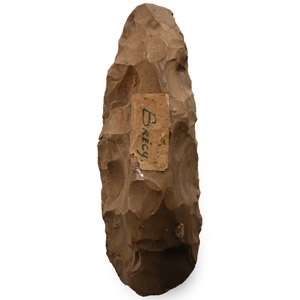
French Stone Age Flaked Axehead from Brecy
Neolithic Period, circa 6,000 B.P.Sold for (Inc. bp): £195
Lentoid in section with rounded blade. old collector's label 'Brecy'. 154 grams, 12.1 cm
From an old large French collection. Acquired on the European art market. From the private collection of an East Anglian, UK, specialist collector. This lot is accompanied by an illustrated lot declaration signed by the Head of the Antiquities Department, Dr Raffaele D'Amato. -
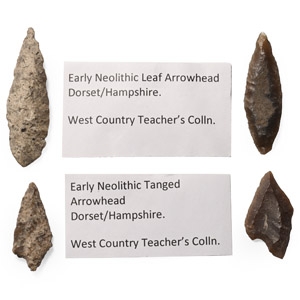
British Stone Age Arrowhead Collection
Neolithic Period, 6000-4500 B.C.Sold for (Inc. bp): £104
Comprising two leaf-shaped and two tanged examples. 7.98 grams total, 28-45 mm
Found in Dorset & Hampshire. Ex N. Thomas collection, 1980s. This lot is accompanied by an illustrated lot declaration signed by the Head of the Antiquities Department, Dr Raffaele D'Amato. -
.jpg)
French Stone Age Mousterian Levellious Point
Middle Palaeolithic Period, Mousterian, circa 150,000-60,000 B.PSold for (Inc. bp): £156
With deep orange patination, classic triangular shape; inked legend '2922' to tip. 84 grams, 85 mm
Ex Paris collection. Acquired on the European art market. From the private collection of an East Anglian, UK, specialist collector. This lot is accompanied by an illustrated lot declaration signed by the Head of the Antiquities Department, Dr Raffaele D'Amato.
Made by Neanderthals.
