
Loading, please wait...
LOT 1507
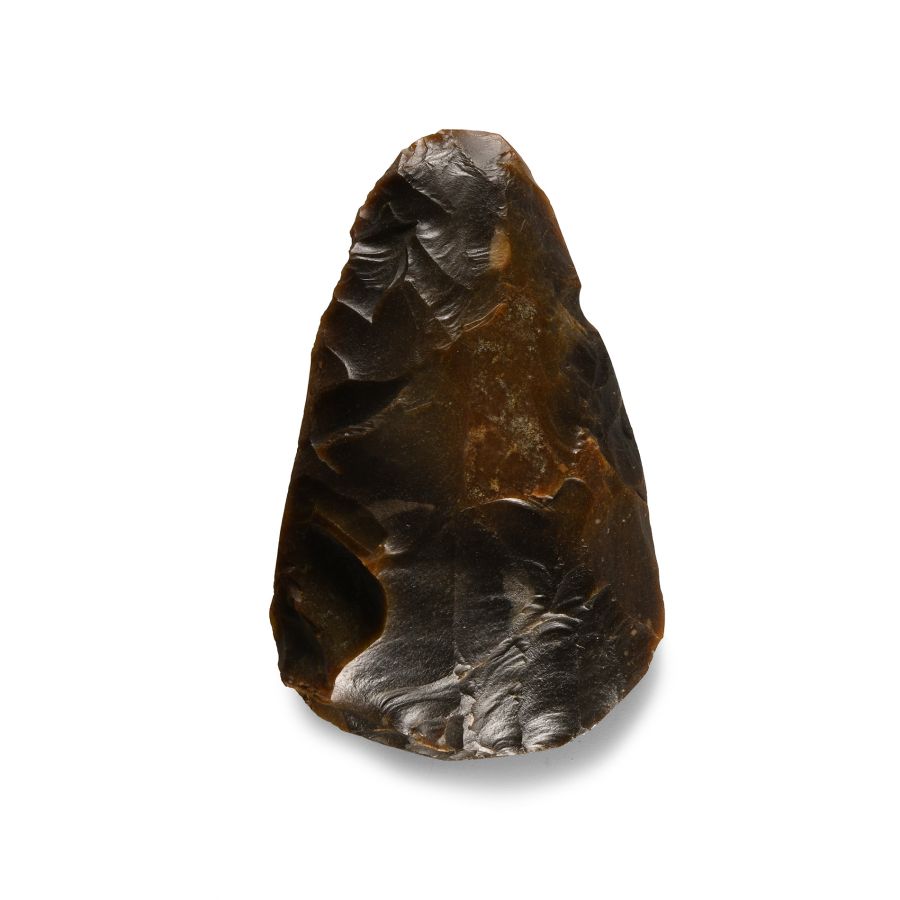
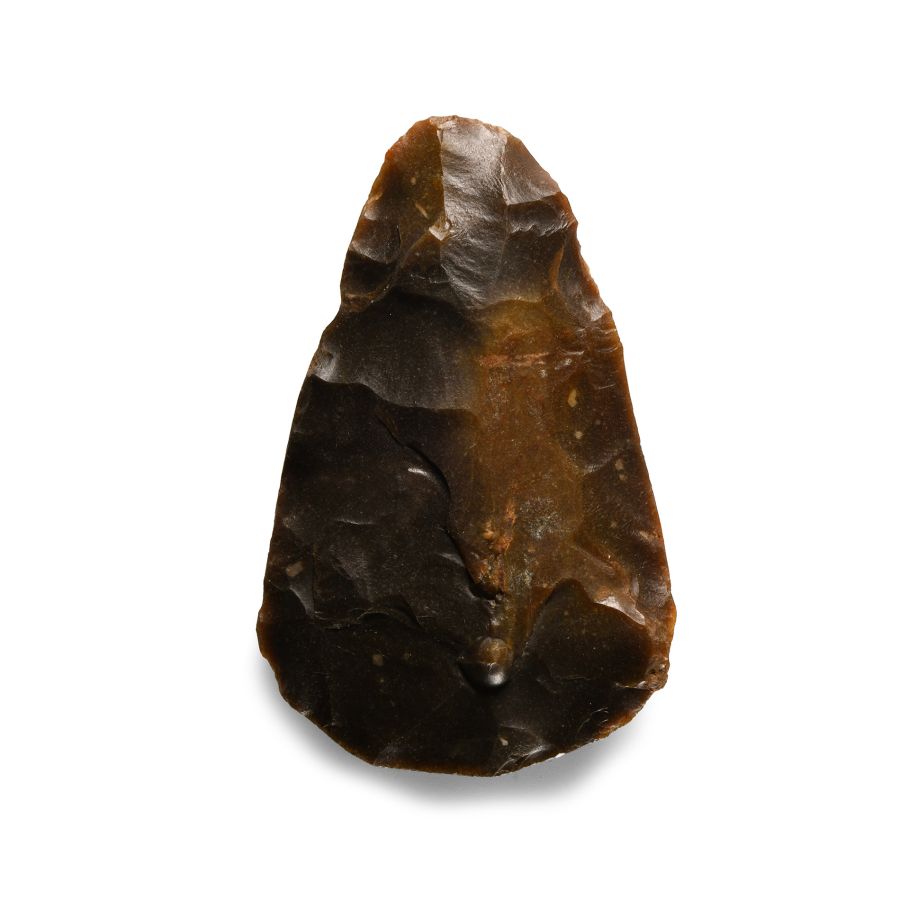
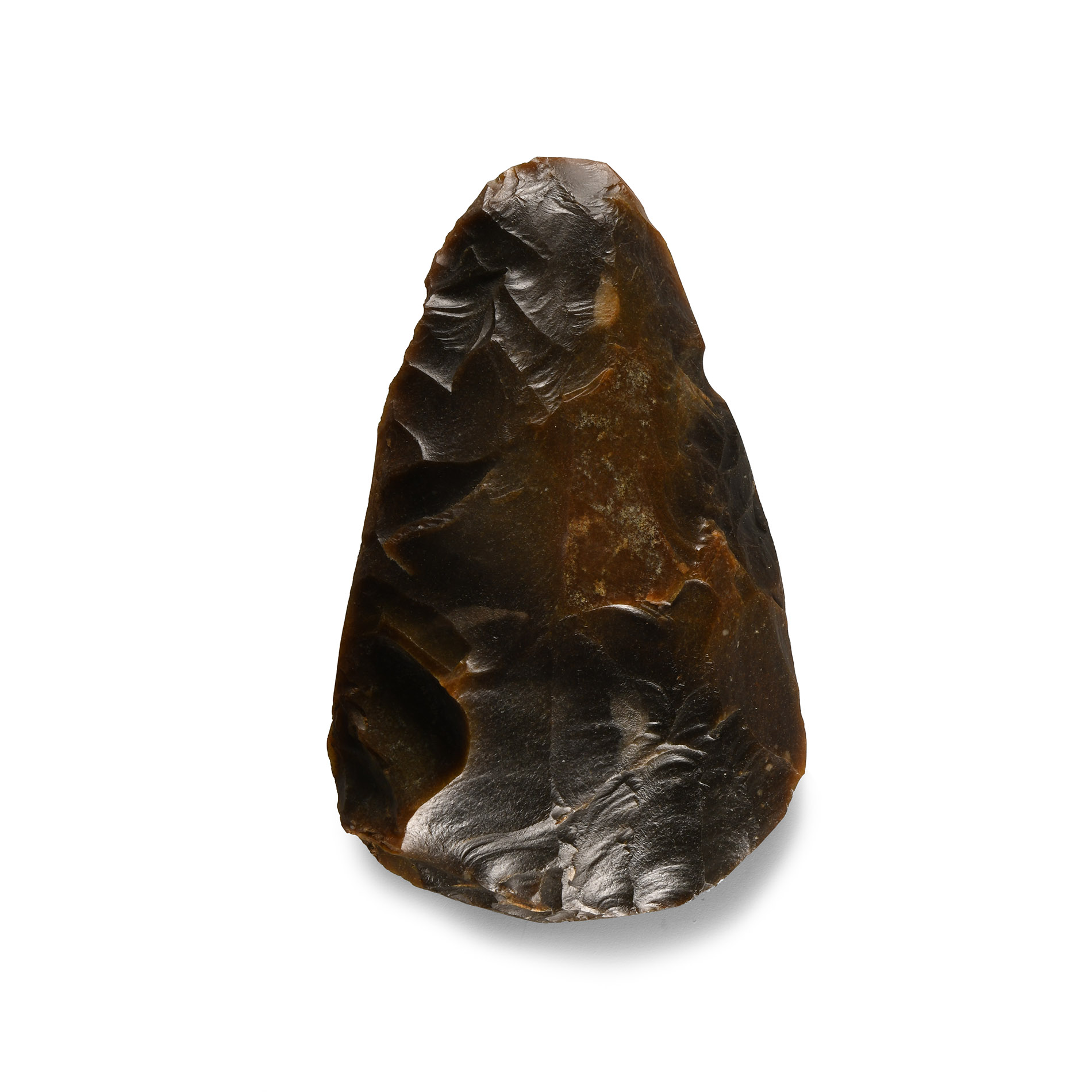
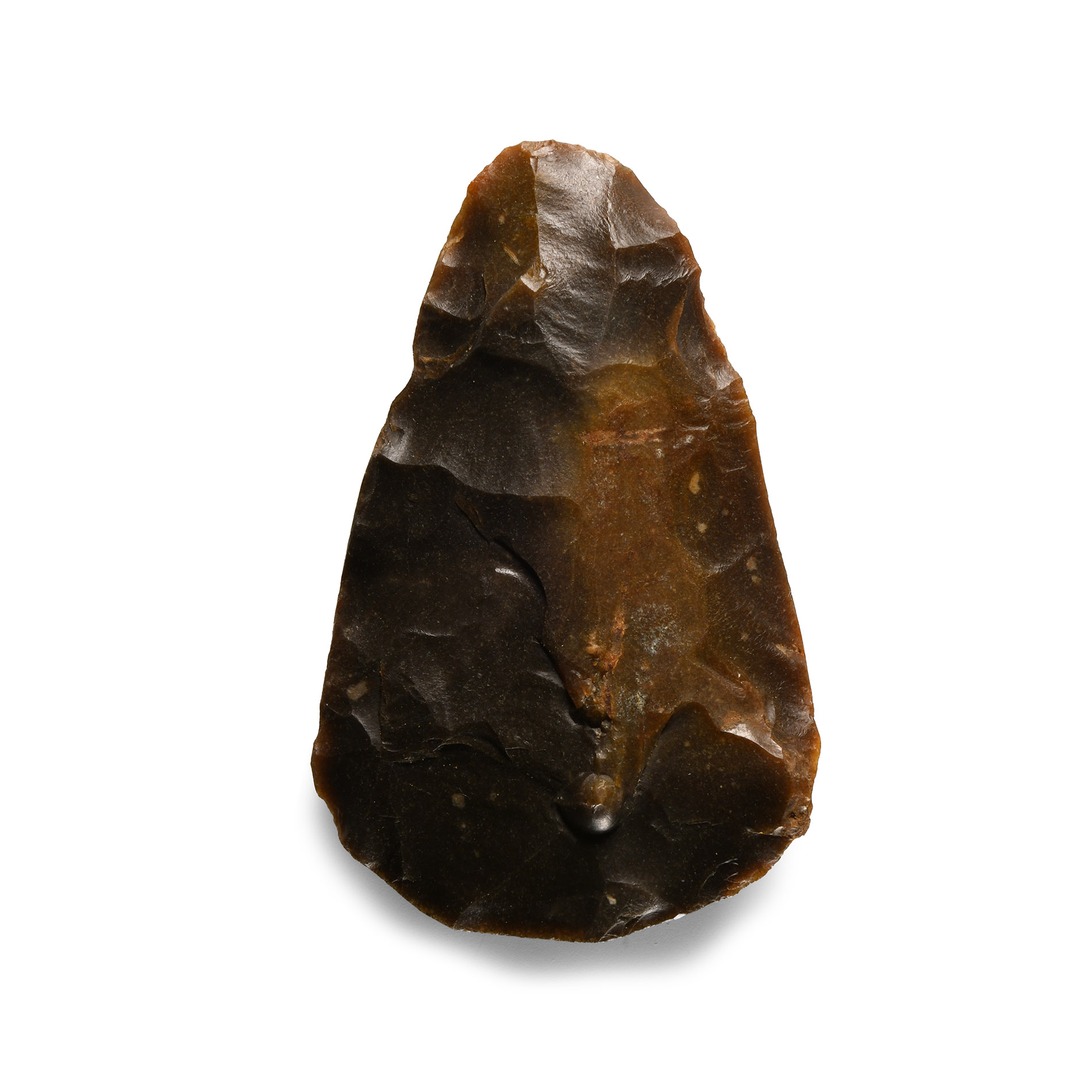
Stone Age 'Central France' Chestnut-Brown Knapped Flint Handaxe
LOWER PALAEOLITHIC PERIOD, 70,000-60,000 YEARS B.P.
4 3/4 in. (240 grams, 12.2 cm).
Cordate in plan with finely worked edges. [No Reserve]
ProvenanceFound in Central France.
From an old French collection formed in the early 1900s.
From the collection of a Norfolk, UK, lady collector.
TimeLine Auctions follows a vetting process to ensure the authenticity and legality of all items, reinforcing our commitment to integrity and responsible trading. Each antiquity, antique, and coin lot undergoes thorough examination by a vetting committee of at least ten external specialists, professional trade association members, scientists, and archaeologists: Our Vetting Process
AUCTIONS:
TimeLine is a leading auction house specialising in antiquities, ancient art, collectables, natural history, coins, medals, and books. Our auctions offer museums, collectors, historians, and enthusiasts the opportunity to acquire unique and historically significant pieces.
LOT 1507
Stone Age 'Central France' Chestnut-Brown Knapped Flint Handaxe
Sold for (Inc. bp): £286
-

Stone Age Terracotta Figure Head
Circa 6th-4th millennium B.C.Sold for (Inc. bp): £208
Biconvex in profile with applied eyes and mouth, mounted on a custom-made stand. 78 grams total including stand, 36 mm
From a collection acquired on the UK art market from various auction houses and collections mostly before 2000. From an important Cambridgeshire estate; thence by descent. -

Stone Age Twydall Knapped Flint Knife
Lower Palaeolithic Period, circa 400,000 B.P.Sold for (Inc. bp): £468
Triangular-section blade; with an old inked inscription: '2.SS.1252.A / Twydall'. 46 grams, 91 mm
Found Twydall, Kent, UK. Richard Jones collection, Welling, Kent, UK, 1912-1915. Ex Rochester Museum, Kent collections. Specialist collection of J Edwin Jarvis. Ex Martin Schoyen collection, London, UK. Accompanied by a copy of an article on the site at Twydall. -

Stone Age Polished Goddess Idol
Neolithic Period, circa 6th-4th millennium B.C.Sold for (Inc. bp): £6,240
With rounded profile, stub arms and head without facial detailing, vestigial legs; accompanied by a custom-made display stand. 635 grams, 15 cm (686 grams total, 16.5 cm including stand)
From a collection acquired on the UK art market from various auction houses and collections mostly before 2000. From an important Cambridgeshire estate; thence by descent. Accompanied by an academic report by Dr Raffaele D'Amato. This lot has been checked against the Interpol Database of stolen works of art and is accompanied by a search certificate number no.12087-217184.
Most scholars consider these as symbols of the cult of fertility and evidence of the existence of a matriarchal society as a form of organisation of the earliest human society. The people of the Stone Age may have considered figures such as this to represent women and mothers with their life-giving powers, or as depictions of the ancestors.
