
Loading, please wait...
LOT 0392
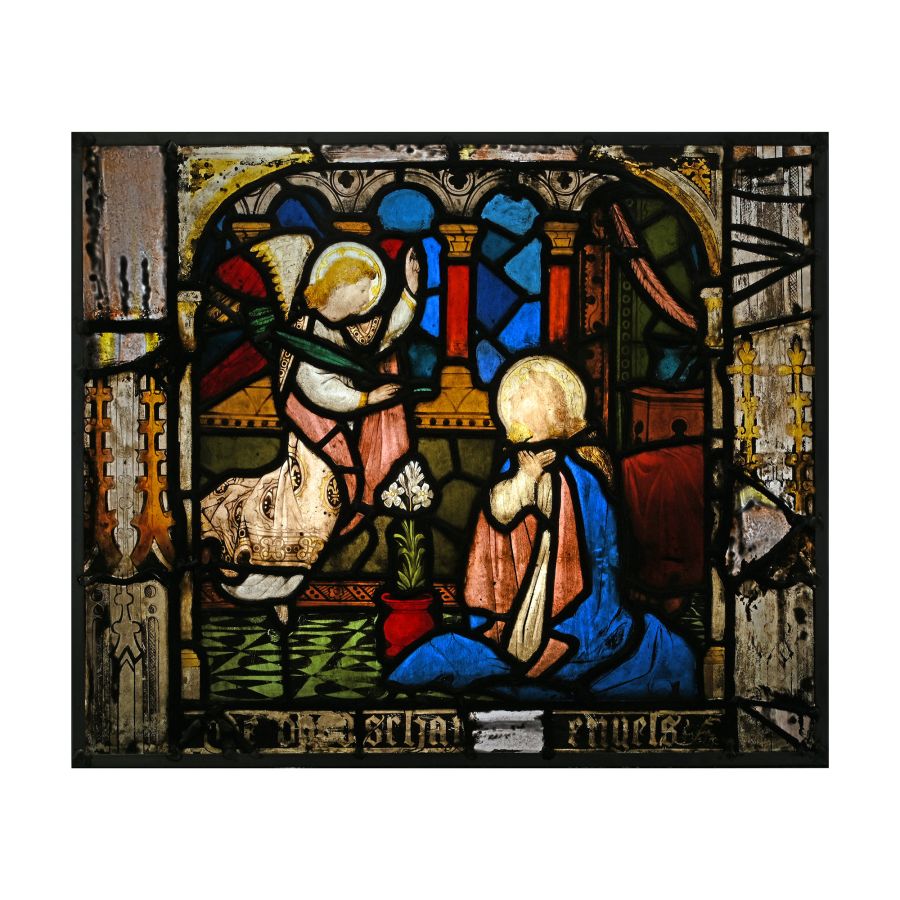
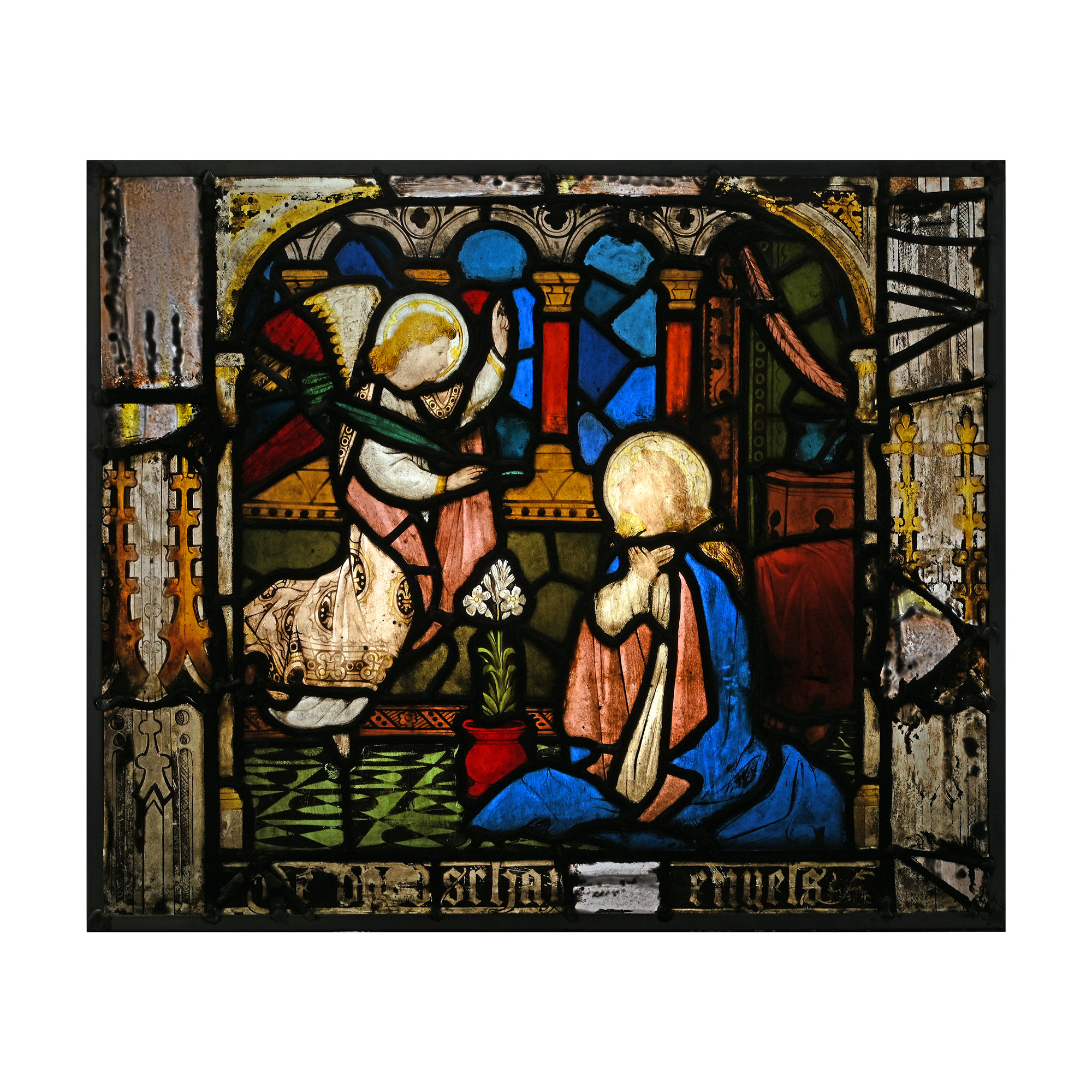
Stained Glass Panel with the Annunciation
FLEMISH, 19TH CENTURY A.D. OR EARLIER
25 1/2 x 21 in. (4.5 kg, 65 x 53.5 cm).
In late 15th century style, showing youthful nimbate Mary on the foreground dressed in red-and-blue cloak and holding her hands crossed at her chest, Archangel Gabriel hovering in the air and pointing a finger, dressed in a decorated white cassock; rich architectural background with columns and arches, a red vase of lilies on the green and black marble floor, Flemish inscription below 'DE BOODSCHAP DES ENGELS’ (the angel’s message) in uncial letters; some restoration. [No Reserve]
ProvenanceFrom a war-damaged church in Belgium.
Ex property of a late Northumberland collector.
From a private collection, Derbyshire, UK.
This lot is accompanied by an illustrated lot declaration signed by the Head of the Antiquities Department, Dr Raffaele D'Amato.
Cf. similar structure of ‘The Annunciation’, work of Simon Bening, Fiammingo, early 16th century A.D., Paul Getty Museum, inv.no.83.ML.115.13v.
FootnotesThe scene represents the announcement made by the angel Gabriel to Mary, that she would conceive and bear a son through the Holy Spirit (according to the Gospel of Luke, I, 26-38). In some regional contexts it is called Conceptio Domini or Conceptio Christi.
CONDITIONTimeLine Auctions follows a vetting process to ensure the authenticity and legality of all items, reinforcing our commitment to integrity and responsible trading. Each antiquity, antique, and coin lot undergoes thorough examination by a vetting committee of at least ten external specialists, professional trade association members, scientists, and archaeologists: Our Vetting Process
AUCTIONS:
TimeLine is a leading auction house specialising in antiquities, ancient art, collectables, natural history, coins, medals, and books. Our auctions offer museums, collectors, historians, and enthusiasts the opportunity to acquire unique and historically significant pieces.
-
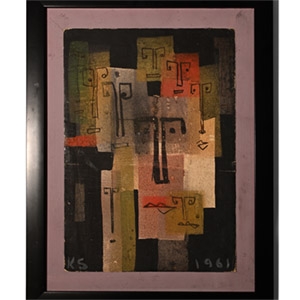
Faces in Rectangles Painting, Attributed to Kirill Sokolov (1930-2004)
20th-21st century A.D.Sold for (Inc. bp): £65
Painted on card and showing overlapping abstract faces on black background, initials 'KS' to the lower left hand corner and '1961' to the right hand corner; mounted on painted backing in frame; reverse with a hand written note 'Kirill Sokolov 1930-2004'. 1.35 kg total, 41.5 x 54 cm
Private collection of a London gentleman, acquired between 1965-2020. Accompanied by an old exhibition catalogue. This lot is accompanied by an illustrated lot declaration signed by the Head of the Antiquities Department, Dr Raffaele D'Amato. -
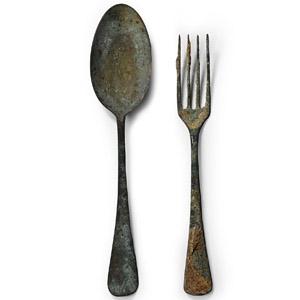
d 'Nuestra Senora de la Luz' Shipwreck Fork and Spoon Set
Sunk 1752 A.D.Sold for (Inc. bp): £65
Comprising a four-pronged table fork and a spoon with ovoid bowl. 53 grams total, 16.7-18.5 cm
Salvaged by Ruben Collado Amatriain in 1992. Accompanied by original signed declarations in both English and Spanish from Ms Mariana Faine Collado, daughter of Mr Ruben Collado Amatriain. This lot is accompanied by an illustrated lot declaration signed by the Head of the Antiquities Department, Dr Raffaele D'Amato. -
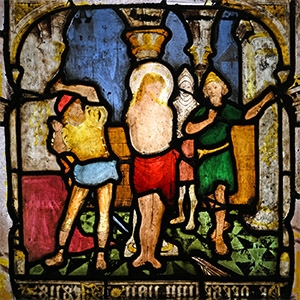
Stained Glass Panel with the Flagellation
Flemish, 19th century A.D. or earlierSold for (Inc. bp): £780
In late 15th century style, the scene depicting Christ at a column, severely beaten by two torturers, both bearded, one dressed in a green tunic and a yellow cap, another in yellow leather corselet worn over a puffed Renaissance-style tunic, and a red cap; in the background an armoured knight in sallet, bevor, cuirass and full leg protection supervising the scene; architectural background, Dutch Flemish inscription ‘DE GESELING (?) VAN JESUS’ (The Scourging of Christ) at the bottom; some restoration. 4.5 kg, 65 x 53.5 cm
some restoration.
From a war-damaged church in Belgium. Ex property of a late Northumberland collector. From a private collection, Derbyshire, UK. This lot is accompanied by an illustrated lot declaration signed by the Head of the Antiquities Department, Dr Raffaele D'Amato.
