
Loading, please wait...

LOT 0401
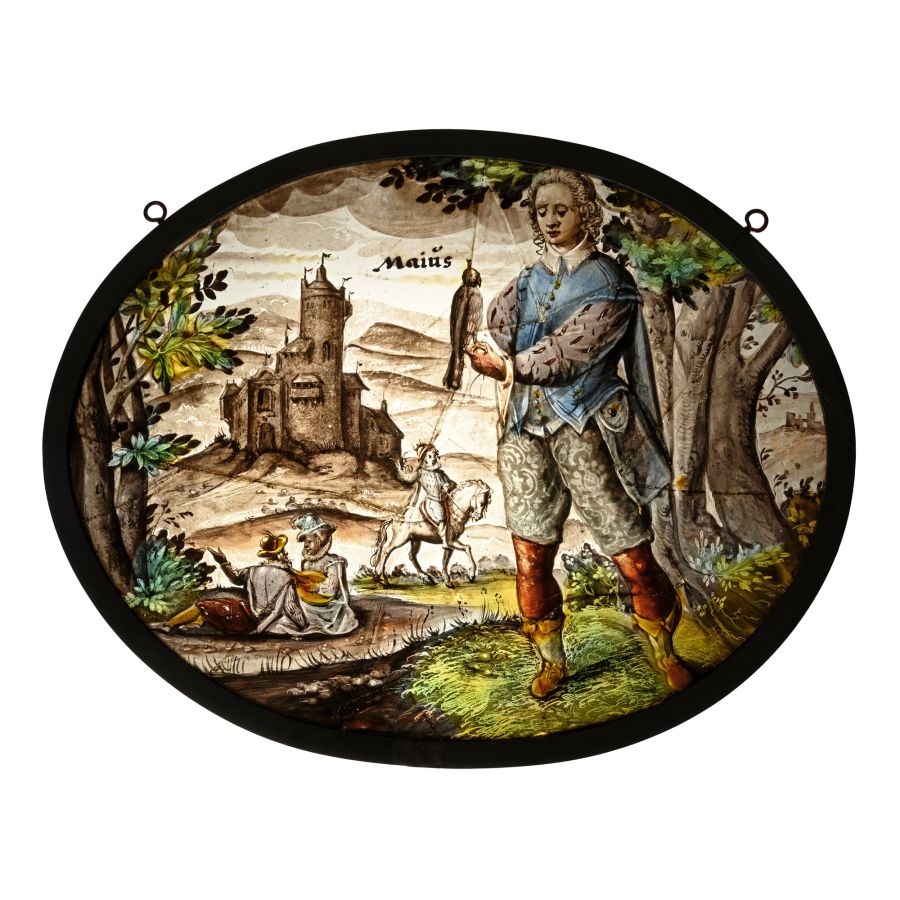
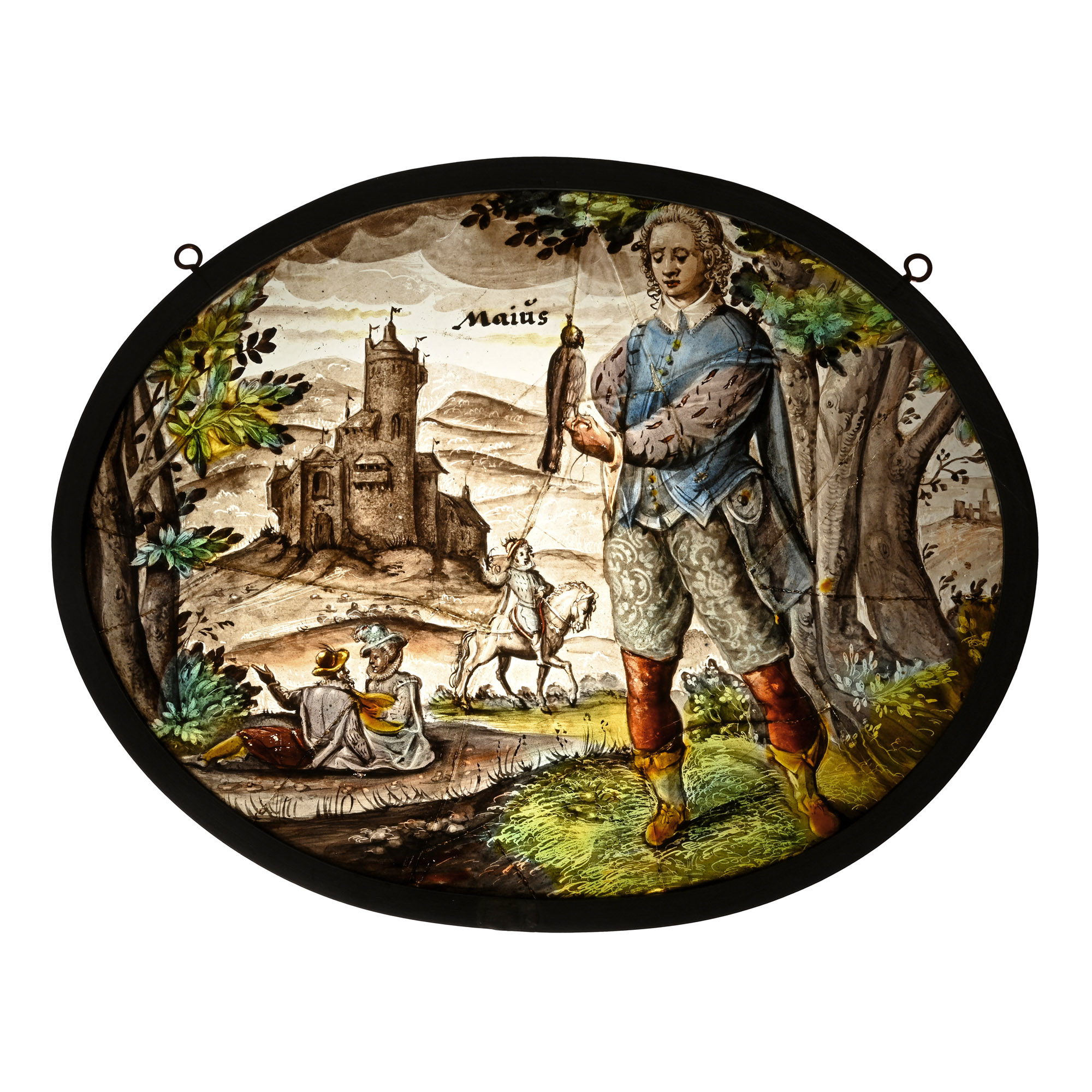
Stained Glass Panel of the Month of May
SOUTHERN LOW COUNTRIES, CIRCA 1580-1600 A.D.
9 3/8 in. (266 grams, 23.7 cm).
Ellipsoid panel with polychrome landscape scene depicting a fowler in the foreground holding his left arm extended for a perching bird of prey wearing a hood; the fowler in slashed doublet and hose with turned boots standing before an oak tree; in the middle distance, two figures sitting in the grass, the female playing a lute and the male gesticulating, and a third riding with arm raised releasing a hawk; in the distance, wooded hills with a castle; inked title 'Maiŭs' (May); lead came with two suspension loops; cracked and repaired. [No Reserve]
ProvenanceDe Baecque Vente aux enchere, 5 March 2022, no.55.
Ex central London gallery.
TimeLine Auctions follows a vetting process to ensure the authenticity and legality of all items, reinforcing our commitment to integrity and responsible trading. Each antiquity, antique, and coin lot undergoes thorough examination by a vetting committee of at least ten external specialists, professional trade association members, scientists, and archaeologists: Our Vetting Process
AUCTIONS:
TimeLine is a leading auction house specialising in antiquities, ancient art, collectables, natural history, coins, medals, and books. Our auctions offer museums, collectors, historians, and enthusiasts the opportunity to acquire unique and historically significant pieces.
-
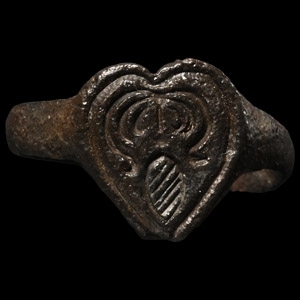
Post Medieval Bronze Heart-Shaped Ring with Pinecone
Circa 16th century A.D.Sold for (Inc. bp): £52
With a D-section hoop supporting a heart-shaped bezel displaying a pinecone with foliage above. 2.73 grams, 20.01 mm overall, 16.51 mm internal diameter (approximate size British L, USA 5 3/4, Europe 11.24, Japan 10)
Private collection formed since the 1940s. UK art market. Property of an Essex, UK, gentleman. -
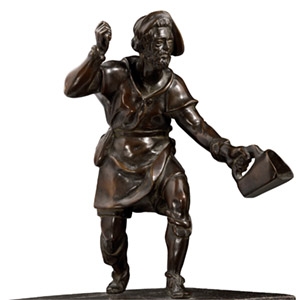
Bronze Figure of a Bird Catcher
18th-19th century A.D.Estimate: £800 - 1,000 (+bp*)
Opening Bid: £400
Clad in garments evoking the Middle Ages, modelled in the round stalking his prey with a cage in one hand and a cudgel or baton held in the other, ready to strike; a number of birds suspended from his belt, together with other pouches; mounted on a veined granite base. 6.2 kg, 29.5 cm
Private collection, England.
Executed in the style of Giambologna (Giovanni da Bologna, 1529-1608), the famed Florentine sculptor whose work was favoured by the Medici family. It is similar to another bronze in the Detroit Institute of Art, where it is ascribed to Antonio Susini, a student of Giambologna. -
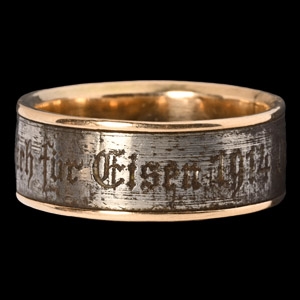
Gold and Iron 'I Gave Gold for Iron' World War I Ring
Germany, 1914 A.D.Sold for (Inc. bp): £403
Finger ring with gold core and median iron band inscribed 'Gold gab ich für Eisen 1914. Oe.S.K.'. 4.67 grams, 20.20 mm overall, 17.12 mm internal diameter (approximate size British N, USA 6 1/2, Europe 13.72, Japan 13)
Acquired on the UK art market. Property of an Essex, UK, gentleman.
