
Loading, please wait...
LOT 0364
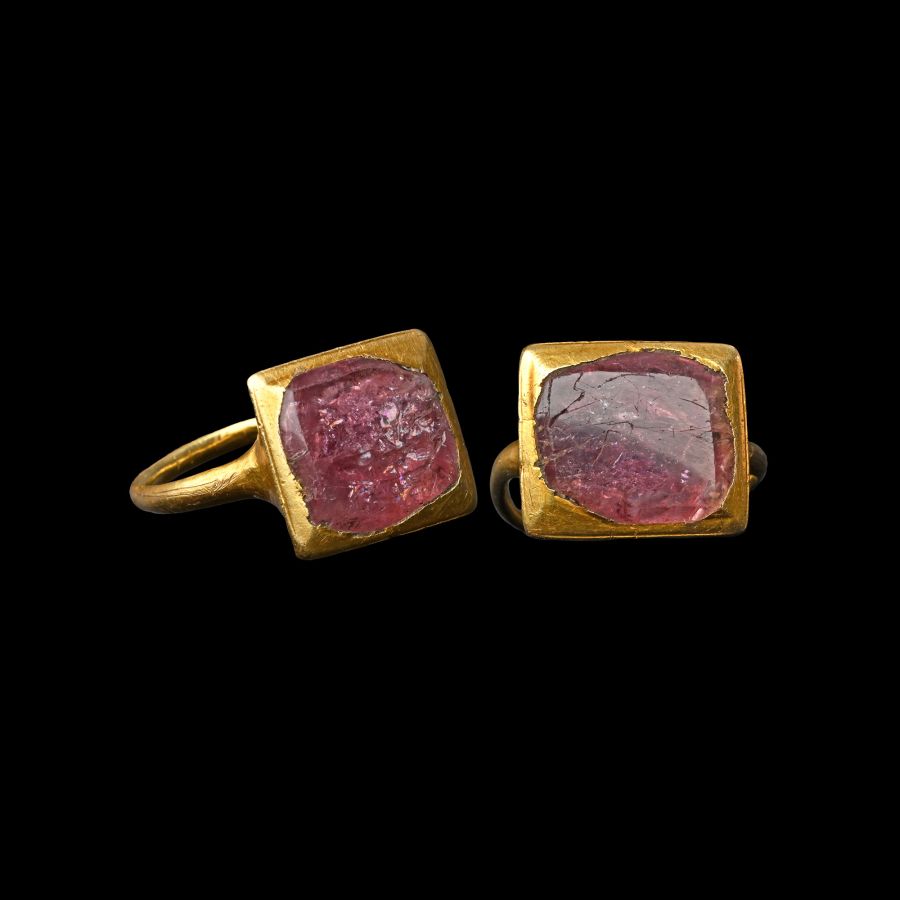
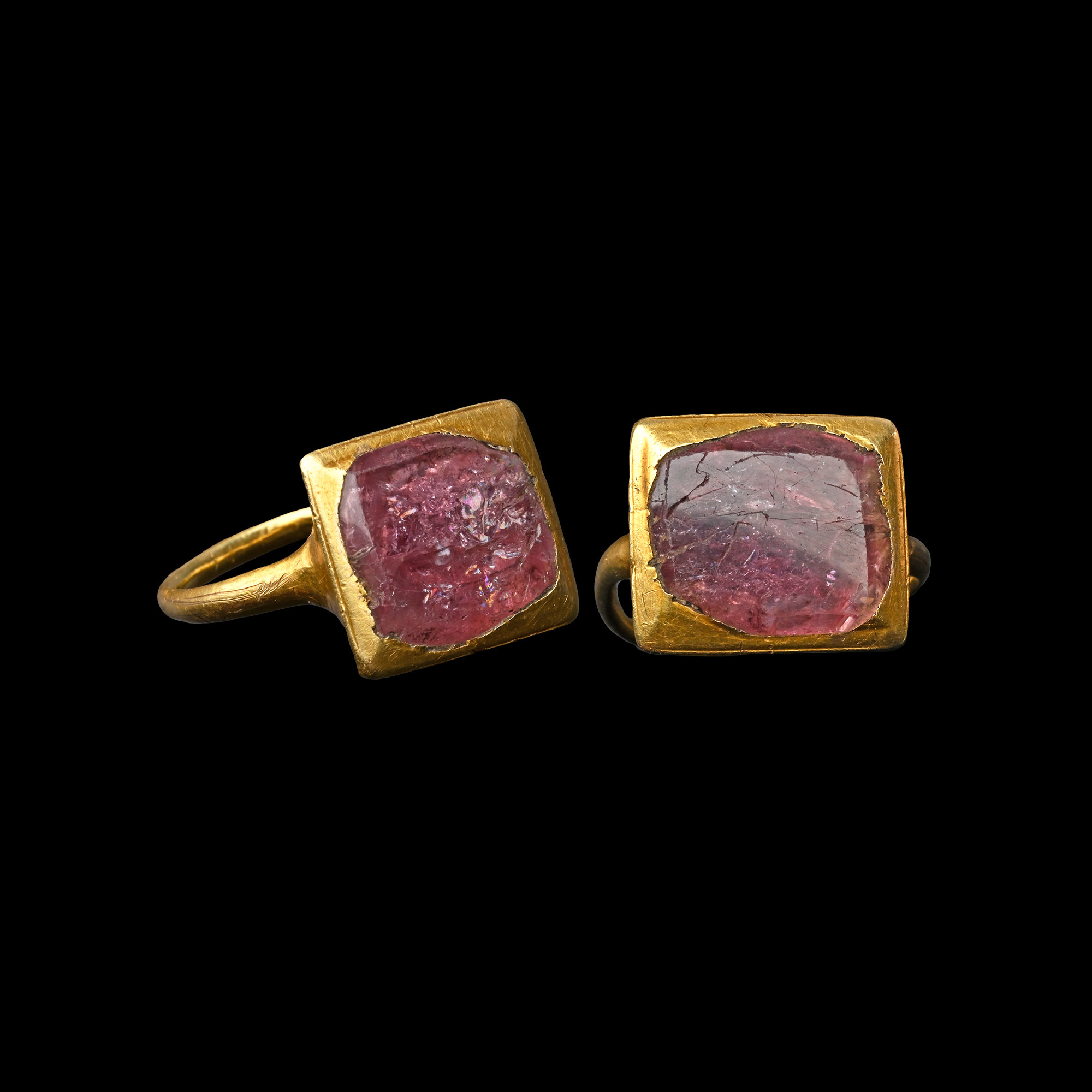
Spanish Gold Ring with a Table-Cut Red Spinel
16TH-17TH CENTURY A.D.
1 in. (6.93 grams, 24.30 mm overall, 17.05 mm internal diameter (approximate size British M 1/2 , USA 6 1/4, Europe 13.09, Japan 12)).
A substantial ring with a box-shaped bezel set with a table-cut red spinel of deep purplish-red hue, the reverse of the bezel convex with chamfered ends.
ProvenancePrivate English collection, formed between the late 1970s and early 1990s.
Private collection, UK.
This lot has been checked against the Interpol Database of stolen works of art and is accompanied by search certificate number no.12996-245986.
The box bezel is typical of both Spanish and Islamic goldsmithing traditions. The small pointed projection at the rear of the hoop, however, is not a common feature in Spanish rings but is a distinctive hallmark of Islamic goldwork — a form ultimately rooted in Middle Eastern traditions of the Sasanian, Fatimid, and Mamluk periods. This detail likely reached Spain through the transmission of techniques from the Middle East into Islamic North Africa, and subsequently into the goldsmithing repertoire of al-Andalus. These forms were adapted by Spanish goldsmiths to accommodate the tastes of a Christian clientele, reflecting the deep and enduring influence of Islamic craftsmanship in post-Reconquista Spain.
CONDITIONTimeLine Auctions follows a vetting process to ensure the authenticity and legality of all items, reinforcing our commitment to integrity and responsible trading. Each antiquity, antique, and coin lot undergoes thorough examination by a vetting committee of at least ten external specialists, professional trade association members, scientists, and archaeologists: Our Vetting Process
AUCTIONS:
TimeLine is a leading auction house specialising in antiquities, ancient art, collectables, natural history, coins, medals, and books. Our auctions offer museums, collectors, historians, and enthusiasts the opportunity to acquire unique and historically significant pieces.
-
The Royal Navy's First Invincible Shipwreck Gun Flint Pair
1758 A.D.Sold for (Inc. bp): £13
Comprising two tongue-shaped flints. 27 grams total, 37-38 mm
From the private collection of author and historian Dr DeWitt Bailey, one of the global authorities on the confederate army in the US civil war; thence by descent to his grandson. Accompanied by certificates of authenticity and other information. -
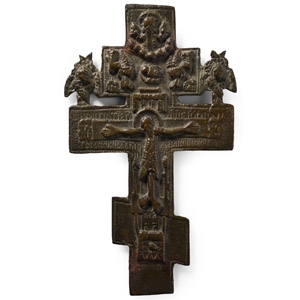
Russian Orthodox Bronze Cross with Prayers
19th century A.D.Sold for (Inc. bp): £111
Depicting the Saviour on the cross, the titulum inscribed in Cyrillic ‘Jesus of Nazareth, King of the Jews’; long inscriptions in Old Church Slavonic and traditional elements of the ‘Stavrosis’ surrounding the cross: sponge on reed, spear and a skull set on stones marking the site as Golgotha, twisted cords or wire, and the walls of Jerusalem; on the upper part of the cross, angels with cloth-covered hands and over them a frontal view of the torso of God with his arms raised above clouds; inscribed prayers in Old Church Slavonic and file marks on the back of the casting. 65.4 grams, 11.1 cm
Acquired from Chris Martin-Zakheim, Iconastas, 5 Piccadilly Arcade, London SW1. From the private collection of a West London, UK, gentleman, formed since the early 2000s.
Orthodox travel icons were used by the faithful to carry a sacred representation with them during their journeys, offering protection and a constant spiritual connection. The icon features meticulous craftsmanship with intricate details of the Passion and Death of the Saviour, according to the Byzantine iconography. -
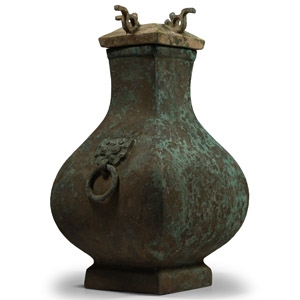
Chinese Archaic Style Bronze Vessel
20th century A.D.Estimate: £100 - 140 (+bp*)
Opening Bid: £50
Square in section and piriform in profile with taotie masks supporting drop handles, domed lid with four dragon appliqués. 3.2 kg, 34 cm high
Ex West Country, UK, collection, 1990s, and Desmond Morris. This lot is accompanied by an illustrated lot declaration signed by the Head of the Antiquities Department, Dr Raffaele D'Amato.
