
Loading, please wait...
LOT 0540
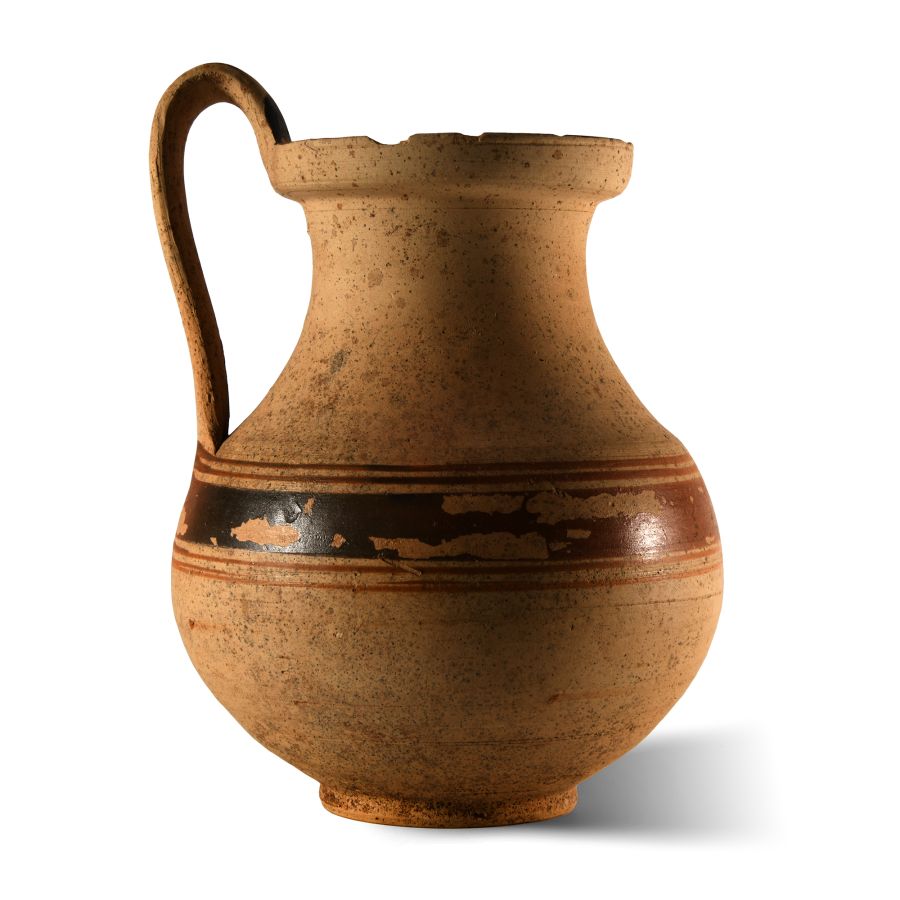
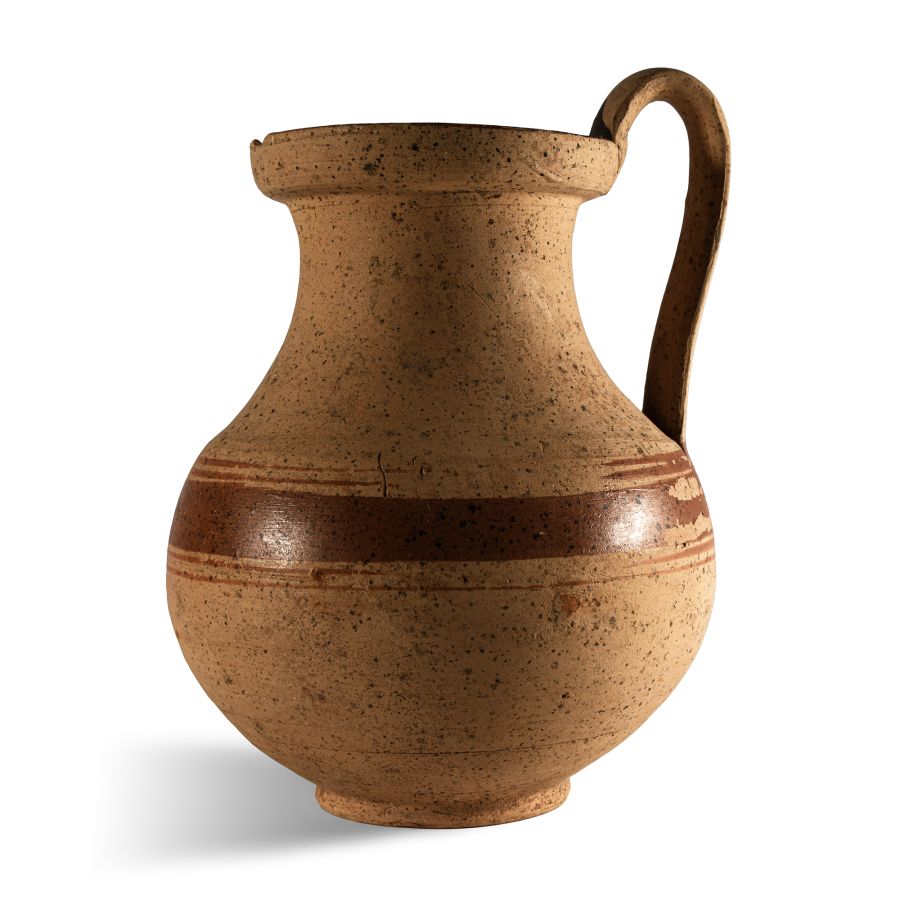
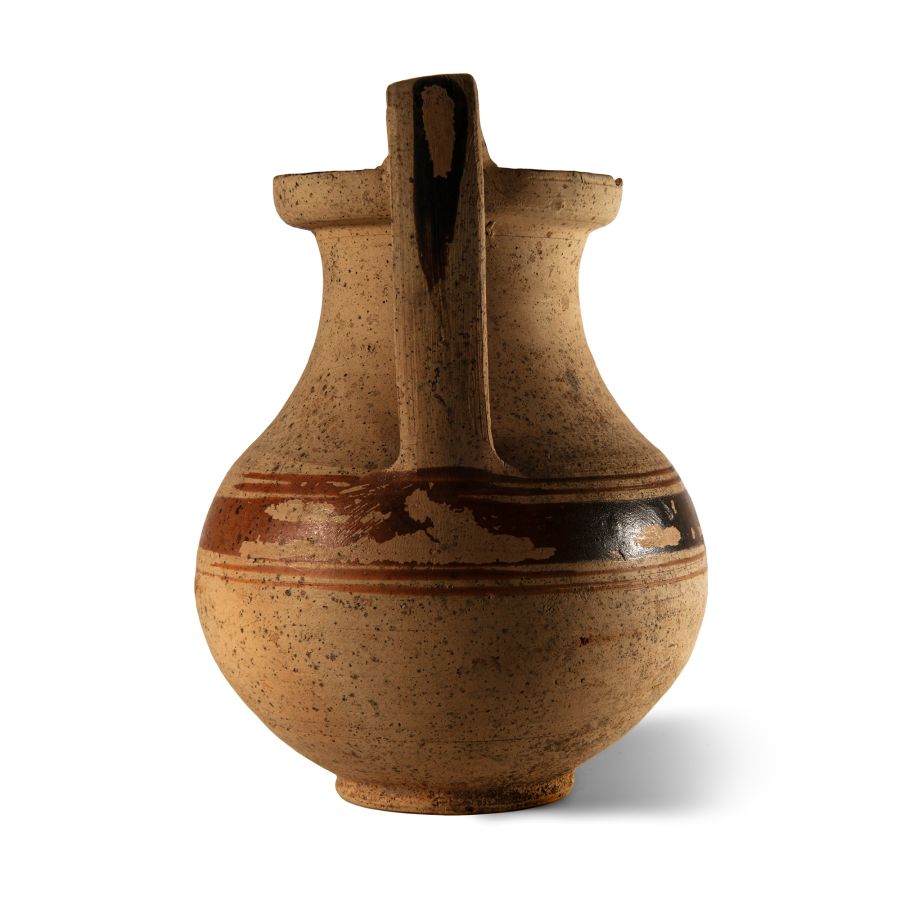
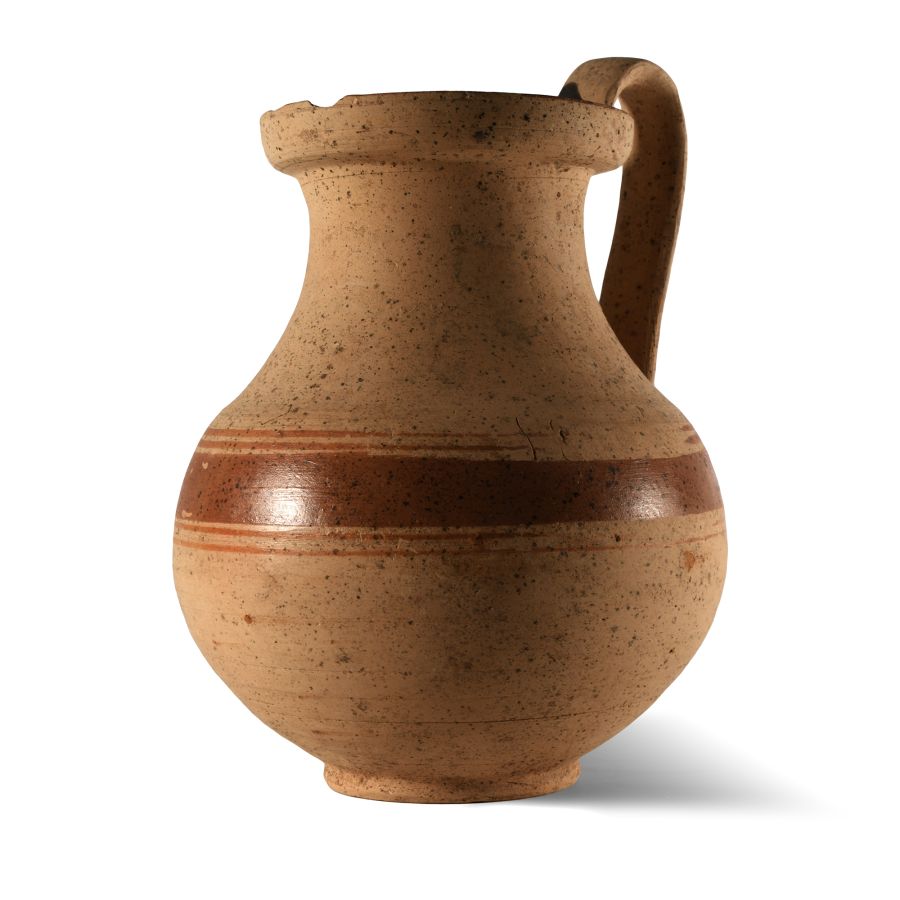
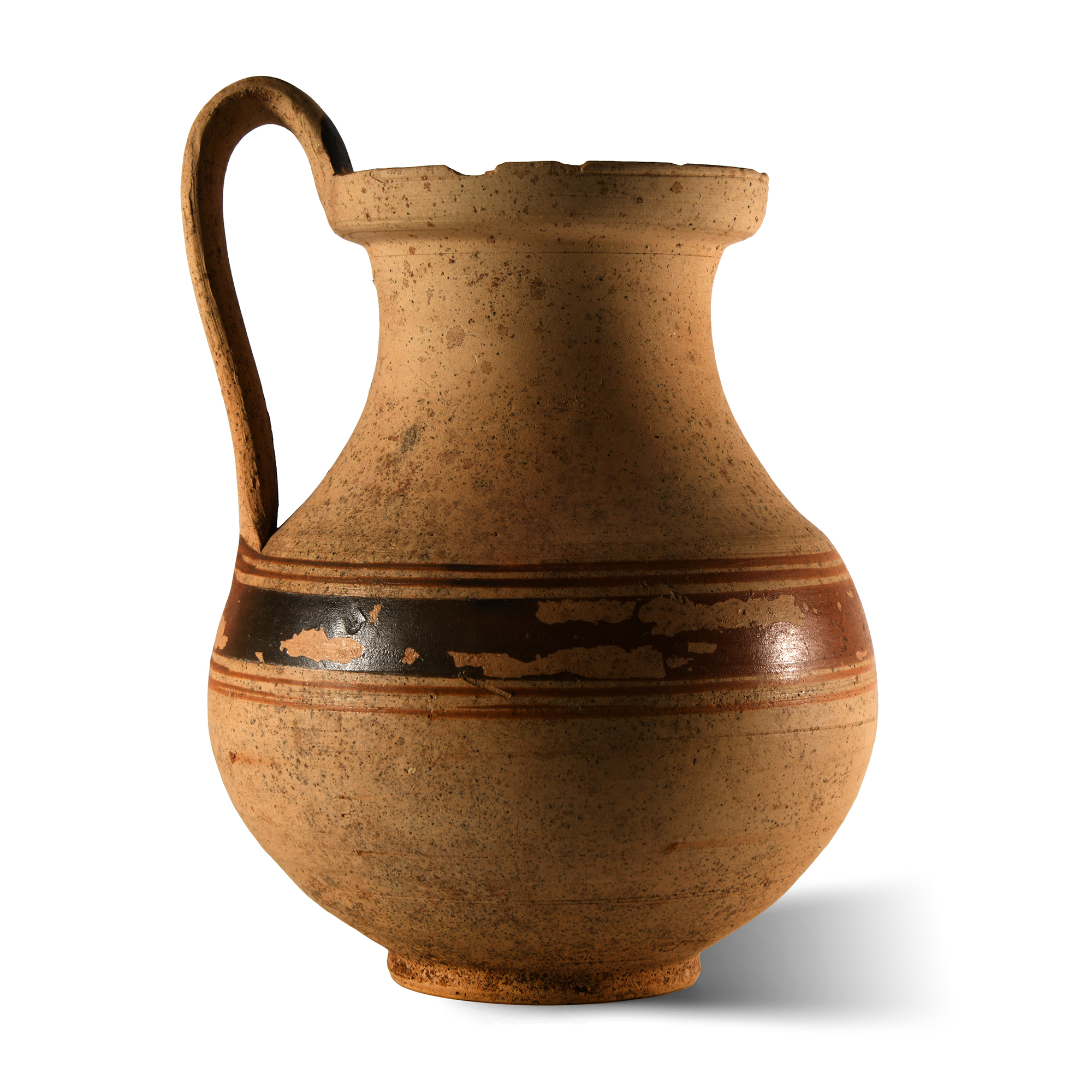
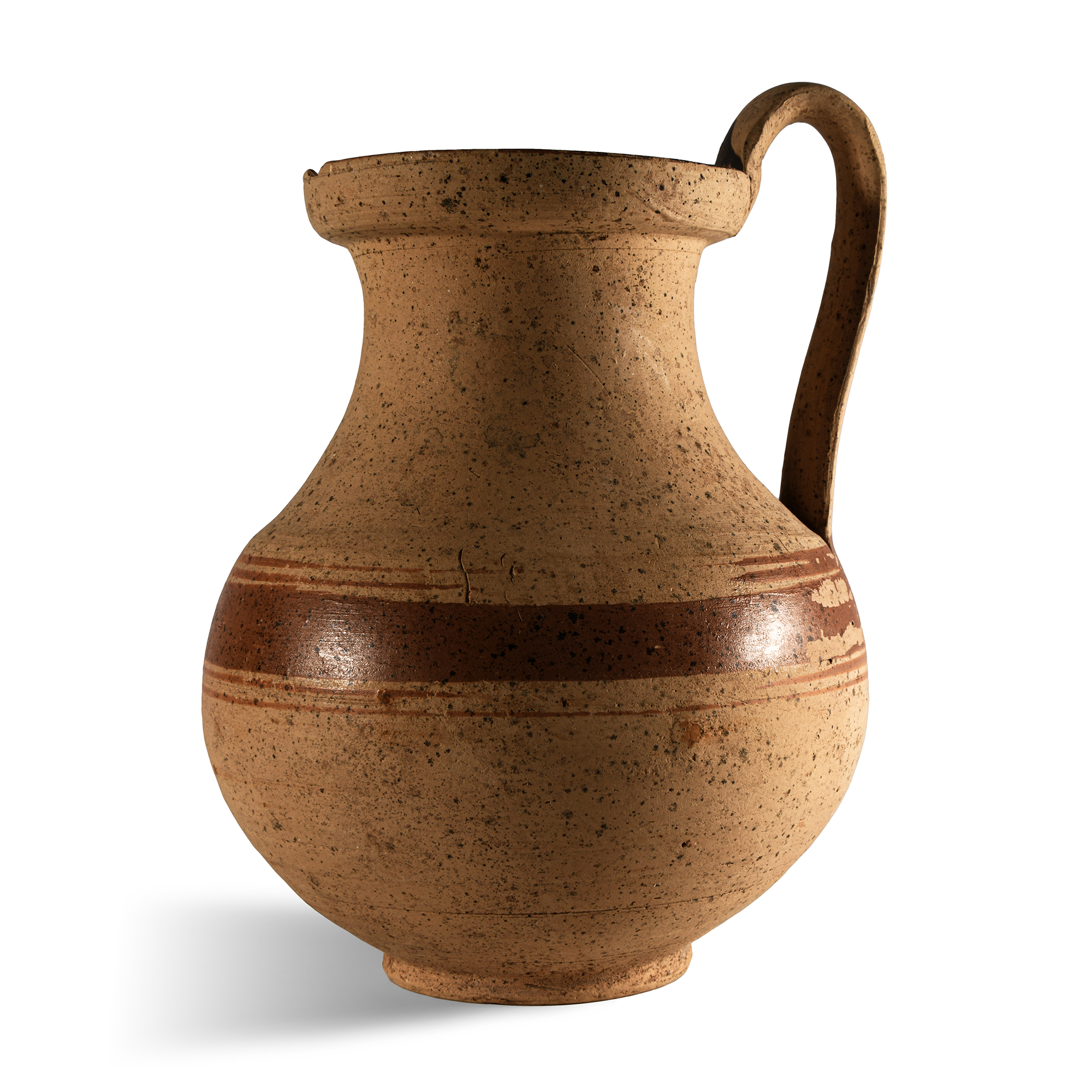
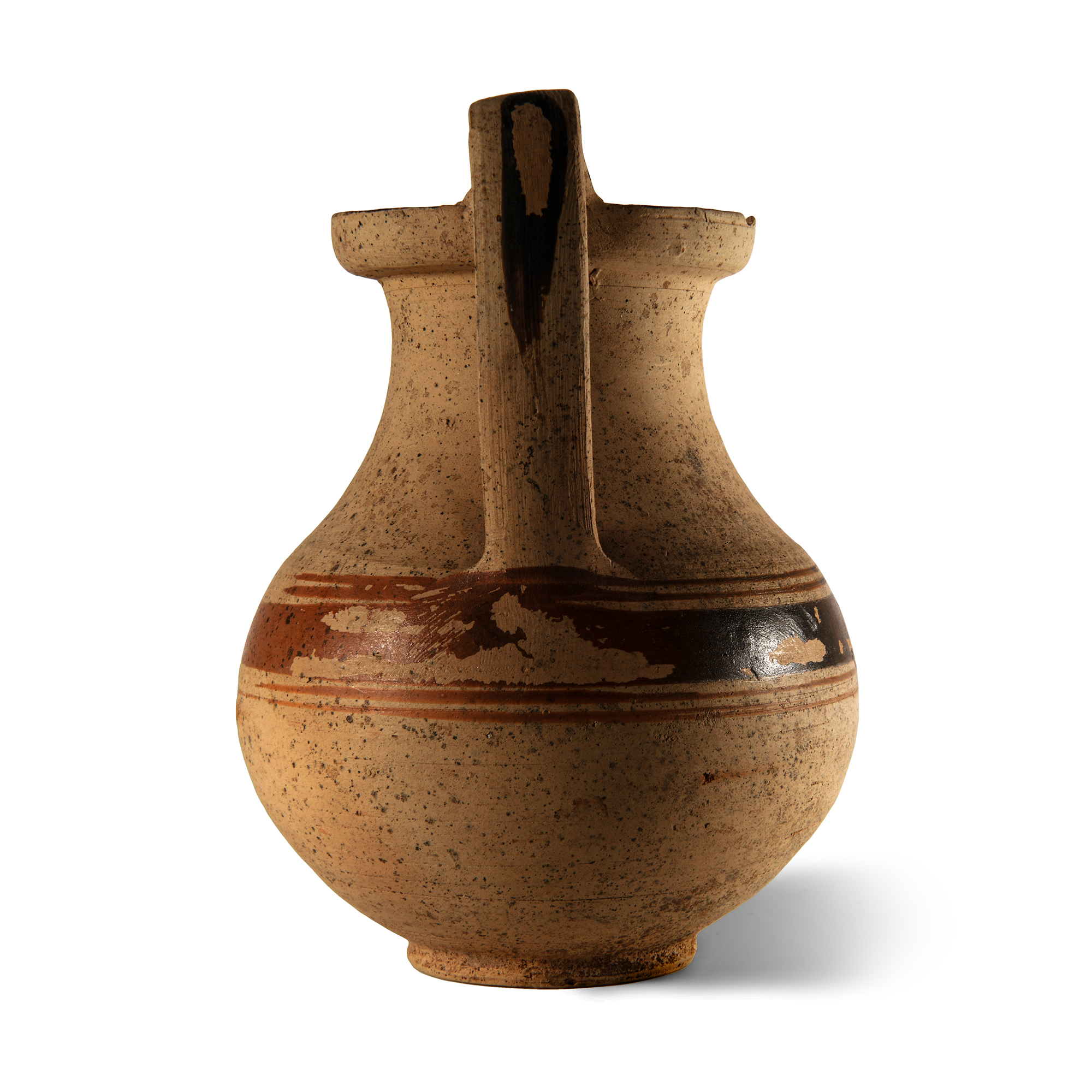
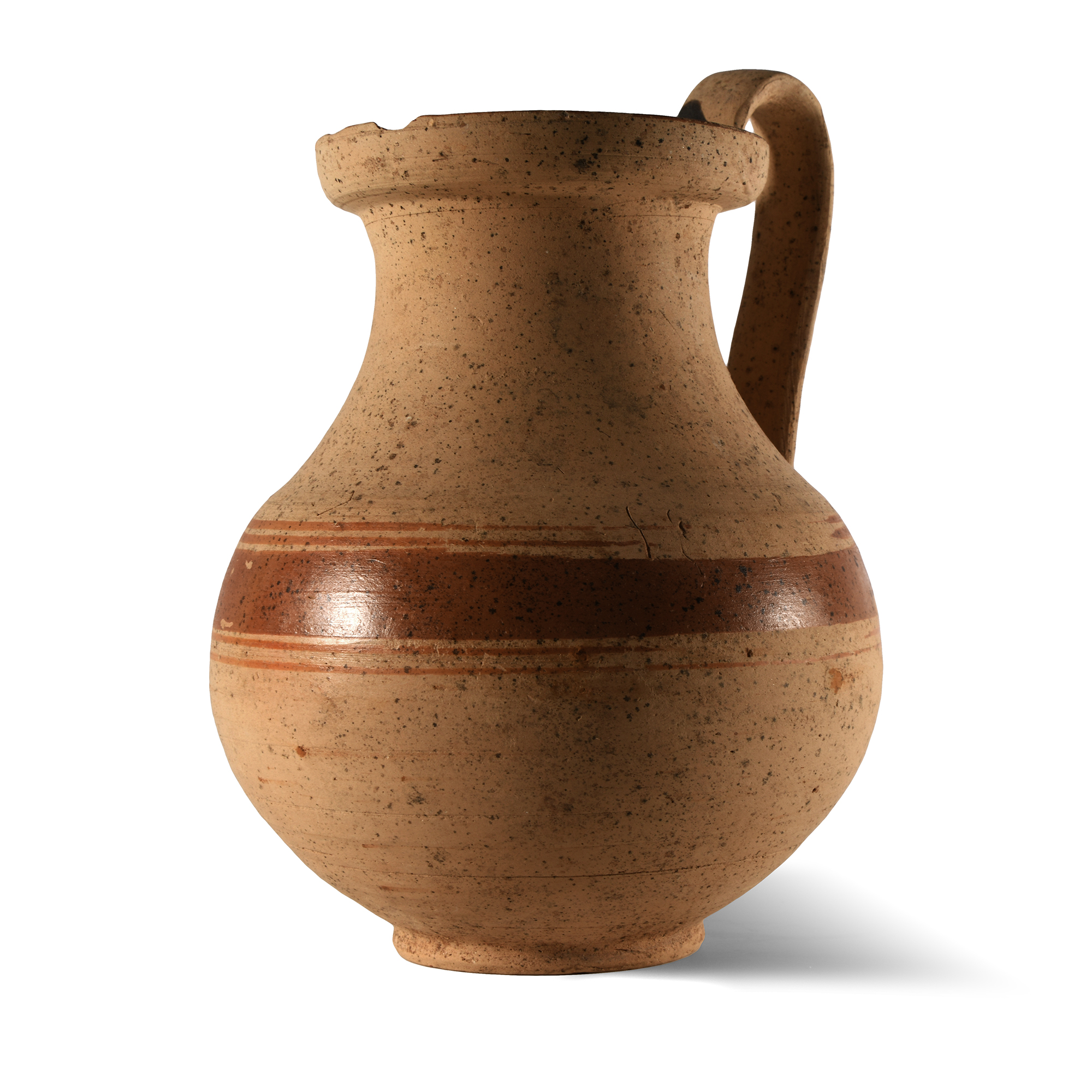
South Italian Terracotta Painted Jug
4TH-2ND CENTURY B.C.
5 3/8 in. (227 grams, 13.5 cm high).
Piriform with convex rim, lentoid-section handle and discoid foot; polychrome painted bands and lines decorating the equator and inner mouth, dash to handle.
ProvenanceAcquired in Europe before 1994.
CONDITIONTimeLine Auctions follows a vetting process to ensure the authenticity and legality of all items, reinforcing our commitment to integrity and responsible trading. Each antiquity, antique, and coin lot undergoes thorough examination by a vetting committee of at least ten external specialists, professional trade association members, scientists, and archaeologists: Our Vetting Process
AUCTIONS:
TimeLine is a leading auction house specialising in antiquities, ancient art, collectables, natural history, coins, medals, and books. Our auctions offer museums, collectors, historians, and enthusiasts the opportunity to acquire unique and historically significant pieces.
LOT 0540
South Italian Terracotta Painted Jug
Estimate £350 - 450€410 - 520 (for guidance only)$470 - 610 (for guidance only)
-
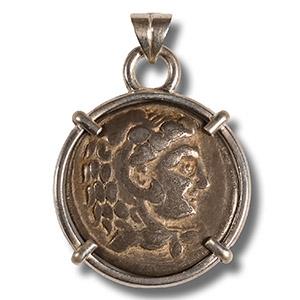
Greek Silver Alexander the Great Tetradrachm Coin Pendant
3rd century B.C. and laterSold for (Inc. bp): £286
Silver tetradrachm with profile bust to obverse, seated figure with bird to reverse; clasp-mounted in a modern silver frame with ring and baile. 21.1 grams, 41 mm
Ex German art market, 2000s. Acquired from an EU collector living in London. From the collection of Surrey, UK, gentleman. -
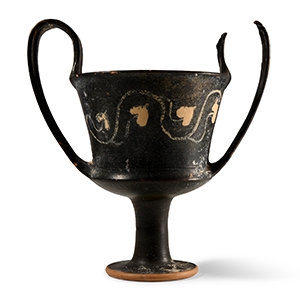
South Italian Blackware Kantharos with Ivy Branch
5th-4th century B.C.Estimate: £1,200 - 1,700 (‡+bp*)
Opening Bid: £667
The high-handled drinking cup with carinated lower body, discoid feet and vines painted to the equator. 525 grams, 22.2 cm
Acquired in the late-1980. Ex S.A. collection. -
.jpg)
Red Polished Black Top Ware 'Tulip' Bowl with Animals
Early Cypriot I-II Period, 2300-2100 B.C.Sold for (Inc. bp): £208
Mammiform bowl with deep body and pointed base; two vertical concave lugs, one of which is pierced; fired black above and in the interior, and red below, all decorated with white lime-filled zigzags and circles on the body, with semicircles at the rim; repaired. 426 grams, 17 cm wide
TBC. Acquired from Chrisitie’s, London, 29 April 2009, no.315./ From an important Cambridgeshire estate; thence by descent.
