
Loading, please wait...
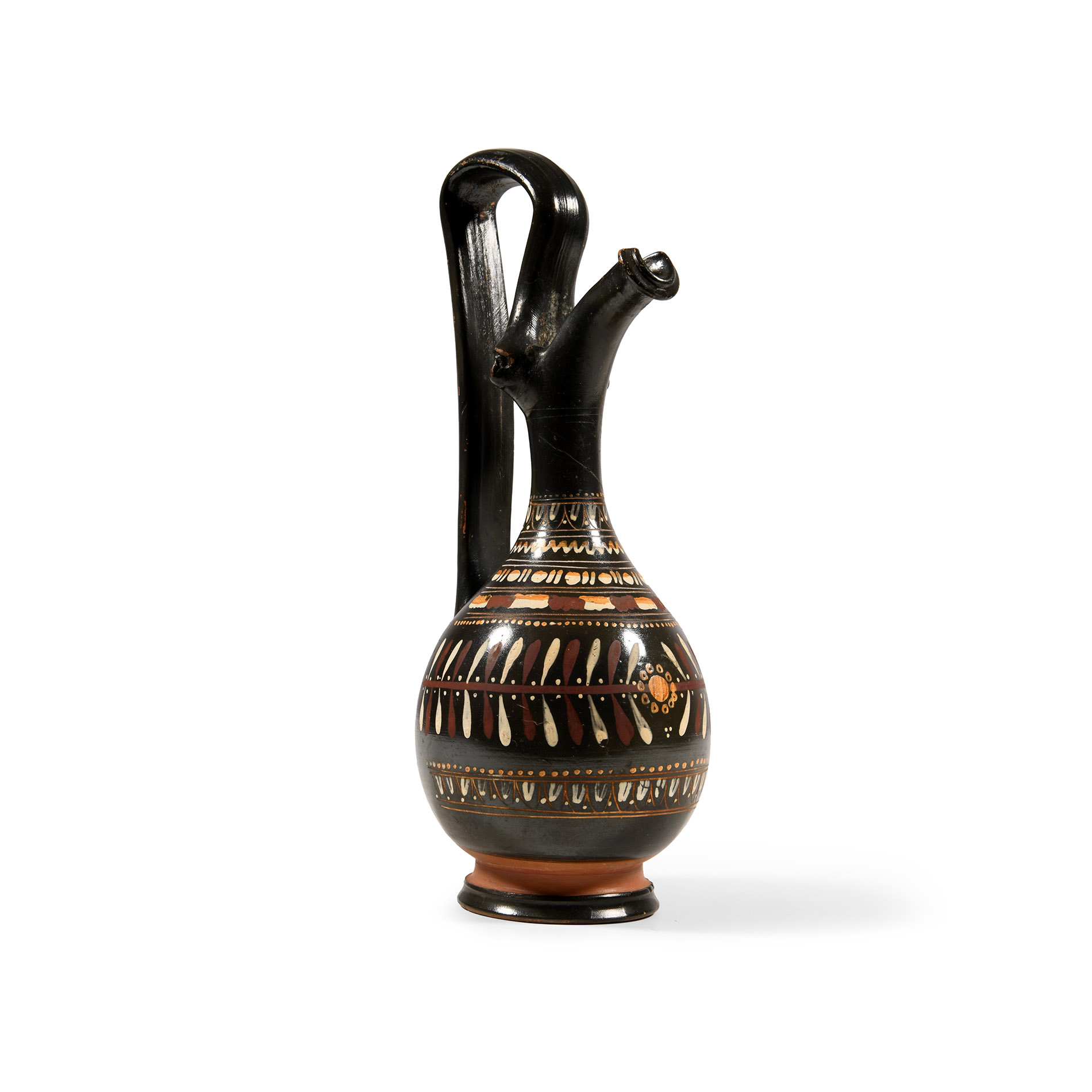
LOT 0080
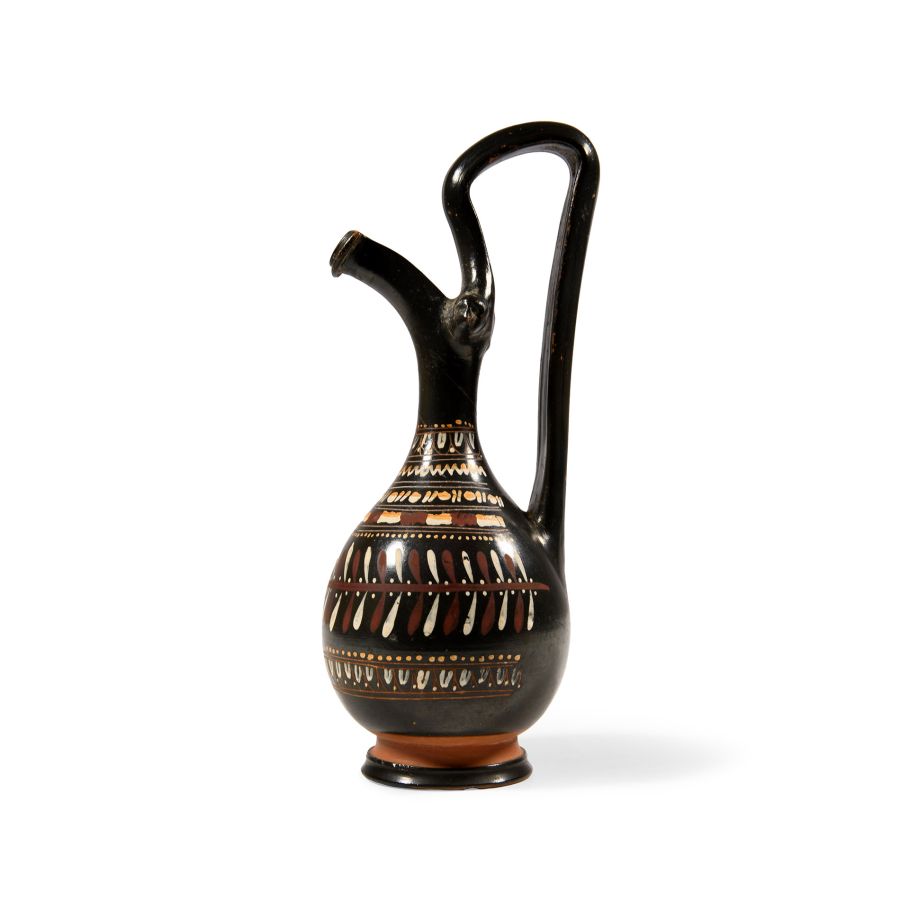
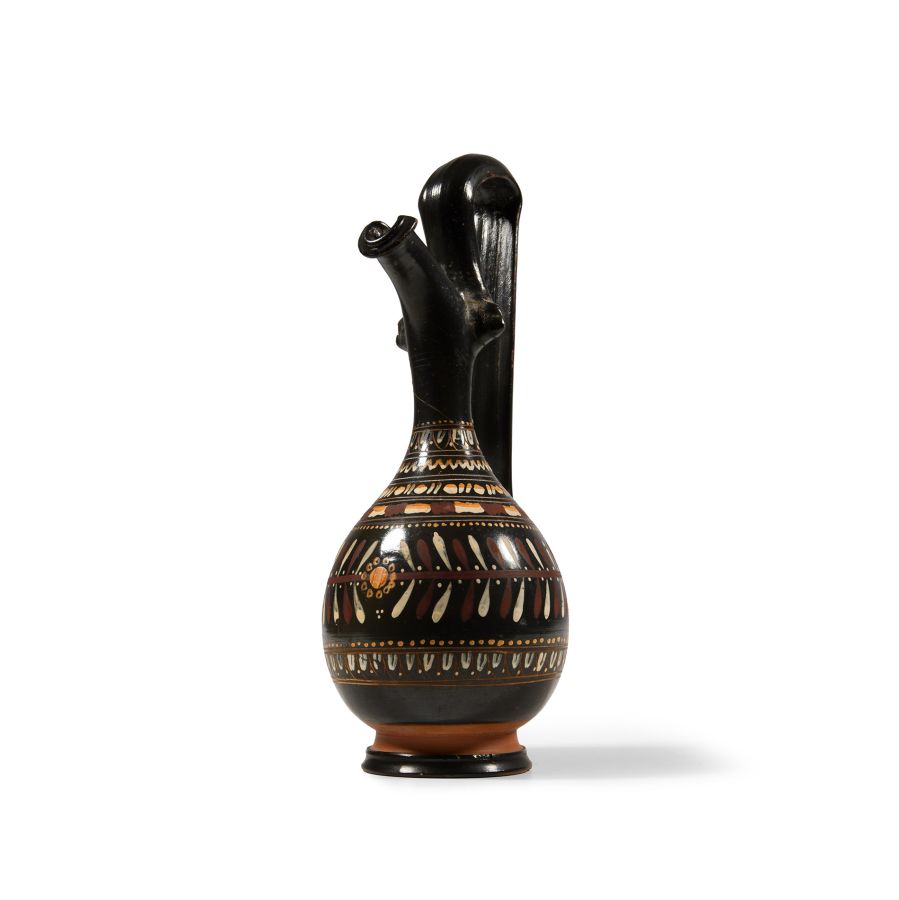
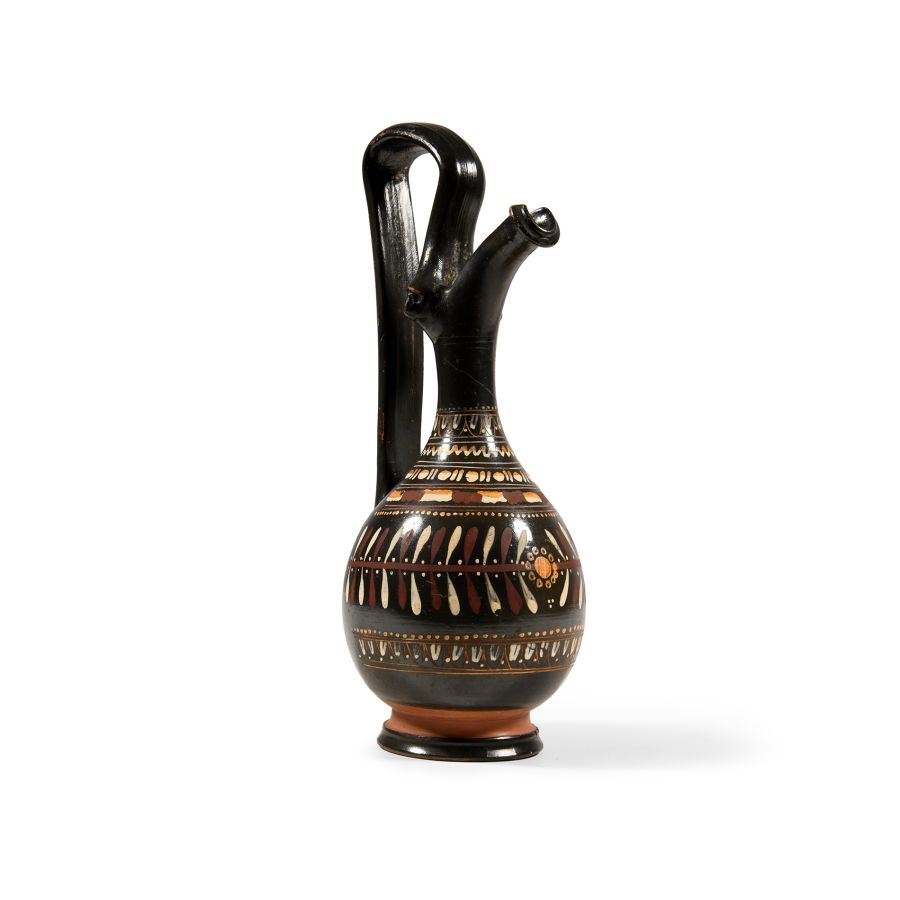
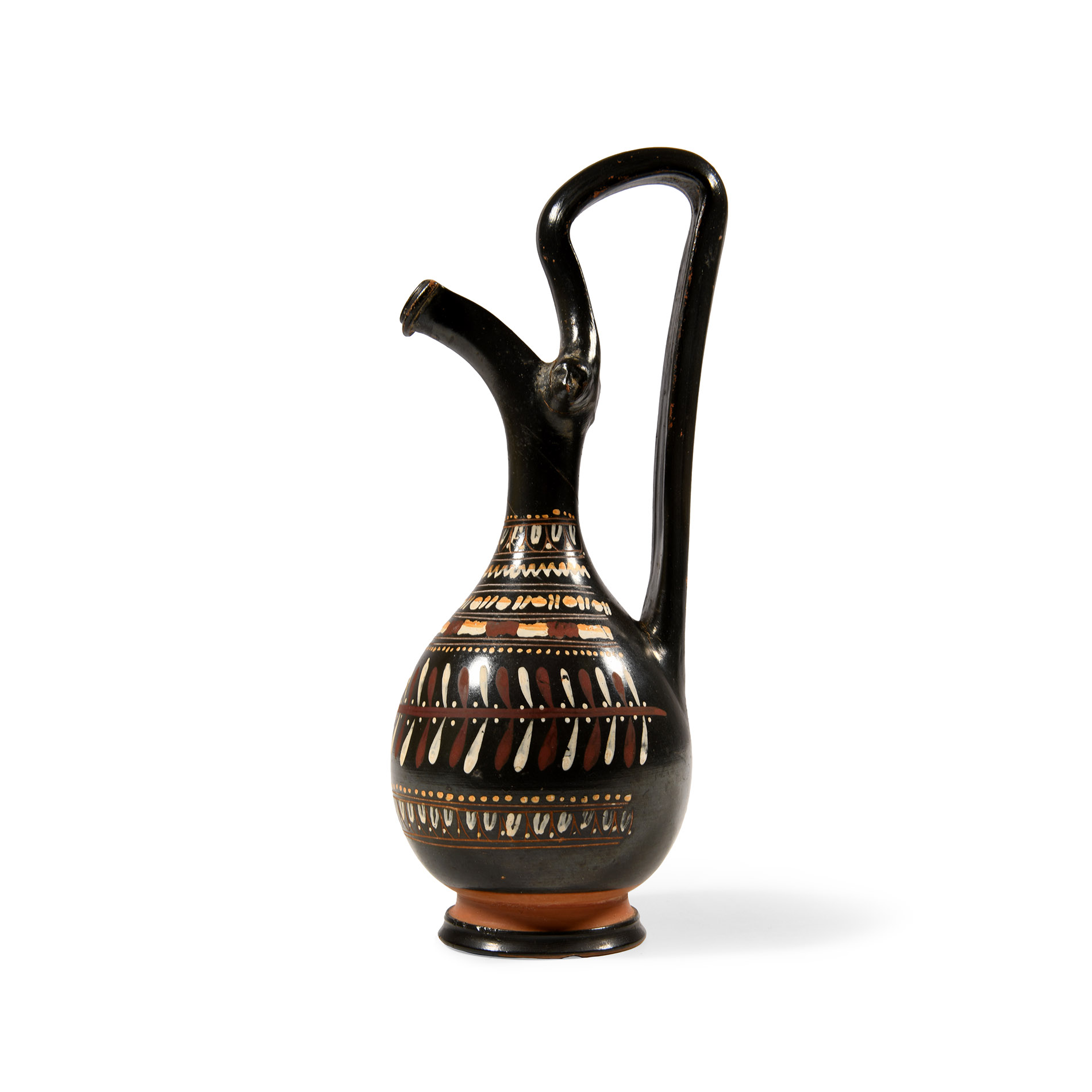
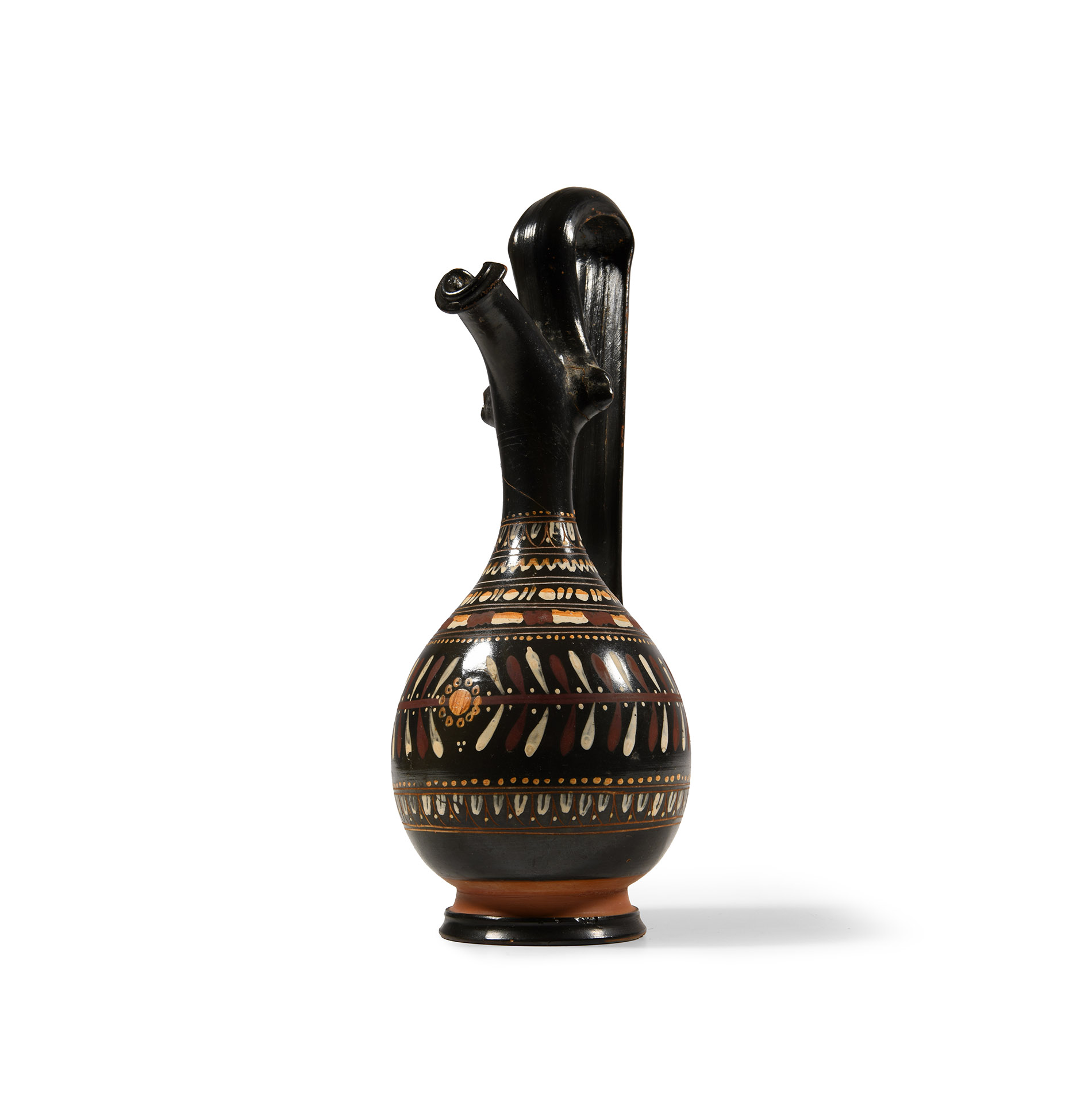
South Italian Gnathian Ware Pottery Oinochoe
CIRCA 4TH CENTURY B.C.
8 in. (193 grams, 20.2 cm high).
Piriform bodied with U-shaped spout and high handle, polychrome painted egg, zigzag, bar, dot and laurel pattern with a flower arranged in rows to the front face.
ProvenanceAcquired in Europe before 2001.
European collection.
Cf. The British Museum, museum number 1867,0508.1206, for similar; cf. The Metropolitan Museum, New York, accession number 1971.11.20, for similar.
CONDITIONTimeLine Auctions follows a vetting process to ensure the authenticity and legality of all items, reinforcing our commitment to integrity and responsible trading. Each antiquity, antique, and coin lot undergoes thorough examination by a vetting committee of at least ten external specialists, professional trade association members, scientists, and archaeologists: Our Vetting Process
AUCTIONS:
TimeLine is a leading auction house specialising in antiquities, ancient art, collectables, natural history, coins, medals, and books. Our auctions offer museums, collectors, historians, and enthusiasts the opportunity to acquire unique and historically significant pieces.
LOT 0080
South Italian Gnathian Ware Pottery Oinochoe
Estimate £800 - 1,000€930 - 1,160 (for guidance only)$1,080 - 1,350 (for guidance only)
-
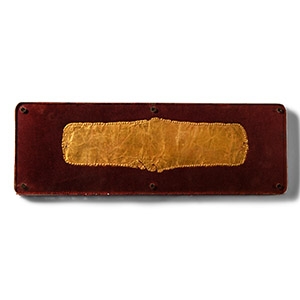
Greek Gold Funerary Diadem
Circa 323-31 B.C.Sold for (Inc. bp): £585
Hammered from a thin gold leaf, a repoussé border of small pellets to the outer edge; mounted in custom-made perspex case with fabric backing. 72 grams total, 12.3 cm wide (18.2 cm wide including perspex mount)
Ex European collection, 1960s. Accompanied by a previous catalogue information slip. -
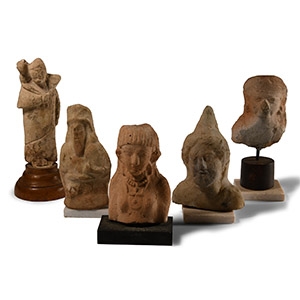
Phoenician Terracotta Figure Collection
Circa 6th-5th century B.C.Sold for (Inc. bp): £1,040
Including standing figure with a lamb across his shoulders, female with disc pendant between her breasts, bearded male bust with pointed headgear and other types, each on a custom-made stand. 690 grams total, 10.5-14.5 cm including stand
From a collection acquired on the UK art market from various auction houses and collections mostly before 2000. From an important Cambridgeshire estate; thence by descent. -
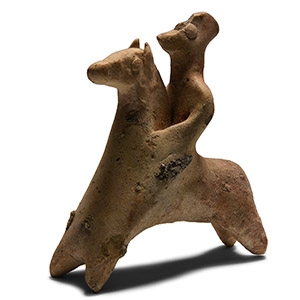
Archaic Greek Terracotta Horse and Rider Statuette
7th-5th century B.C.Sold for (Inc. bp): £234
Integrally modelled horse and rider with applied pellet eyes, traces of red pigment. 112 grams, 96 mm high
From a collection acquired on the UK art market from various auction houses and collections mostly before 2000. From an important Cambridgeshire estate; thence by descent.
Terracotta figurines of horse and rider were common grave offerings in Boeotia, northwest of Attica, particularly during the 6th century B.C. Representations of warriors on horseback were already widespread in the Geometric Period, and widely used in Cyprus during this period. The rider, although influenced by Cypriot designs, does not show typical Cypriot characteristics.
