
Loading, please wait...
LOT 0590
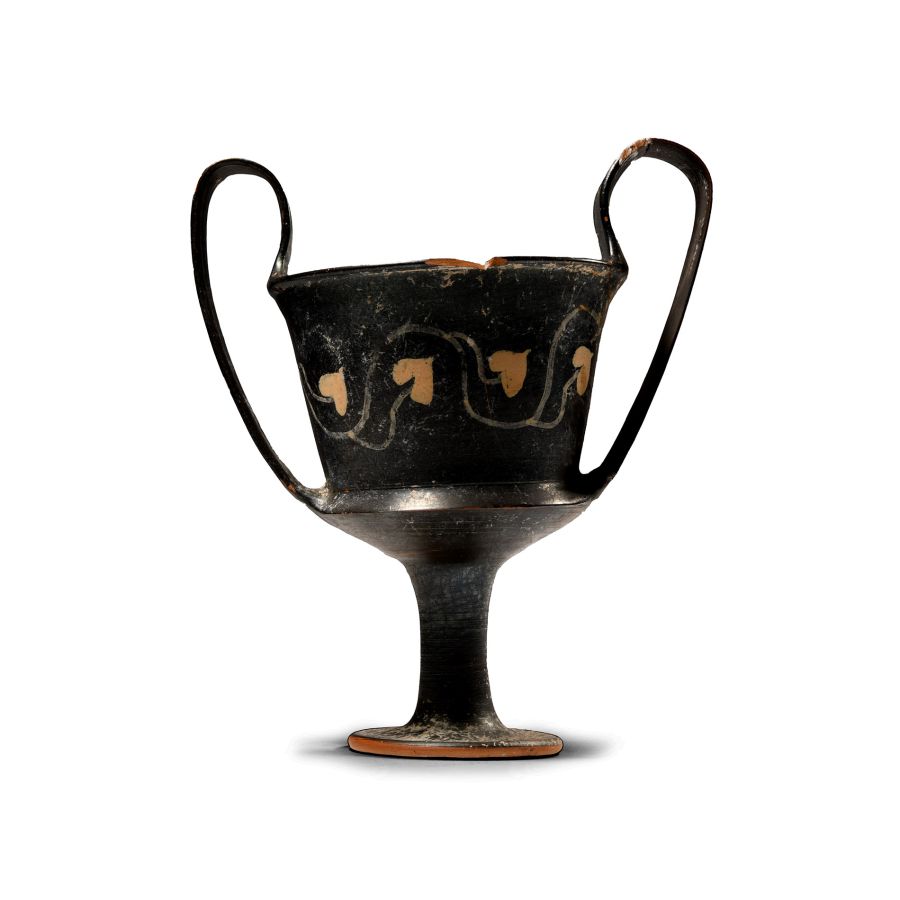
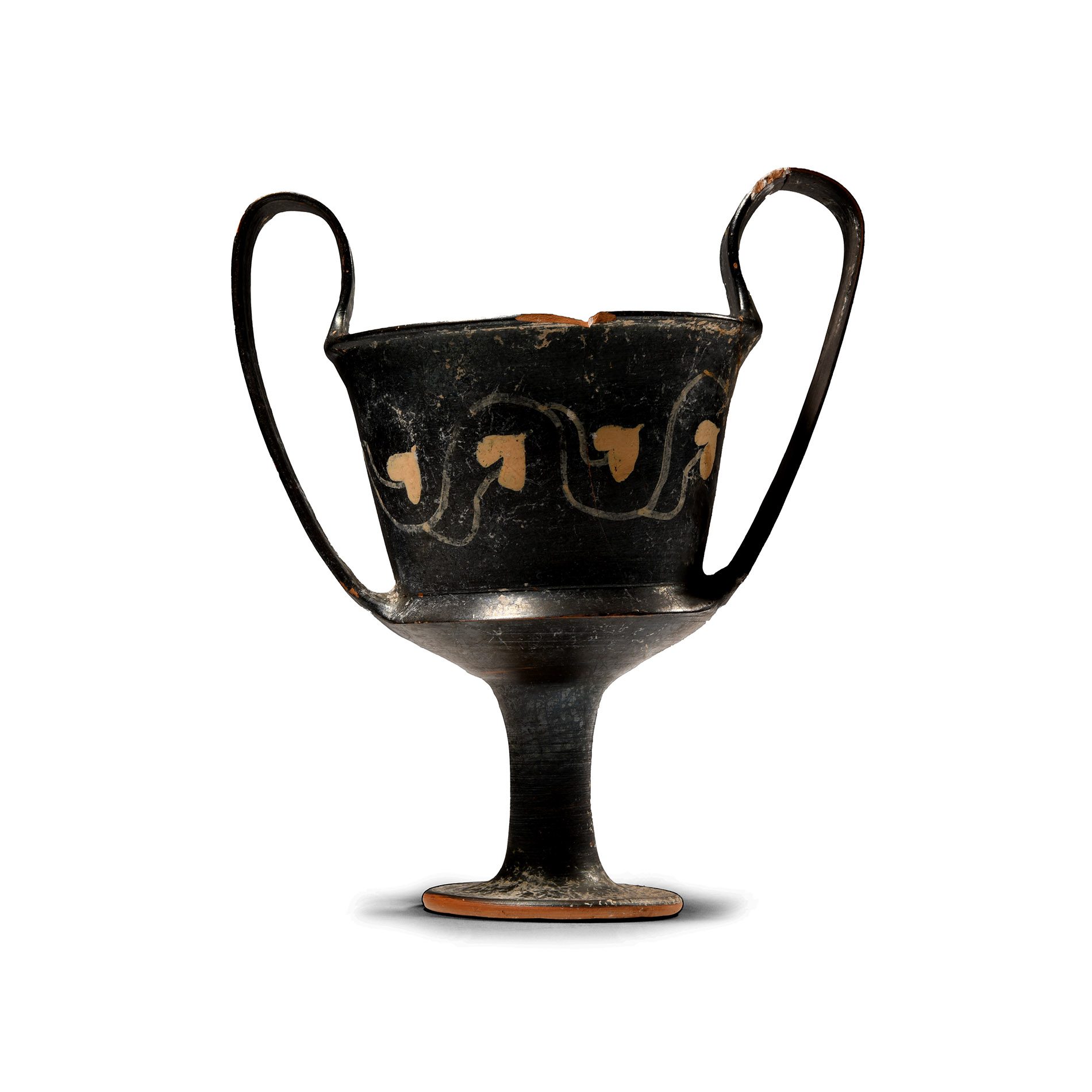
South Italian Blackware Kantharos with Ivy Branch
5TH-4TH CENTURY B.C.
9 1/8 in. (472 grams, 23.3 cm high).
The high-handled drinking cup with carinated lower body, discoid feet and vines painted to the equator.
ProvenanceAcquired in Europe before 1994.
LiteratureCf. The Metropolitan Museum, New York, accession number 1993.197, for a similar 5th century Boeotian example.
CONDITIONTimeLine Auctions follows a vetting process to ensure the authenticity and legality of all items, reinforcing our commitment to integrity and responsible trading. Each antiquity, antique, and coin lot undergoes thorough examination by a vetting committee of at least ten external specialists, professional trade association members, scientists, and archaeologists: Our Vetting Process
AUCTIONS:
TimeLine is a leading auction house specialising in antiquities, ancient art, collectables, natural history, coins, medals, and books. Our auctions offer museums, collectors, historians, and enthusiasts the opportunity to acquire unique and historically significant pieces.
LOT 0590
South Italian Blackware Kantharos with Ivy Branch
Estimate £1,500 - 2,000€1,740 - 2,320 (for guidance only)$2,030 - 2,700 (for guidance only)
-
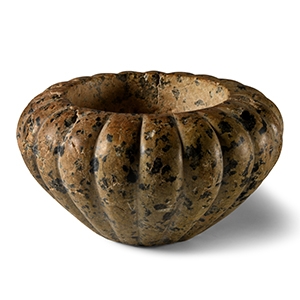
Minoan Serpentine Blossom Bowl
1700-1450 B.C.Estimate: £12,000 - 17,000 (+bp*)
Opening Bid: £6,000
Finely worked in the form of a blossoming lotus flower with tightly arranged delicate petals separated by deep grooves, narrow flat base and high shoulder. 408 grams, 91 mm wide
Owned by rock and roll legend Sir Mick Jagger, prior to 1976. Gifted by Sir Mick Jagger to his friend Hon. Colin Tennant, who became the 3rd Baron Glenconner in 1983, at his infamous Golden Ball 50th birthday party on the prestigious island of Mustique, The Grenadines, on 22 November 1976. During the celebrations Mick Jagger's wife Bianca Pérez-Mora Macías was carried into the party on a litter carried by nude fishermen, with strategically positioned gold coconut shells, in respect of the presence of Princess Margaret. From the private collection of Baron Glenconner, thence by descent 2010. Accompanied by an original handwritten note by Baron Glenconner. This lot has been checked against the Interpol Database of stolen works of art and is accompanied by search certificate no.12079-214453. For an addendum to the provenance see https://timelineauctions.com/stories/Satisfaction-for-the-winning-bidder/19/ -
.jpg)
Scythian Bronze Mirror with Panther Handle
5th-4th century B.C.Sold for (Inc. bp): £1,300
Discoid mirror with raised rim, ribbed rectangular handle with lateral lobes at base, transverse ribbed finial with stylised feline above modelled in the round; repaired and mounted on a custom-made stand. 1.85 kg total, 44 cm high including stand
Acquired 1971-1971. From the collection of the vendor's father. Ex London, UK, collector. Property of a Essex gentleman. -
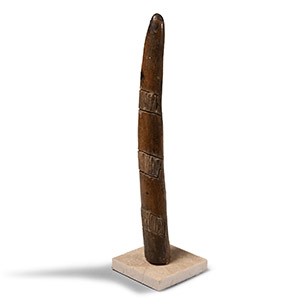
Cypriot Terracotta Votive Horn
2100-1850 B.C.Sold for (Inc. bp): £247
Tapering round-section votive with reserved bands of dense linear hatching; repaired and mounted on a custom made display stand. 127 grams total, 18 cm high
From the celebrated personal collection of art formed by the famous anthropologist, artist, and television presenter Desmond Morris. with Christie’s, South Kensington, 14 May 2002, no.19 (part). From a collection acquired on the UK art market from various auction houses and collections mostly before 2000. From an important Cambridgeshire estate; thence by descent. Accompanied by copies of the relevant Christie's catalogue pages.
