
Loading, please wait...
LOT 0071
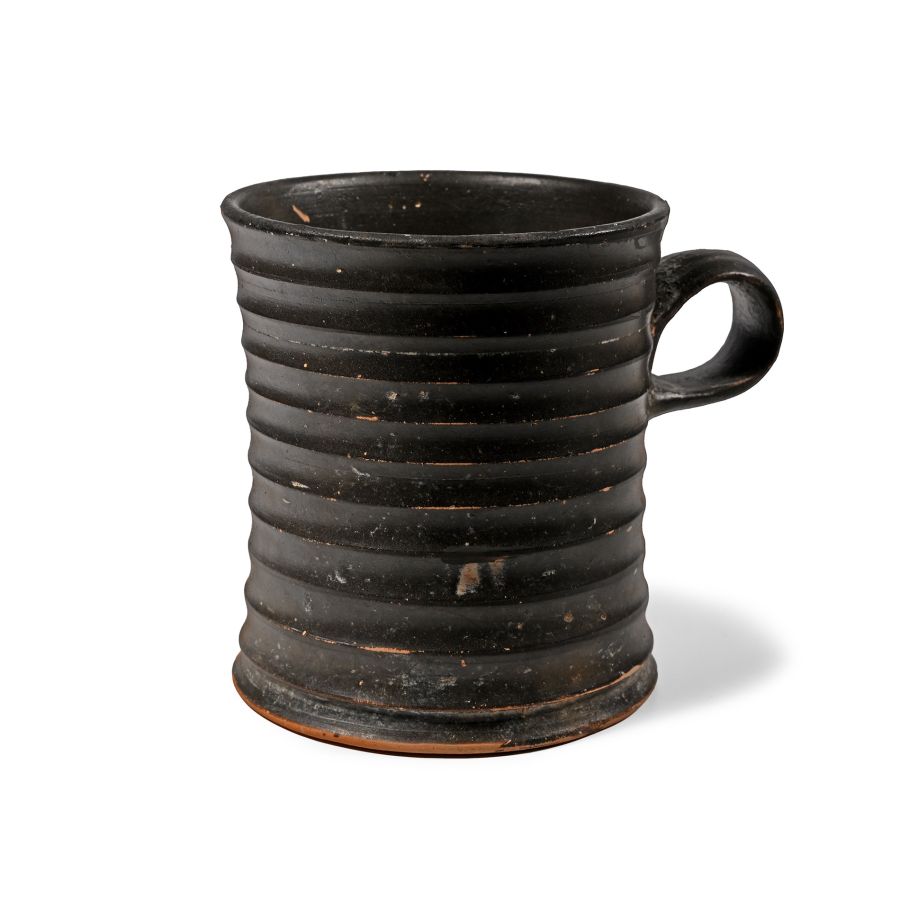
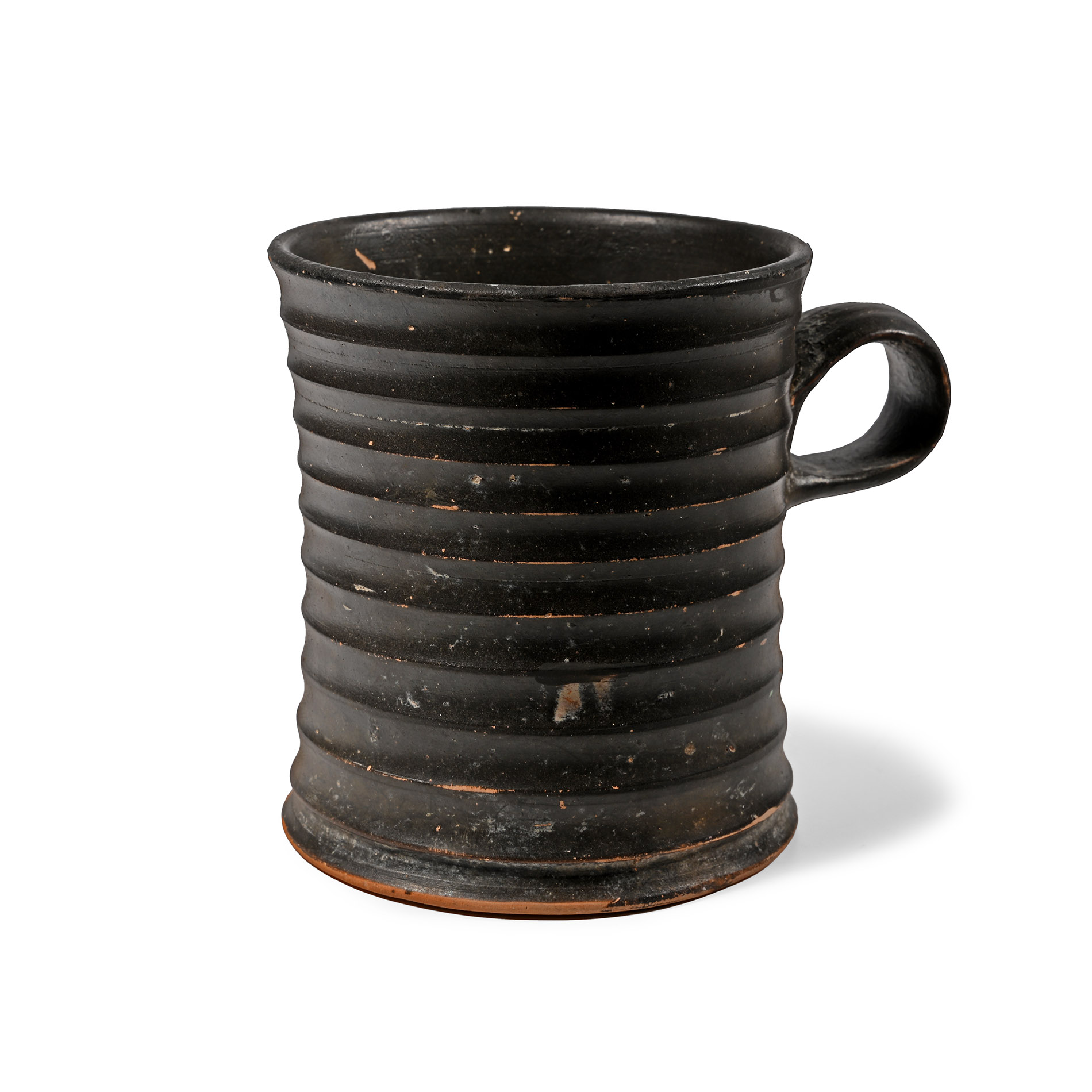
South Italian Black-Glazed Ribbed Mug
5TH-4TH CENTURY B.C.
3 1/4 in. (13.2 grams, 85 mm).
Tubular with flared foot and raised rim to underside, horizontal ribbing to the sidewall, small loop handle.
ProvenanceAcquired in the mid 1980s-1990s.
Private collection, Switzerland, thence by descent.
Private collection, since the late 1990s.
This lot has been checked against the Interpol Database of stolen works of art and is accompanied by search certificate number no.12215-222327.
Cf. similar in the British Museum under accession no. 2000,1030.1.
CONDITIONTimeLine Auctions follows a vetting process to ensure the authenticity and legality of all items, reinforcing our commitment to integrity and responsible trading. Each antiquity, antique, and coin lot undergoes thorough examination by a vetting committee of at least ten external specialists, professional trade association members, scientists, and archaeologists: Our Vetting Process
AUCTIONS:
TimeLine is a leading auction house specialising in antiquities, ancient art, collectables, natural history, coins, medals, and books. Our auctions offer museums, collectors, historians, and enthusiasts the opportunity to acquire unique and historically significant pieces.
LOT 0071
South Italian Black-Glazed Ribbed Mug
Estimate £1,800 - 2,400€2,090 - 2,780 (for guidance only)$2,430 - 3,240 (for guidance only)
-
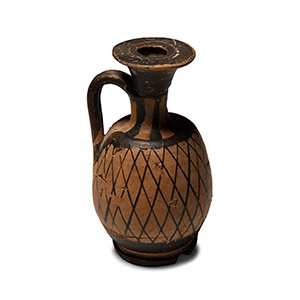
Greek Net-Painted Black-Figure Lekythos
Apulian, 4th century B.C.Sold for (Inc. bp): £416
The ovoid body decorated with cross-hatching, solid band to the shoulder and vertical bands to the slender neck, trumpet-shaped mouth, strap handle and discoid foot; repaired. 72 grams, 91 mm
Ex Mister X. (1931-2017) private collection. Sold in the benefit of the 'Croix-Rouge of Monaco'. -
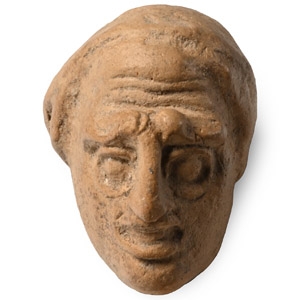
Greek Terracotta Head of an Actor
Tarentine, 3rd-1st century B.C.Sold for (Inc. bp): £234
Modelled in the round with wrinkled brow, sloping eyebrows, thick nose and pellet eyes with discoid surrounds, small pouting mouth. 44 grams, 45 mm
Acquired in the mid 1980s-1990s. Private collection, Switzerland, thence by descent. Private collection, since the late 1990s. -
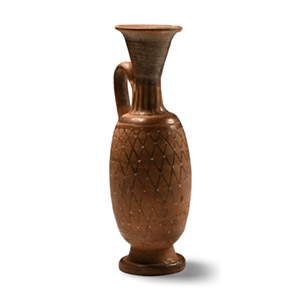
Greek Apulian Net Lekythos
Circa 300 B.C.Sold for (Inc. bp): £312
On a set-off ring foot with long cylindrical neck and funnel-shaped rim; the body with net-pattern decoration in umber, highlighted with white dots at the junctions, framed by brown bands above and below; handle, spout and the outside of the ring foot also in brown; from Apulian Greek colonies of southern Italy, surface chip to the body, usage wear. 156 grams, 14.3 cm
From a Swiss collection, since at least 1978. Ex Swiss collection, Mr. P.B. Basel-Landschaft, acquired on the Swiss art market.
