
Loading, please wait...
LOT 0072
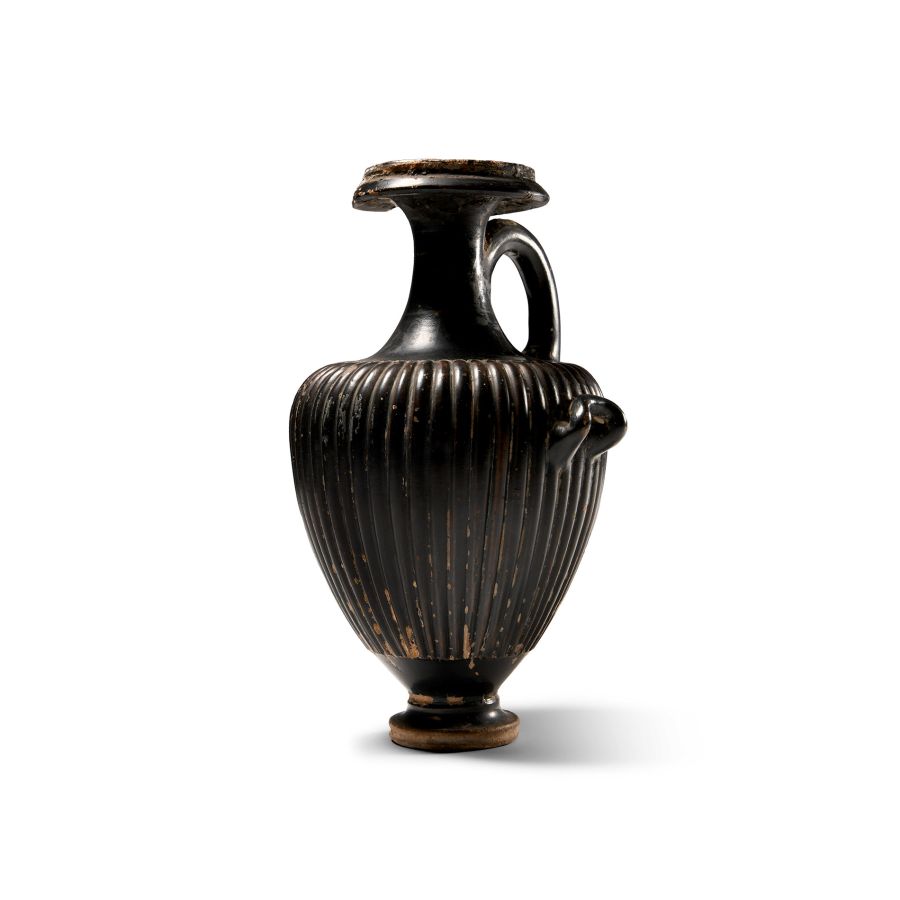
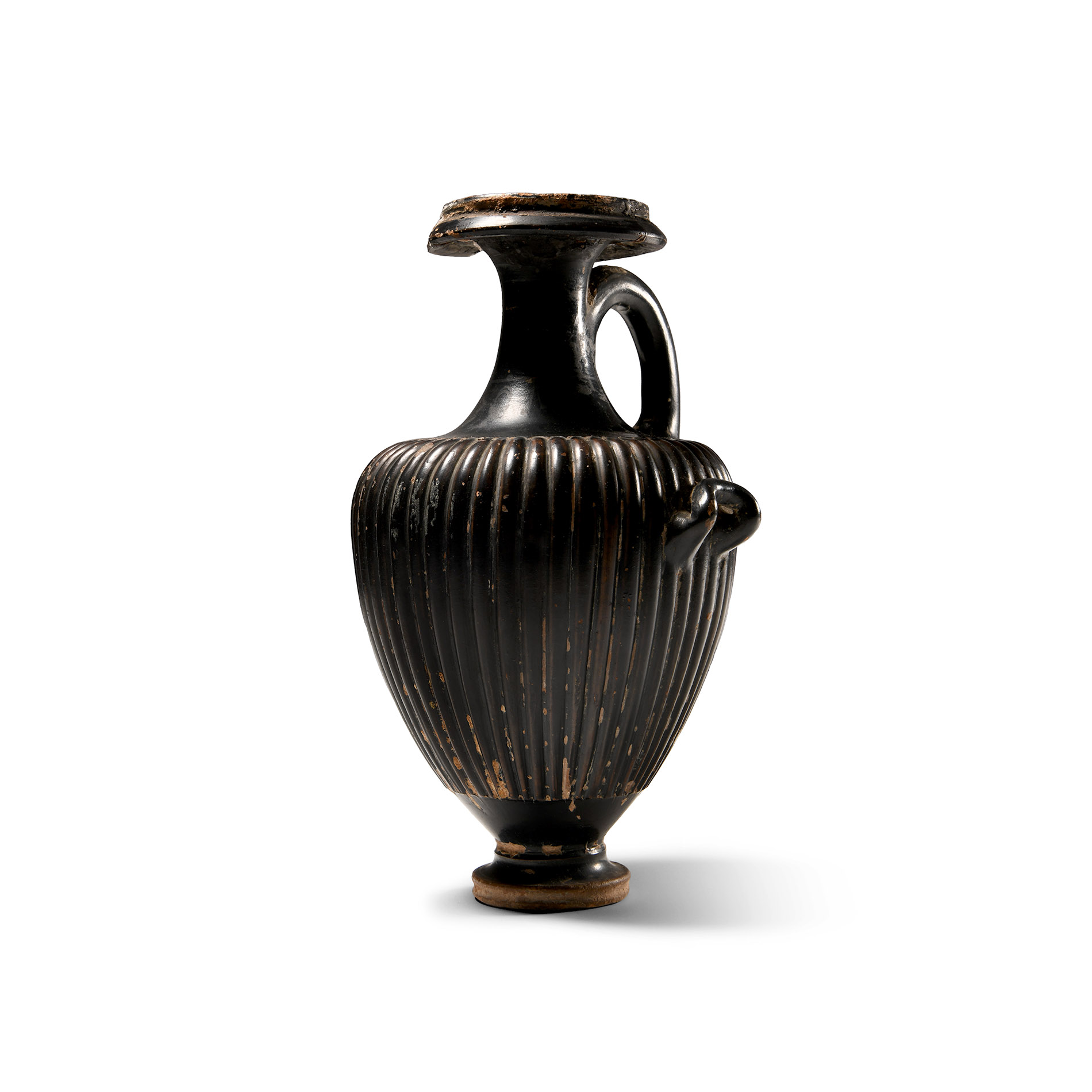
South Italian Black-Glazed Miniature Hydria
4TH CENTURY B.C.
6 1/2 in. (232 grams, 16.5 cm high).
Decorated with ribbed fluting around the body and broad shoulder, slender neck with stepped and everted rim and mouth, two handles to the equator, a carry handle between neck and shoulder to the rear, discoid foot; repaired.
ProvenancePrivate collection.
Anonymous sale, Eve Auctions, Paris, December 11, 2013, no.11.
Cf. The Metropolitan Museum, New York, accession number 01.8.10, for similar.
CONDITIONTimeLine Auctions follows a vetting process to ensure the authenticity and legality of all items, reinforcing our commitment to integrity and responsible trading. Each antiquity, antique, and coin lot undergoes thorough examination by a vetting committee of at least ten external specialists, professional trade association members, scientists, and archaeologists: Our Vetting Process
AUCTIONS:
TimeLine is a leading auction house specialising in antiquities, ancient art, collectables, natural history, coins, medals, and books. Our auctions offer museums, collectors, historians, and enthusiasts the opportunity to acquire unique and historically significant pieces.
-
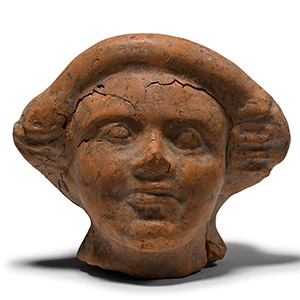
Hellenistic Terracotta Head of a Woman
3rd-1st century B.C.Estimate: £800 - 1,000 (‡+bp*)
Opening Bid: £400
Hollow-formed with flared neck, moulded face with shallow lentoid eyes, snub nose and wide mouth with enigmatic smile; band of hair framing the face. 499 grams, 12.3 cm wide
Acquired in the mid 1980s-1990s. Private collection, Switzerland, thence by descent. Private collection, since the late 1990s. -
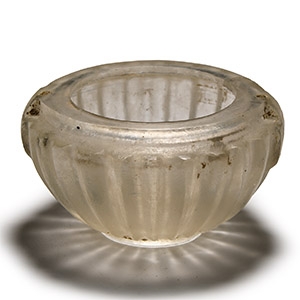
Hellenistic Ribbed Rock Crystal Bowl
3rd-2nd century B.C.Sold for (Inc. bp): £2,600
Of squat profile, with circumferential band of vertical ribbing to the exterior wall, broad flat rim incorporating two shallow lateral blocks, pierced vertically to accept a handle. 148 grams, 82 mm wide
Acquired from Galerie Serres, Paris, before 1980. Formerly in a French private collection. H.B. collection since 2012. Private collection, England. This lot has been checked against the Interpol Database of stolen works of art and is accompanied by a search certificate number no.12312-215584.
Glassmaking and glass-working were considered to be two separate crafts and took place in different regions during the Hellenistic period. Each craft was characterised by its own technological tradition, know-how and equipment. Glassmakers and glassworkers did not need to have an understanding of glass vessel manufacture and primary production respectively in order to carry out their tasks. Glassmaking had to take place as close as possible to the sources of the raw materials used, namely sand and mineral natron. Raw glass was traded throughout the Mediterranean in the form of ingots and it was then worked and shaped into vessels, inlays, jewellery, etc, in various locations. A lot of glass production took place on the Syro-Palestinian coast as well as the broader Levant and Egypt, with centres of manufacture in the royal capitals of Antioch and Alexandria. The reputation of the Alexandrian workshop is well-understood from luxury glass vessels decorated with Egyptian-style buildings or characteristic scenes found as far away as Italy and Afghanistan. -
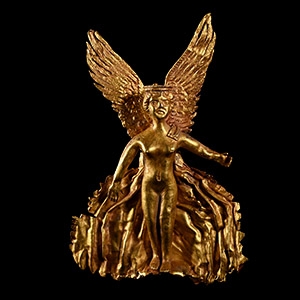
Greek Gold Figure of Nike from a Monumental Funerary Wreath
South Italian, 4th century B.C.Sold for (Inc. bp): £14,040
Formed as a composite figurine comprising: hollow-formed nude female figure with left arm extended to her side and fingers curled inwards, right hand at her side, hair drawn up in a chignon surmounted by an applied beaded-wire diadem; two sub-triangular wings each attached to the shoulder blades, with repoussé feather detailing to the obverse; broad D-shaped panel attached to the waist and rear of the legs, with radiating arch detailing; supplied with a custom-made display stand. 56 grams total, 92 mm including stand
Focquaert collection, Belgium, 1970s. European private collection. Accompanied by an academic report by Dr Raffaele D'Amato. This lot has been checked against the Interpol Database of stolen works of art and is accompanied by search certificate number no.12220-222337.
Similar statuettes were surmounting huge funerary wreaths, like the one from Armento (325-300 B.C. made in Southern Italy). The wreaths, composed of golden flowers, leaves, fruits, bees and Erotes, have a winged goddess, with all probability Nike, the Greek goddess of victory, as the central motif. It is possible that the wreath was given to the deceased as a prize after a successful competition, but the dimensions of the Nike show that it was an extremely rare artefact. These costly objects were financed by rich and powerful Mecenates, like Kreithonios, named in the inscription on the base of Nike from Armento.
