
Loading, please wait...
LOT 0278
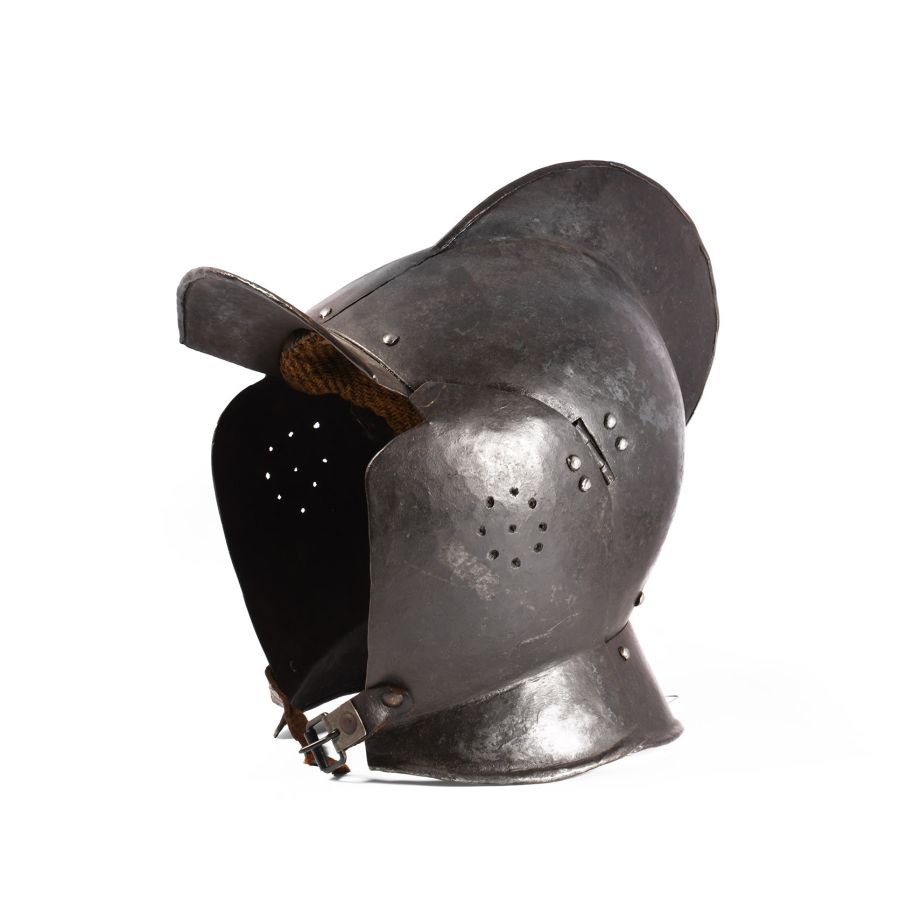
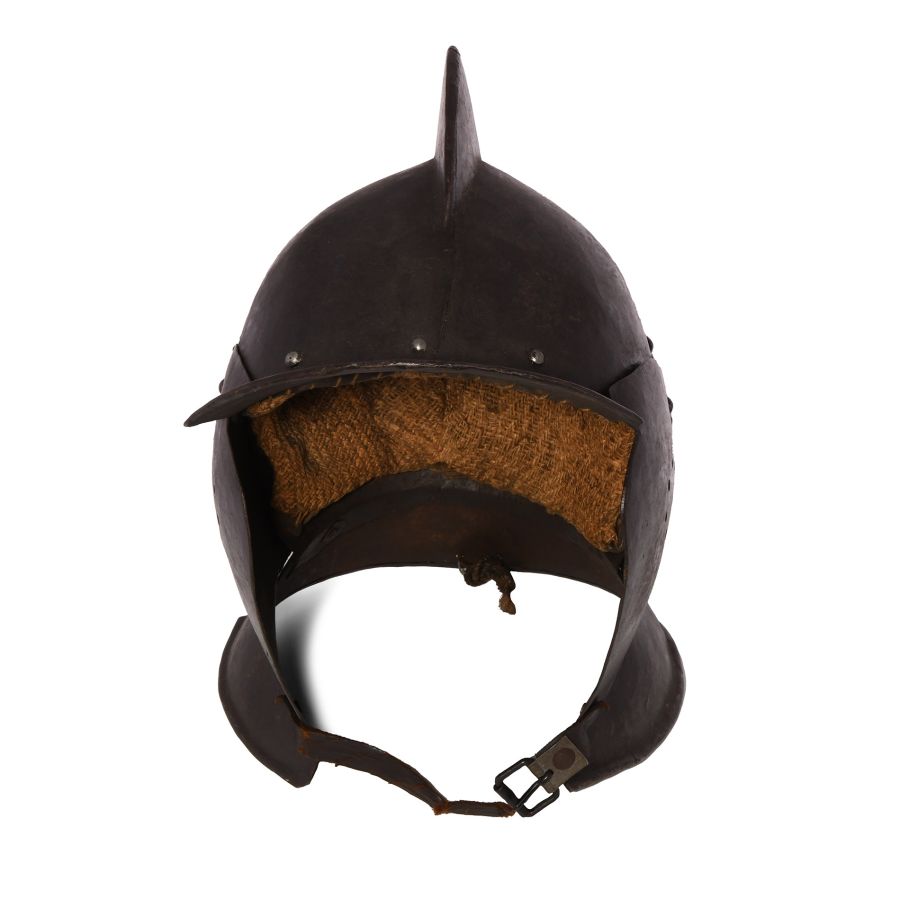
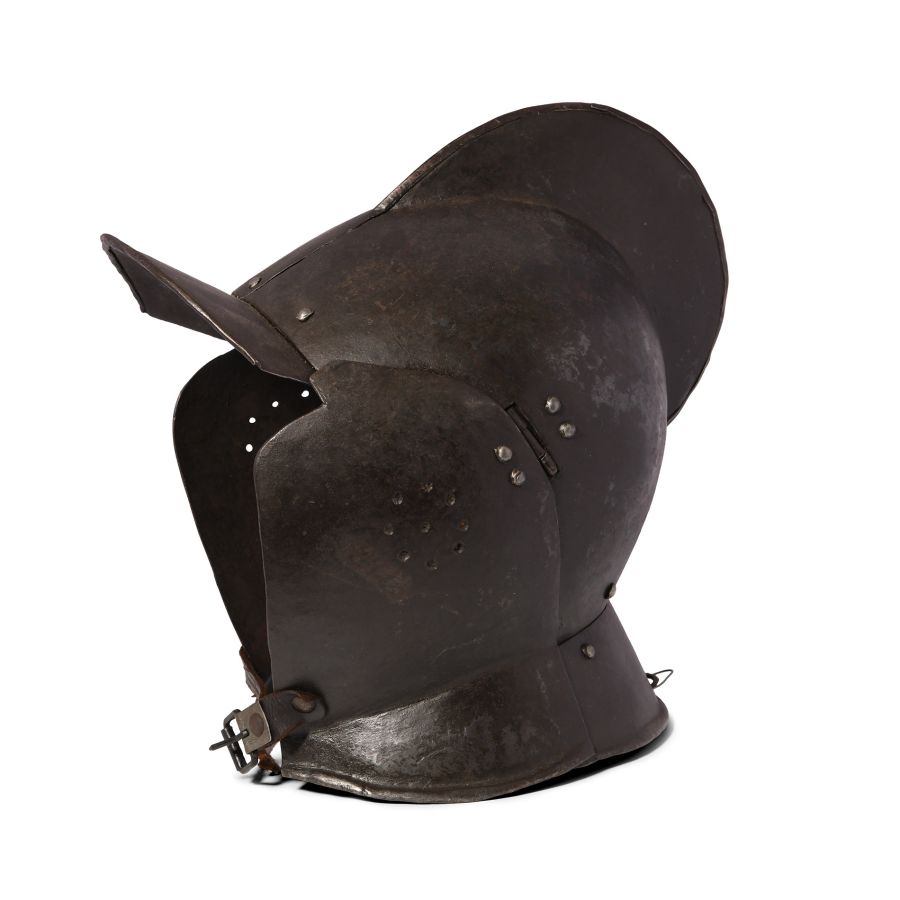
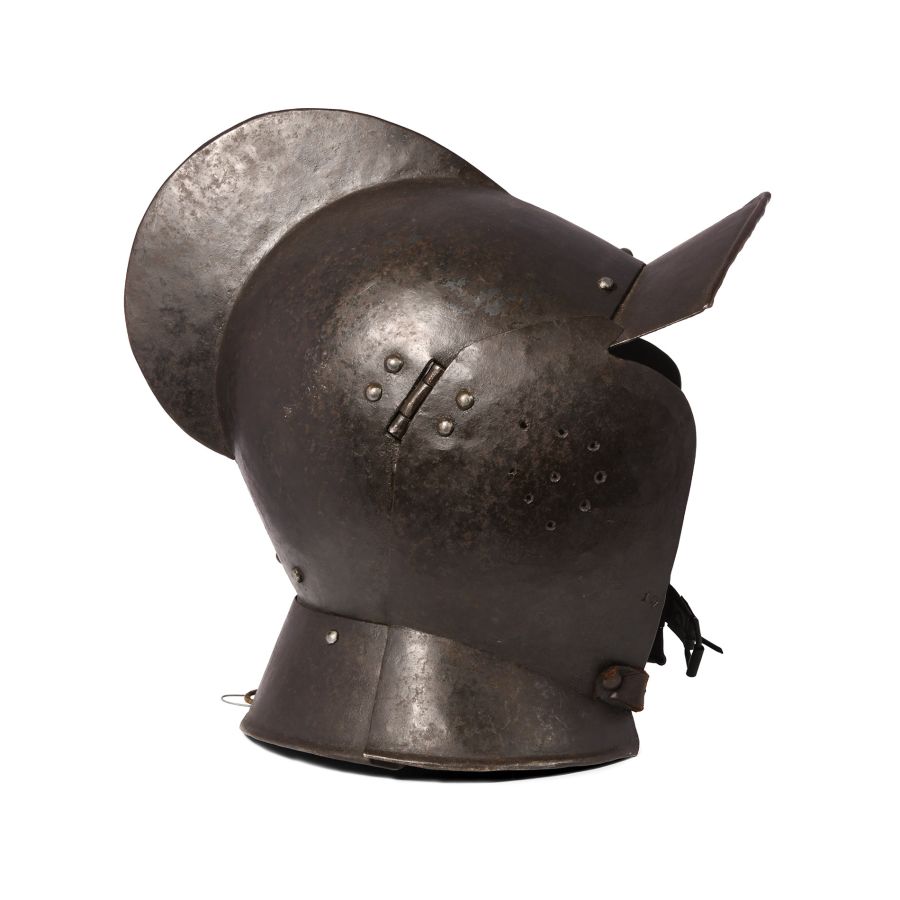
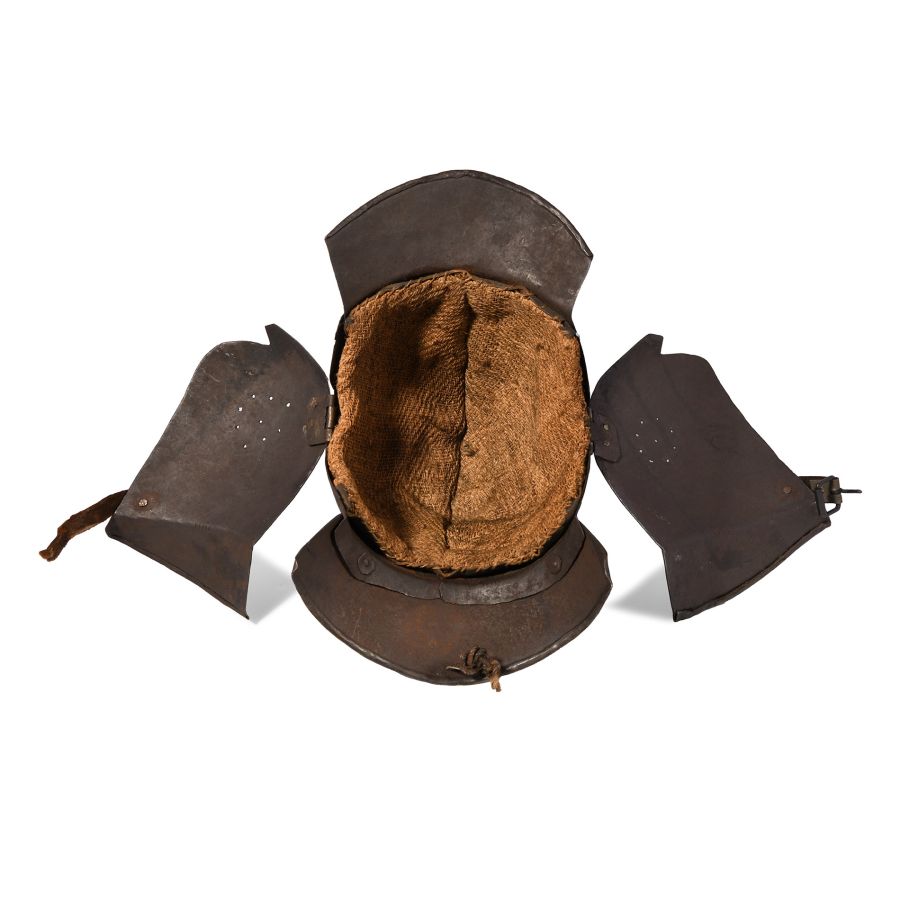
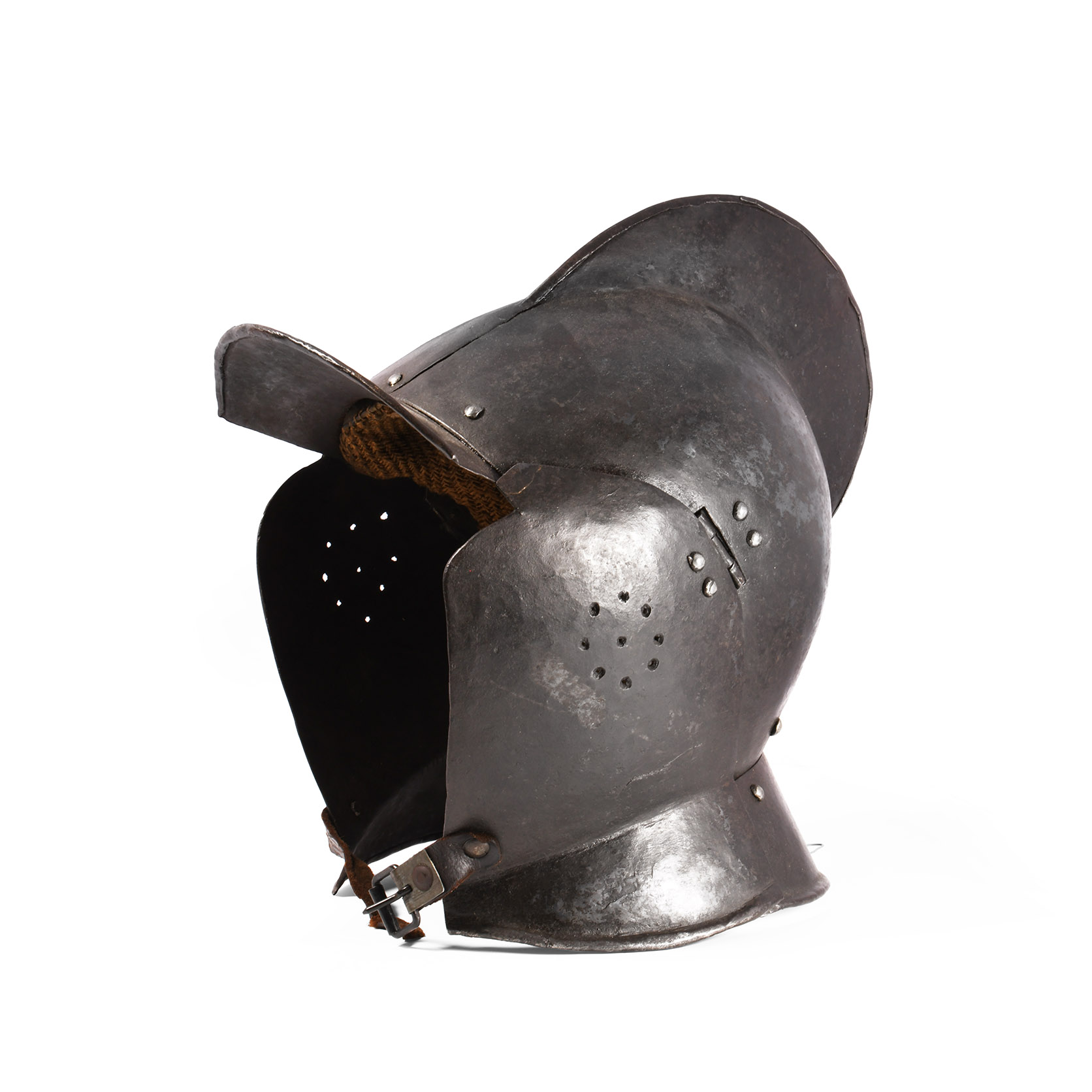
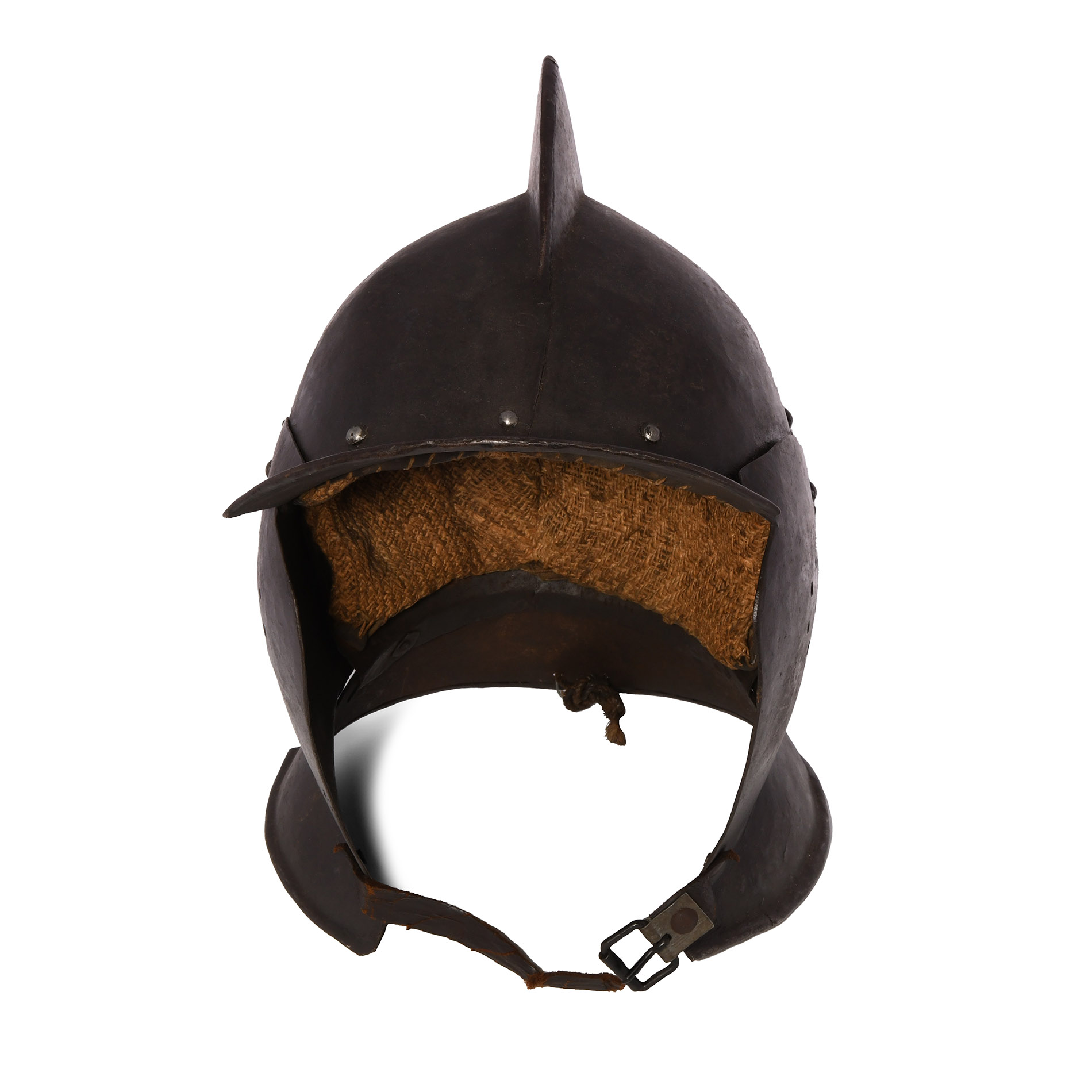
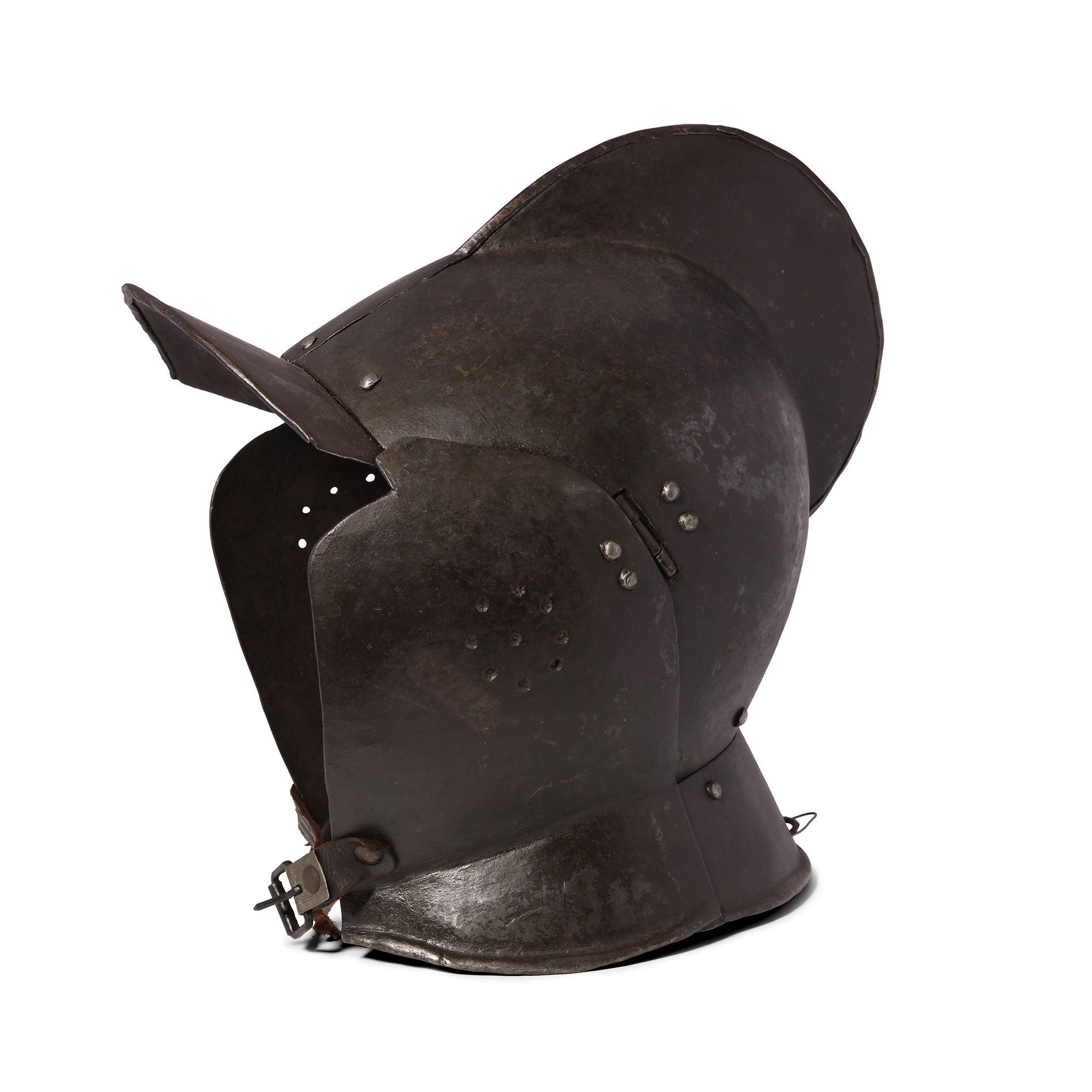
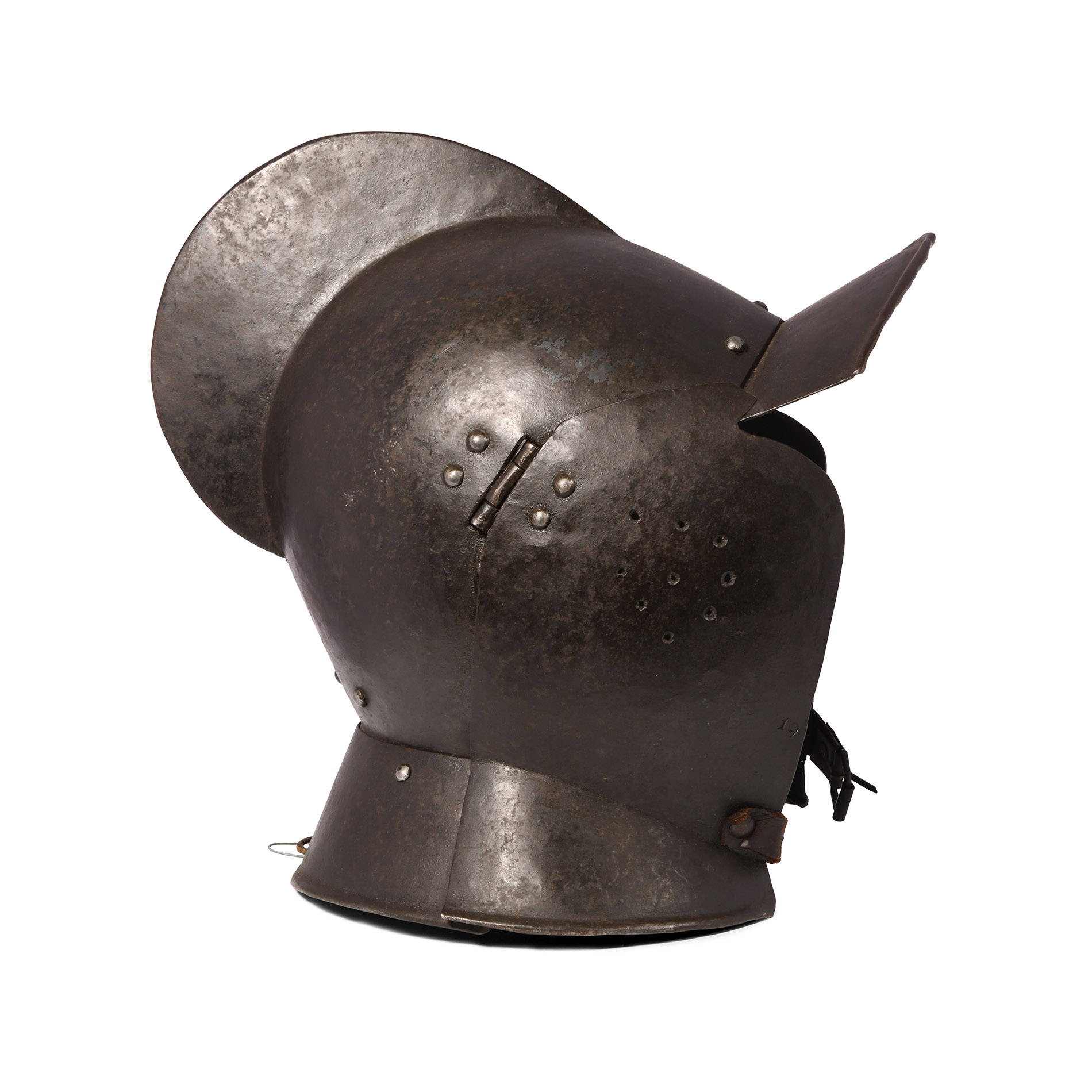
South German Burgonet Helm
CIRCA 1580-1610 A.D.
11 1/2 in. (1.7 kg, 29 cm).
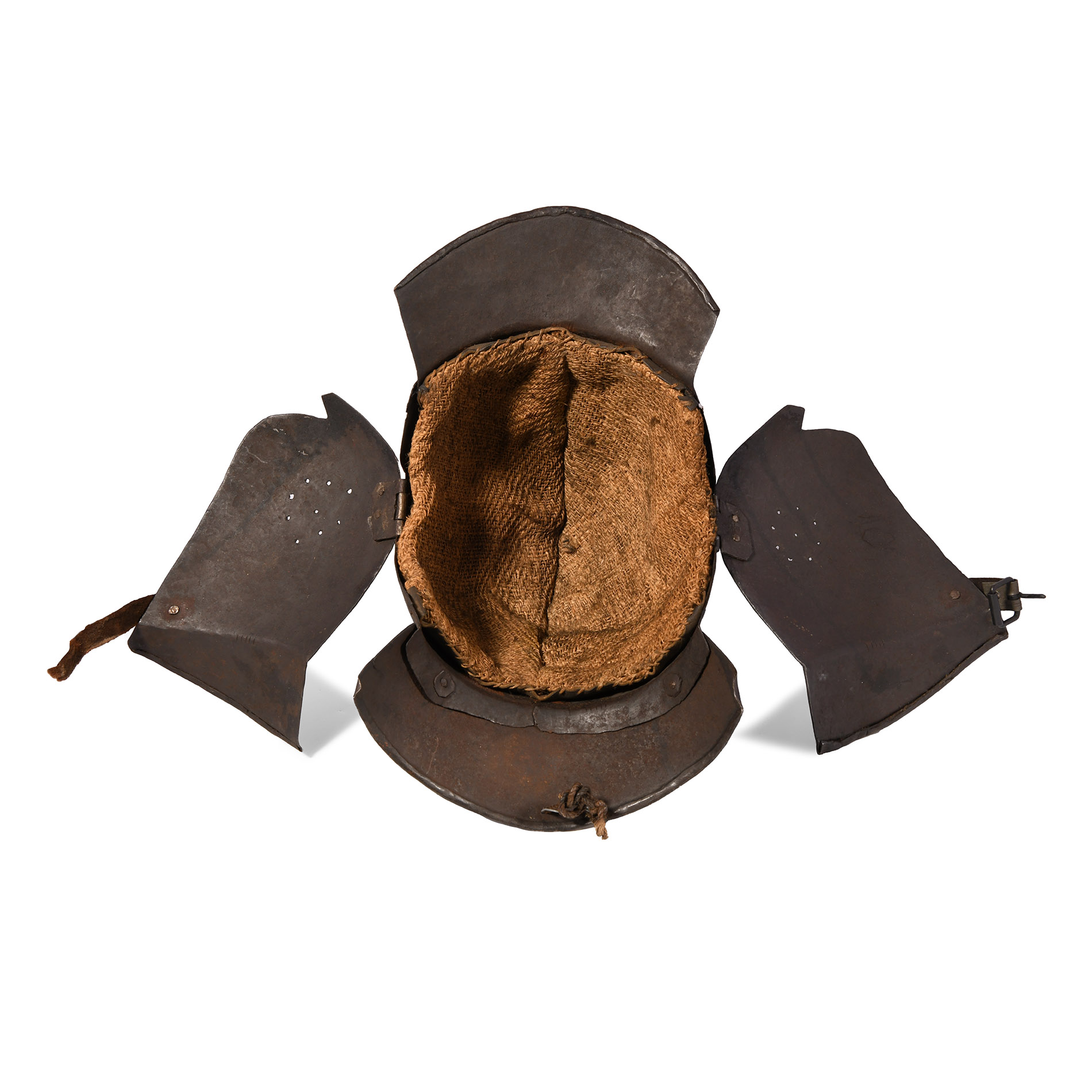
The rounded two-piece skull joined along the crest with a high medial comb, internally fitted with a quilted canvas lining sewn to a leather lining-band, the brow with a fixed rounded peak, outward-flanged rear edge with a matching one-piece neck guard, hinged cheek-pieces flanged outwards at the lower edge to serve as a continuation of the neck-guard.
Provenancewith Thomas Del Mar Ltd, 7th December 2017, lot 542.
The Kusmirek Collection, UK.
Accompanied by a copy of the Thomas Del Mar invoice.
Accompanied by an academic report by Dr Raffaele D'Amato.
This lot has been checked against the Interpol Database of stolen works of art and is accompanied by search certificate number no.11762-203983.
Cf. Mauro, M., Armeria della Rocca, mostra di armi antiche, Ancona, 1989, p.94, no.15; Hayward, J., L’armeria del Castello di Monselice, Venezia, 1980, p.37, no.25, pl.22.
FootnotesThe burgonet (Italian borgognotta) had developed at the beginning of the 16th century from the sallet and soon became a very popular helmet worn in many parts of Europe (especially in Germany and Northern Italy) by infantry and later cavalry units. A clear advantage of this helmet was the unifying a good protective function against cut and thrust weapons with a unhindered field of sight, good ventilation and user comfort due to the small weight and the fact it could be worn independently without an armour.
CONDITIONTimeLine Auctions follows a vetting process to ensure the authenticity and legality of all items, reinforcing our commitment to integrity and responsible trading. Each antiquity, antique, and coin lot undergoes thorough examination by a vetting committee of at least ten external specialists, professional trade association members, scientists, and archaeologists: Our Vetting Process
AUCTIONS:
TimeLine is a leading auction house specialising in antiquities, ancient art, collectables, natural history, coins, medals, and books. Our auctions offer museums, collectors, historians, and enthusiasts the opportunity to acquire unique and historically significant pieces.
-
Byzantine Iron Horse Bit
14th-16th century A.D.Estimate: £250 - 350 (+bp*)
Opening Bid: £135
Composed of arched openwork shanks with looped terminals; one end fitted with large hoops and bar between; one end with a tripartite mouthpiece comprising two collared bars connected by a central hoop; Byzantine or early Ottoman. 340 grams, 19.5 cm
Fine condition.
Collection of Dr. Hanns-Ulrich Haedeke (1928-2017), author of ‘Schmuck Aus Drei Jahrtausenden’ and who became the director of the Museum of Klingenmuseum in Solingen, Germany, in 1968; the collection was formed in the early 1960s. From an important private Dutch collection.
This type of horse bit is visible on one of the most important equestrian artworks of the 15th century - the Cappella dei Magi by Benozzo Gozzoli, a painting representing the Three Kings visiting Christ, depicted in costumes belonging to the early quarter of 15th century. All the cavalrymen in the artwork had heavy curb-bits (with short and curved shanks, as in our specimen) and heavy, single reins. -
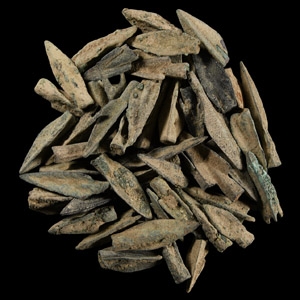
Greek Bronze Arrowhead Group
Circa 5th-3rd century B.C.Sold for (Inc. bp): £98
Primarily composed of socketted types, most triangular in section. 186 grams, 26-45 mm
Ex private collection, 1980s. Acquired on the UK art market in the 1990s. -
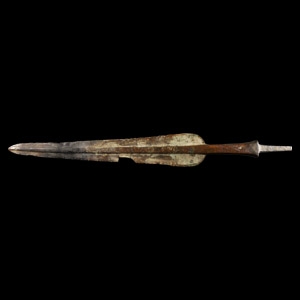
Amlash Tanged Spearhead
12th century B.C.Estimate: £250 - 350 (+bp*)
Opening Bid: £83
Composed of a tapering leaf-shaped blade with raised midrib, splayed neck and tapering tang. 637 grams, 49 cm
Acquired on the London art market, prior to 1980s. The Kusmirek Collection, UK.
The weapon belongs to the type 1 of the Khorasani spearhead classification, mainly from Marlik or Amlash areas. Similar pieces have been dated by Stutzinger to 1200-1100 B.C.
