
Loading, please wait...
LOT 2217
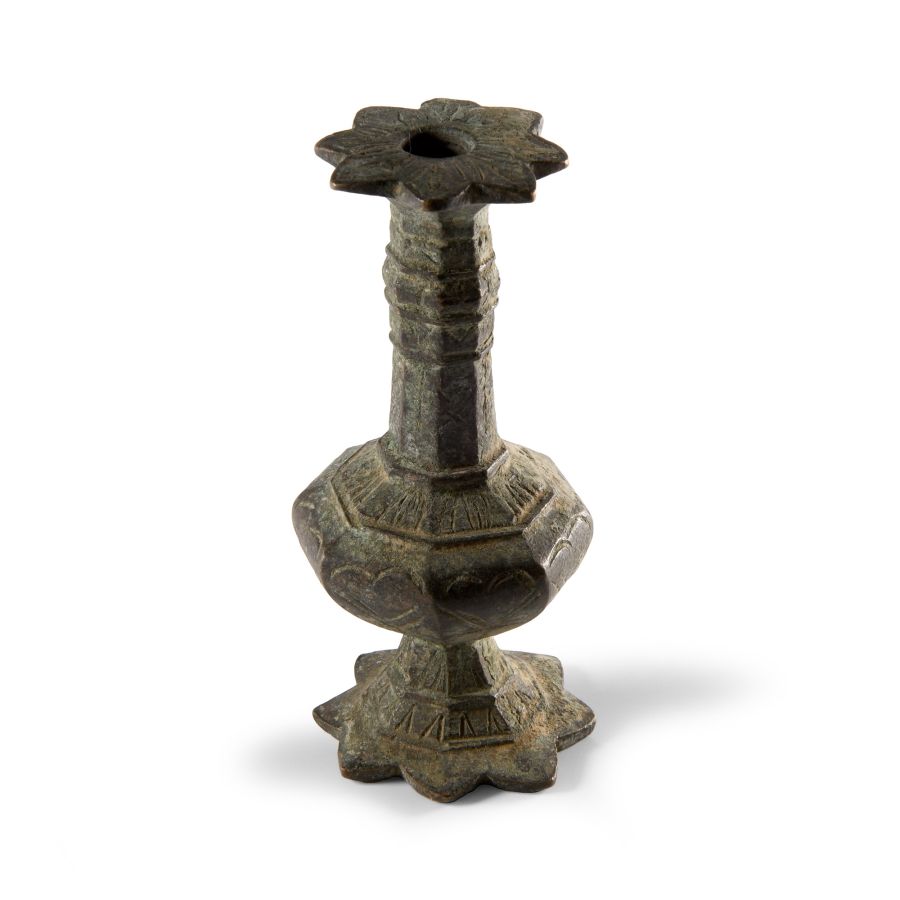
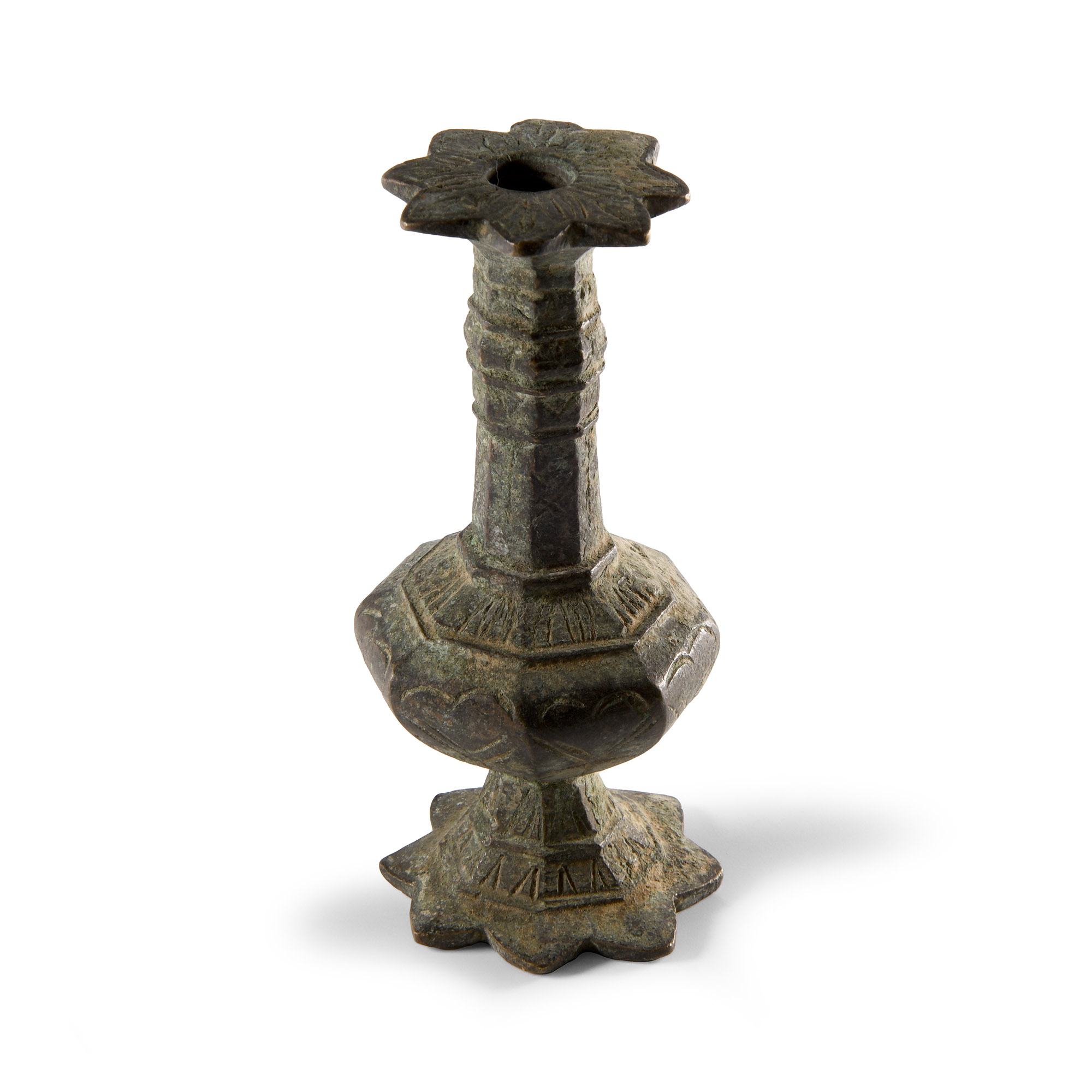
South East Asian Bronze Kohl Pot
18TH-19TH CENTURY A.D.
4 1/8 in. (207 grams, 10.5 cm high).
Composed of an octagonal carinated body, octagonal neck, octofoil neck and foot, decorated with floral and geometric ornament. [No Reserve]
ProvenanceFrom the collection of H.N., Milton Keynes, 1980s-1990s.
CONDITIONTimeLine Auctions follows a vetting process to ensure the authenticity and legality of all items, reinforcing our commitment to integrity and responsible trading. Each antiquity, antique, and coin lot undergoes thorough examination by a vetting committee of at least ten external specialists, professional trade association members, scientists, and archaeologists: Our Vetting Process
AUCTIONS:
TimeLine is a leading auction house specialising in antiquities, ancient art, collectables, natural history, coins, medals, and books. Our auctions offer museums, collectors, historians, and enthusiasts the opportunity to acquire unique and historically significant pieces.
-
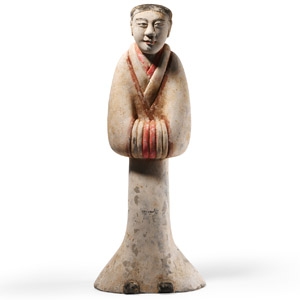
Chinese Han Terracotta Male Figure
Han Dynasty, 206 B.C.-220 A.D.Sold for (Inc. bp): £1,404
Modelled standing, wearing a floor-length courtly robe, arms folded within sleeves at the waist, stylised facial features; remains of polychrome pigmentation. 6.1 kg, 56 cm high
Acquired 1990s. West Country, UK, collection. Accompanied by an original thermoluminescence analysis report no.C122e80 from Oxford Authentication. -
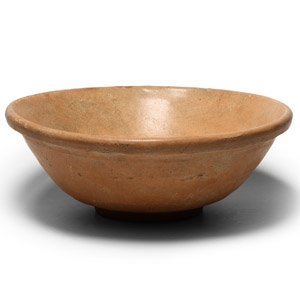
Chinese Tang Glazed Ceramic Bowl
Tang Dynasty, 618-907 A.D. or laterSold for (Inc. bp): £39
Formed with a gently tapering convex side wall, everted rim and ring foot. 512 grams, 17 cm wide
From a late Japanese specialist collector, 1970-2000s. -
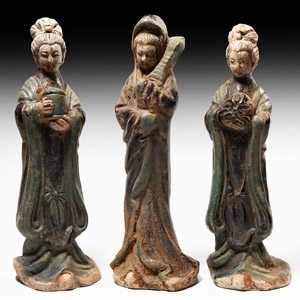
Chinese Late Ming Glazed Ceramic Lady Group
Late Ming Dynasty-early Qing Dynasty, 16th-17th century A.D.Estimate: £300 - 400 (+bp*)
Opening Bid: £150
Comprising: standing female in blue robe holding a stringed instrument to her shoulder; similar standing female holding a gourd to her chest; similar standing female holding a lidded casket. 1.5 kg total, 23-24 cm
Acquired 1970s. West Country, UK, collection.
