
Loading, please wait...
LOT 2275
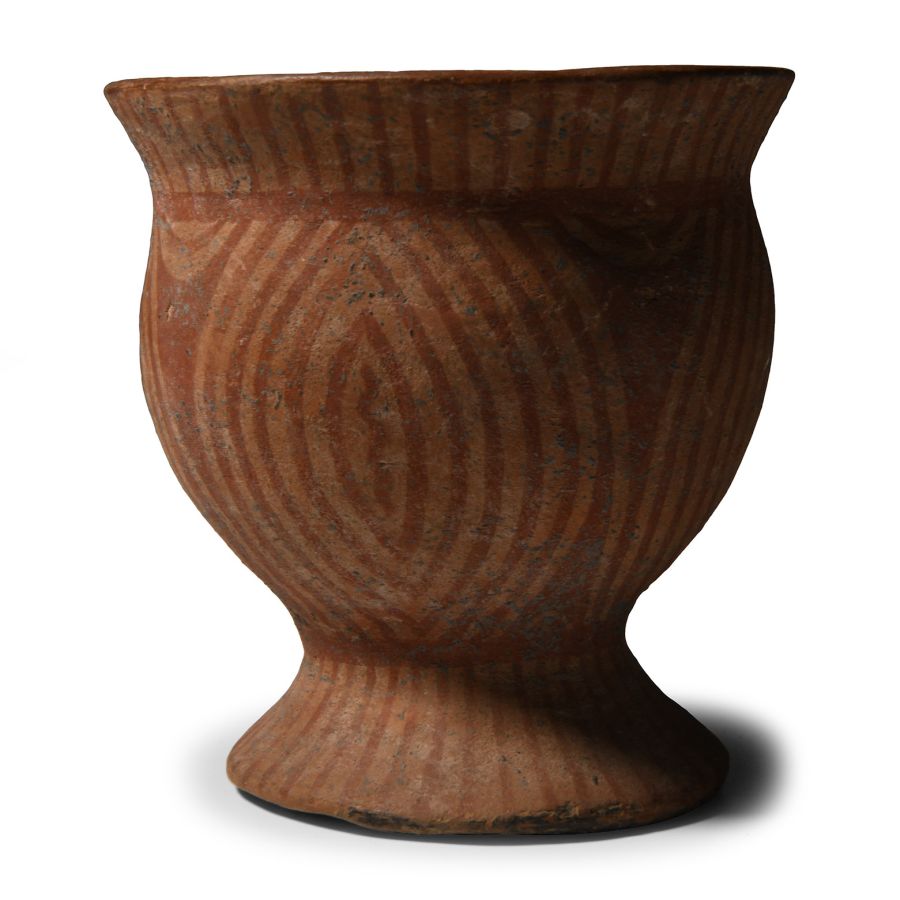
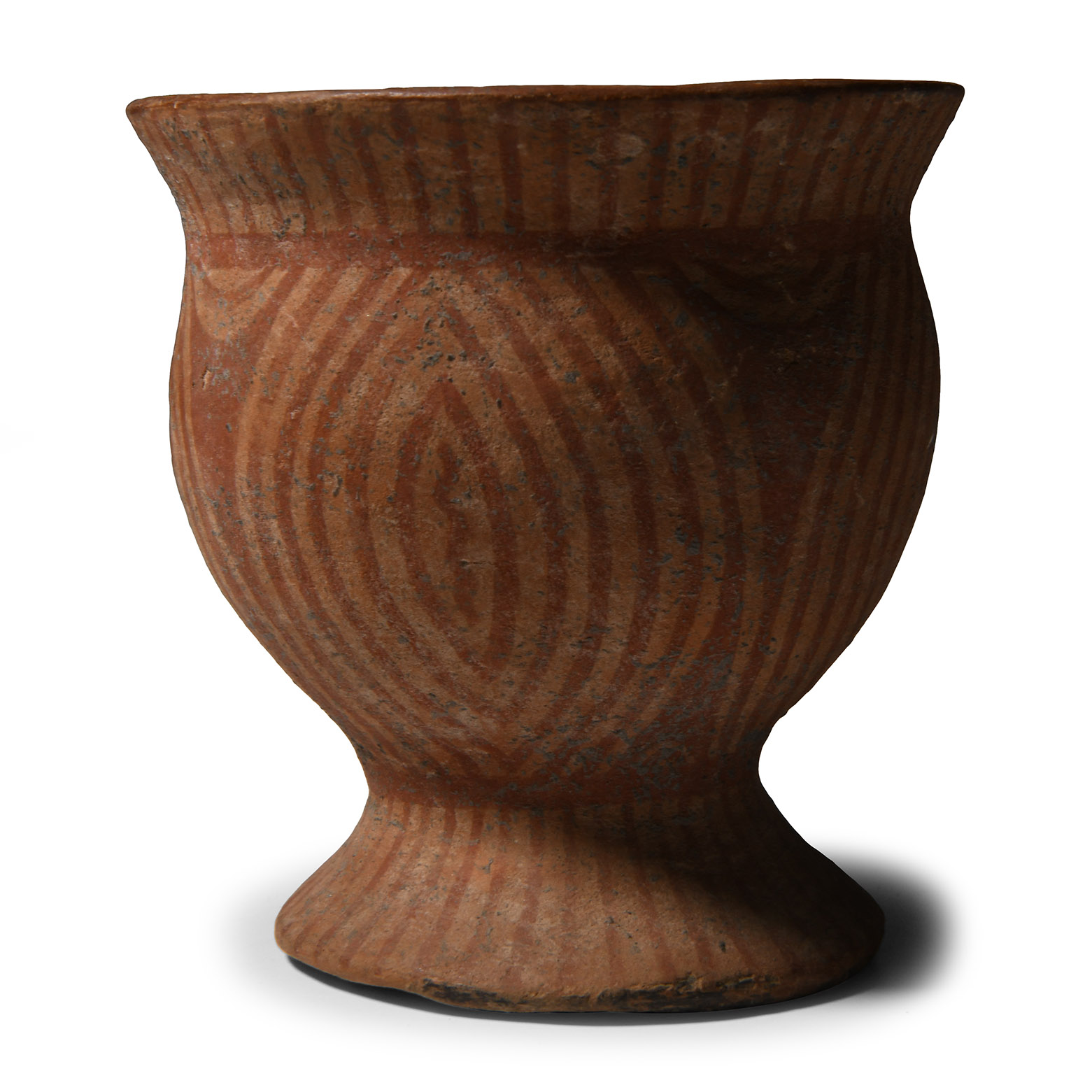
South East Asian Ban Chiang Period Painted Chalice
MIDDLE PERIOD, 900-300 B.C.
4 3/8 in. (407 grams,11 cm).
Formed as an oblate upper bowl with flared rim atop a trumpet-shaped foot; decorated with dense series of parallel and concentric lines forming vesica motifs. [No Reserve]
ProvenanceFrom a collection acquired on the UK art market from various auction houses and collections mostly before 2000.
From an important Cambridgeshire estate; thence by descent.
TimeLine Auctions follows a vetting process to ensure the authenticity and legality of all items, reinforcing our commitment to integrity and responsible trading. Each antiquity, antique, and coin lot undergoes thorough examination by a vetting committee of at least ten external specialists, professional trade association members, scientists, and archaeologists: Our Vetting Process
AUCTIONS:
TimeLine is a leading auction house specialising in antiquities, ancient art, collectables, natural history, coins, medals, and books. Our auctions offer museums, collectors, historians, and enthusiasts the opportunity to acquire unique and historically significant pieces.
-
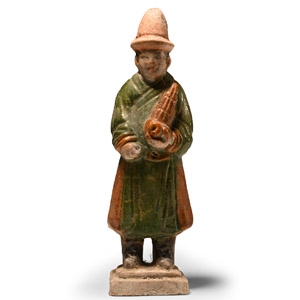
Chinese Ming Glazed Terracotta Attendant
Ming Dynasty, 1368-1644 A.D. or laterSold for (Inc. bp): £59
Modelled in the round wearing a red conical hat with upturned brim, black boots and the traditional court attire of a green cross-over robe tied at the waist with ochre panels on either side; painted facial features with clear eyes and eyebrows; left hand raised supporting a tiered object, probably a musical instrument; on a stepped square base. 295 grams, 17 cm
Ex North Yorkshire, UK, collection, 1990s. -
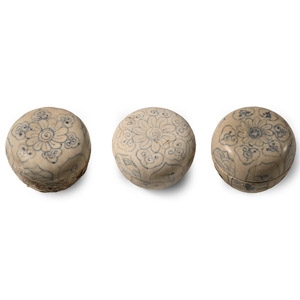
Hoi An Cargo Shipwreck Glazed Blue and White Lidded Box Collection
15th century A.D.Sold for (Inc. bp): £156
Comprising three powder boxes with painted floral motifs to the lid and body. 251 grams total, 56 mm
Ex Butterfield and Butterfield auction with official Hoi An Hoard labels. Accompanied by an illustrated information sheet about the Hoi An shipwreck.
In the mid 15th century a freighting junk loaded with fine Vietnamese pottery sank in an area of the South China Sea called the 'Dragon’s Embrace.' This vessel is part of the shipwreck cargo recovered off the coast of Vietnam at Hoi An. The ceramics themselves were probably made in the area of Chu Dau. -
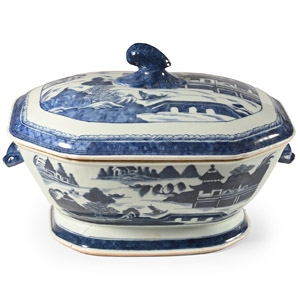
Diana Cargo Shipwreck Large Glazed Blue and White Lidded Terrine
Early 19th century A.D.Sold for (Inc. bp): £143
The body with sloping walls and everted base, separately made pig-head handles, the long sides painted with a lakeside town scene composed of various building on islands, and an arched bridge to the foreground, two boats floating in the calm waters; the lid with a similar scenery and a wave-shaped handle; repaired. 2.88 kg total, 33 cm
Ex Christie's, Amsterdam, March 1995.
'The Diana' was owned by Palmer and Co. a powerful Calcutta ship owner and was licenced by the English East India Company to sail from Calcutta or Madras to Canton. On the 14th of March 1817, she hit rocks off the Straits of Malacca and sank. The wreck was identified and recovered in 1994 by Dorian Ball of Malaysian Historical Salvors.
