
Loading, please wait...
_900x900.jpg "South Arabian Alabaster Male Head")
_200x200.jpg "South Arabian Alabaster Male Head")
.jpg "South Arabian Alabaster Male Head")
LOT 0239
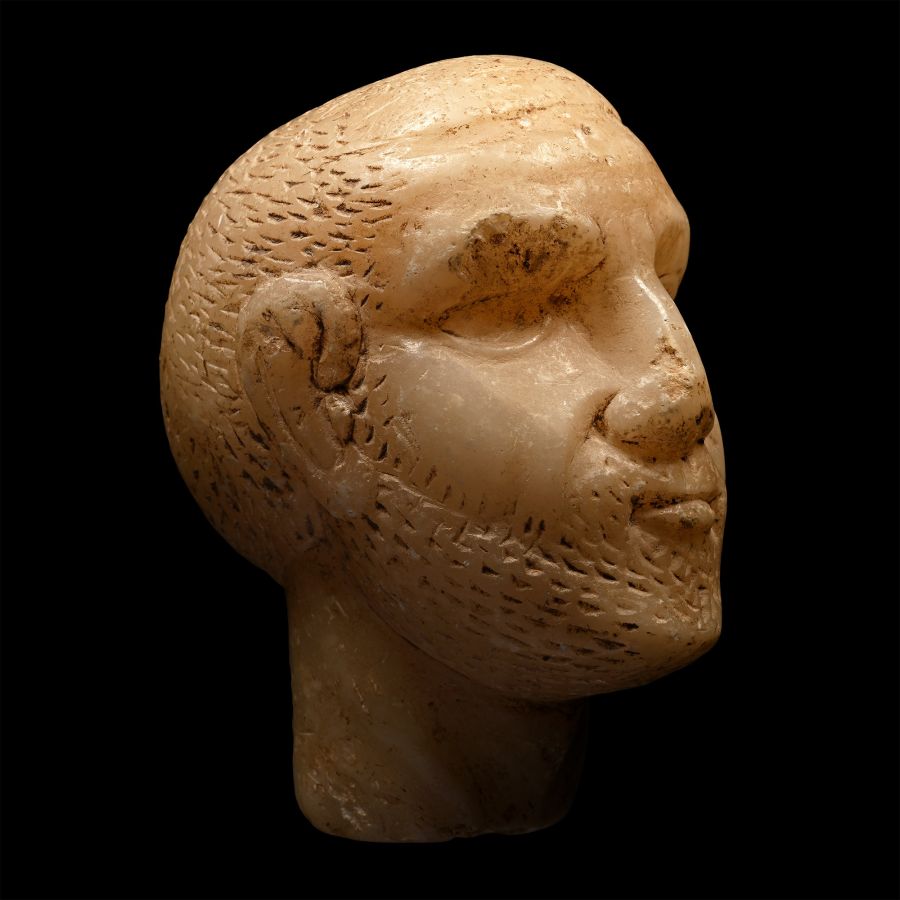
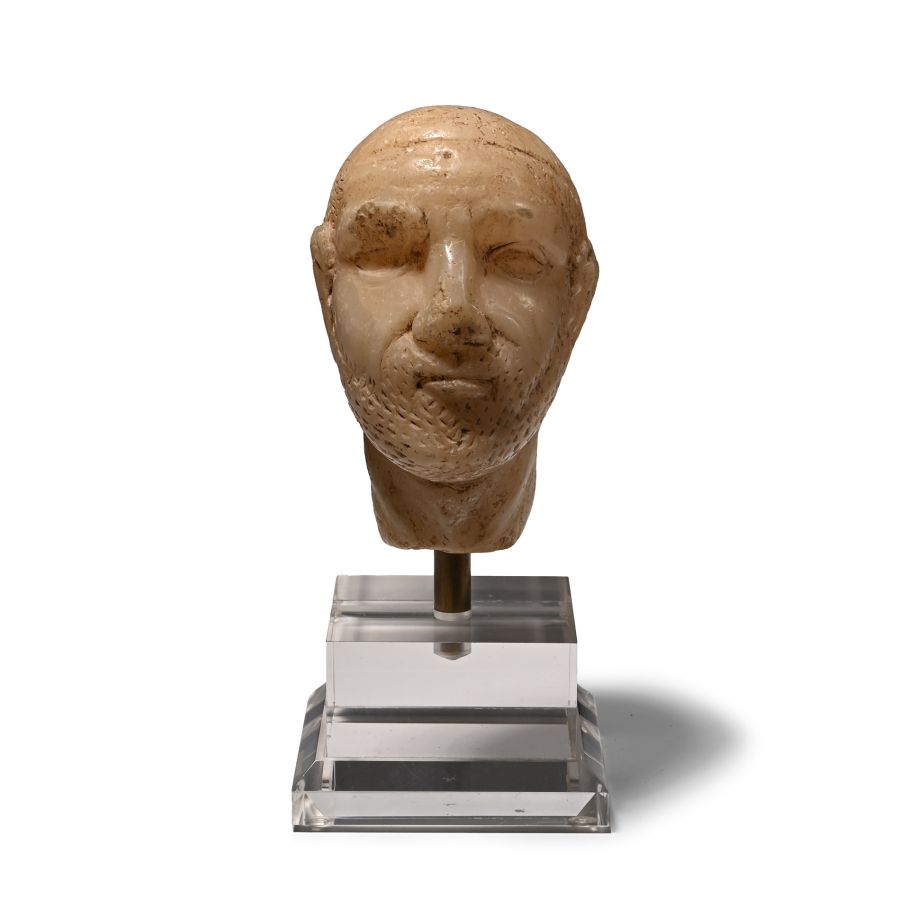
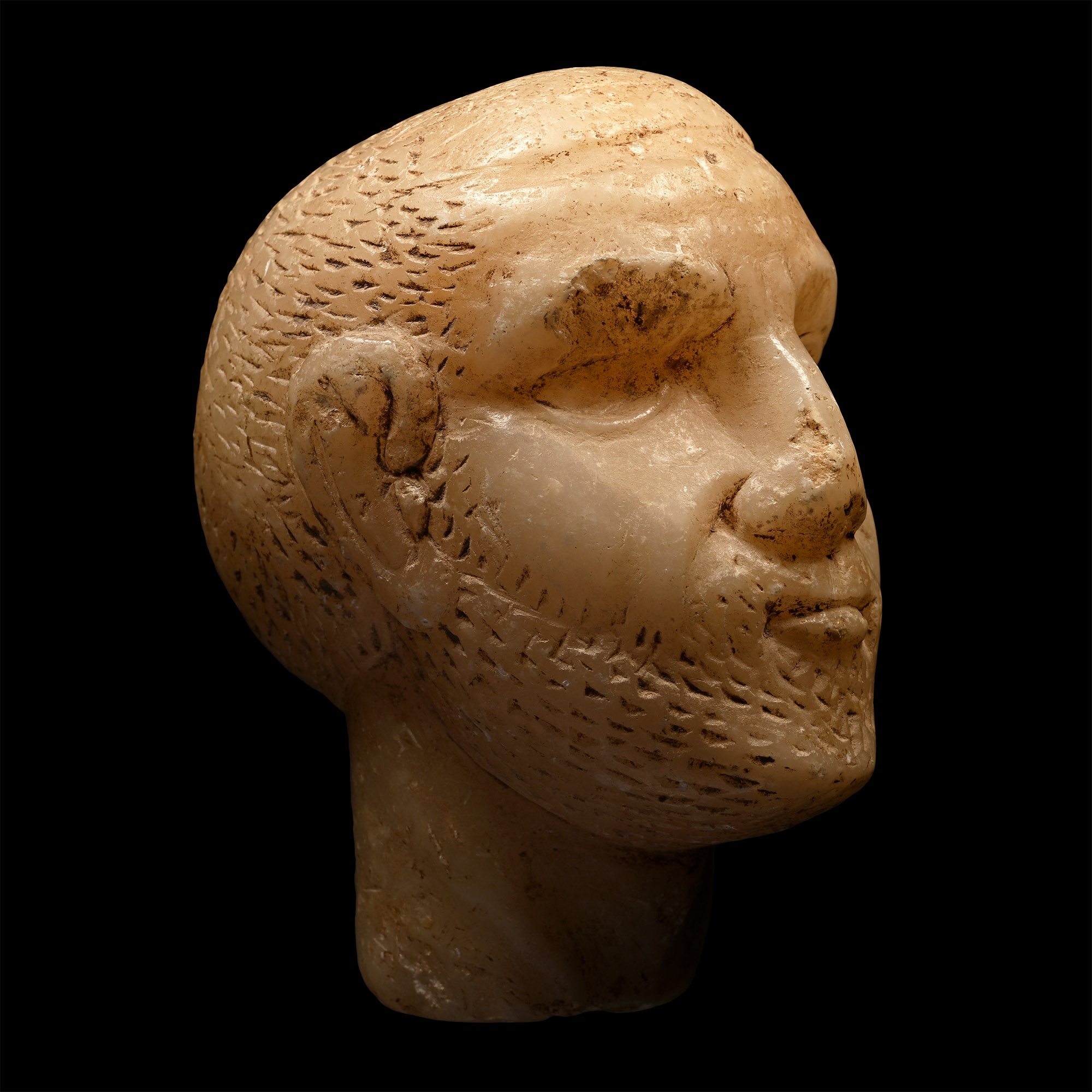
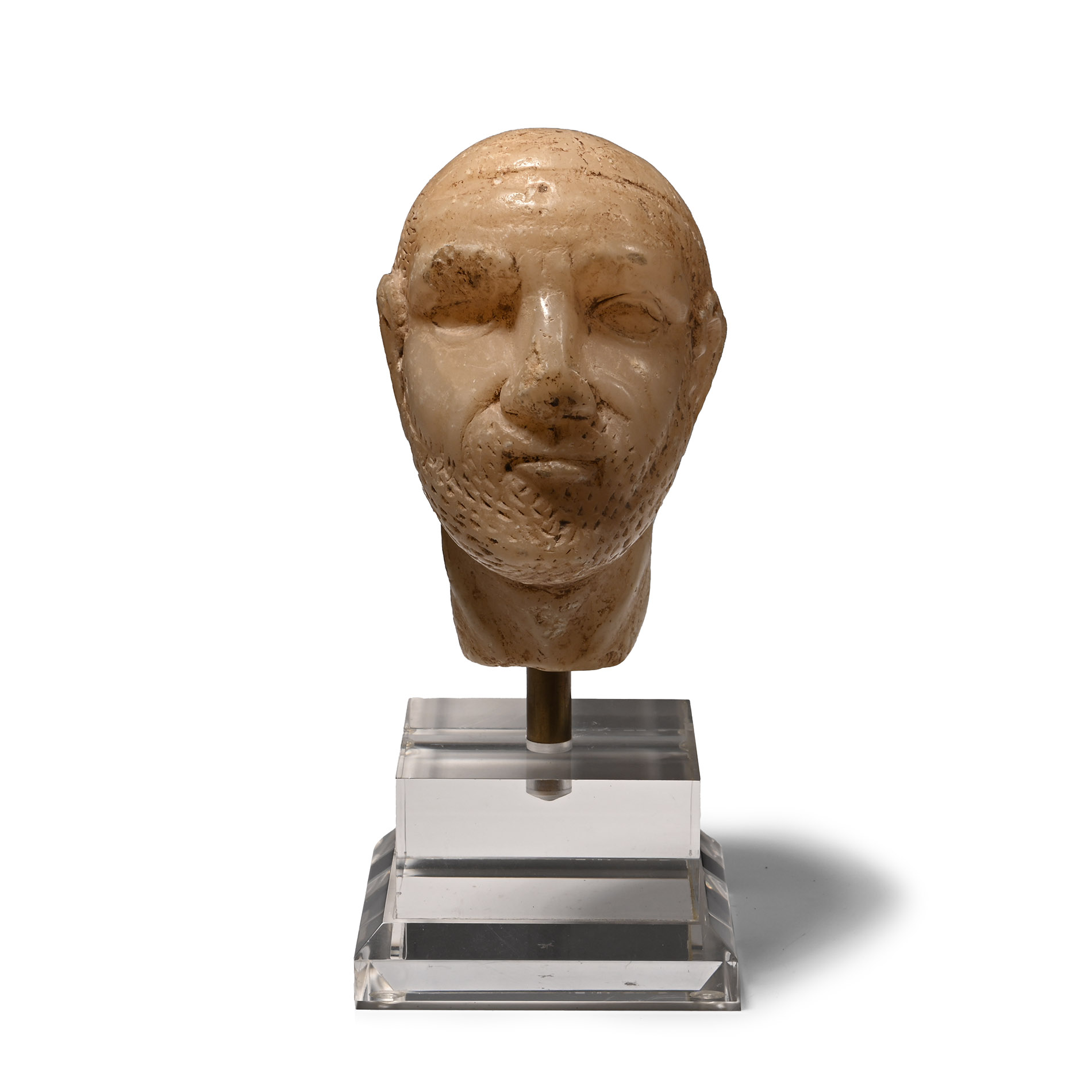
South Arabian Alabaster Male Head
LATE 2ND-3RD CENTURY A.D.
7 in. (1.17 kg total, 18 cm high including stand).
Carved in the round with deep-set eyes and broad aquiline nose; hair and short beard modelled with stippled surface; slender neck; mounted on a custom-made display stand.
ProvenanceFormerly private European collection.
with Christie's, New York, 7 December 1995, no.116.
This lot has been checked against the Interpol Database of stolen works of art and is accompanied by a search certificate number no.12262-222127.
TimeLine Auctions follows a vetting process to ensure the authenticity and legality of all items, reinforcing our commitment to integrity and responsible trading. Each antiquity, antique, and coin lot undergoes thorough examination by a vetting committee of at least ten external specialists, professional trade association members, scientists, and archaeologists: Our Vetting Process
AUCTIONS:
TimeLine is a leading auction house specialising in antiquities, ancient art, collectables, natural history, coins, medals, and books. Our auctions offer museums, collectors, historians, and enthusiasts the opportunity to acquire unique and historically significant pieces.
LOT 0239
South Arabian Alabaster Male Head
Estimate £6,000 - 8,000€6,960 - 9,280 (for guidance only)$8,100 - 10,800 (for guidance only)
-
Neo Babylonian Stone Stamp Seal with Winged God
8th-7th century B.C.Sold for (Inc. bp): £572
Plano-convex in profile pierced near the top, with incuse lamma winged deity, rampant with tail raised and horns splayed; supplied with a museum-quality impression. 11 grams, 23 mm
1 in.
Ex S. collection, London, UK, 1980s-2000s. -
.jpg)
Western Asiatic Haematite Cylinder Seal with Presentation Scene for En-Nanna
2nd-1st millennium B.C.Sold for (Inc. bp): £182
With large central hole, incised frieze of a seated figure receiving an offering from a figure in floor-length pleated garment, second figure behind him in a fringed robe, column of cuneiform text to the rear: En-Nanna, [son of ] ... is your servant. 8.24 grams, 33 mm
Acquired 1970s-1996. Property of a North American collector; collection no.065. London collection, 2016. -
Western Asiatic Bronze Ram's Head Fitting from a Whetstone
1st millennium B.C.Sold for (Inc. bp): £234
Comprising a barrel-shaped collar with raised corrugated rim to each end; flat-section curved neck with beast-head finial, incised circular eyes, long curved horns. 115 grams total, 84 mm including stand
From a collection acquired on the UK art market from various auction houses and collections mostly before 2000. From an important Cambridgeshire estate; thence by descent.
