
Loading, please wait...


LOT 0242
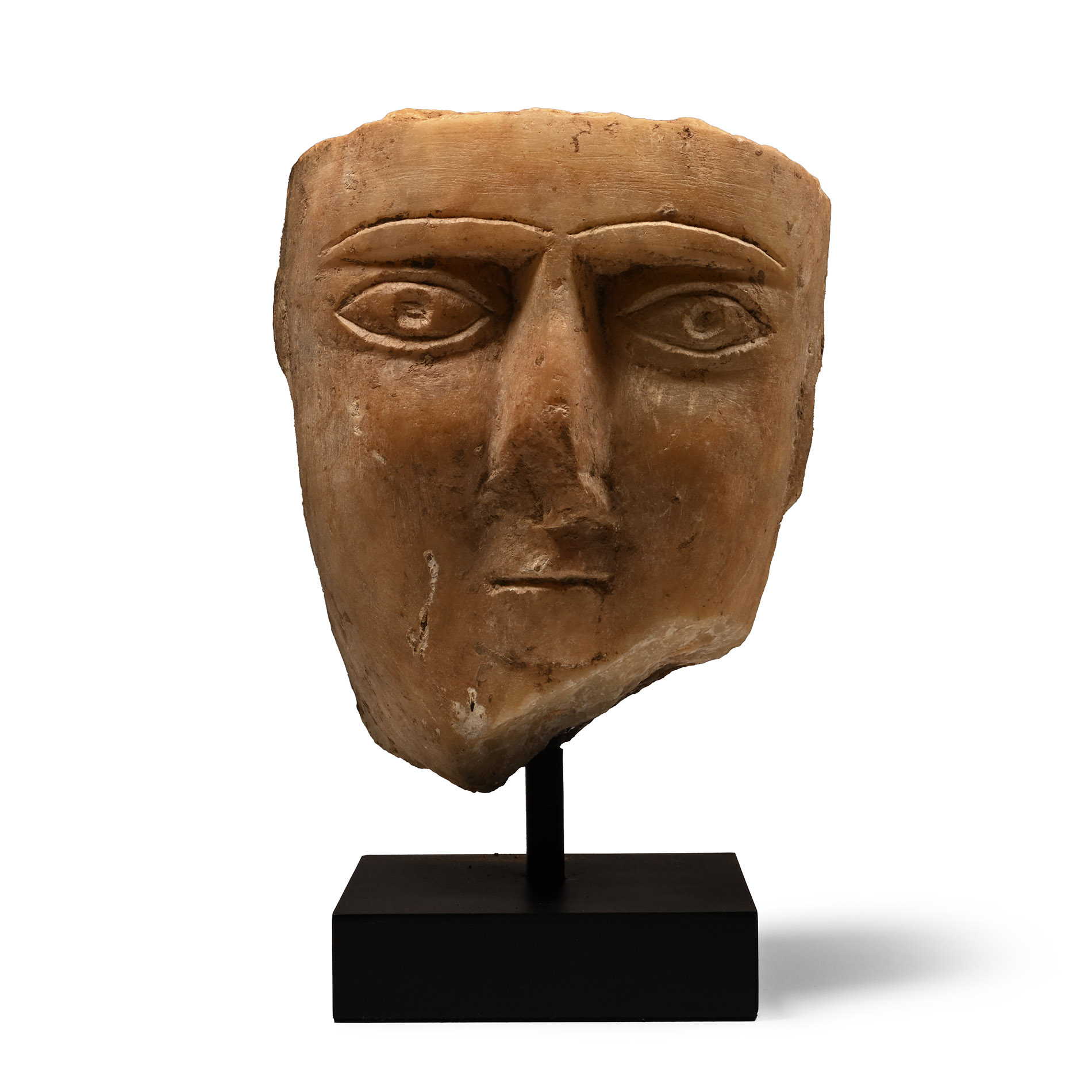
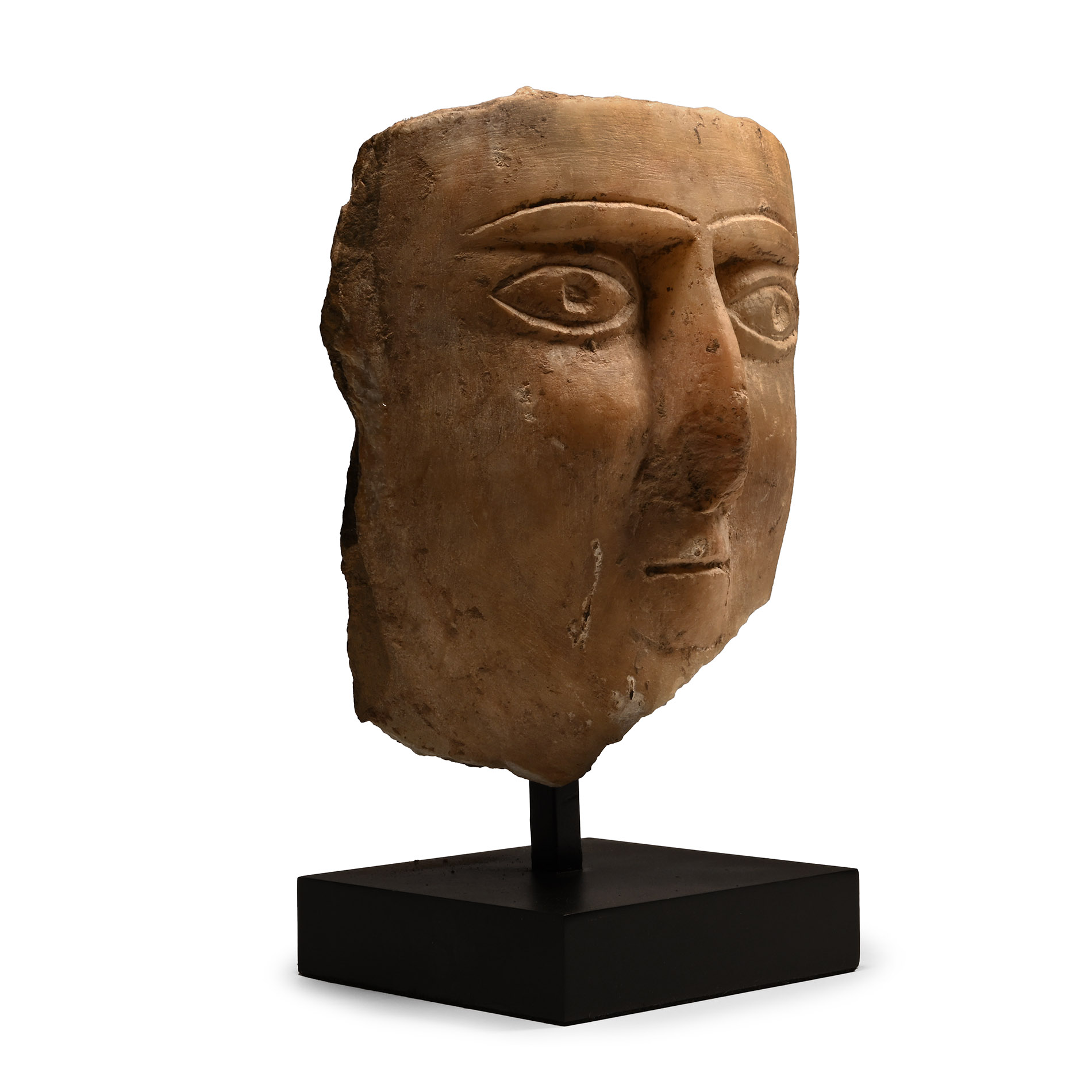
South Arabian Alabaster Head of a Woman
1ST CENTURY B.C.-1ST CENTURY A.D.
8 7/8 in. (3.49 kg total, 22.5 cm high including stand).
Carved in the half-round, the eyes with drilled pupils to accept inserts; mounted on a custom-made display stand.
ProvenanceFrom the collection of Dr Mohammed Saïd Farsi (1936-2019), acquired between 1960-1990 at Christie's, Sotheby's and Mayfair galleries.
LiteratureSee Simpson, S.T., Queen of Sheba: Treasures From Ancient Yemen, The British Museum Press, London, 2002, items 126, 270, and 282, for similar portraits.
FootnotesThe eyes of these beautiful statues were inlaid with blue glass or lapis lazuli. These portraits could have been inserted in a funerary stele, but most probably this portrait comes from a statue similar to the 'Myriam of Tamna', as can be understood from the flat back, to which braided hair in plaster was probably attached.
CONDITIONTimeLine Auctions follows a vetting process to ensure the authenticity and legality of all items, reinforcing our commitment to integrity and responsible trading. Each antiquity, antique, and coin lot undergoes thorough examination by a vetting committee of at least ten external specialists, professional trade association members, scientists, and archaeologists: Our Vetting Process
AUCTIONS:
TimeLine is a leading auction house specialising in antiquities, ancient art, collectables, natural history, coins, medals, and books. Our auctions offer museums, collectors, historians, and enthusiasts the opportunity to acquire unique and historically significant pieces.
-
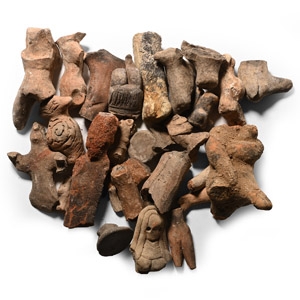
Western Asiatic Terracotta Figurine Fragment Group
1st millennium B.C. and laterSold for (Inc. bp): £59
Including Indus Valley type figure, various heads and other body parts. 623 grams total, 21-94 mm
From a collection acquired on the UK art market from various auction houses and collections mostly before 2000. From an important Cambridgeshire estate; thence by descent. -
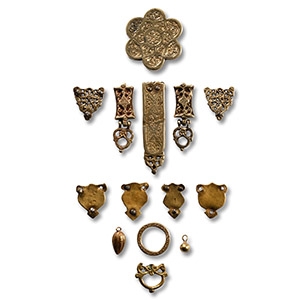
Golden Horde Belt Buckle and Fittings Group
13th-14th century A.D.Estimate: £3,000 - 4,000 (+bp*)
Opening Bid: £1,500
Comprising: hexafoil strap- or belt-fitting with panels of scrolled tendrils and reserved petals, reverse damaged; tongue-shaped hollow strap-end with openwork arabesque finial, bands of scrolled tendrils to obverse, incised arabesque to reverse; two rectangular belt mounts each with openwork obverse, hanged looped fitting to lower edge; four discoid mounts with three pierced lugs; two triangular plaques with openwork scrolled tendril design, pin to each angle; spherical dangle; ribbed scaphoid dangle; openwork hoop with scrolled tendrils; annular mount with ropework motif to obverse. 45 grams total, 9-49 mm
Mr M.B., Mainz, Germany, since the 1980s. Private collection, London. Accompanied by an academic report by Dr. Jack Ogden of Strptwist Ltd, reference 190623 with description of the items and the techniques used to produce them, and the metallic composition of the gold (56.36% to 64.25% on the items tested). -
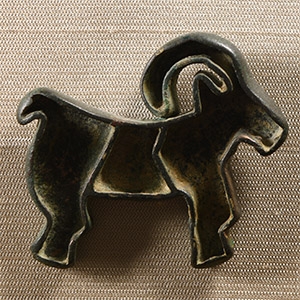
Bactrian Copper Stamp Seal with Ibex
Late 3rd millennium B.C.Sold for (Inc. bp): £468
Ibex-shaped seal with segmented body and long horns, facing right, standing on all four legs; mounted in a modern wooden frame with fabric backing. 220 grams total, 17.8 cm including frame
Ex London, UK, gallery, 1971-early 2000s. Property of a London gentleman.
The object belongs to a large class of compartmented seals, characteristic of this area. These stamps were frequently produced in either copper or bronze and would feature distinctive figural or geometric patterns such as floral and cross motifs, or animals such as goats, snakes, scorpions and mythical beasts. The wild goat or markhor or ibex Shumashti Siru, was a tribal animal subject to representation on the most ancient Bactrian seals.
