
Loading, please wait...
LOT 0344
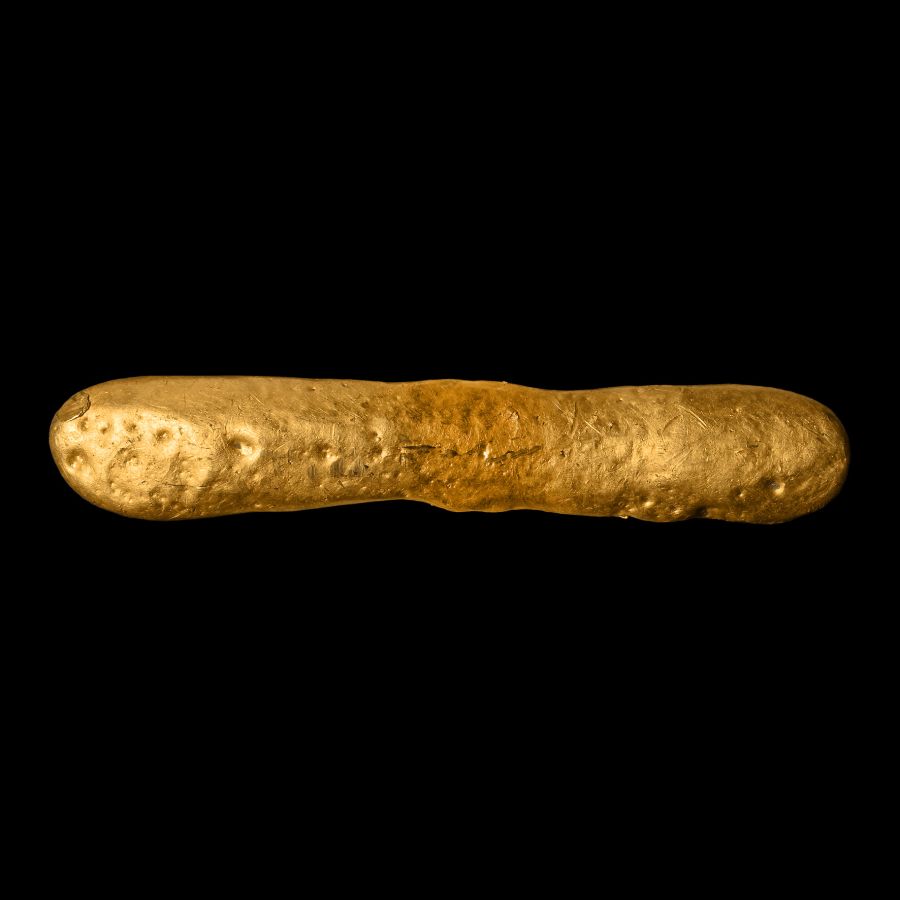
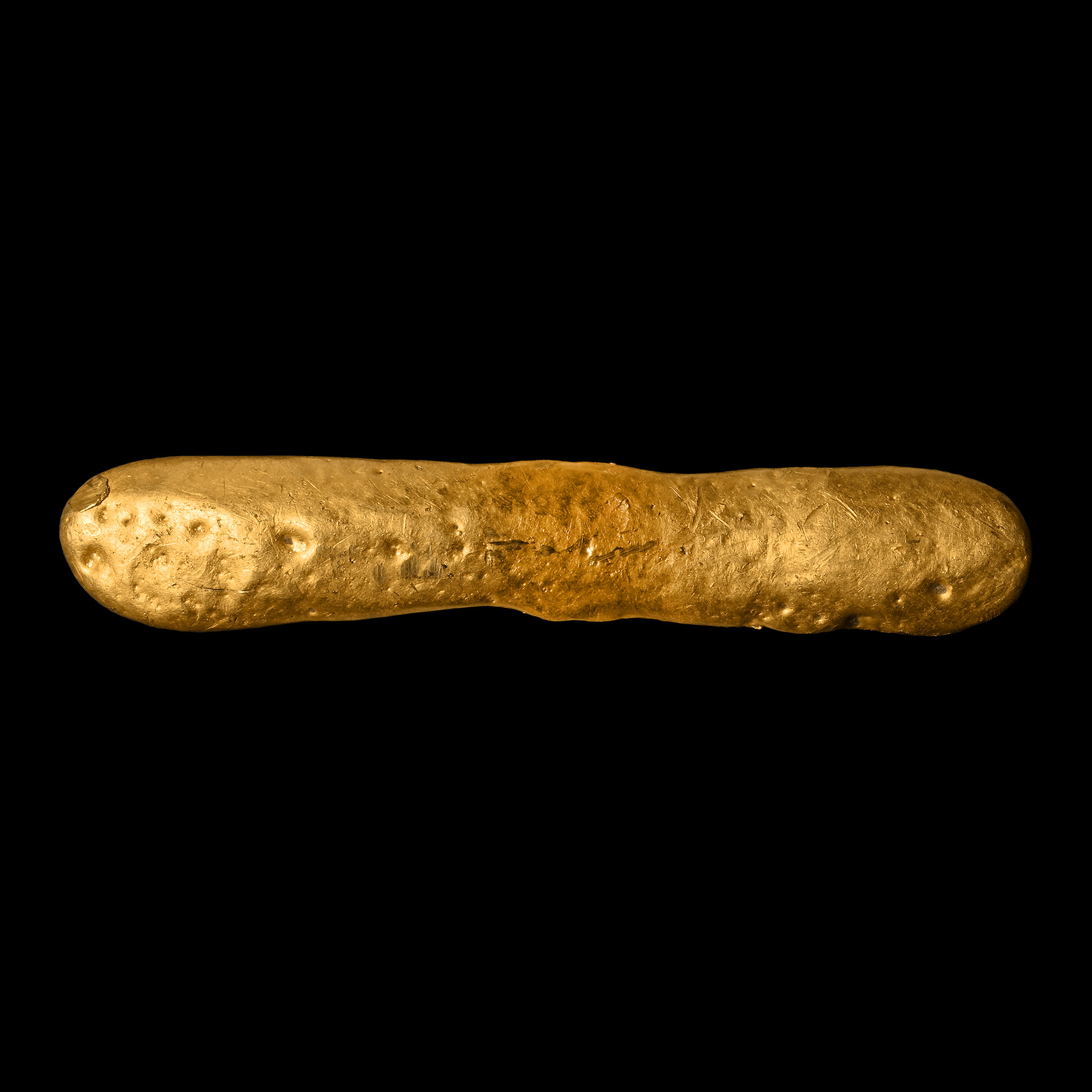
Viking Age or Earlier Solid Gold Bar Ingot
2ND MILLENNIUM B.C.-11TH CENTURY A.D.
2 5/8 in. (36.74 grams, 67 mm).
Sub-rectangular in plan with rounded ends, with the remains of a spur towards one end indicating the pouring point of the molten metal into the mould.
ProvenanceFound whilst searching with a metal detector near Eastchurch, Swale, Kent, UK, on Sunday 1st September 2019.
Accompanied by a copy of the report on find of potential Treasure for HM Coroner with reference no.2020 T3.
Accompanied by a copy of the British Museum's Portable Antiquities Scheme (PAS) report no.KENT-B43CF3.
Although listed as Early Medieval (i.e. Viking) in the coroner's report, this ingot could date from as early as the Bronze Age. The gold purity is near to 21 carat with an elemental breakdown of: Au 87.9, Ag 11.1, Sn 0.2 and traces of other elements.
CONDITIONTimeLine Auctions follows a vetting process to ensure the authenticity and legality of all items, reinforcing our commitment to integrity and responsible trading. Each antiquity, antique, and coin lot undergoes thorough examination by a vetting committee of at least ten external specialists, professional trade association members, scientists, and archaeologists: Our Vetting Process
AUCTIONS:
TimeLine is a leading auction house specialising in antiquities, ancient art, collectables, natural history, coins, medals, and books. Our auctions offer museums, collectors, historians, and enthusiasts the opportunity to acquire unique and historically significant pieces.
-
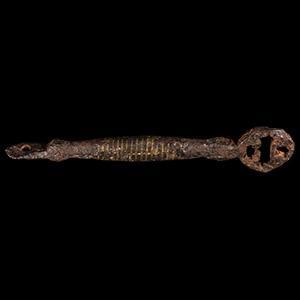
Viking Age Latten Inlaid Iron Key
9th-11th century A.D.Estimate: £200 - 300 (‡+bp*)
Opening Bid: £100
Comprising an openwork bow, oval-section stem and pierced terminal. 59.6 grams, 13.6 cm
From the collection of a North American gentleman, formed in the 1990s. -
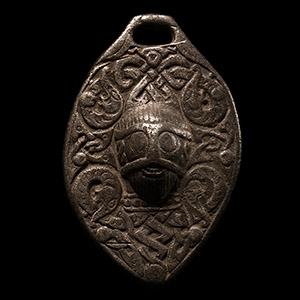
Viking Silver Urnes Style Rattle Pendant
9th century A.D.Sold for (Inc. bp): £2,600
Formed from a hollow vesica-shaped silver mount which rattles when shaken, probably a horse-harness fitting; with Urnes style interlaced dragons in low relief surrounding a facing bearded mask with large staring eyes (Thor?). 67 grams, 73 mm
Formerly acquired on the German art market in the early 1980s. Previously in a European collection in the 1990s. From an important central London collection. This lot has been checked against the Interpol Database of stolen works of art and is accompanied by searcher certificate no. 200377.
The last phase of Viking art is the Urnes style from about 1050-1150. The Urnes style has gracefully curved lines of different width - swelling, tapering - but always in a curve. The tendril clusters from the Ringerike style are abandoned. The Urnes style developed shortly before the middle of the 11th century. -
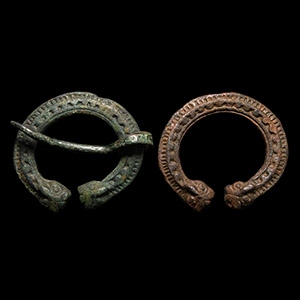
Large Viking Age Bronze Penannular Brooch Group
9th-11th century A.D.Sold for (Inc. bp): £117
Each with animal head terminals and geometric decoration, one with free-running tongue. 21 grams total, 42-44 mm
From the collection of a North American gentleman, formed in the 1990s.
