
Loading, please wait...
LOT 0236
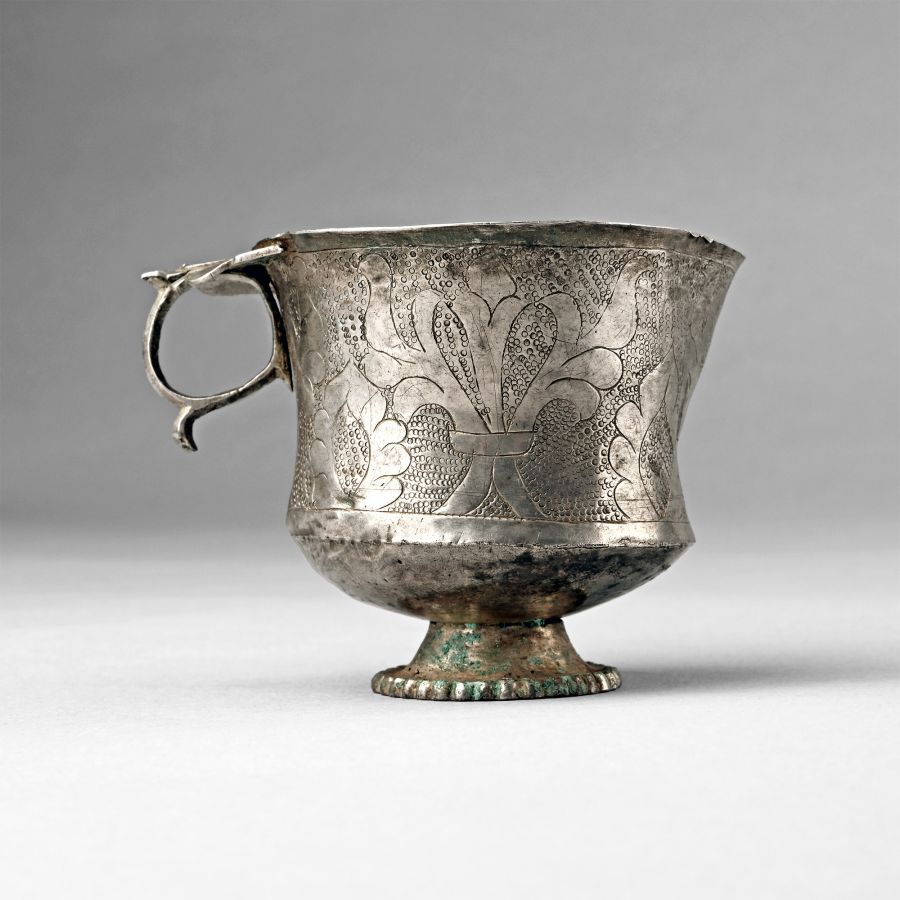
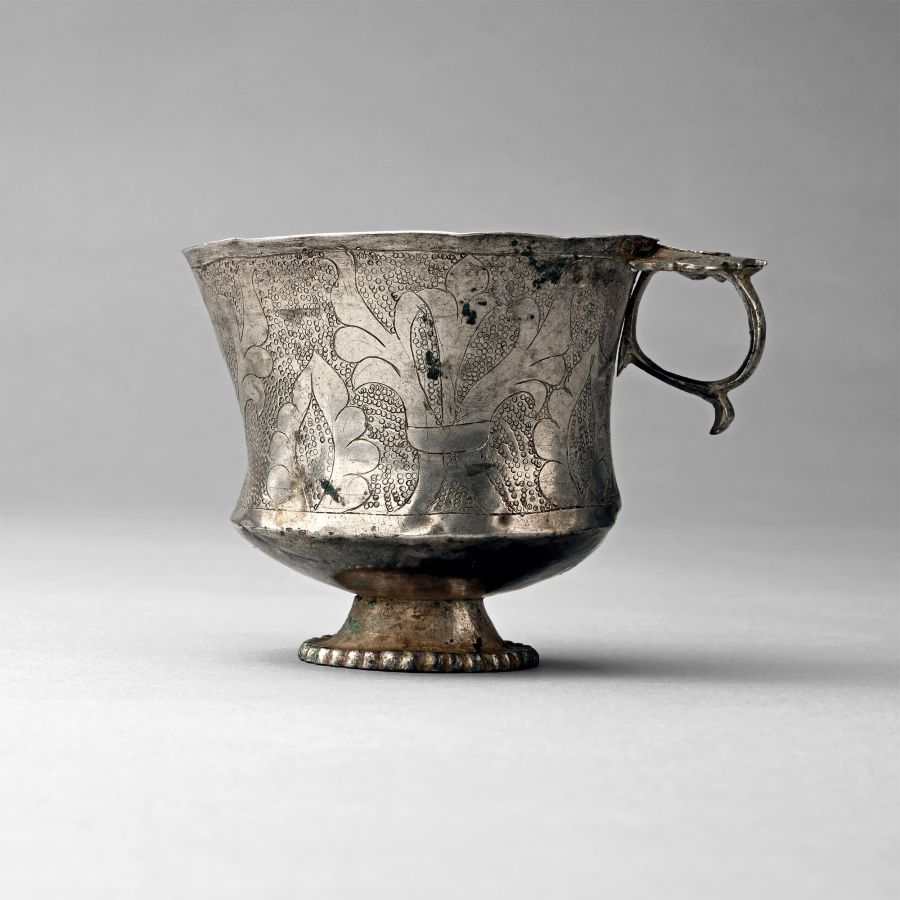
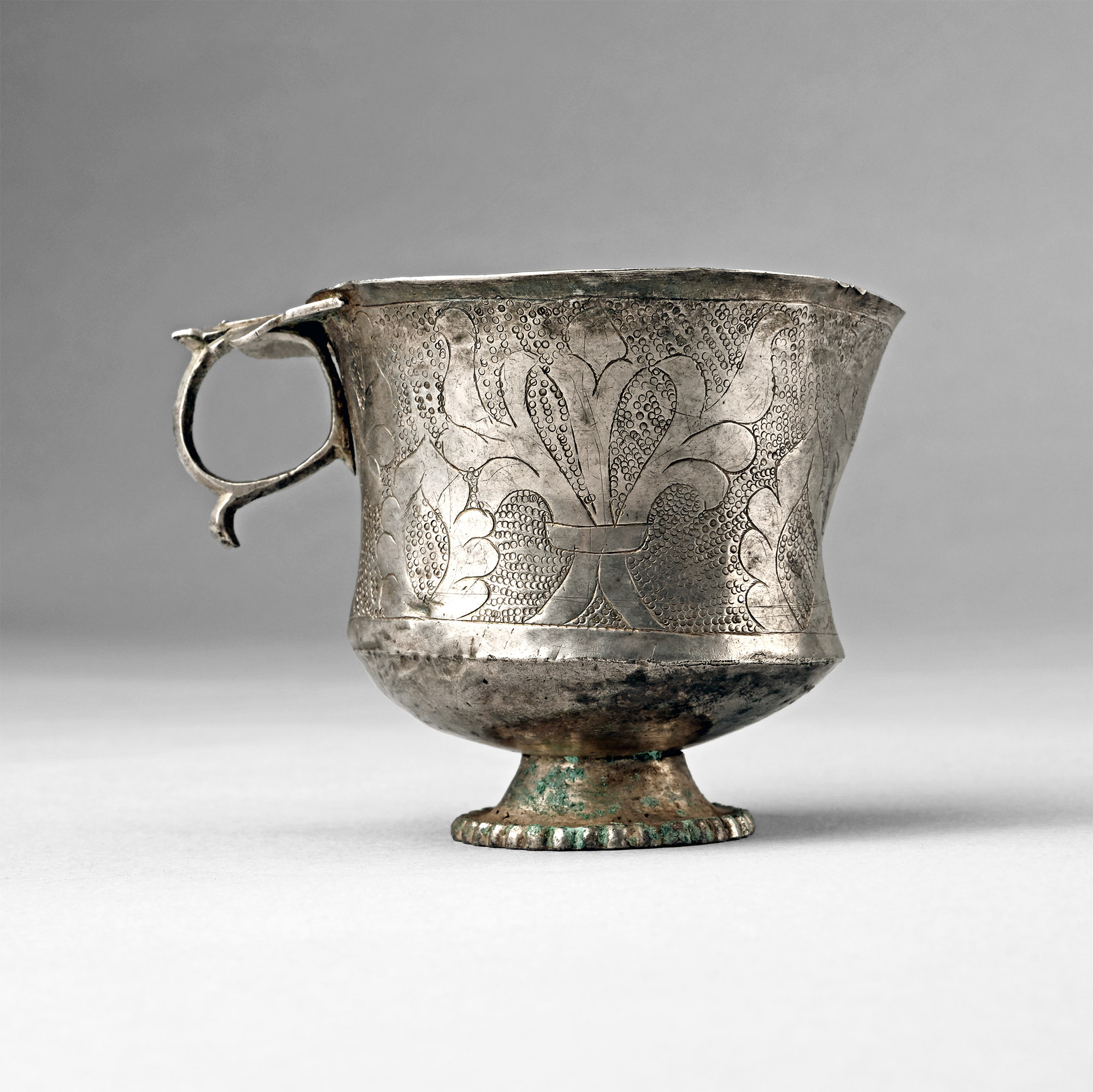
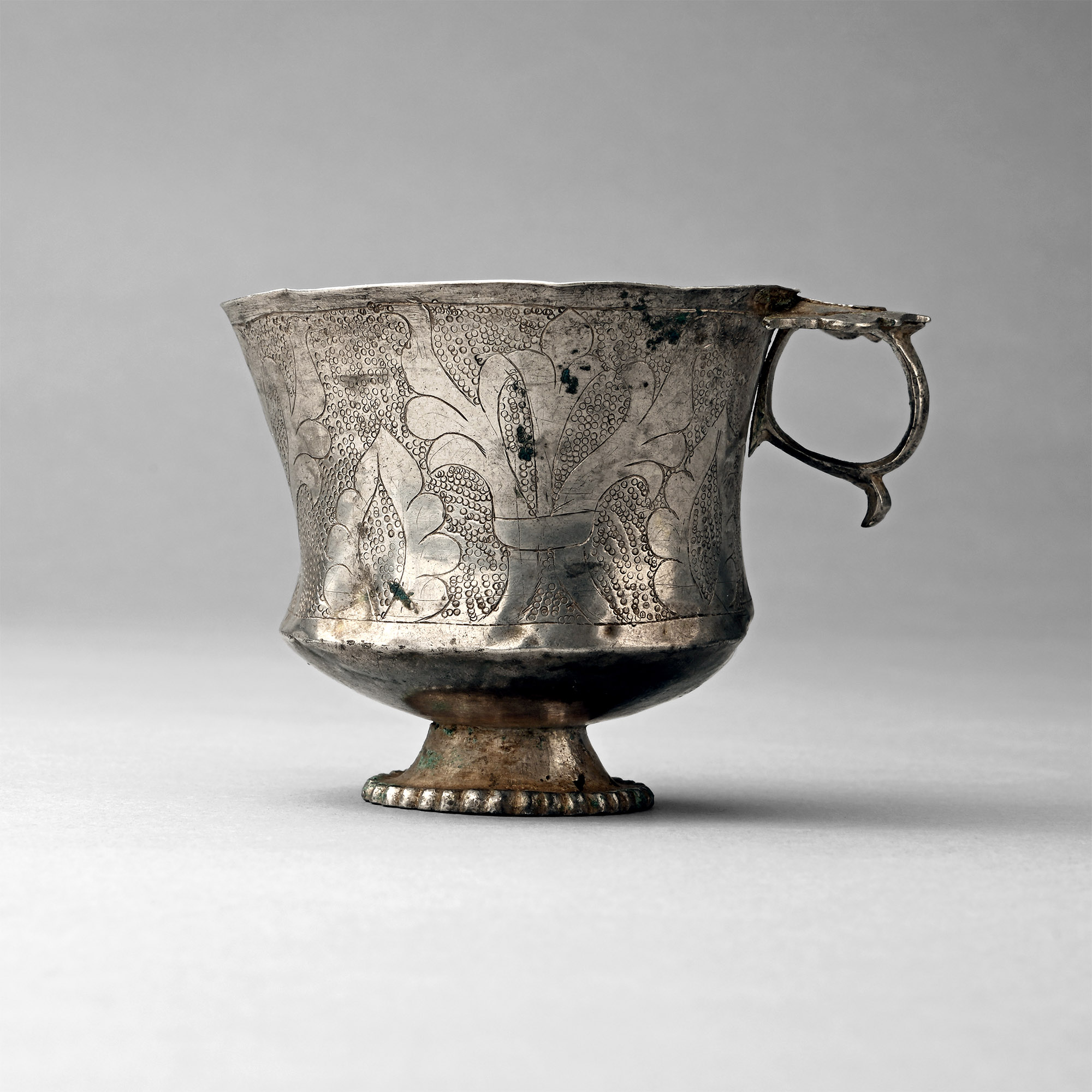
Sogdian Silver Cup with Incised Design
7TH-8TH CENTURY A.D.
3 3/8 in. (67.7 grams, 86 mm).
Comprising a tapering sidewall with carination and convex underside, trumpet-shaped foot with beaded rim; D-shaped thumb-pad to the rim with narrow chamfered handle and spur beneath; frieze of fronds reserved against a pounced field.
ProvenanceOld Belgian private collection, 1970s.
Acquired on the Brussels art market, 2008.
Accompanied by an academic report by Dr Raffaele D'Amato.
This lot has been checked against the Interpol Database of stolen works of art and is accompanied by search certificate number no.12908-242700.
Cf. similar cup in Freer Gallery of Art, Washington, DC, under accession no.F2012.1 (fluted cup with ring handle decorated with elephant heads); see the exhibition The Sogdians: Influencers on the Silk Roads at Freer Gallery of Art and Arthur M. Sackler Gallery, Smithsonian Institute; Marshak, B., ‘A Sogdian Silver Bowl in the Freer Gallery of Art’ in Ars Orientalis, 29, 1999, pp.103-110; see cup with similar handle in the Hermitage State Museum, Saint Petersburg inventory no.S-251; cf. a similar goblet in the treasure of Mala Perescepina, in Daim, F., Hunnen + Awaren, Reitervölker aus dem Osten, Burgenländische Landesausstellung 1996, Schloß Halbturn, 26 April - 31 Oktober 1996, Eisenstadt, 1996, p.214ff., no.5.18.
FootnotesFooted silver cups with ring handles were well known in Central Asia and were common in Sogdian silverwork of the 7th – 8th century A.D. The low beaded foot and the ring handle with lobed thumb rest are well documented in Sogdian silver attributed to the same period. The plant and floral decoration finds parallel with a silver bowl from Xijao (Marshak, 1999, fig.6), which shows the same low beaded foot of our cup. This decoration is also visible on a vessel from the Malaya Perescepina treasure, sent by the Emperor Heraclius to the Bulgarian Khan Kuvrat. Heraclius took it together with other precious objects as war booty after defeating the Sasanians in 627-628 A.D.
CONDITIONTimeLine Auctions follows a vetting process to ensure the authenticity and legality of all items, reinforcing our commitment to integrity and responsible trading. Each antiquity, antique, and coin lot undergoes thorough examination by a vetting committee of at least ten external specialists, professional trade association members, scientists, and archaeologists: Our Vetting Process
AUCTIONS:
TimeLine is a leading auction house specialising in antiquities, ancient art, collectables, natural history, coins, medals, and books. Our auctions offer museums, collectors, historians, and enthusiasts the opportunity to acquire unique and historically significant pieces.
LOT 0236
Sogdian Silver Cup with Incised Design
Estimate £6,000 - 8,000€6,960 - 9,280 (for guidance only)$8,100 - 10,800 (for guidance only)
-
Sasanian Bronze Bowl with Bird
Circa 3rd-6th century A.D.Sold for (Inc. bp): £195
Hemispherical in profile with an incised ring enclosing a perching bird, both filled with punched ring-and-dot detailing. 134 grams, 15 cm
Ex London, UK, collection, early 2000s. -
Bactrian Turquoise Bead Necklace
1st millennium B.C.Estimate: £150 - 200 (+bp*)
Opening Bid: £75
Restrung designer group of turquoise-coloured seed beads with fan-shaped, lentoid and other beads. 4.57 grams, 56.5 cm
Ex Jack Ogden and Faustus Gallery, Mayfair, London, UK, 1980s-1990s, and latterly a London gentleman's collection. -
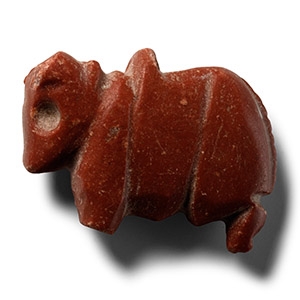
Jemdet Nasr Period Red Jasper Animal Amulet
3rd millennium B.C.Sold for (Inc. bp): £117
Carved in the round zebu with transverse piercing to the dorsal hump, shallow sockets at the eyes to accept inlay in contrasting colour. 30.9 grams, 44 mm
Acquired 1970s-1996. Property of a North American collector. London collection, 2016.
