
Loading, please wait...
LOT 2249
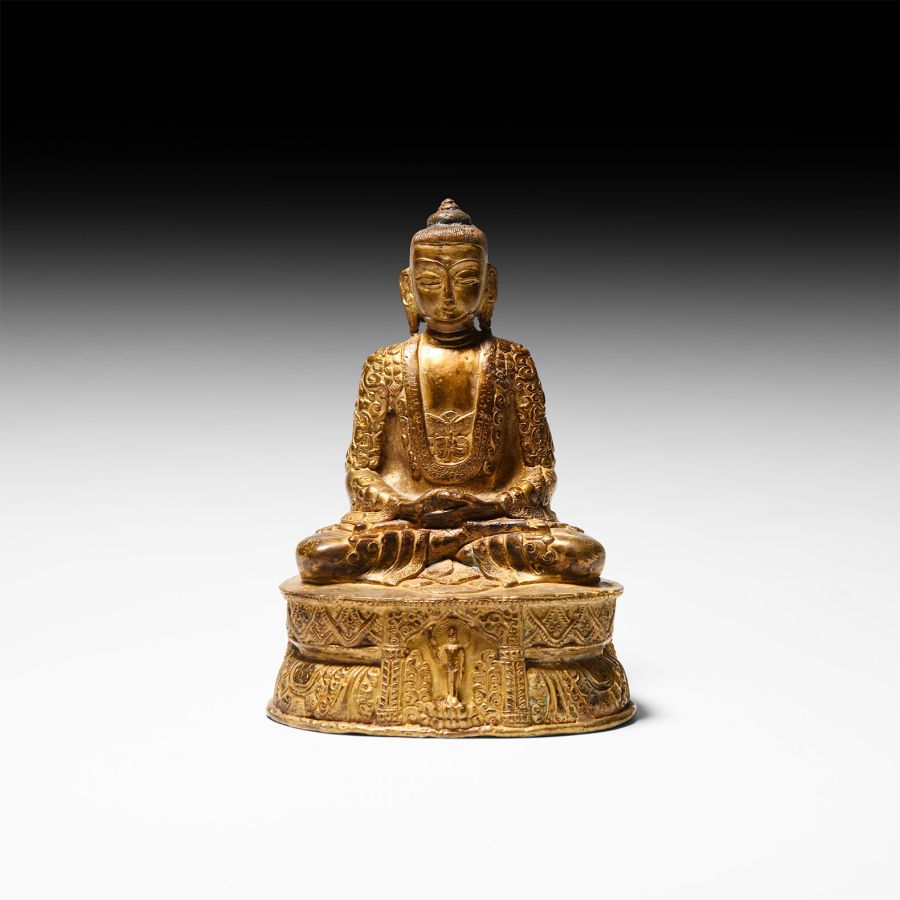
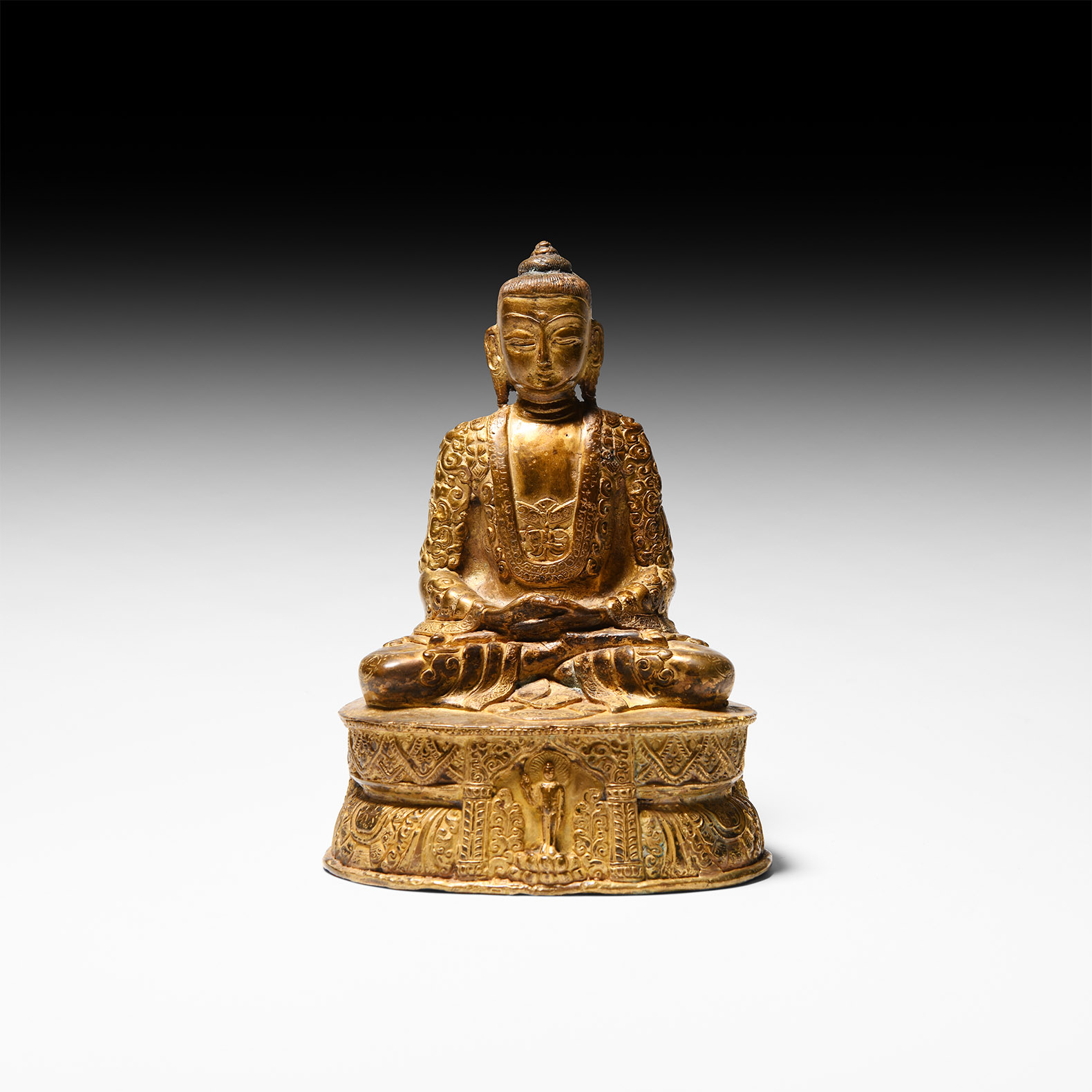
Sino-Tibetan Gilt Bronze Buddha Figure
19TH-20TH CENTURY A.D.
6 3/4 in. (1.9 kg, 17 cm high).
Sitting cross-legged on a lotus flower dais; both hands placed palm-upwards in the lap; the D-shaped base with a lotus detailing to the outer face and icons of Buddha in various poses, hollow with panel to the underside.
ProvenanceAcquired 1970s-2000s.
From a Japanese collection of Buddhist art.
TimeLine Auctions follows a vetting process to ensure the authenticity and legality of all items, reinforcing our commitment to integrity and responsible trading. Each antiquity, antique, and coin lot undergoes thorough examination by a vetting committee of at least ten external specialists, professional trade association members, scientists, and archaeologists: Our Vetting Process
AUCTIONS:
TimeLine is a leading auction house specialising in antiquities, ancient art, collectables, natural history, coins, medals, and books. Our auctions offer museums, collectors, historians, and enthusiasts the opportunity to acquire unique and historically significant pieces.
LOT 2249
Sino-Tibetan Gilt Bronze Buddha Figure
Estimate £300 - 400€350 - 460 (for guidance only)$410 - 540 (for guidance only)
-
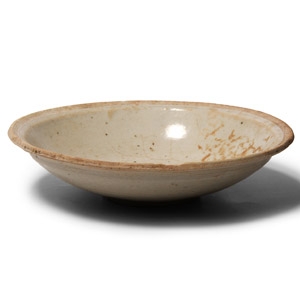
Chinese Song Glazed Ceramic Bowl
Song Dynasty, 960-1279 A.D. or laterSold for (Inc. bp): £7
Formed with a gently tapering convex sidewall, everted rim and ring foot. 138 grams, 14 cm wide
From a late Japanese specialist collector, 1970-2000s. -
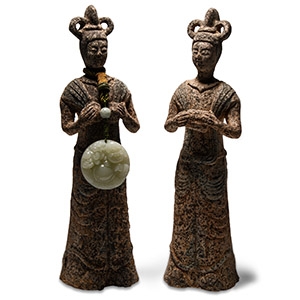
Chinese Style Ceramic Statue Pair
Circa 20th century A.D.Sold for (Inc. bp): £20
Each modelled as a standing female figure with voluminous hair styles, hands cupping breasts, one figure holding an offering, the other with a jadeite necklace displaying a fat Buddha figure in relief. 1.09 kg total, 28 cm high each
The Kusmirek Collection, UK. -
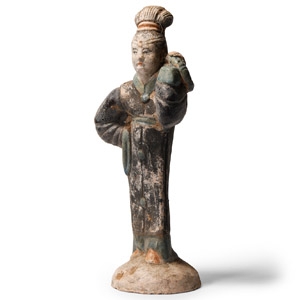
Chinese Qing Glazed Ceramic Female Attendant
Qing Dynasty, 1644-1911 A.D.Estimate: £100 - 140 (+bp*)
Opening Bid: £50
Modelled in the round standing on a domed base, wearing floor length robes with voluminous sleeves, hair dressed in an elaborate style, holding a wreath in one hand over the shoulder; remains of polychrome pigmentation. 505 grams, 22.8 cm high
Ex Cotswold, UK, collection, 1970-1990.
