
Loading, please wait...


LOT 1339
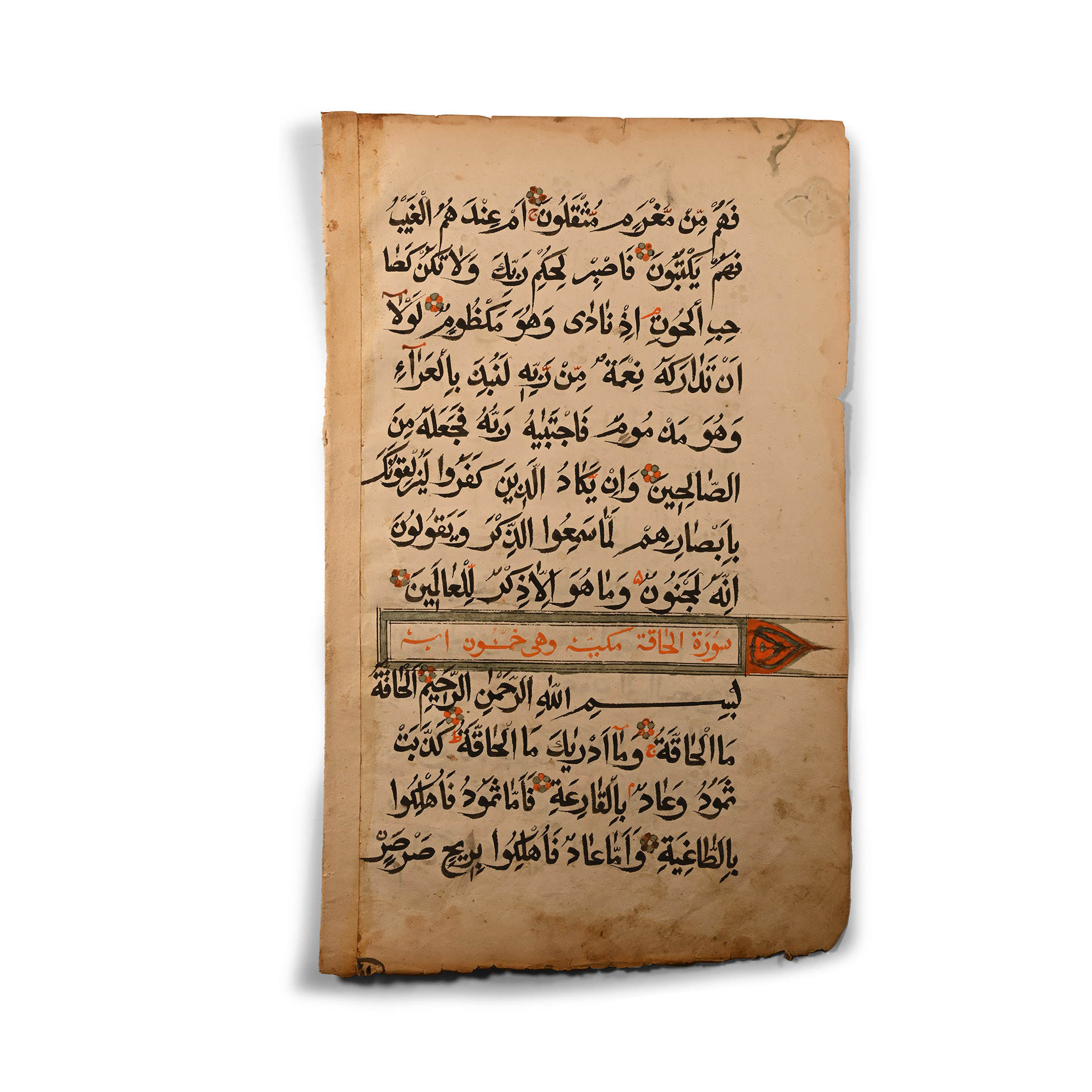
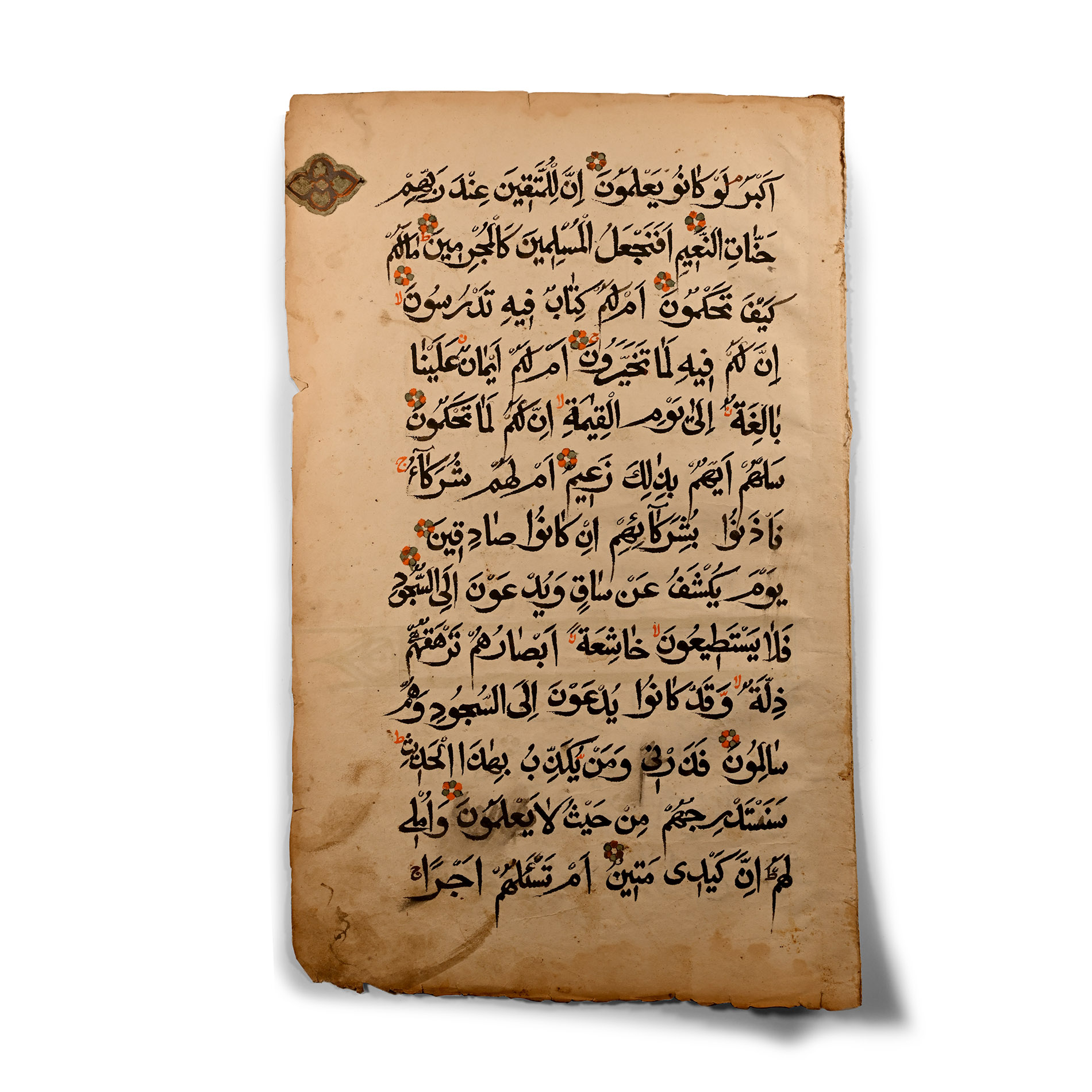
Single Quran Manuscript Page
18TH-19TH CENTURY A.D.
13 3/8 in. (6 grams, 34 cm).
Loose paper leaf with handwritten text in Naskh script, thirteen lines of text to each side, red and blue inked rings as punctuation, decorative inset panel with red-ink text, marginal arabesque painted motif; one long edge reinforced, edges chipped. [No Reserve]
ProvenanceFrom the private collection of M.Cummings, Lincolnshire, UK, 1990s.
CONDITIONTimeLine Auctions follows a vetting process to ensure the authenticity and legality of all items, reinforcing our commitment to integrity and responsible trading. Each antiquity, antique, and coin lot undergoes thorough examination by a vetting committee of at least ten external specialists, professional trade association members, scientists, and archaeologists: Our Vetting Process
AUCTIONS:
TimeLine is a leading auction house specialising in antiquities, ancient art, collectables, natural history, coins, medals, and books. Our auctions offer museums, collectors, historians, and enthusiasts the opportunity to acquire unique and historically significant pieces.
-

Post Sassanian Cut Glass Bottle
6th-7th century A.D.Estimate: £600 - 800 (+bp*)
Opening Bid: £200
Squat in profile with nine facets to the body, broad shoulder and eight facets to the neck, chamfered rim. 197 grams, 84 mm
UK private collection before 2000. Acquired on the UK art market. Property of a London gentleman. -
Akkadian Marble Cylinder Seal with Contest Scene
2nd millennium B.C.Sold for (Inc. bp): £104
With incuse frieze depicting a male figure holding a sceptre between two rampant stags; behind, a second pair of rampant beasts (probably lions) fighting; supplied with a museum-quality impression. 16.7 grams, 28 mm
UK private collection before 2000. Acquired on the UK art market. Property of a London gentleman. -

Bactrian Camel Applique
3rd-2nd millennium B.C.Sold for (Inc. bp): £650
A finely modelled two-humped camel, shown in a dynamic pose, possibly in the act of kneeling and balancing its body weight on its bent back and front legs; mounted in a display frame. 245 grams total, 17.5 cm including frame
Ex London, UK, gallery, 1971-early 2000s. Property of a London gentleman.
Camels were a symbol of wealth and well-being. The importance of the Bactrian camel is attested in the ancient sources. The two-humped Bactrian camel, object of many seal representations, was already widespread in North India during the first quarter of the 2nd millennium B.C. It was probably an Aryan introduction. The Mitanni came from Bactria and Margiana and maintained a close connection with their regions of origin, via Khorasan, as can be suggested by the presence of Bactrian camels on the Mitanni seals.
