
Loading, please wait...
LOT 2080
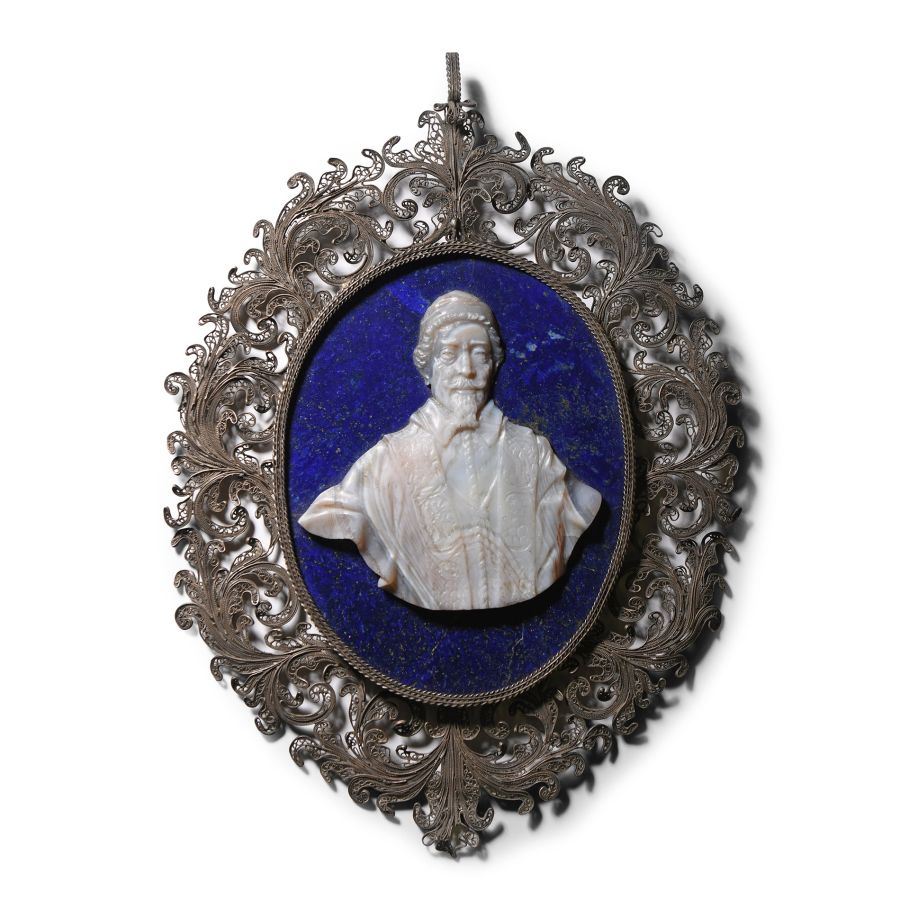
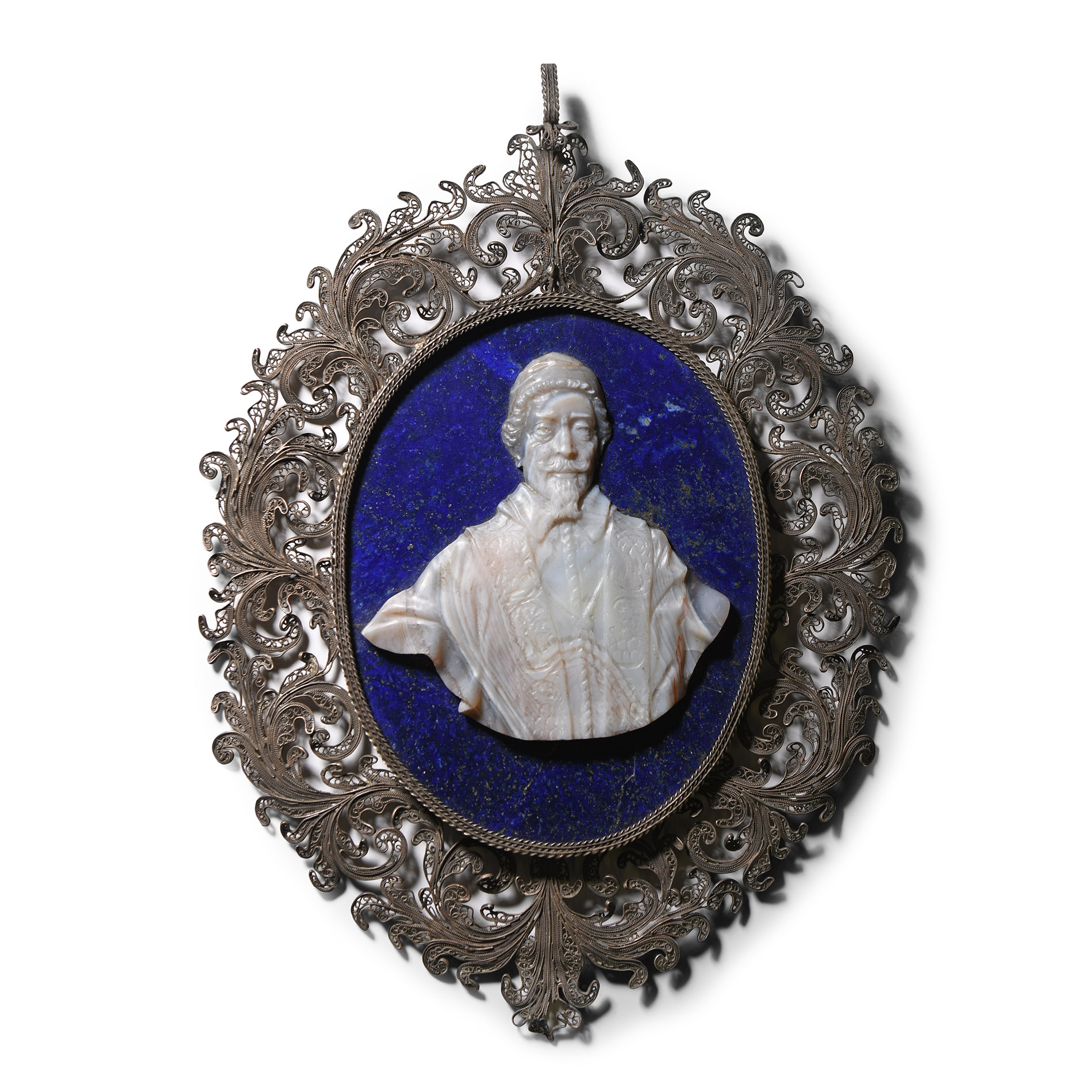
Silver Plaque with Cameo of Pope Alexander VII
17TH-18TH CENTURY A.D.
11 1/4 in. (500 grams, 28.5 cm).
A carved agate facing bust within a lapis lazuli plaque, held in a silver canatille frame comprising elaborate filigree foliage and with suspension loop; image of Pope Alexander VII.
ProvenancePrivate collection, England.
FootnotesPope Alexander VII was born Fabio Chigi and took the role of head of the Catholic Church and ruler of the Papal States from 7 April 1655 to his death, in May 1667. He held a number of diplomatic positions in the Holy See, was ordained in 1634, and became bishop of Nardo in 1635. Pope Innocent X elevated him to the role of secretary of state in 1651, and in the following year he was appointed a cardinal. Alexander VII supported various construction projects in Rome, wrote poetry and patronized artists working on the decoration of churches.
CONDITIONTimeLine Auctions follows a vetting process to ensure the authenticity and legality of all items, reinforcing our commitment to integrity and responsible trading. Each antiquity, antique, and coin lot undergoes thorough examination by a vetting committee of at least ten external specialists, professional trade association members, scientists, and archaeologists: Our Vetting Process
AUCTIONS:
TimeLine is a leading auction house specialising in antiquities, ancient art, collectables, natural history, coins, medals, and books. Our auctions offer museums, collectors, historians, and enthusiasts the opportunity to acquire unique and historically significant pieces.
-
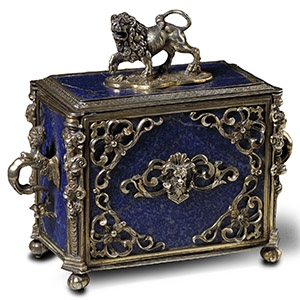
Gilt Bronze Casket with Lapis Lazuli Panels
19th century A.D.Sold for (Inc. bp): £1,105
Rectangular casket with hinged lid and melon-bead feet; four sides and lid with inset lapis lazuli panel in a gilt frame, caryatid to each corner, applied openwork ribbons and rosettes, handle of lid formed as an advancing lion, loop handle on each end formed as a harpy. 645 grams, 14.5 cm wide
Private collection, England. -
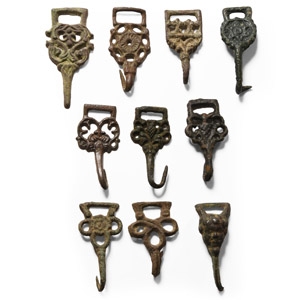
Tudor 'Published' Bronze Clothes Fastener Collection
16th century A.D.Sold for (Inc. bp): £52
Group of hooked tags of various forms including rosette and openwork types; many of these objects are published in the Detector Finds book series and Buttons & Fasteners 500 BC-AD 1840. 25.3 grams total, 30-40 mm
From the collection of the famous author, writer and speaker, Gordon Bailey, Essex, UK; formed since 1968. -
.jpg)
Framed Watercolour Painting
Persia, 20th century A.D.Sold for (Inc. bp): £20
With two lines of a poem, permitting a view into a grand architectural setting, populated by falconers, musicians, attendants and others entertaining a prince seated beneath a pagoda, hilly landscape beyond the walls, broad stylised floral border to three sides, Indian workmanship; mounted in a reveal and a glazed wooden frame. 782 grams, 38.6 x 25.5 cm
Very fine condition.
Acquired on the UK art market, 1980s-1990s. The Woodbridge collection of Indo-Persian art.
