
Loading, please wait...
LOT 1078
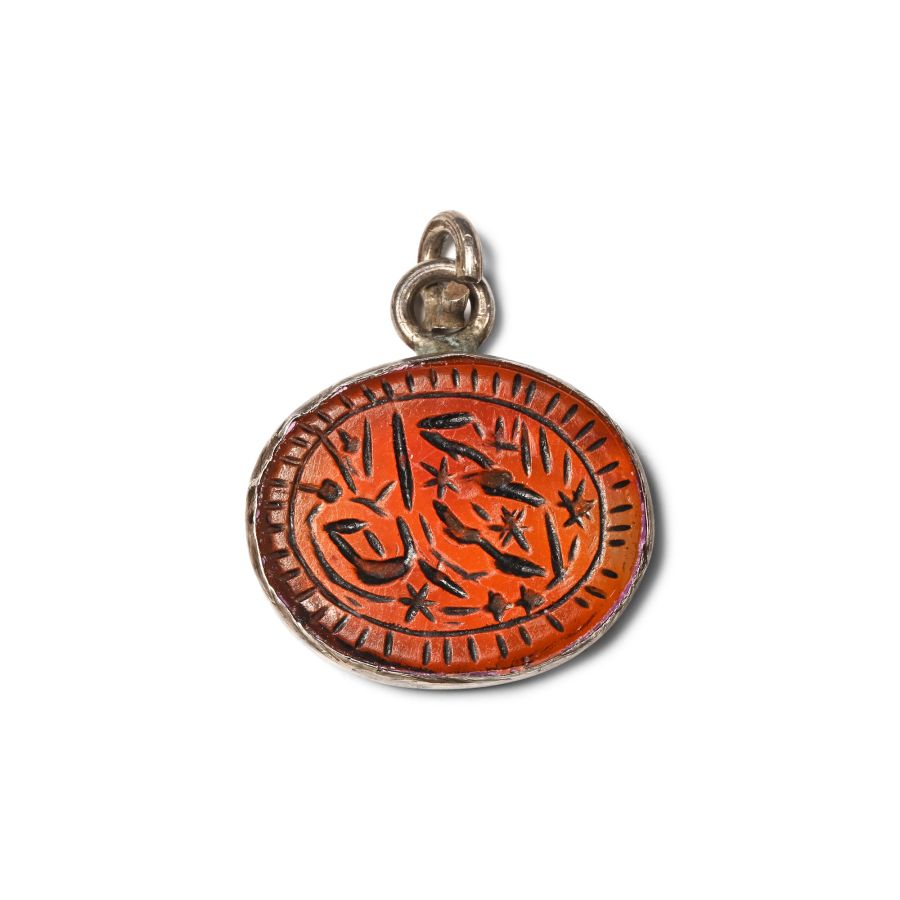
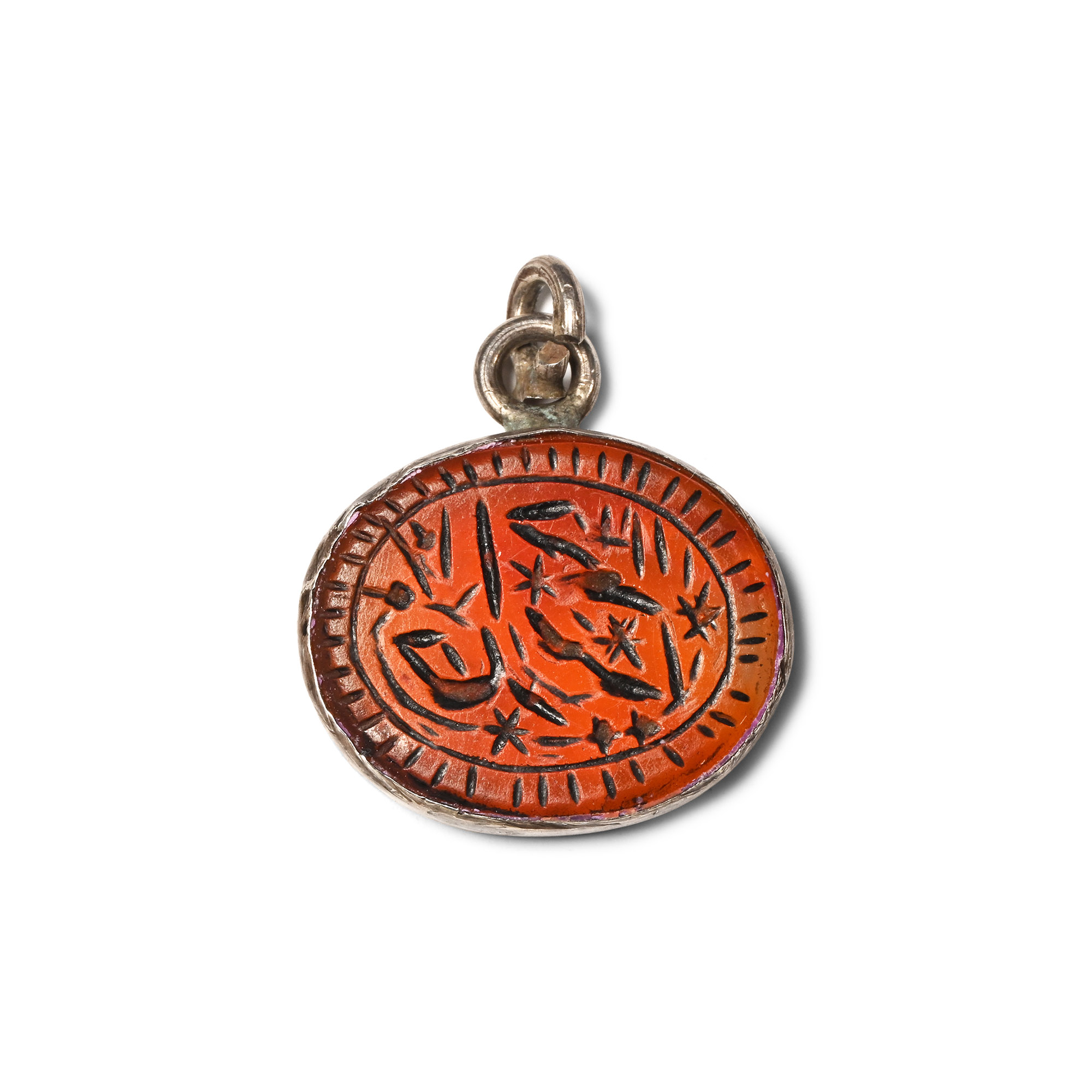
Silver Pendant with Engraved Garnet
19TH-20TH CENTURY A.D.
5/8 in. (2.37 grams, 17 mm).
Ellipsoid garnet cloison with segmented border and calligraphic inscription, in silver cell with loop. [No Reserve]
ProvenancePrivate collection, London.
This lot has been cleared against the Art Loss Register database, and is accompanied by an illustrated lot declaration signed by the Head of the Antiquities Department, Dr Raffaele D'Amato.
TimeLine Auctions follows a vetting process to ensure the authenticity and legality of all items, reinforcing our commitment to integrity and responsible trading. Each antiquity, antique, and coin lot undergoes thorough examination by a vetting committee of at least ten external specialists, professional trade association members, scientists, and archaeologists: Our Vetting Process
AUCTIONS:
TimeLine is a leading auction house specialising in antiquities, ancient art, collectables, natural history, coins, medals, and books. Our auctions offer museums, collectors, historians, and enthusiasts the opportunity to acquire unique and historically significant pieces.
-
.jpg)
Akkadian Shell Cylinder Seal with Heroes
2350-2200 B.C.Sold for (Inc. bp): £5,720
Representing a god with horned helmet, half animal and half man, standing on the left and holding a staff, near him the hero Gilgamesh killing Humbaba, and the hero Enkindu killing the celestial bull, followed by a mythological divinity depicted as half animal and half human; supplied with a museum-quality impression. 27 grams, 33 mm
Acquired in the mid 1980s-1990s. Private collection, Switzerland, thence by descent. Private collection, since the late 1990s. This lot has been checked against the Interpol Database of stolen works of art and is accompanied by a search certificate number no.12577-232112. This lot has been cleared against the Art Loss Register database, and is accompanied by an illustrated lot declaration signed by the Head of the Antiquities Department, Dr Raffaele D'Amato.
King Sargon of Akkad created political unity when he seized control of Mesopotamia, and carvings on seals from the time demonstrate his success by portraying the power the Akkadian gods had to legitimize both their domain and their rulers. Religious scenes on cylinder seals detail the spiritual beliefs and practices of the time. The deeply intertwined relationship between religion and state power in Akkad is also present in the decorations of some cylinder seals. Here the hero Gilgamesh, embodying the strength of royal power, kills the monster Humbaba, as the king of Akkad kills his enemies. -
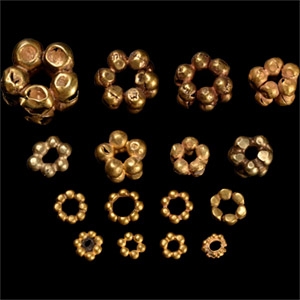
Western Asiatic Mixed Gold Floral Bead Group
1st millennium B.C.Estimate: £300 - 400 (+bp*)
Opening Bid: £150
Comprising annular granule clusters and annular beads formed of two rows of hollow spheres. 2.89 grams total, 2-8 mm
Ex property of a late Japanese collector, 1970-2000s. This lot has been cleared against the Art Loss Register database, and is accompanied by an illustrated lot declaration signed by the Head of the Antiquities Department, Dr Raffaele D'Amato. -

Sasanian Carnelian Seal with Bird
5th-6th century A.D.Sold for (Inc. bp): £338
Plano-convex garnet seal with intaglio simurgh motif, portion of wire suspension loop. 2.21 grams, 12.85 mm
Acquired from Ancient and Islamic Art Ltd., February 1993. Thence by descent, private collection, since 1998. This lot has been cleared against the Art Loss Register database, and is accompanied by an illustrated lot declaration signed by the Head of the Antiquities Department, Dr Raffaele D'Amato.
