
Loading, please wait...
LOT 1878
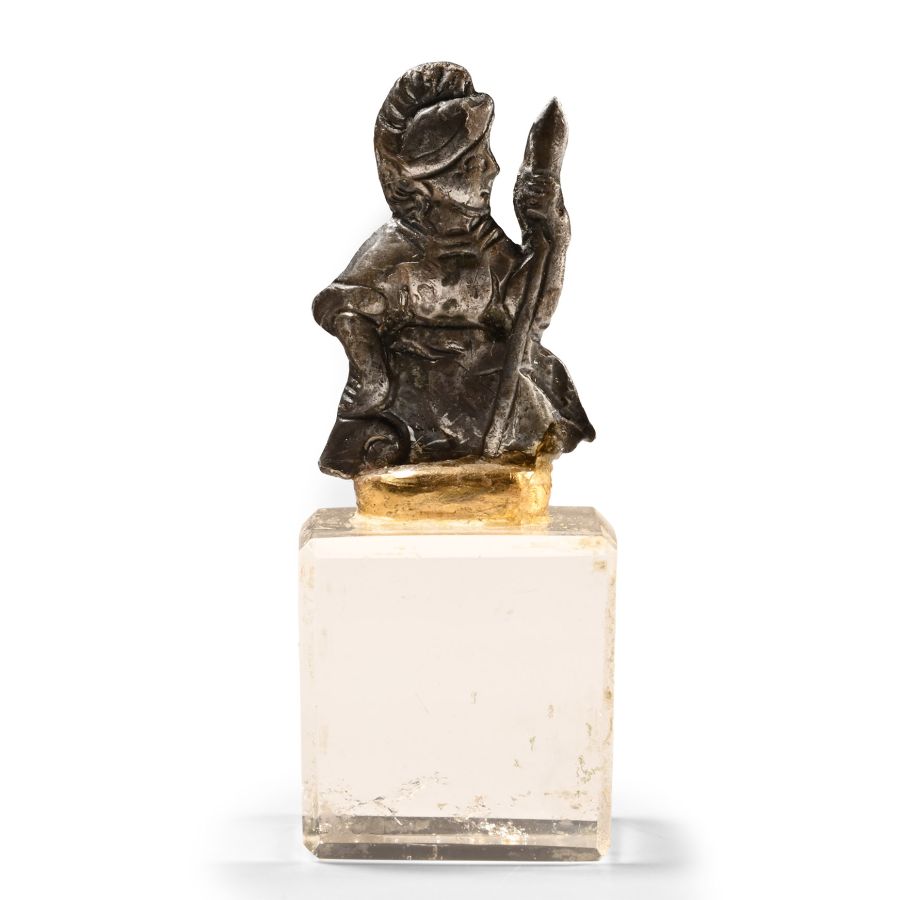
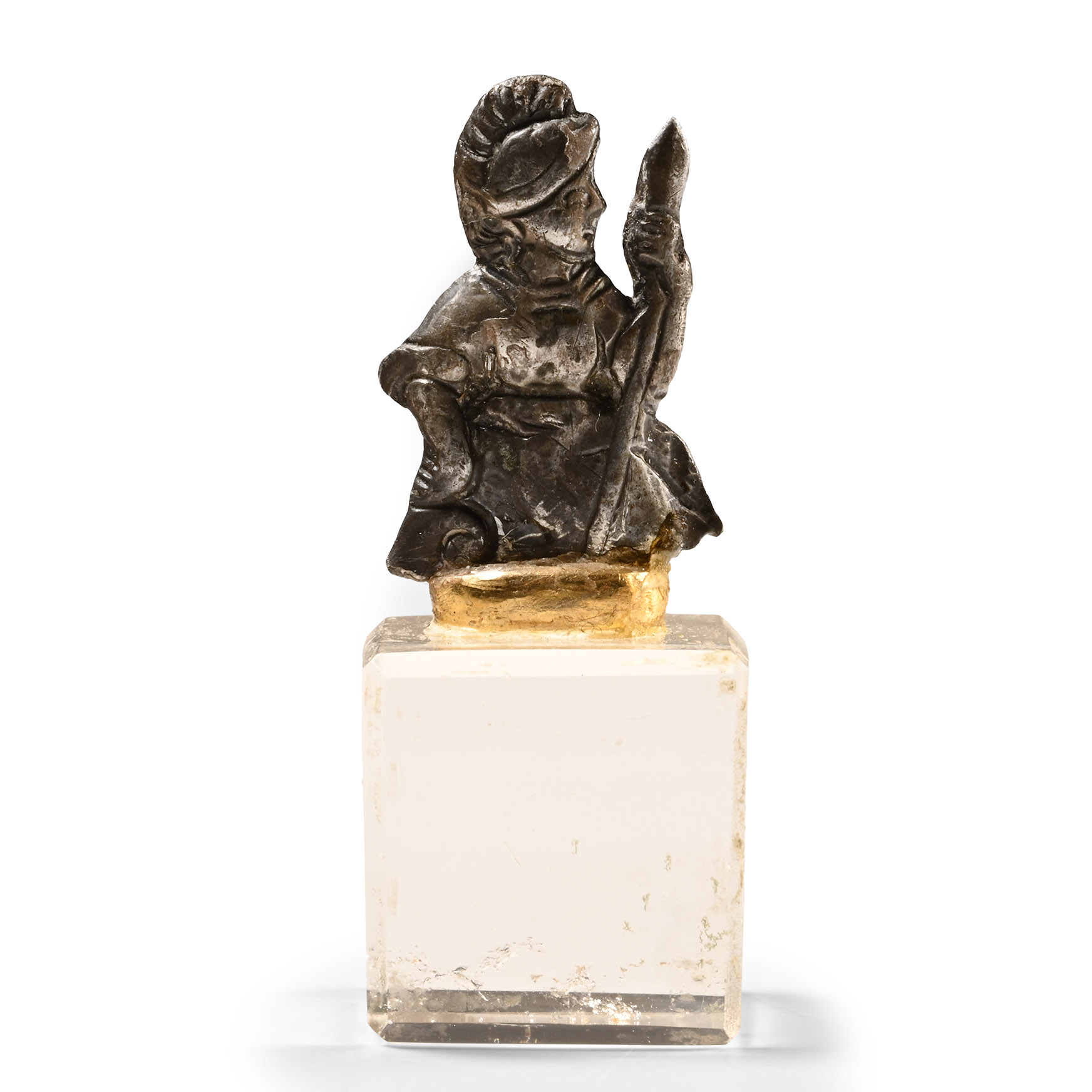
Silver Mount of Britannia
CIRCA 1750 A.D.
1 1/2 in. (14.5 grams total, 40 mm including stand).
Depicted in profile and wearing a crested helmet, holding a long spear in her left hand and shield resting against her lower body; mounted on a custom-made display stand.
ProvenanceFrom the late Alison Barker collection, 1970-1990.
CONDITIONTimeLine Auctions follows a vetting process to ensure the authenticity and legality of all items, reinforcing our commitment to integrity and responsible trading. Each antiquity, antique, and coin lot undergoes thorough examination by a vetting committee of at least ten external specialists, professional trade association members, scientists, and archaeologists: Our Vetting Process
AUCTIONS:
TimeLine is a leading auction house specialising in antiquities, ancient art, collectables, natural history, coins, medals, and books. Our auctions offer museums, collectors, historians, and enthusiasts the opportunity to acquire unique and historically significant pieces.
-
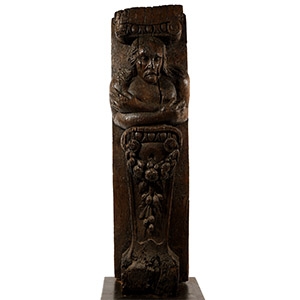
Large Oak Architectural Feature Section with Figure of Charles I
17th century A.D.Sold for (Inc. bp): £1,105
With scrolled capital supported by a human bust above a tapering column ornamented with egg-and-reel detailing and a festoon of fruit and leaves, flared foot; the human bust a male, possibly King Charles I, with shoulder-length hair and goatee beard, the arms crossed at the chest and hands clasped to the body; mounted on a later wooden stand. 50 kg total, 146.5 cm high including stand
Acquired from an antiques shop in Southwold, UK. Property of a Suffolk, UK, gentleman. -
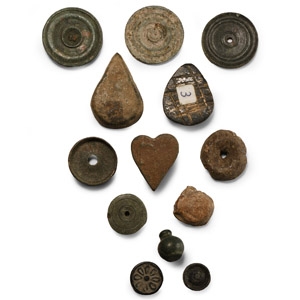
Mixed Bronze Weight Collection
18th-20th century A.D.Sold for (Inc. bp): £20
Including discoid type with flange rim, heart-shaped, teardrop and other types. 223 grams total, 13-38 mm
Ex Simmons gallery, 1990s. From a North London, UK, collection. -
.jpg)
Post Medieval Toy Finial with Two Faces
19th century A.D.Sold for (Inc. bp): £7
D-shaped in profile with grotesque male face to both sides, the mouth and chin formed with a separate panel. 31.6 grams, 33 mm
Found Essex, UK. Property of an Essex collector.
