
Loading, please wait...
LOT 1913
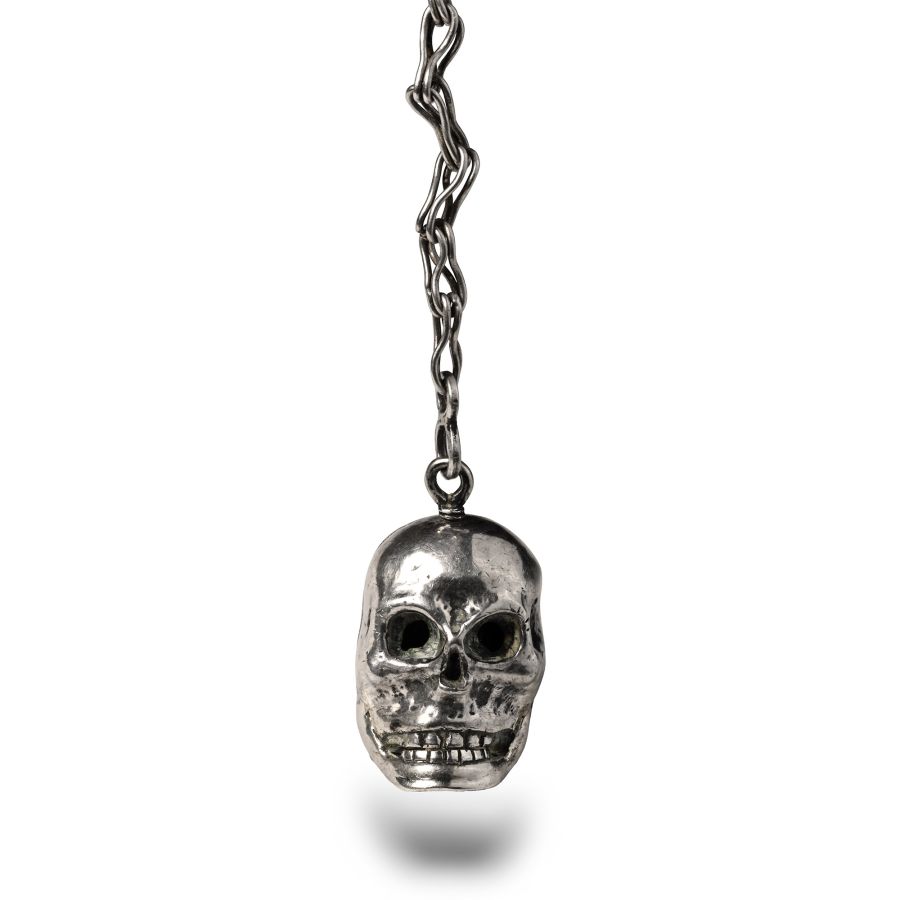
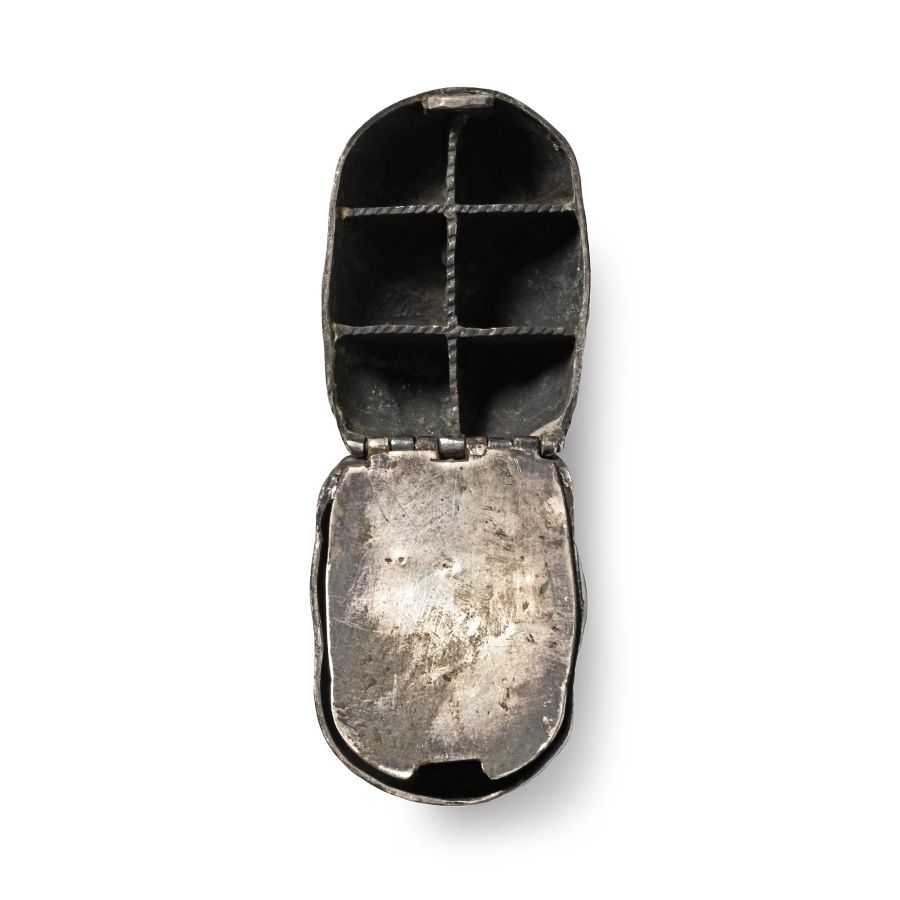
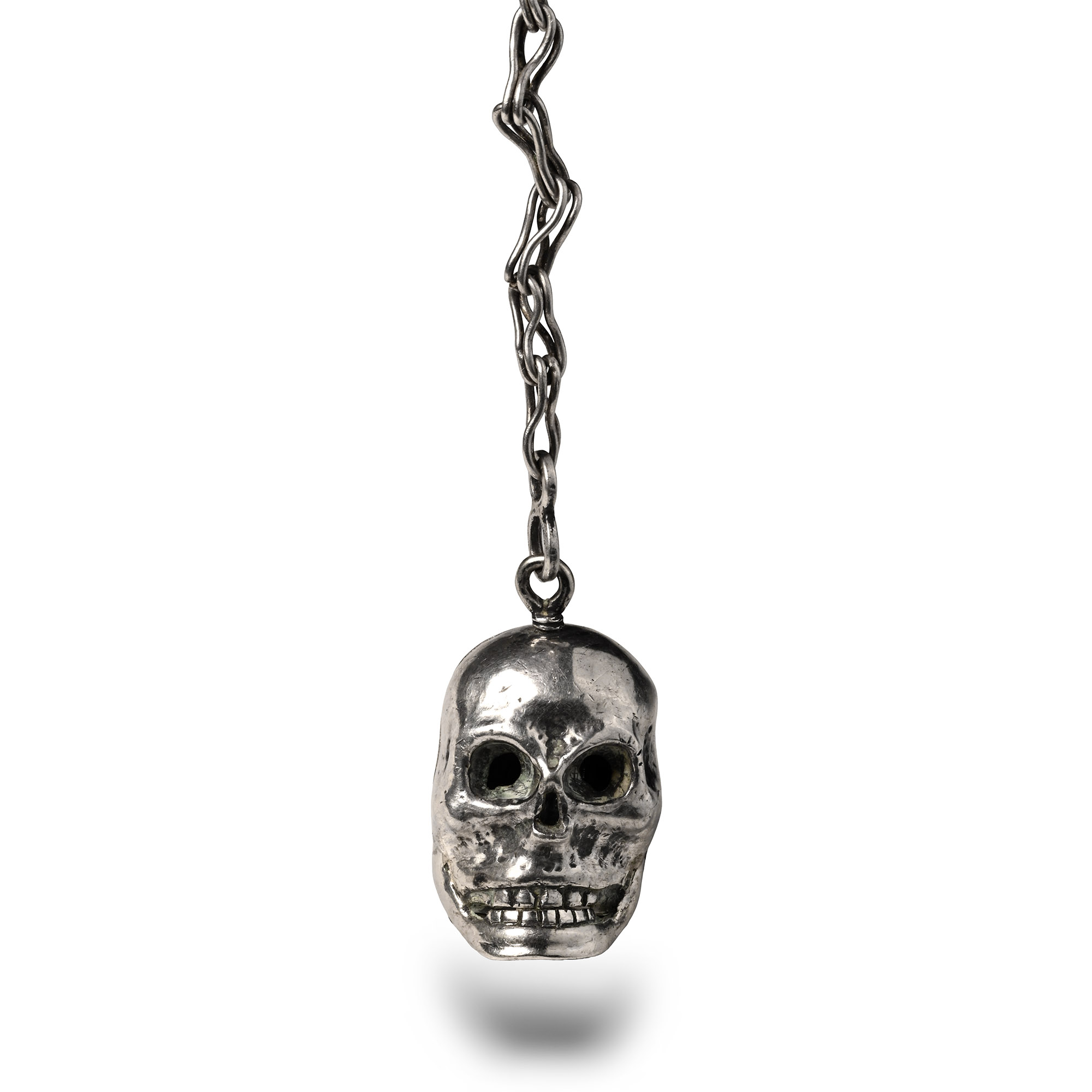
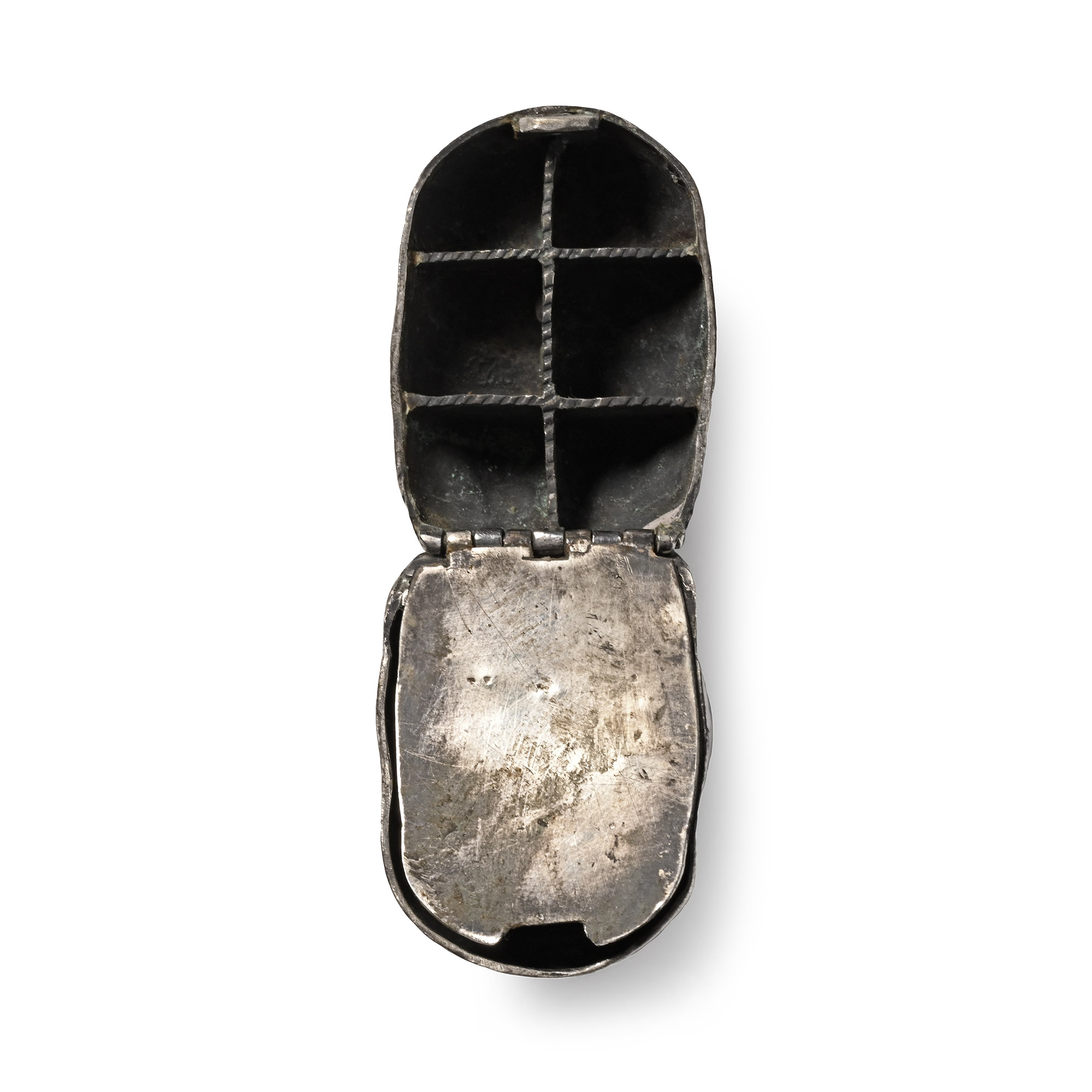
Silver Memento Mori Skull Pomander
17TH CENTURY A.D.
1 /2 in. (25.4 grams, 38 mm).
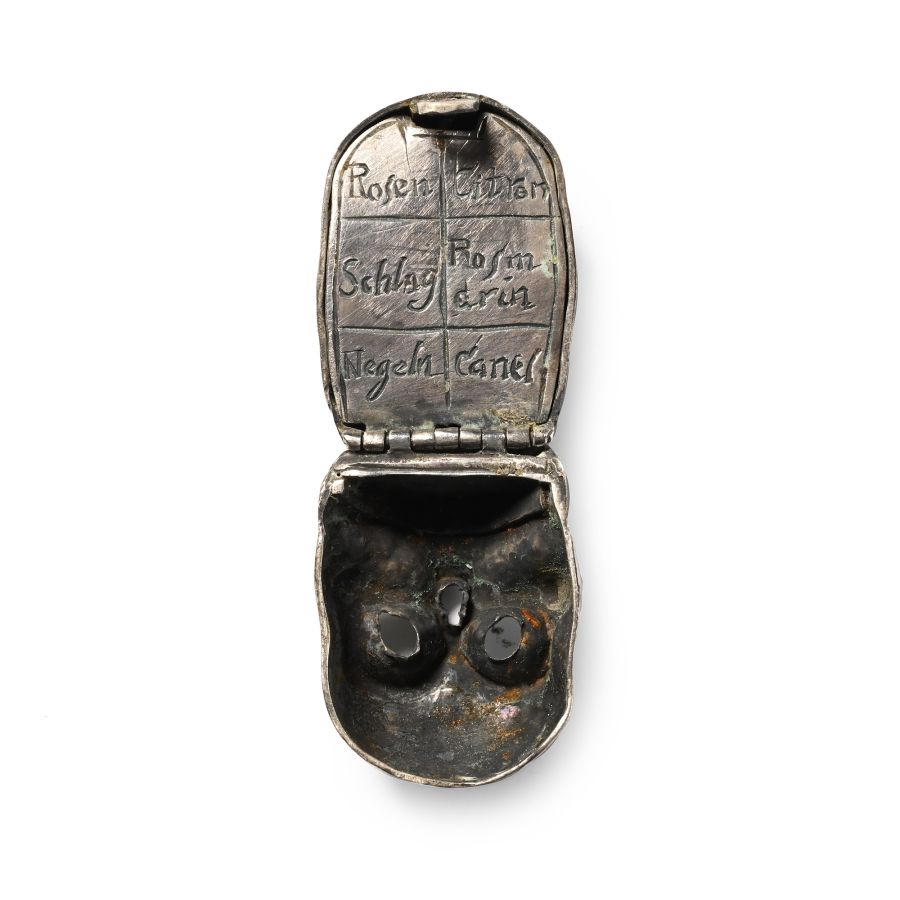
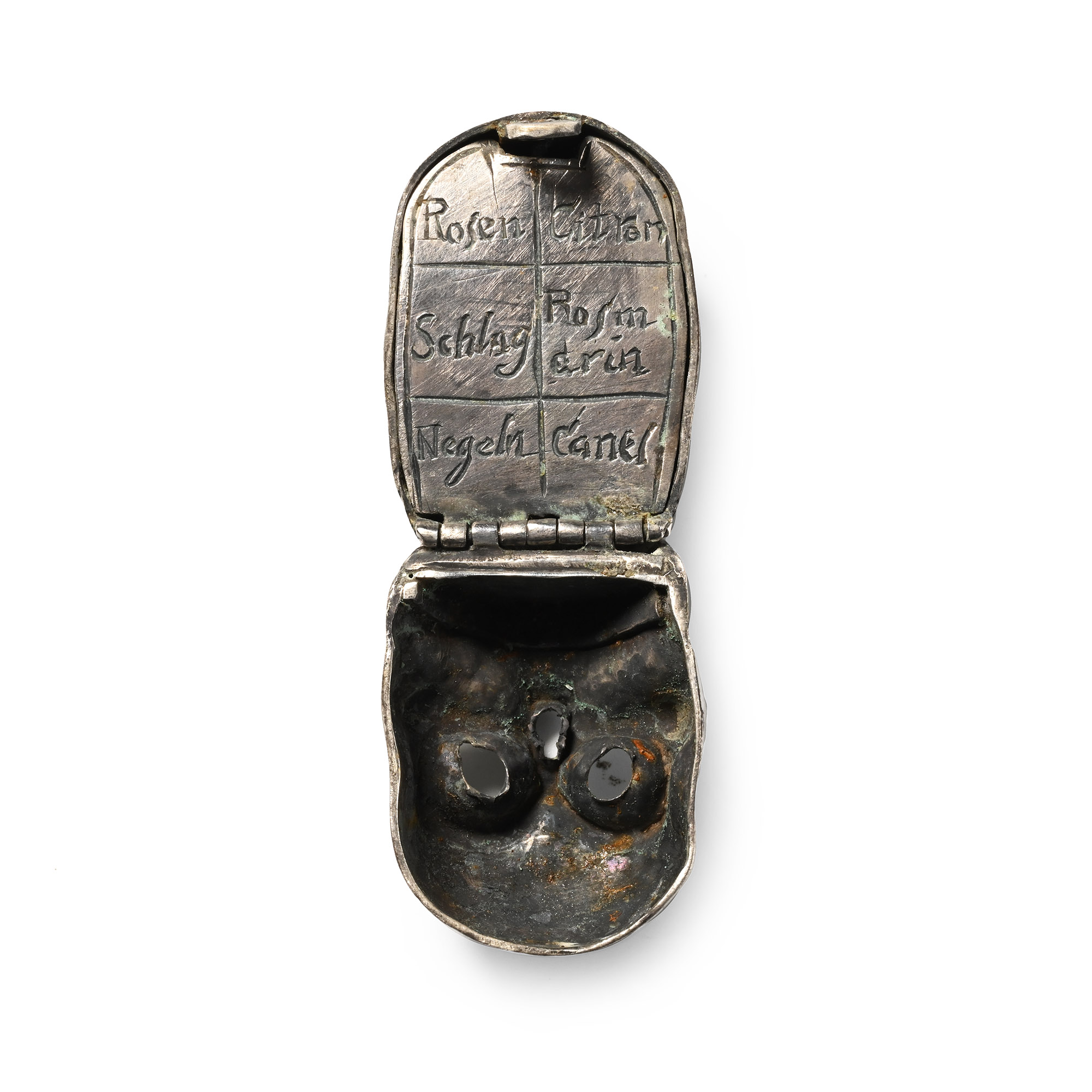
Hollow-formed with openwork eyes and nasal cavity, hinge beneath the lower jaw which opens to reveal six compartments with internal 'lid' engraved with the names of six fragrances: 'Rosen, Citron, Schlag, Rosmarin, Negeln, and Canel', the other side to contain a sponge soaked in the perfumed oils and spices, a short length of chain suspended from the top of the skull.
ProvenancePrivate collection, UK.
This lot has been checked against the Interpol Database of stolen works of art and is accompanied by search certificate number no.13004-246014.
For a similar example also in silver see: British Museum collection no.1978,1002.162.
FootnotesOriginally a talisman to ward off sickness and noxious odours, this item of jewellery could be worn around the neck or suspended from a belt. The Pomander scent carrier, with chambers for the herbs and spices, was popular in England and on the continent during the 16th and 17th centuries. Intended to protect the wearer from sickness, it was designed to be worn around the neck or waist on a rope by wealthy aristocrats.
CONDITIONTimeLine Auctions follows a vetting process to ensure the authenticity and legality of all items, reinforcing our commitment to integrity and responsible trading. Each antiquity, antique, and coin lot undergoes thorough examination by a vetting committee of at least ten external specialists, professional trade association members, scientists, and archaeologists: Our Vetting Process
AUCTIONS:
TimeLine is a leading auction house specialising in antiquities, ancient art, collectables, natural history, coins, medals, and books. Our auctions offer museums, collectors, historians, and enthusiasts the opportunity to acquire unique and historically significant pieces.
-

Post Medieval Bronze Bull Statuette
20th century A.D. or earlierSold for (Inc. bp): £39
Standing with head lowered and facing slightly right. 297 grams, 13 cm long
From the private collection of John Meredith, acquired since the 1990s; thence by descent. -
Painted Wooden Icon with Christ Pantocrator with Silver Basma
Russia, 16th-17th century A.D.Sold for (Inc. bp): £5,720
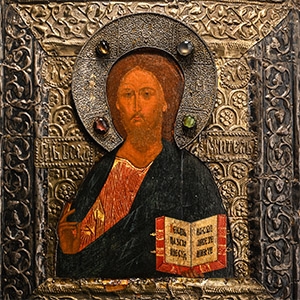
With raised right hand, the left hand holding the Gospel, dressed in red tunic and dark-green garment (himation); covered with an elaborate silver oklad with repoussé and chased decoration, mounting bar to reverse, silver-coloured metal with reserved epigraphic panels and circular void to reveal painted icon beneath; separate two-piece gilt revetment, the upper nimbus with pierced edge and reserved capitals, set with four stones; the background panel bearing reserved tendril ornament; incised Cyrillic inscription 'Г[оспо]дь Вседержит[ель]' (= Lord Almighty) on the sides of Jesus; the Gospel with Cyrillic inscription, red foil embroidered in gold; incised three letters in Cyrillic capitals on the gilt nimbus 'ТѠ Ο И' (The only living One). 983 grams, 29 x 25 cm
Acquired on the UK art market. Private collection, London, UK. Accompanied by an academic report by Dr Raffaele D'Amato. This lot has been checked against the Interpol Database of stolen works of art and is accompanied by a search certificate number no.12926-246332. -
Russian Wooden Icon with St John the Baptist
19th century A.D.Estimate: £1,500 - 2,000 (+bp*)
Opening Bid: £800
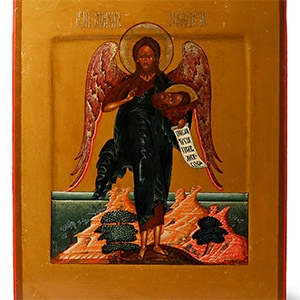
Comprising a painted board with mounting panel and slots to the reverse, gessoed surface with painting of St John the Baptist standing nimbate with wings spread behind him, left hand supporting a bowl containing his severed head and holding an unfurled scroll with Cyrillic text 'Repent ye, for the Kingdom of Heaven is at hand,' (Matthew 3:2); right hand raised in blessing; landscape with sand-dunes and trees; gilded title above; the upper border with gilt Slavonic inscription reading 'Holy John the Forerunner'; from the Palekh Icon School, probably made in Mstera circa 1890. 1.02 kg, 31 cm high
Fine condition.
Ex property of a London lady, part of her family's collection. This lot has been checked against the Interpol Database of stolen works of art and is accompanied by a search certificate no.11546-196366.
The Palekh icon school emerged in the 17th century, inspired by the Moscow and Suzdal traditions of icon painting. Although preserving many features of traditional Russian iconography, the school created its own style that remained active into the 18th century. The hallmarks of the school include the frequent use of gold on the clothes of the saints and a rich palette. Bodies are shown as tall and slender and abrupt transitions between light and shadow are distinctive features of Palekh icons. The wings of Saint John derive from the double meaning of the Greek word used to describe him in Mark 1:2 - Angelos, meaning both messenger and angel. John is often called a 'Heavenly Man' and 'Earthly Angel' in Orthodoxy. At his feet is shown a small tree with an axe cutting into it, illustrating Luke 3:9, 'And now also the axe is laid unto the root of the tree...'
