
Loading, please wait...
LOT 1889
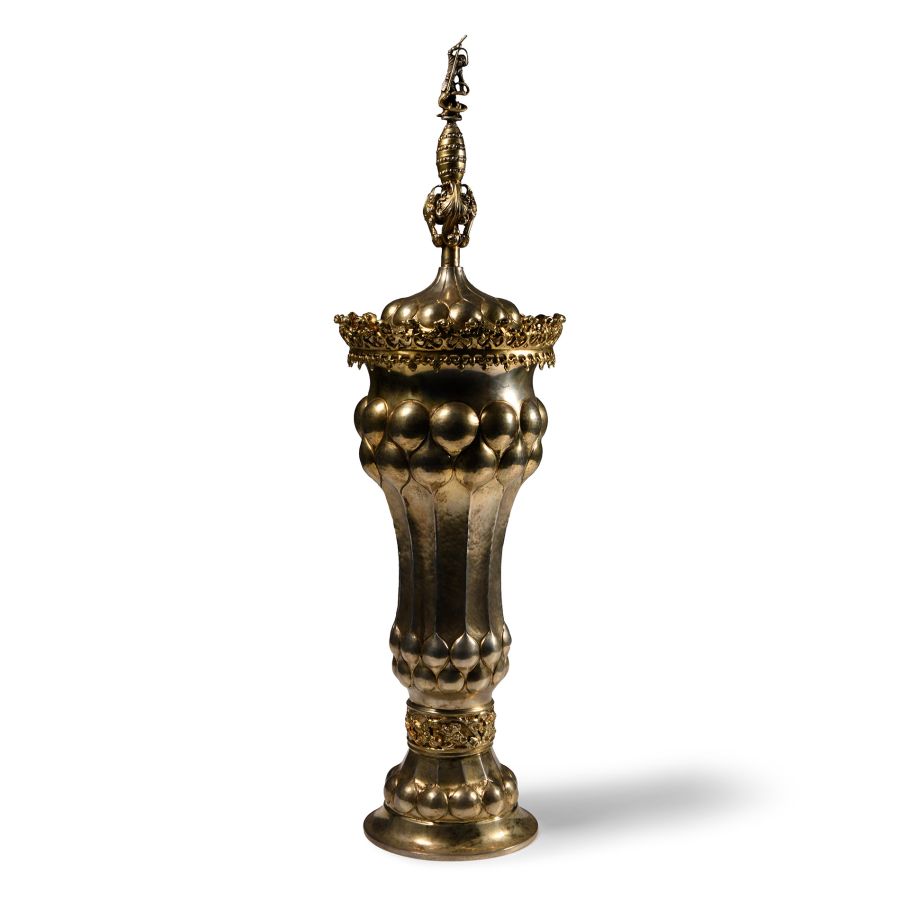
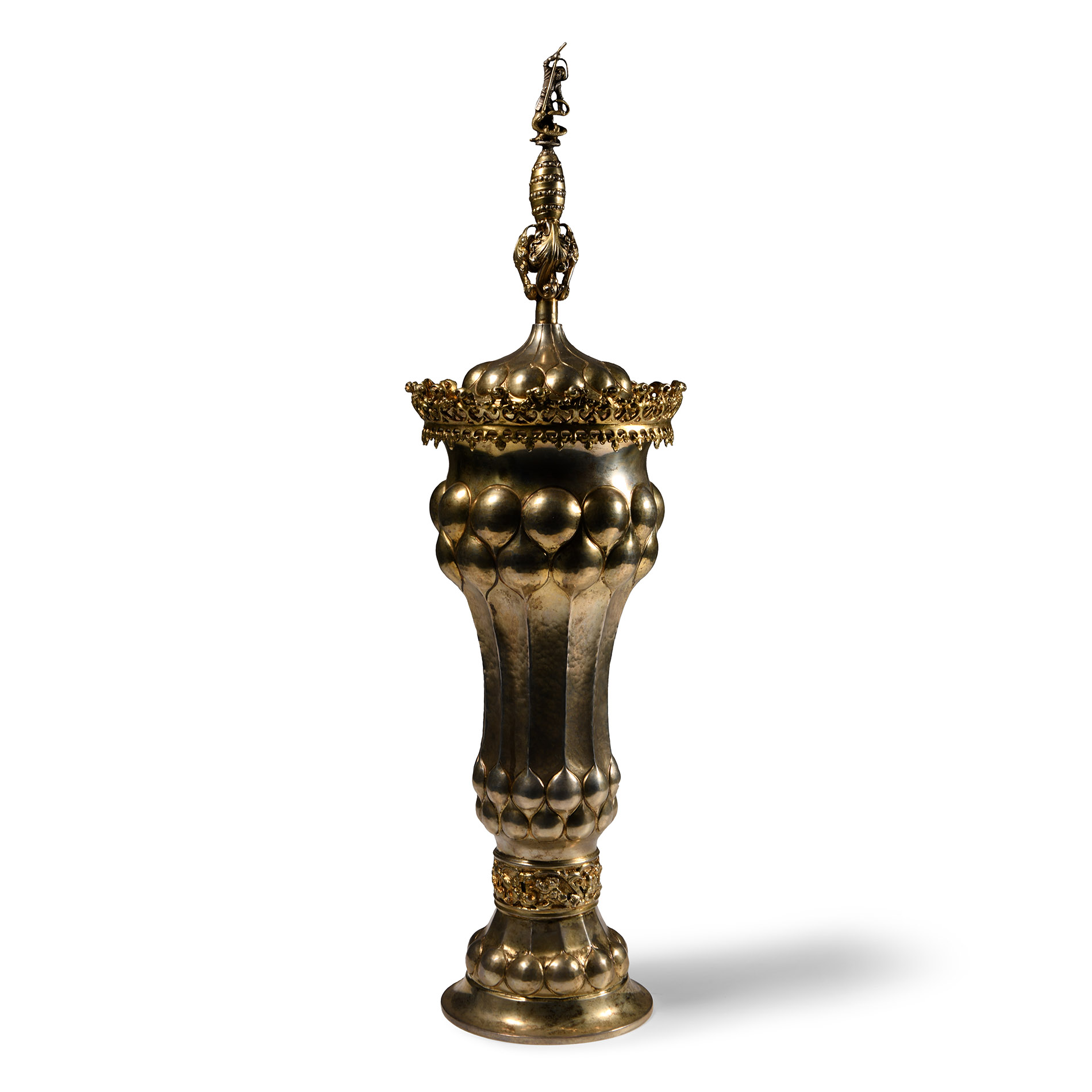
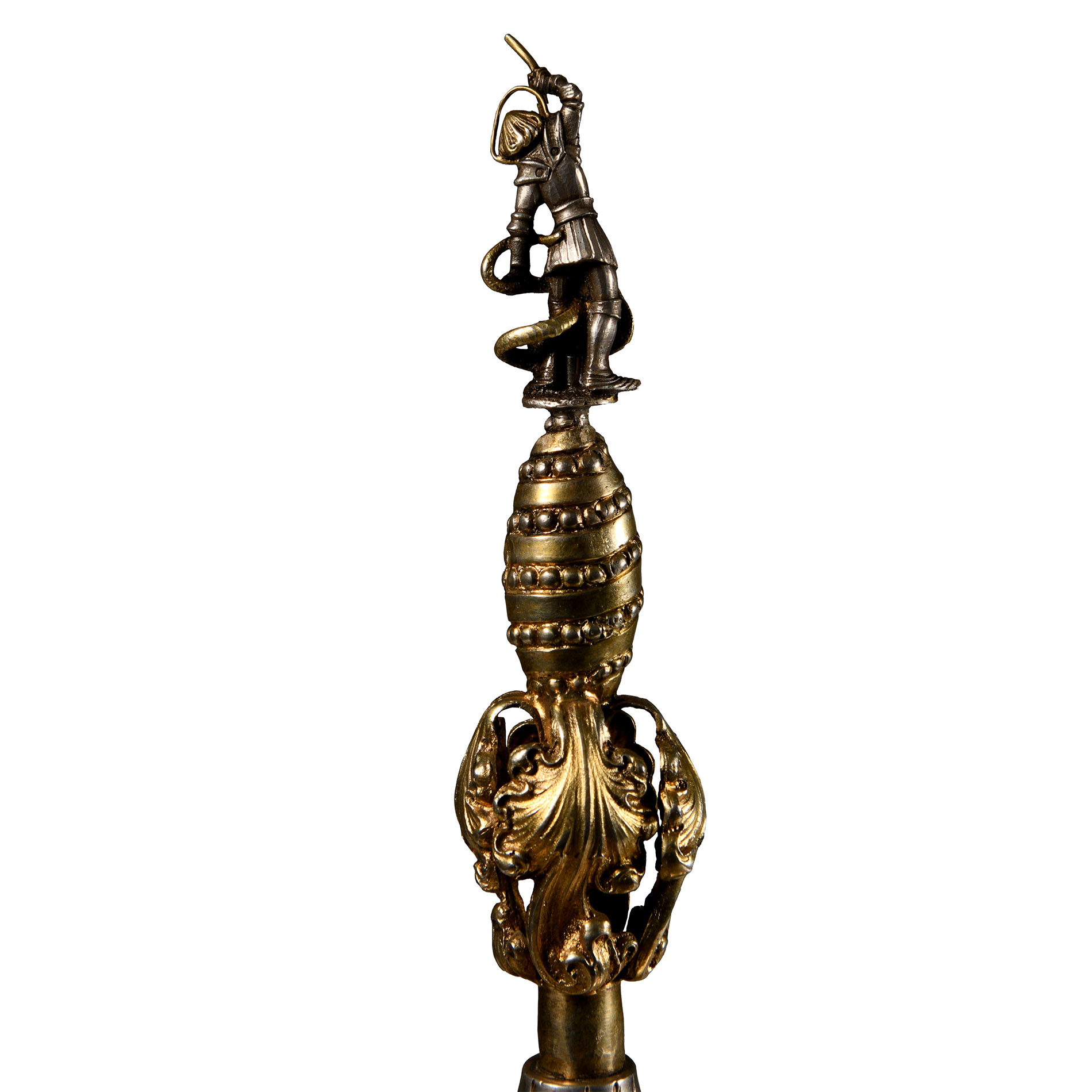
Silver-Gilt Pineapple Chalice with Saint George
GERMANY, 19TH-20TH CENTURY A.D.
17 1/2 in. (613 grams, 43.6cm).
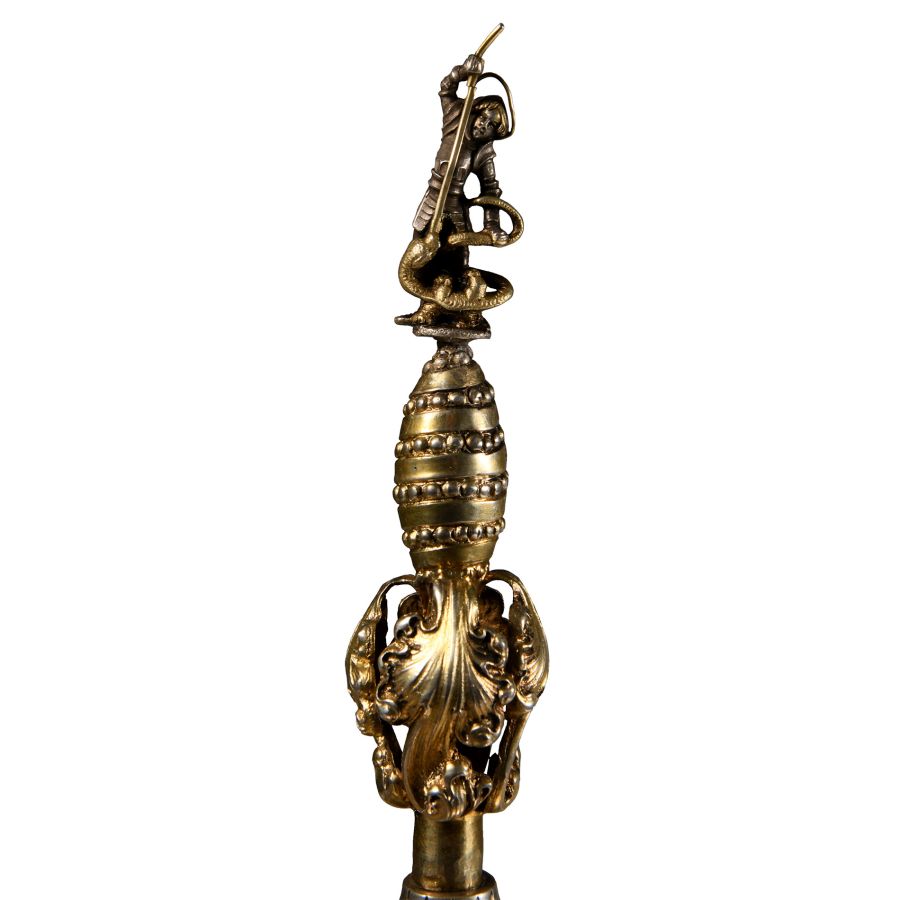
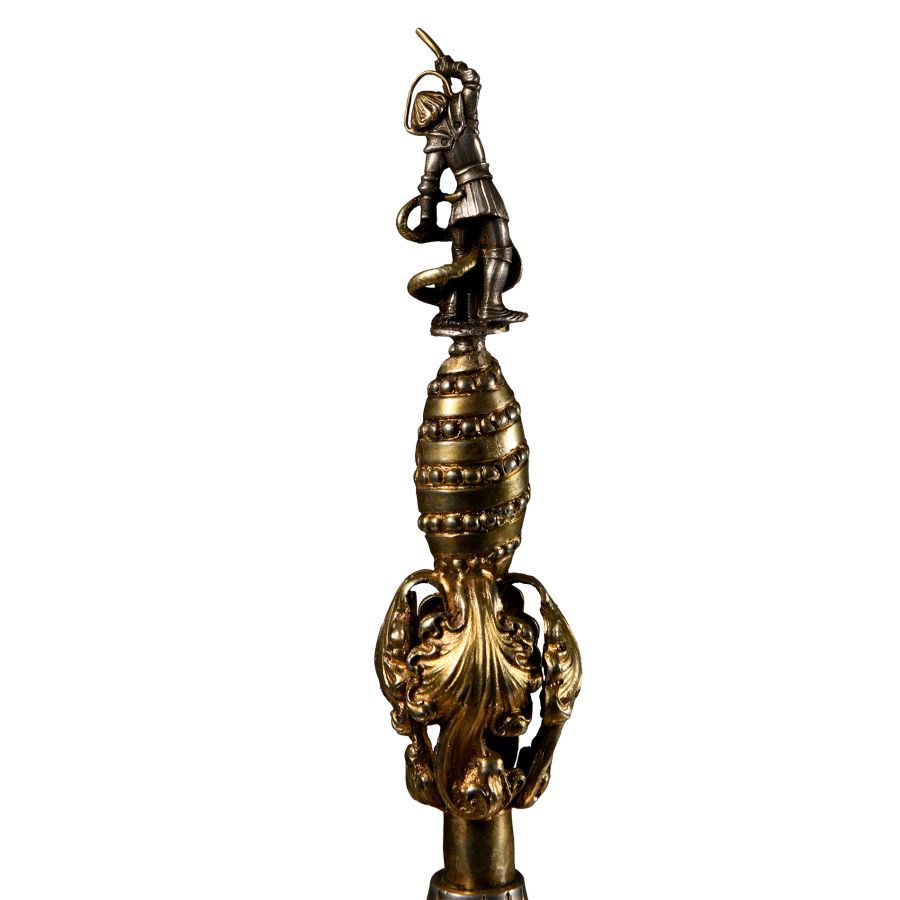
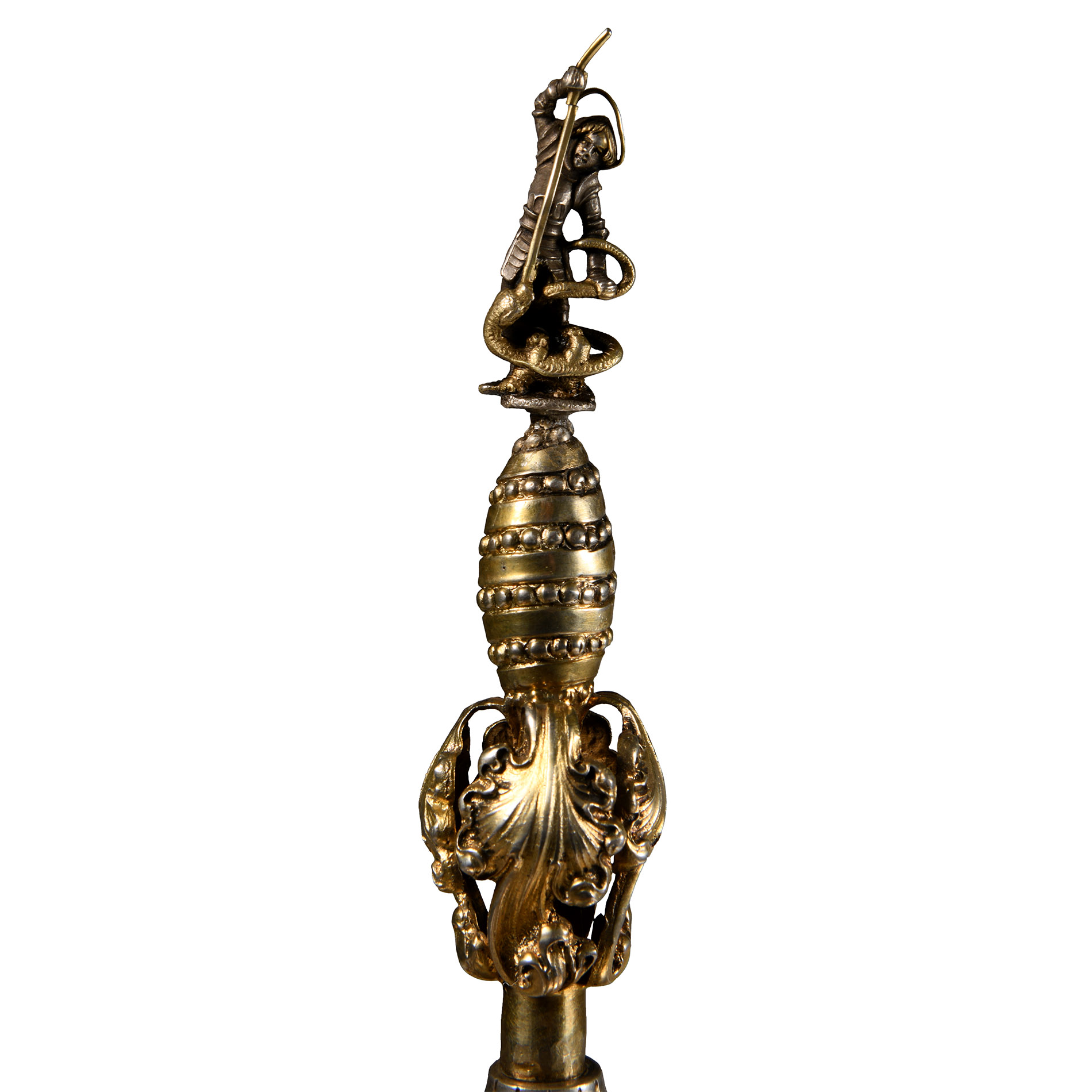
With waisted body, bulbous shoulder, everted rim, collared stem and tiered splayed foot, ornamented in repoussé bulbs and ogival ribs; lid with openwork rim of palmettes and foliate forms, central domes, finial with basket of palmettes, oval bulb above ornamented in pellets between spiral band, surmounted by a statuette, modelled in the round as Saint George, clad in armour, driving a spear into the dragon, with naturalistic detailing to the saint's features; various stamps to base; finial repaired. [No Reserve]
ProvenanceFrom the Deutsch collection, Germany.
Ex central London gallery.
TimeLine Auctions follows a vetting process to ensure the authenticity and legality of all items, reinforcing our commitment to integrity and responsible trading. Each antiquity, antique, and coin lot undergoes thorough examination by a vetting committee of at least ten external specialists, professional trade association members, scientists, and archaeologists: Our Vetting Process
AUCTIONS:
TimeLine is a leading auction house specialising in antiquities, ancient art, collectables, natural history, coins, medals, and books. Our auctions offer museums, collectors, historians, and enthusiasts the opportunity to acquire unique and historically significant pieces.
-
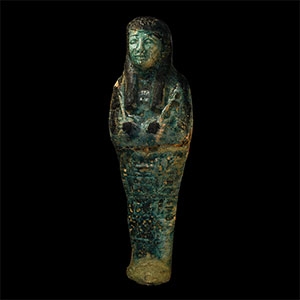
Grand Tour Green Glazed Egyptian Shabti
19th-early 20th century A.D.Sold for (Inc. bp): £39
With black detailing to the tripartite wig, bands of hieroglyphic text to the lower body. 153 grams, 15.5 cm
Fine condition.
Property of a Devon, UK collector, acquired at auction; previously in a private UK collection. -
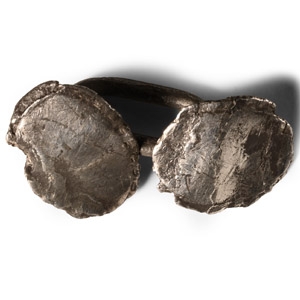
Post Medieval Cufflink from the Shipwreck of HMS Colossus
18th century A.D.Sold for (Inc. bp): £39
Formed as two ellipsoid plates with ropework border, connected by a sturdy link. 2.05 grams, 23 mm
Ex Divework, Scilly; found HMS Colossus, wrecked 1798. Accompanied by old certificate of authenticity. -
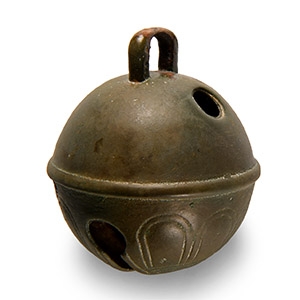
Large Post Medieval Bronze 'R W' Crotal Bell
1755-1798 A.D.Sold for (Inc. bp): £52
With low-relief radiating petal motif and raised rib to the equator with R and W both between annulets for makers Robert Wells and his son from a foundry at Aldbourne. 100 grams, 61 mm
Acquired since the 1970s. From the private collection of a Surrey, UK, gentleman.
