
Loading, please wait...
LOT 2130
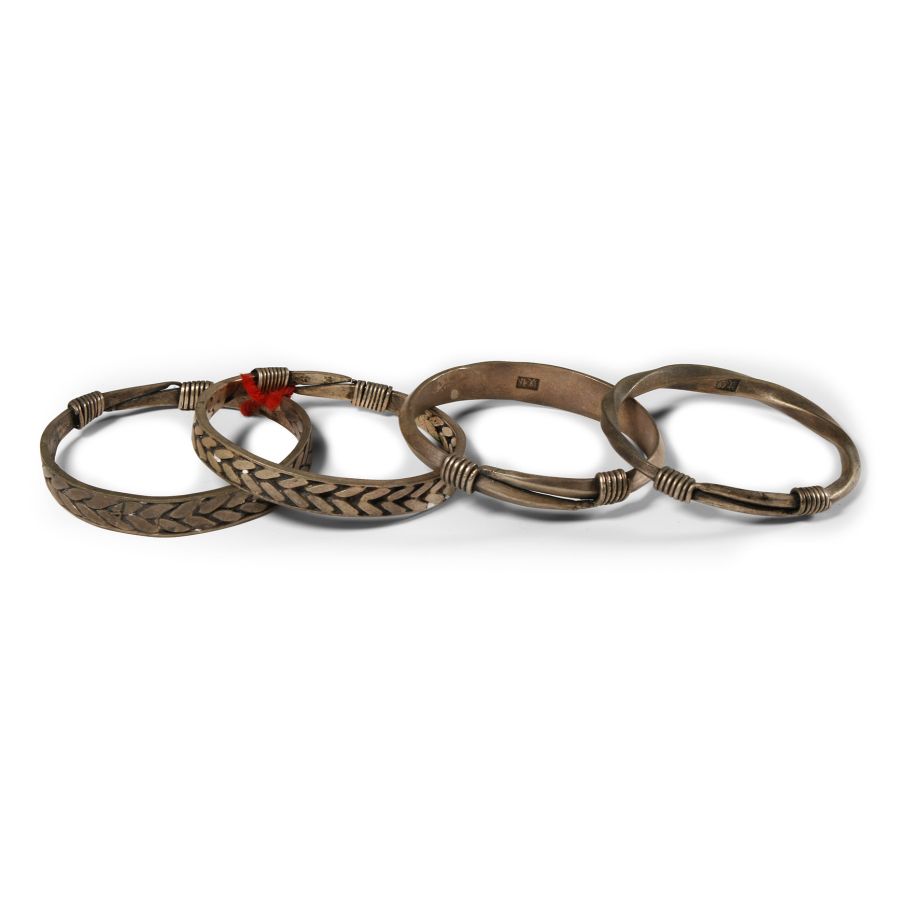
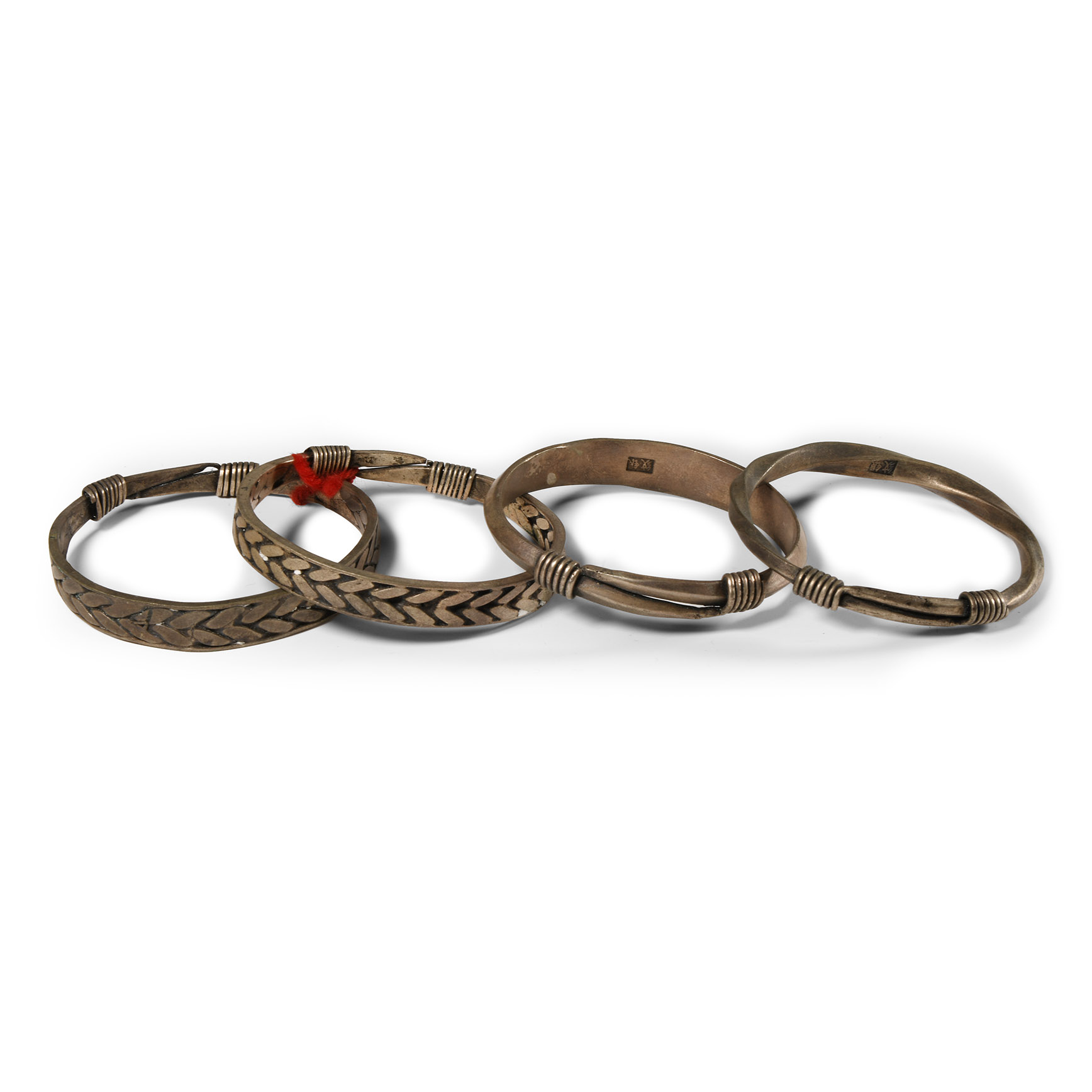
Silver-Coloured Metal Bracelet Group
20TH CENTURY A.D.
2 3/4 in. (164 grams total, 71-73 mm).
One square in section, twisted about its own axis; one with carinated profile; two of herringbone construction; each with the ends wound round the shank. [4, No Reserve]
ProvenanceFrom a collection acquired on the UK art market from various auction houses and collections mostly before 2000.
From an important Cambridgeshire estate; thence by descent.
TimeLine Auctions follows a vetting process to ensure the authenticity and legality of all items, reinforcing our commitment to integrity and responsible trading. Each antiquity, antique, and coin lot undergoes thorough examination by a vetting committee of at least ten external specialists, professional trade association members, scientists, and archaeologists: Our Vetting Process
AUCTIONS:
TimeLine is a leading auction house specialising in antiquities, ancient art, collectables, natural history, coins, medals, and books. Our auctions offer museums, collectors, historians, and enthusiasts the opportunity to acquire unique and historically significant pieces.
-
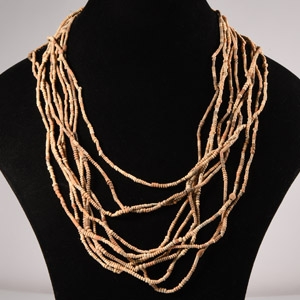
African Terracotta Bead Group
12th century A.D. or laterSold for (Inc. bp): £20
Restrung; composed of cream, beige and umber-coloured ribbed terracotta beads with some cylindrical beads. 61 grams total, 68-73 cm long
UK gallery, early 2000s.
There are in Africa two main different beads used for the nacklaces: the mangour and the rougad-el-fagah. The first is a round glass bead exported from Galilee, green, or yellow, or black and speckled. The rougad-el-fagah is larger, smoother and more beautiful. The mangour is about the size of an ordinary nut and the rougad-el-fagah of a larger nut. Both are of terracotta covered with a glaze like that of faience. But the rougad-el-fagah is of more perfect work, better glazed and looks most agreeable and expensive. The mangour is rough, crinkled on the surface and grossly glazed. It is also sold cheap. -
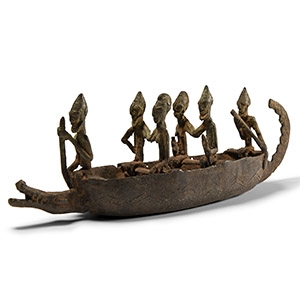
Cental African Bronze Boat with Figures
19th-early 20th century A.D.Sold for (Inc. bp): £156
Miniature boat model comprising: flat-bottomed open boat with incised zigzag line to the hull, curved stern post formed as a reptilian tail, prow with simulated crocodile head; two pairs of figures sitting on the thwarts, one male and one female, each male with a paddle; rear figure with paddle to the port side, leading figure with paddle to the starboard 749 grams, 28 cm
From a collection acquired on the UK art market from various auction houses and collections mostly before 2000. From an important Cambridgeshire estate; thence by descent. -
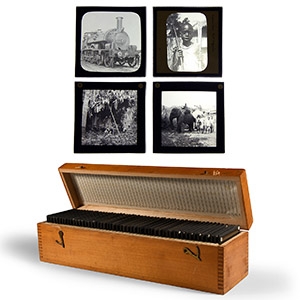
A Historic Collection of Fifty-Six Original Slides of East Africa
Circa 1897 A.D.Sold for (Inc. bp): £390
Collection of glass photographic slides recording railway construction in East Africa, river transport, customary dress and other topics; in a wooden box with hinged lid and numbered inner racking, initials 'DWC' to some slides. 3.01 kg total, 39.5 x 10.5 x 10.5 cm
From the private collection of Dudley Collings, from his travels in Africa in the late 19th century.
The caption on one slide refers to 'B.E.Africa' (British East Africa), the area now known as Rwanda / Burundi.
