
Loading, please wait...
LOT 1969
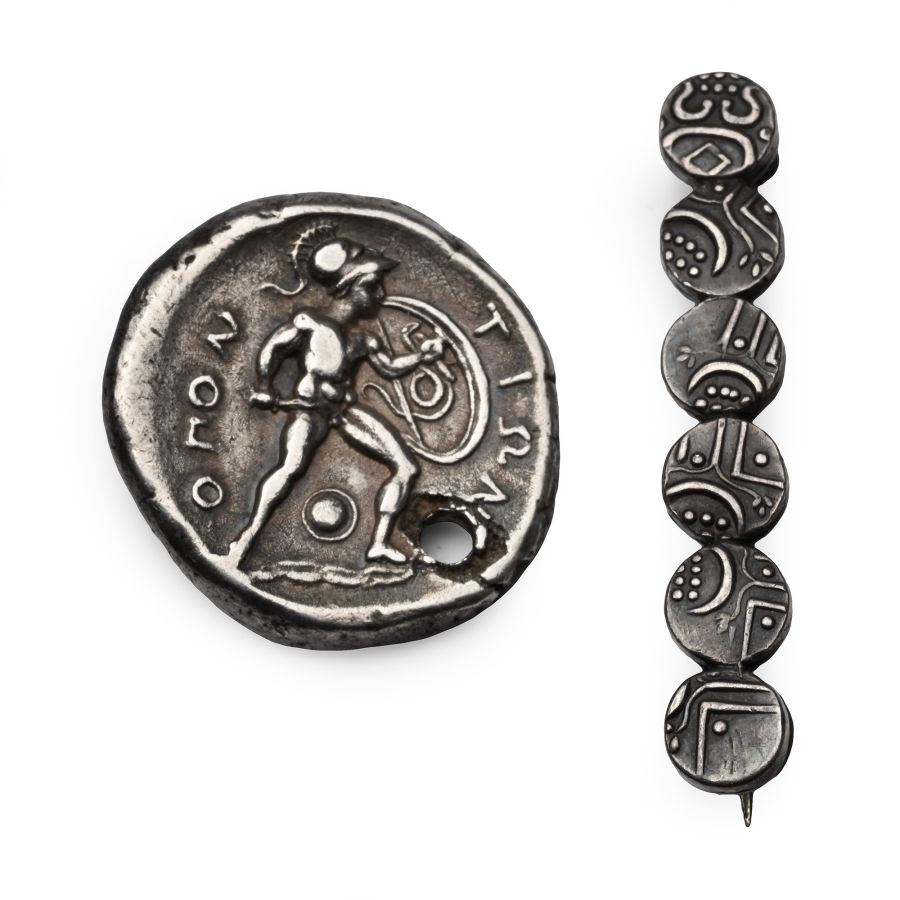
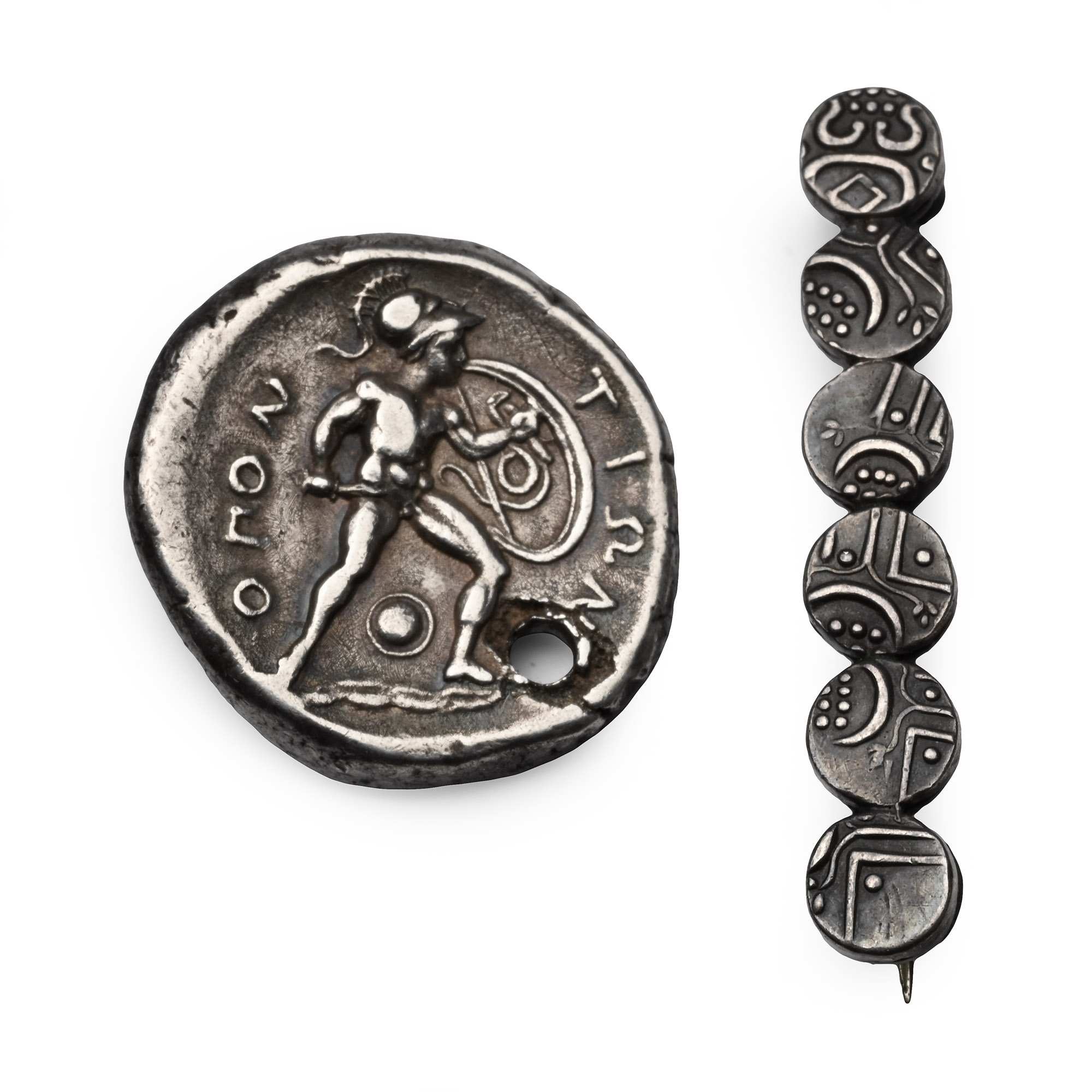
Silver Coin with Indian Fanam Coin Tie Pin
CIRCA 18TH-19TH CENTURY A.D. OR LATER
7/8 - 1 3/8 in. (Pin: 3.64 grams, 37mm; coin: 11.72 grams, 22 mm, 12h.).
Bar-type tie-pin formed as a row of six replicas(?) of AR Indian Chuckrams, hinged pin and catch to reverse; offered with a pierced AR Stater of Lokris Opuntii, Lokris (circa 420-380 BC): Head of Demeter to left, wearing barley-wreath, triple-pendant earring and necklace / Ajax the Locrian, nude but for crested Corinthian helmet, advancing to right on rocky ground, holding short sword in his right hand, round shield decorated on its interior with coiled serpent in his left hand; between his legs, small shield; OΠON-TIΩN around.
ProvenancePrivate collection, UK.
LiteratureCf. Traité Tf. CCVI, 14; SNG Delepierre 1256.
CONDITIONTimeLine Auctions follows a vetting process to ensure the authenticity and legality of all items, reinforcing our commitment to integrity and responsible trading. Each antiquity, antique, and coin lot undergoes thorough examination by a vetting committee of at least ten external specialists, professional trade association members, scientists, and archaeologists: Our Vetting Process
AUCTIONS:
TimeLine is a leading auction house specialising in antiquities, ancient art, collectables, natural history, coins, medals, and books. Our auctions offer museums, collectors, historians, and enthusiasts the opportunity to acquire unique and historically significant pieces.
-
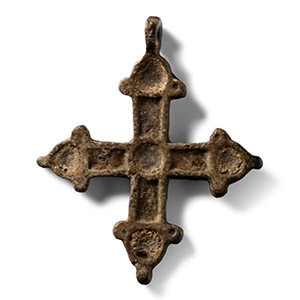
Orthodox Enamelled Bronze Cross Pendant
Circa 1750 A.D.Sold for (Inc. bp): £20
Cruciform pendant with cells to both faces for cloisonné enamel detailing. 4.88 grams, 41 mm
Acquired from Chris Martin-Zakheim, Iconastas, 5 Piccadilly Arcade, London SW1. From the private collection of a West London, UK, gentleman, formed since the early 2000s. -
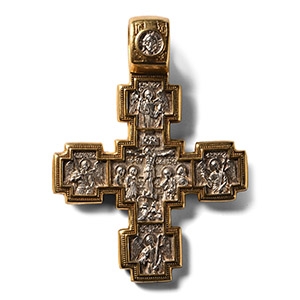
Russian Silver-Gilt Cross Pendant
21st century A.D.Sold for (Inc. bp): £46
Bifacial pendant cross with applied silver panels; obverse with central crucifixion scene surrounded by winged angels with spears and nimbate bust on the bale; reverse with central combat scene surrounded by saints; stamped '925' on reverse of bale. 13.72 grams, 45 mm
From the private collection of a West London, UK, gentleman, formed since the early 2000s. -
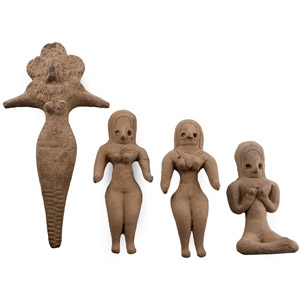
Indus Valley Style Terracotta Idol Group
20th century A.D.Sold for (Inc. bp): £13
Mixed group of figures with anatomical details. 314 grams, 8.6-16.2 cm
Very fine condition.
From the private collection of John Meredith, acquired since the 1990s; thence by descent.
