

LOT 2688
Sikyonia. Sikyon AR Obol. Circa 340-320 BC.
Laureate head of Apollo to right / ΣΙ, dove flying to right. BCD Peloponnesos 257-61. HGC 5, 226. Good Very Fine. Well centred.(0.84gr, 12mm, 5h.).
ProvenanceEx Nomos AG, obolos 25, 23 October 2022, lot 188.
TimeLine Auctions follows a vetting process to ensure the authenticity and legality of all items, reinforcing our commitment to integrity and responsible trading. Each antiquity, antique, and coin lot undergoes thorough examination by a vetting committee of at least ten external specialists, professional trade association members, scientists, and archaeologists: Our Vetting Process
AUCTIONS:
TimeLine is a leading auction house specialising in antiquities, ancient art, collectables, natural history, coins, medals, and books. Our auctions offer museums, collectors, historians, and enthusiasts the opportunity to acquire unique and historically significant pieces.
LOT 2688
Sikyonia. Sikyon AR Obol.
Estimate £150 - 200€170 - 230 (for guidance only)$200 - 270 (for guidance only)
-
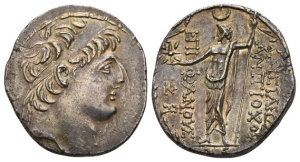
Seleukid Empire, Antiochos VIII Epiphanes (Grypos) AR Tetradrachm. 121/0-97/6 BC.
Sold for (Inc. bp): £286
Damaskos mint. Dated SE 204 (109/8 BC). Diademed head to right within fillet border / ΒΑΣΙΛΕΩΣ ΑΝΤΙΟΧΟΥ ΕΠΙΦΑΝΟΥΣ, Zeus Ouranios, nude, standing to left, holding star and sceptre; monogram of KA above ZH to outer left; ΔΣ (date) in exergue; all within wreath. SC 2324.1b; HGC 9, 1196e; DCA 266. 16.12gr, 30mm, 12h.
Good Very Fine. Nicely toned. Slightly double struck.
From a private collection, Europe. -

Phoenicia, Sidon AE 22mm. 1st century BC.
Sold for (Inc. bp): £31
Uncertain date. Jugate busts of Tyche, veiled and turreted, and Zeus to right; monogram to left / ΣΙΔΩΝΟΣ ΘΕΑΣ, Phoenician galley to left; [date] above. HGC 10, 283. 6.78gr, 22mm, 12h.
Near Very Fine.
Private collection, acquired 1980–1985. -

Skythia, Olbia Cast AE Dolphin. Circa 437-410 BC.
Sold for (Inc. bp): £117
ΘV on flat surface / Dolphin. Anokhin 180; HGC 3, 1879. 1.47gr, 25mm x 9mm.
Very Fine.
Acquired Munich, Germany, in the early 1990s. From a private German collection. Property of a Kent, UK, lady collector since 2015.
The method of casting this unique type of coin was adopted by the Gallic Celts who originally came from this region. Dolphins were generally struck in the form of a tree attached to the tail, although some examples appear to have been cast individually.
