
LOT 2895
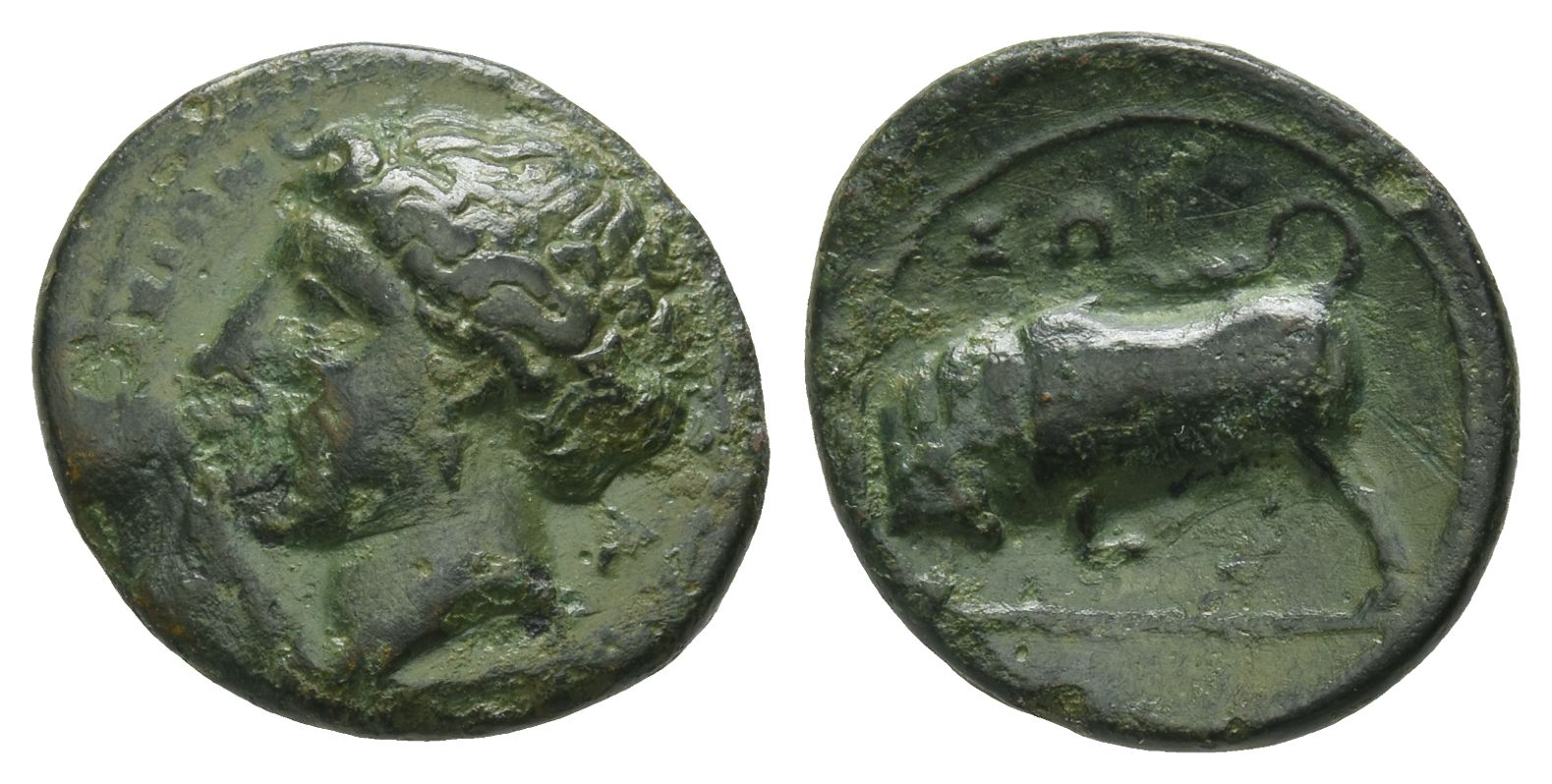
Sicily, Syracuse AE 18mm. Time of Agathokles, circa 317-310 BC.
Wreathed head of Arethusa to left; [ΣYPAKO]ΣIΩN upwards before, bucranium behind / Bull butting to left, ΣΩ above. CNS II, 106; HGC 2, 1489. Very Fine. Nice green patina.(3.22gr, 18mm, 10h). [No Reserve]
ProvenanceFrom an old UK collection;
From the collection of a London antiquarian.
TimeLine Auctions follows a vetting process to ensure the authenticity and legality of all items, reinforcing our commitment to integrity and responsible trading. Each antiquity, antique, and coin lot undergoes thorough examination by a vetting committee of at least ten external specialists, professional trade association members, scientists, and archaeologists: Our Vetting Process
AUCTIONS:
TimeLine is a leading auction house specialising in antiquities, ancient art, collectables, natural history, coins, medals, and books. Our auctions offer museums, collectors, historians, and enthusiasts the opportunity to acquire unique and historically significant pieces.
-
.jpg)
Macedon under Roman rule, First Meris AR Tetradrachm. Circa 167-149 BC.
Sold for (Inc. bp): £325
Amphipolis mint. Diademed and draped bust of Artemis to right; bow and quiver at shoulder; all within the centre of Macedonian shield / ΜΑΚΕΔΟΝΩΝ ΠΡΩΤΗΣ, horizontal club; AΘ monogram above and ΑΧΕ monogram and E below, all within oak wreath tied at left; thunderbolt in outer left field. AMNG III/1 168; Prokopov, Silver, Group I.A, 29; SNG Copenhagen -; HGC 3, 1103. 16.80gr, 32mm, 9h
Near Very Fine. Nice old cabinet tone with light golden iridescence around the devices. Very rare with these monograms.
Ex German art market, 2000s; Acquired from a EU collector living in London; From the collection of a Surrey, UK, gentleman. -
![Parthian Dynasty AR Drachms Group [5].](https://timelineauctions.com/upload/images/items/small/220618-s.jpg)
Parthian Dynasty AR Drachms Group [5]. 1st century BC.
Sold for (Inc. bp): £104
Five silver Drachms of the Parthian dynasty. 20.90gr total
Acquired on the UK market before 2000; Property of a London, UK, gentleman. -
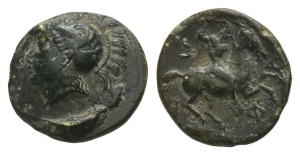
Thessaly, Pharsalos AE 13mm. Circa 3rd century BC.
Sold for (Inc. bp): £39
Head of Athena to left, wearing crested Attic helmet / Armoured warrior on horseback to right, wielding flail; ΦAPΣA around. BCD Thessaly II 667.4; HGC 4, 660. 1.60gr, 13mm, 11h
Very Fine.
From an old UK collection; From the collection of a London antiquarian.
