
Loading, please wait...


LOT 1342
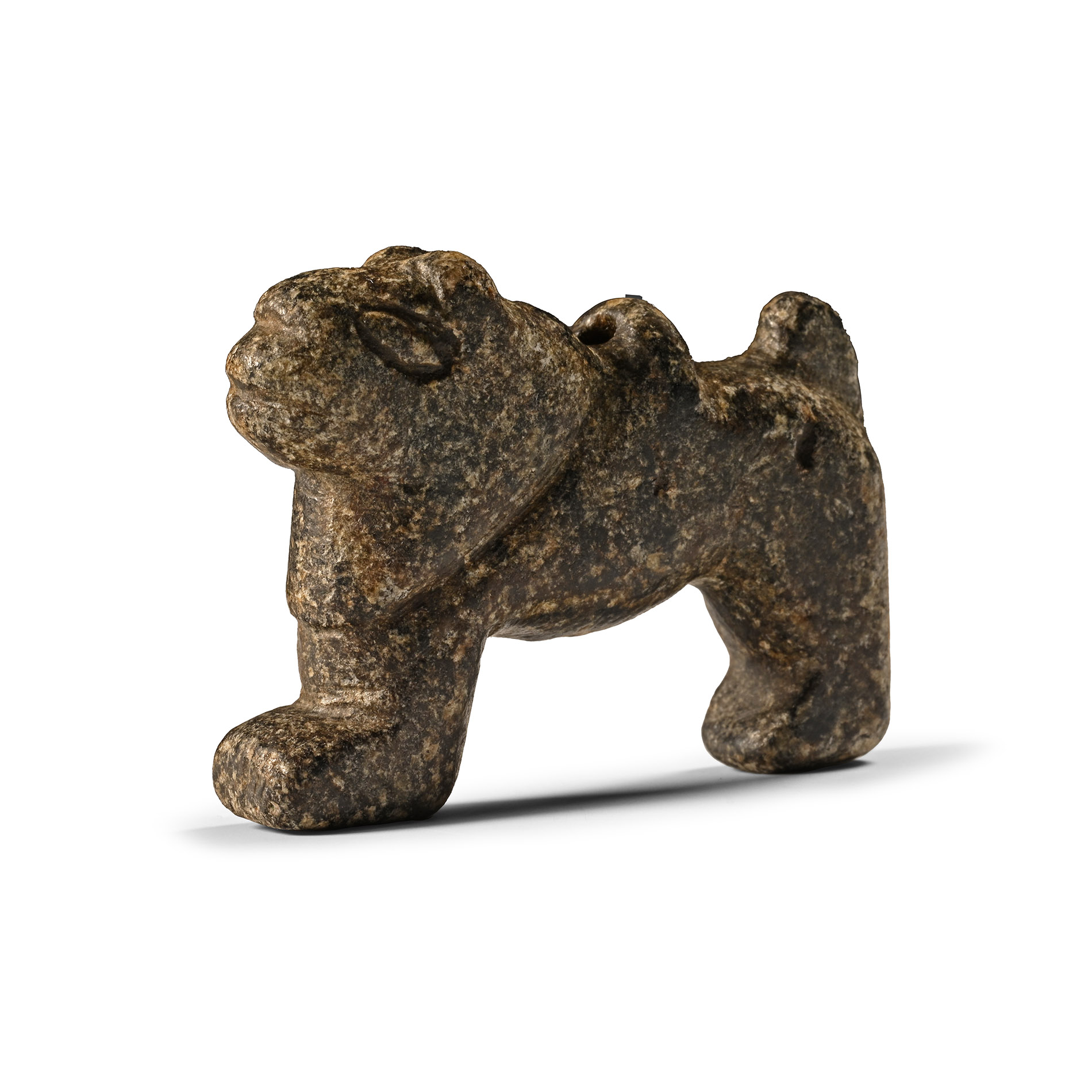
Seljuk Standing Stone Lion
12TH-13TH CENTURY A.D.
2 1/4 in. (57.5 grams, 57 mm).
Modelled in the round, front and back paws formed as a one block, pierced lug to the back.
Provenancewith a London, UK gallery, 1971-early 2000s.
LiteratureCf. Öney, G., ‘Anadolu Selçuklu Mimarisinde Aslan Figürü, (Lion’s figure in Anatolian Selcuk Architecture)’ in Anadolu, XIII, 1971, pp.1-64, fig.1, for a similar lion in stone at the castle of Kayseri, dated 1224 A.D.
FootnotesThe lion was one of the most widely used symbols in Seljuk culture. They frequently used the word aslan, meaning lion, in the names of their Sultans and statesmen, such as Alparslan, "brave lion," Aslanshah, "lion king," and Aslandogmus, "lion born." Four of the Seljuk Sultans were named Kilicarslan, which combines the words for a sword and lion, and the interest in lions is clearly reflected in the art and architecture of the Seljuk period. Lion-head water spouts are to be found at a number of caravanserais, and lion statues guarded the portals to the city of Cardak Han in Anatolia, as well as carved onto the walls of the palace at Incir Han. The lion is also to be found on the coins of Sultan Giyaseddin II.
CONDITIONTimeLine Auctions follows a vetting process to ensure the authenticity and legality of all items, reinforcing our commitment to integrity and responsible trading. Each antiquity, antique, and coin lot undergoes thorough examination by a vetting committee of at least ten external specialists, professional trade association members, scientists, and archaeologists: Our Vetting Process
AUCTIONS:
TimeLine is a leading auction house specialising in antiquities, ancient art, collectables, natural history, coins, medals, and books. Our auctions offer museums, collectors, historians, and enthusiasts the opportunity to acquire unique and historically significant pieces.
LOT 1342
Seljuk Standing Stone Lion
Estimate £200 - 300€230 - 350 (for guidance only)$270 - 410 (for guidance only)
-
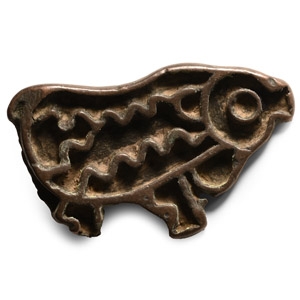
West Central Asian Bronze Stamp Seal with Pig
23rd-20th century B.C.Sold for (Inc. bp): £286
A bronze seal in the form of a standing pig, accompanied by a typed and signed note by the late W.G. Lambert, Professor of Assyriology at the University of Birmingham, 1970-1993, which states: 'Stamp Seal of Bronze, 37 x 61 x 14mm. This has the shape of a standing pig, with no ears marked, but with a short tail and big round eye. Its snout is raised. The seal has a flat, compartmented face, and flat back on which a handle of sheet metal is mounted. This comes from west central Asia and dates to c. 2300-2000 B.C. It has a rare and attractive design, and is in very good condition save that the hind leg is broken off. The metal has been conserved.' 37 grams, 61 mm
Ex Signo collection, the property of a West London businessman, formed in the late 1980s-early 1990s; collection number R-770, academically researched and catalogued by the late Professor Lambert in the early 1990s. -
Western Asiatic Stone Macehead
2nd millennium B.C.Sold for (Inc. bp): £182
Tubular in form with tapering profile and collar above the socket. 455 grams, 82 mm
Ex London, UK, gentleman's collection, 1990s. -
Western Asiatic Terracotta Idol
3rd-2nd millennium B.C.Estimate: £700 - 900 (‡+bp*)
Opening Bid: £360
Free-standing, with a pinched, bird-like face, conical headdress or hairstyle, ornamental collar and stub arms; splayed foot. 57 grams, 13.5 cm high
Acquired in the 1970s. Ex European private collection.
