
Loading, please wait...
LOT 0295
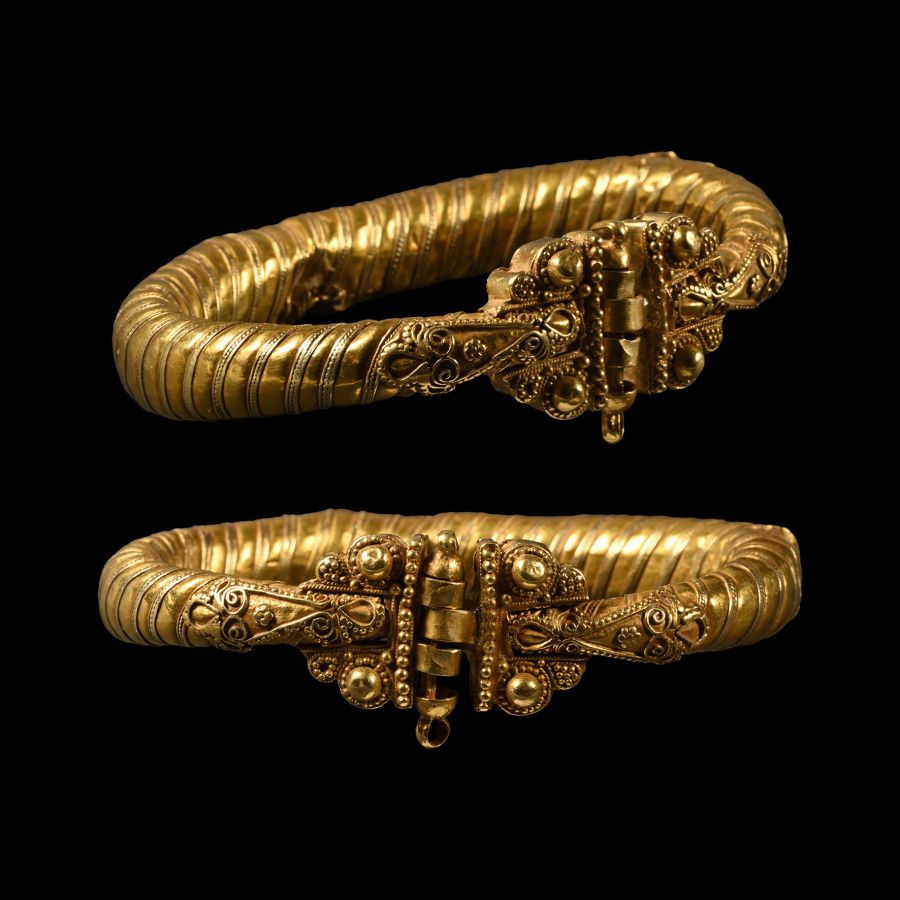
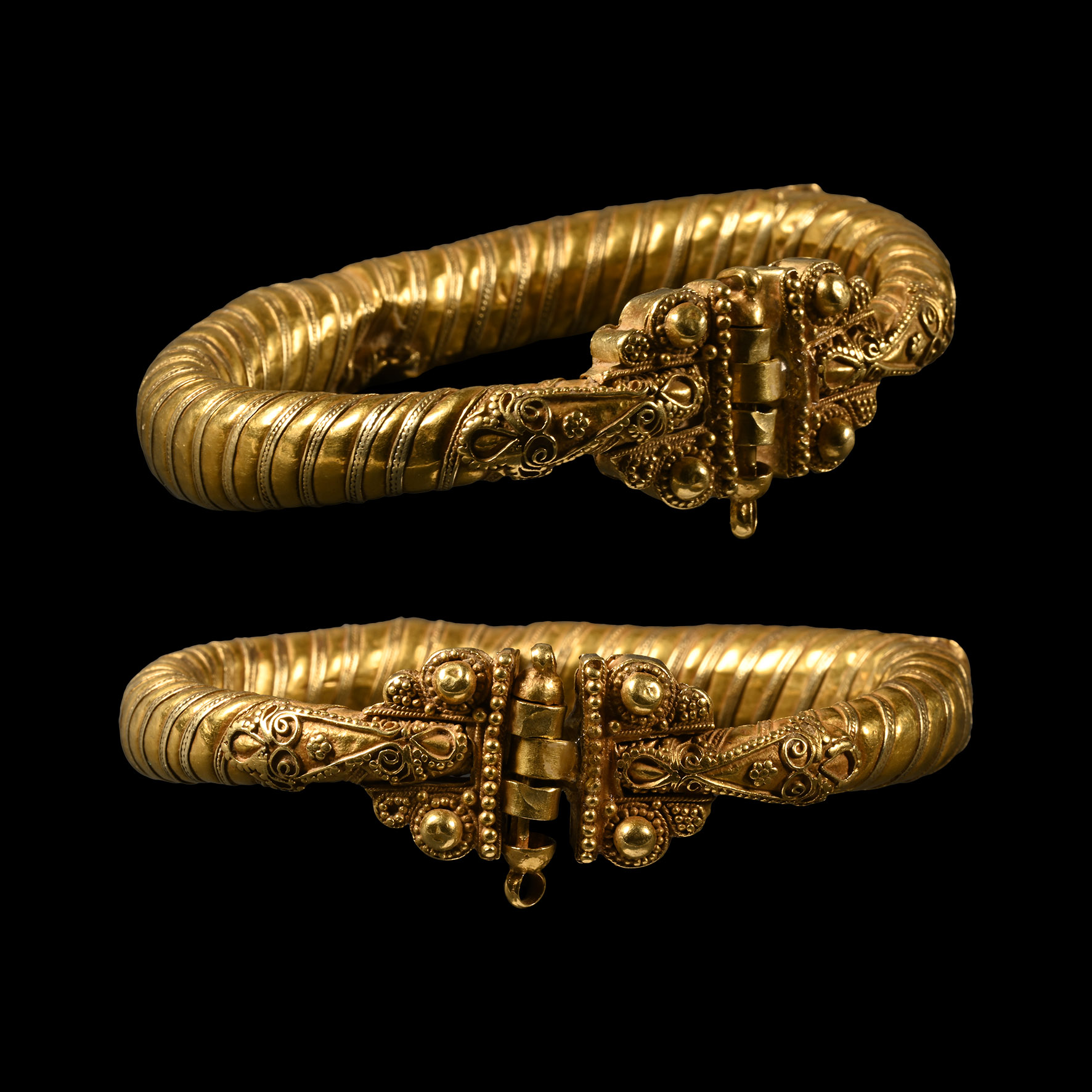
Seljuk Hinged Gold Bracelet
CIRCA 12TH CENTURY A.D.
2 3/4 in. (28.7 grams, 70.5 mm).
Constructed from gold sheet wrapped around a crescent-shaped core tapering towards the ends and over-wrapped with thin gold wire forming diagonal narrow bands; the body terminating in a wirework clasp with four small domed motifs surrounded by granulated circles and hinge pin between.
ProvenanceFrom a private family collection formed in the 1970s.
This lot has been checked against the Interpol Database of stolen works of art and is accompanied by search certificate no.12102-214104.
Cf. Allan, J.W., The Metalworking Industry in Iran in the Early Islamic Period, volume II, Oxford, 1976, fig.13, for similar.
FootnotesSeljuk metalwork with Islamic traditions was characterised by the use of geometric and plant motifs in order to fill blank spaces, a coherent combination of colours, and abstinence from using gold and silver. Decorative motifs in metal items in the Seljuk era are, therefore, mainly geometric plant figures, inscriptions, animal and fictional figures compatible with Islamic tradition, with the focus on plant figures and geometric elements like the one visible on our bracelet.
CONDITIONTimeLine Auctions follows a vetting process to ensure the authenticity and legality of all items, reinforcing our commitment to integrity and responsible trading. Each antiquity, antique, and coin lot undergoes thorough examination by a vetting committee of at least ten external specialists, professional trade association members, scientists, and archaeologists: Our Vetting Process
AUCTIONS:
TimeLine is a leading auction house specialising in antiquities, ancient art, collectables, natural history, coins, medals, and books. Our auctions offer museums, collectors, historians, and enthusiasts the opportunity to acquire unique and historically significant pieces.
-
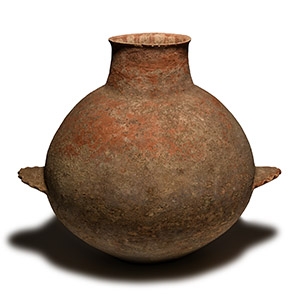
Large Holy Land Terracotta Storage Jar with Pie-Crust Handles
3rd-2nd millennium B.C.Sold for (Inc. bp): £111
Biconvex globular body with broad neck, everted rim, two ledge handles below the equator each with a piecrust outer edge. 2.6 kg, 35 cm wide
From a collection acquired on the UK art market from various auction houses and collections mostly before 2000. From an important Cambridgeshire estate; thence by descent. -
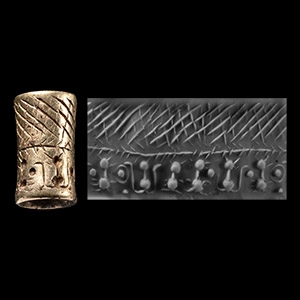
Mesopotamian Silver Cylinder Seal with Two Registers
13th-12th century B.C.Sold for (Inc. bp): £1,105
Tubular in form with large hatched panel above and frieze of standing beasts below; supplied with a museum-quality impression. 5.57 grams, 16 mm
Ex S collection, London, UK, 1980-1990. -
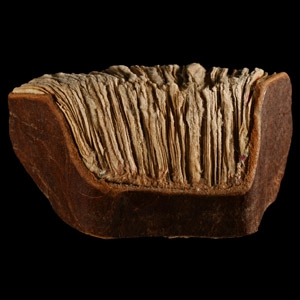
Miniature Book with Qu'ranic Prayers
19th century A.D.Sold for (Inc. bp): £403
Leather-bound, hexagonal-trimmed pages with handwritten texts in black and red ink, first four pages decorated. 9.64 grams, 30 mm
Acquired in the 1970s. Property of a London lady, part of her family's collection.
