
Loading, please wait...
LOT 1058
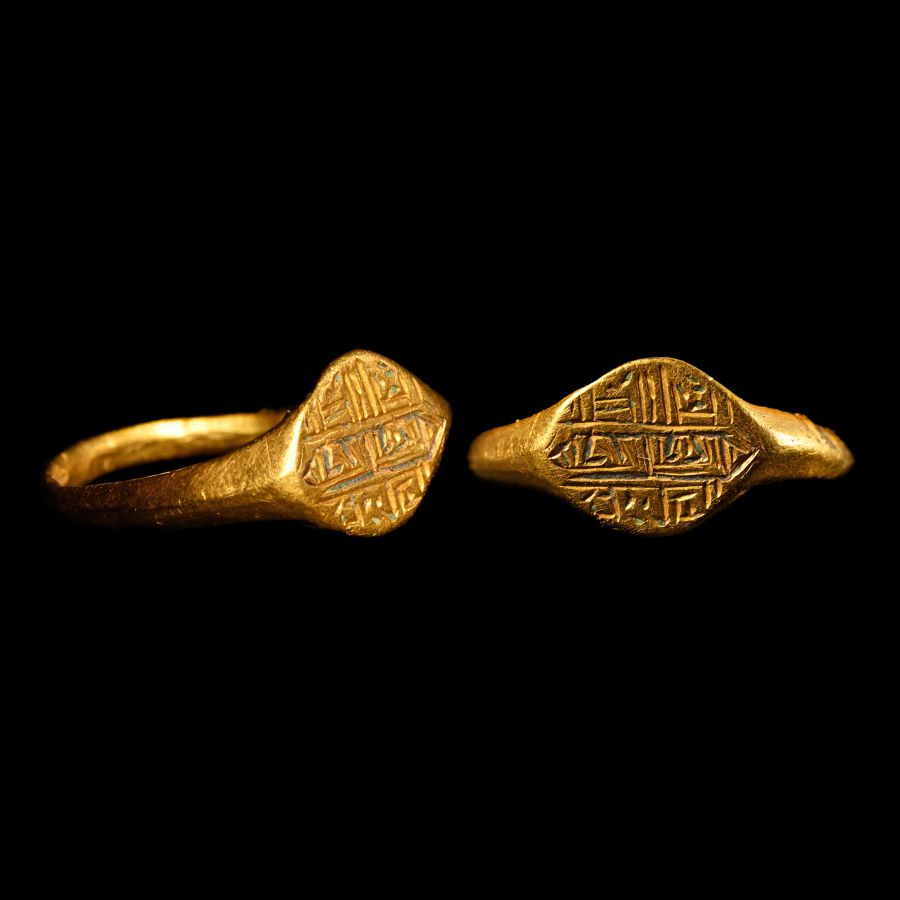
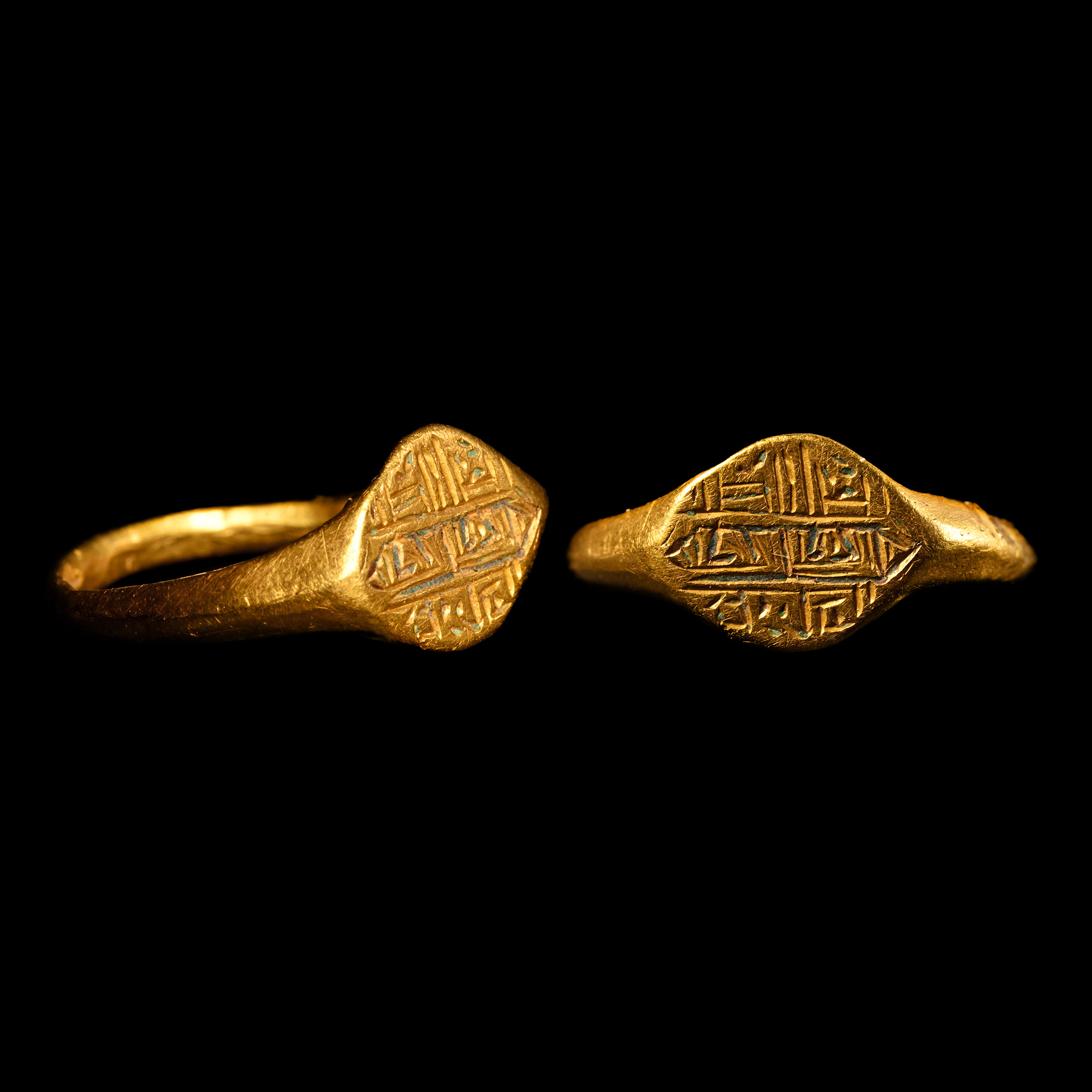
Seljuk Gold Ring with Inscription
12TH CENTURY A.D.
5/8 in. (3.04 grams, 17.36 mm overall, 15.15 x 14.79 mm internal diameter (approximate size British H, USA 3 3/4, Europe 6.18, Japan 6)).
With facetted shoulders, scaphoid bezel with three lines of Kufic text.
ProvenanceAcquired in the mid 1980s-1990s.
Private collection, Switzerland, thence by descent.
Private collection, since the late 1990s.
This lot has been cleared against the Art Loss Register database, and is accompanied by an illustrated lot declaration signed by the Head of the Antiquities Department, Dr Raffaele D'Amato.
TimeLine Auctions follows a vetting process to ensure the authenticity and legality of all items, reinforcing our commitment to integrity and responsible trading. Each antiquity, antique, and coin lot undergoes thorough examination by a vetting committee of at least ten external specialists, professional trade association members, scientists, and archaeologists: Our Vetting Process
AUCTIONS:
TimeLine is a leading auction house specialising in antiquities, ancient art, collectables, natural history, coins, medals, and books. Our auctions offer museums, collectors, historians, and enthusiasts the opportunity to acquire unique and historically significant pieces.
-
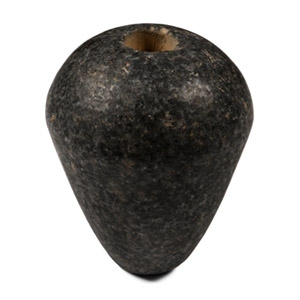
Western Asiatic Stone Macehead
3rd-2nd millennium B.C.Estimate: £100 - 140 (+bp*)
Opening Bid: £50
Piriform with vertical socket expanding towards the narrower end. 383 grams, 8 cm
From the collection of a London, UK, gentleman, 1990s. This lot has been cleared against the Art Loss Register database, and is accompanied by an illustrated lot declaration signed by the Head of the Antiquities Department, Dr Raffaele D'Amato. -
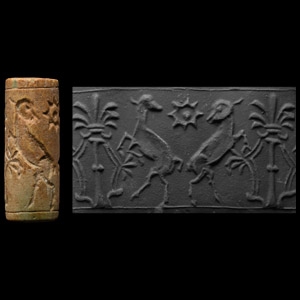
Eastern Syrian Faience Cylinder Seal with Worship Scenes
Circa 800-600 B.C.Sold for (Inc. bp): £650
Accompanied by a copy of an old scholarly note, hand written and signed by W.G. Lambert, late Professor of Assyriology, University of Birmingham, 1970-1993, which states: 'Cylinder seal of Green faience, 36x15mm. The design shows a stylized sacred tree and a reared up kid on either side. A stylized solar disc serves as a terminal. This seal is to be dated c. 800-600 B.C. and comes from Mesopotamia or Eastern Syria. For faience it is a large seal in good condition.'; supplied with a museum-quality impression. 13.5 grams, 36 mm
From the private collection of a North American lady, formed 1970s-early 1990s, with collection reference no.P38. Accompanied by a copy of a scholarly note, hand written and signed by Professor Wilfrid George Lambert dated December 1990. This lot has been cleared against the Art Loss Register database, and is accompanied by an illustrated lot declaration signed by the Head of the Antiquities Department, Dr Raffaele D'Amato. -
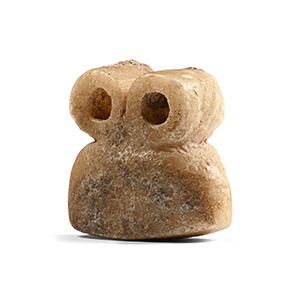
Anatolian Alabaster Eye Idol
4th-3rd millennium B.C.Sold for (Inc. bp): £1,820
With a squat body and two looped eyes, slightly convex base. 34 grams, 38 mm wide
Acquired in the 1980s. Private collection, Switzerland, thence by descent. Private collection, since the late 1990s. This lot has been cleared against the Art Loss Register database, and is accompanied by an illustrated lot declaration signed by the Head of the Antiquities Department, Dr Raffaele D'Amato.
This type of figurine belongs to the type known as an ‘eye idol’ or ‘spectacle idol’, made of stone, marble or alabaster. Usually models having incised eyes (but also examples of open eyes are found) have been excavated mainly at Tell Brak, where thousands were found in a building now called the Eye Temple. There, in the precincts of the temple, excavators have found thousands of little 'eye-idols', schematised humanoid figures fashioned from alabaster, limestone, soapstone and black burnished clay.
