
Loading, please wait...
_900x900.jpg "Seljuk Gold Ring with Inscription")
_200x200.jpg "Seljuk Gold Ring with Inscription")
.jpg "Seljuk Gold Ring with Inscription")
LOT 0294
Seljuk Gold Ring with Inscription
12TH-13TH CENTURY A.D.
7/8 in. (13.16 grams, 21.68 mm overall, 17.01 mm internal diameter (approximate size British M 1/2, USA 6 1/4, Europe 13.09, Japan 12)).
With ornamented D-section hoop expanding towards the shoulders, domed plaque below and shield-like waisted shoulders with scrollwork and plinth-shaped support with S-scrolls framing the central plaque with Arabic inscription 'Hassan/ Aundt'. [No Reserve]
ProvenanceFrom a French private collection, circa 1960s.
Acquired from a private collection in the early 1990s.
Property of a North American gallery.
Accompanied by a copy of a previous cataloguing information page.
This lot has been checked against the Interpol Database of stolen works of art and is accompanied by search certificate no.12103-214334.
Cf. Wenzel, M., Ornament and Amulet: Rings of the Islamic Lands (The Nasser D. Khalili Collection of Islamic Art), London, 1993, nos. 211 and 279, for similar design; see also Content, D. (ed.), Islamic Rings & Gems. The Zucker Collection, London, 1987, no.28.
CONDITIONTimeLine Auctions follows a vetting process to ensure the authenticity and legality of all items, reinforcing our commitment to integrity and responsible trading. Each antiquity, antique, and coin lot undergoes thorough examination by a vetting committee of at least ten external specialists, professional trade association members, scientists, and archaeologists: Our Vetting Process
AUCTIONS:
TimeLine is a leading auction house specialising in antiquities, ancient art, collectables, natural history, coins, medals, and books. Our auctions offer museums, collectors, historians, and enthusiasts the opportunity to acquire unique and historically significant pieces.
-
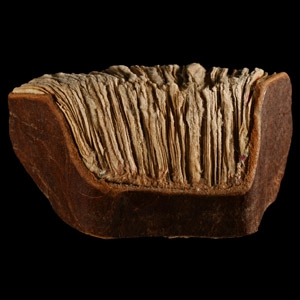
Miniature Book with Qu'ranic Prayers
19th century A.D.Sold for (Inc. bp): £403
Leather-bound, hexagonal-trimmed pages with handwritten texts in black and red ink, first four pages decorated. 9.64 grams, 30 mm
Acquired in the 1970s. Property of a London lady, part of her family's collection. -
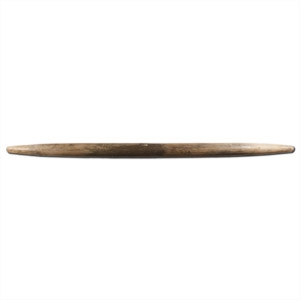
Bactrian Stone Idol
2nd-1st millennium B.C.Sold for (Inc. bp): £1,235
Columnar bar with tapering ends, repair to one end. 13.6 kg, 148.5 cm
Ex collection 'F', London, UK, 2000s. -
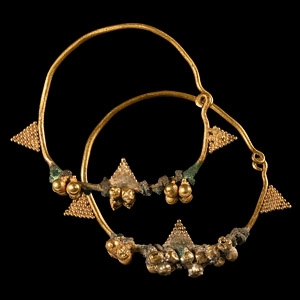
Large Western Asiatic Gold Hoop Earrings
1st millennium B.C.Estimate: £1,000 - 1,400 (+bp*)
Opening Bid: £500
Matched pair, each with radiating granulated triangular plaques and large granule clusters. 20.34 grams total, 62 mm each
From a late Japanese specialist collector, 1970-2000s.
