
Loading, please wait...
LOT 1310
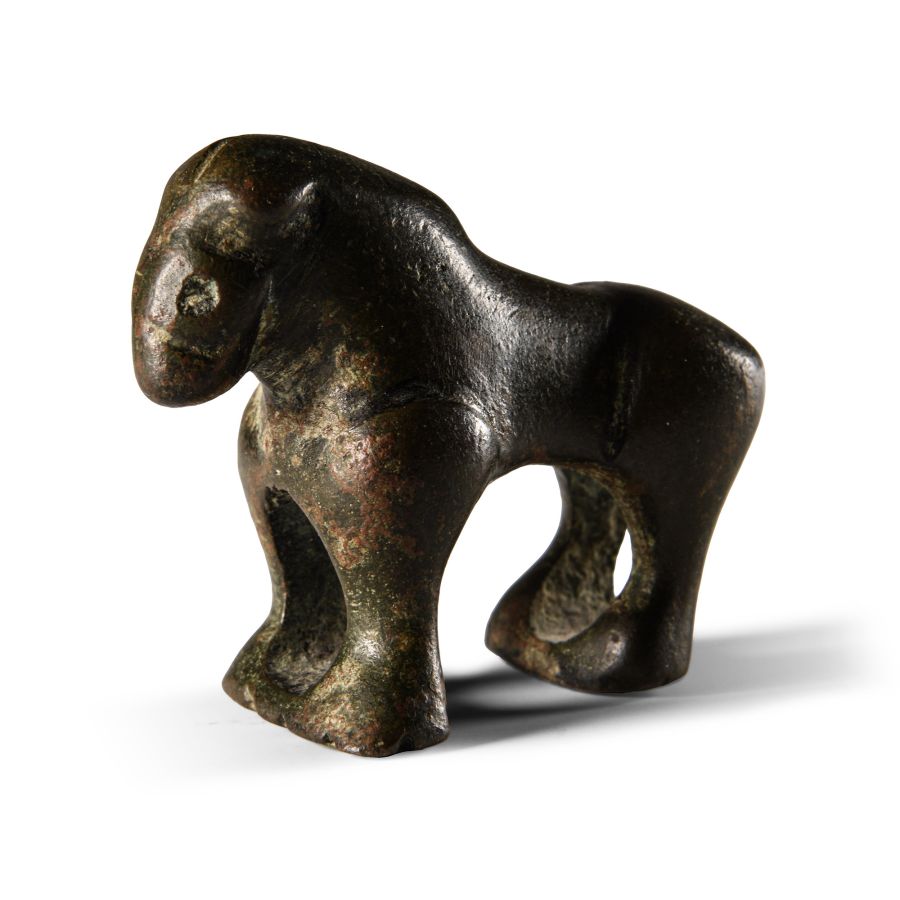
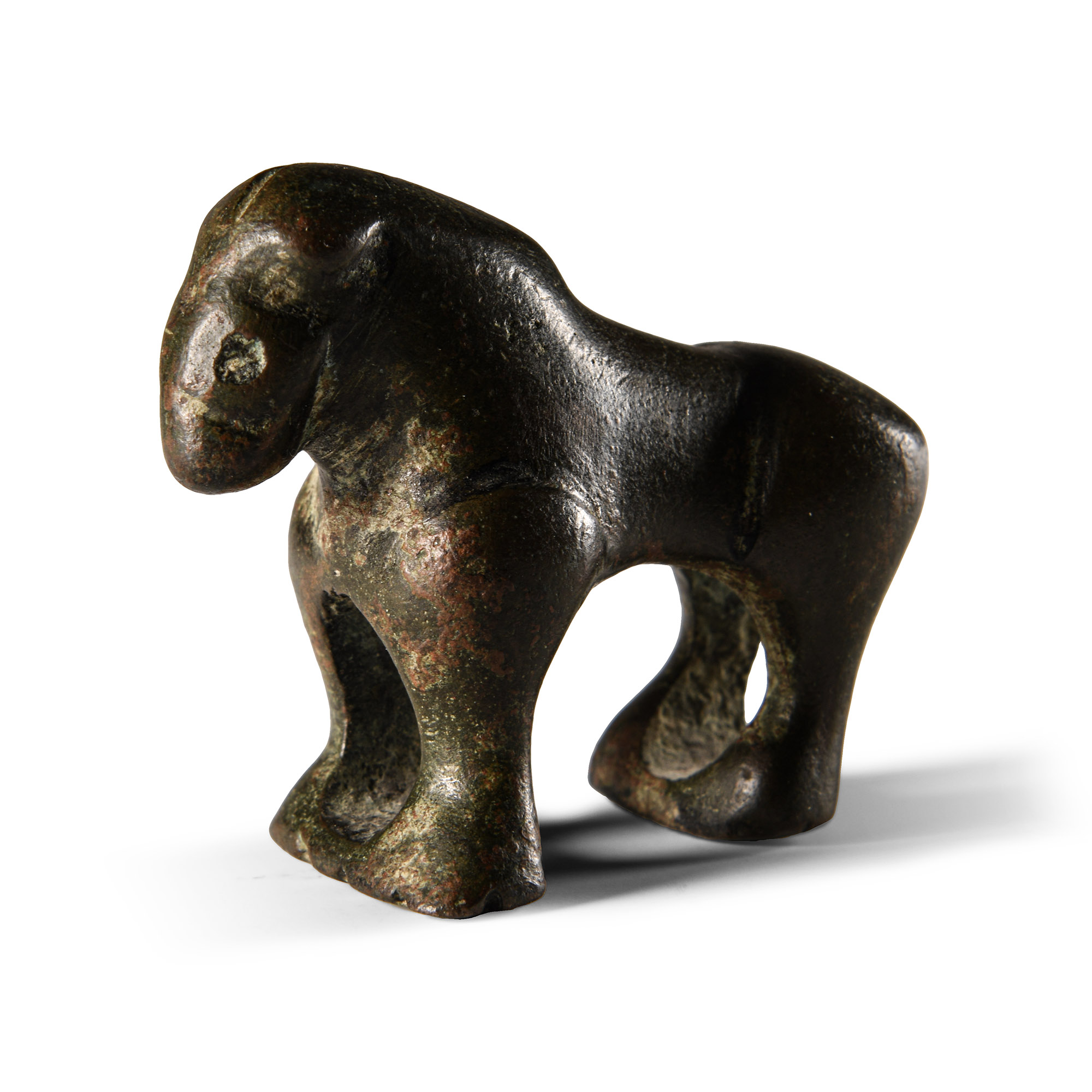
Seljuk Bronze Statuette of a Horse
CIRCA 11TH-12TH CENTURY B.C.
2 in. (115 grams, 52 mm).
Modelled in the round with stocky body, front and back legs united with an integral pedestal. [No Reserve]
ProvenanceEx P.A. collection, Hertfordshire, UK, 1990s.
LiteratureCf. Ettinghausen, R., ‘The Flowering of Seljuk Art’ in The Metropolitan Museum Journal, New York, 1970, volume 3, pp.113-131, for similar style in a feline incense burner and on a ceramic figurine of an armed horseman.
FootnotesSeljuk metalworkers were inspired by their surrounding environment and fauna, but mostly forms of animals (like lion, tiger, deer, rabbit, peafowl, duck, horse, hawk) that seem to be following the Sasanid tradition.
CONDITIONTimeLine Auctions follows a vetting process to ensure the authenticity and legality of all items, reinforcing our commitment to integrity and responsible trading. Each antiquity, antique, and coin lot undergoes thorough examination by a vetting committee of at least ten external specialists, professional trade association members, scientists, and archaeologists: Our Vetting Process
AUCTIONS:
TimeLine is a leading auction house specialising in antiquities, ancient art, collectables, natural history, coins, medals, and books. Our auctions offer museums, collectors, historians, and enthusiasts the opportunity to acquire unique and historically significant pieces.
-
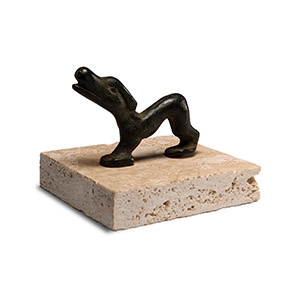
Western Asiatic Bronze Howling Dog Figure
1st millennium B.C.Sold for (Inc. bp): £169
Modelled in the round with sinuous body, head raised and mouth open; possibly the bridge from a stringed instrument; mounted on a custom-made stand. 99 grams total, 52 mm including stand
From a collection acquired on the UK art market from various auction houses and collections mostly before 2000. From an important Cambridgeshire estate; thence by descent. -
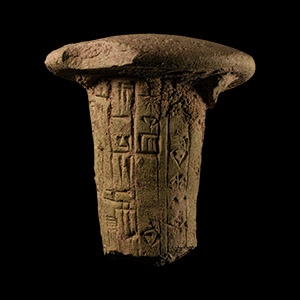
Mesopotamian Terracotta Foundation Nail for Ningirsu, the Strong Hero of Enlil His King, Gudea
3rd-2nd millennium B.C.Sold for (Inc. bp): £442
Conical foundation nail fragment with broad domed top, columns of cuneiform text to the shank: 'dnin-gir -su ur-saĝ-kal-ga- den-lil -la lugal-a-ni gu -de -a ensi ŠIR.BUR.LAki-ke nig -du -e pa mu-na-e e -ninnu AN.IM.DUGUD-babbar -ra-ni mu-na-du ki-bi mu-na-gi', reading: 'Ningirsu, the strong hero of Enlil his king, Gudea, ruler of Lagaš, made ideal values shine and built Eninnu, his white eagle, and restored it'. 338 grams, 92 mm
Acquired in London in 1995. European private collection. -
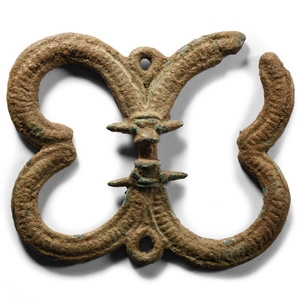
Luristan Bronze Horse Trapping with Animal Decoration
13th-7th century B.C.Sold for (Inc. bp): £65
Formed as two waisted loops with ribbed detailing, central slot framed by facing ibex heads, small loops in the spandrels. 93 grams, 10 cm
Acquired 1980-2015. Ex Abelita family collection. Accompanied by an earlier catalogue identification card.
