
Loading, please wait...
LOT 2072
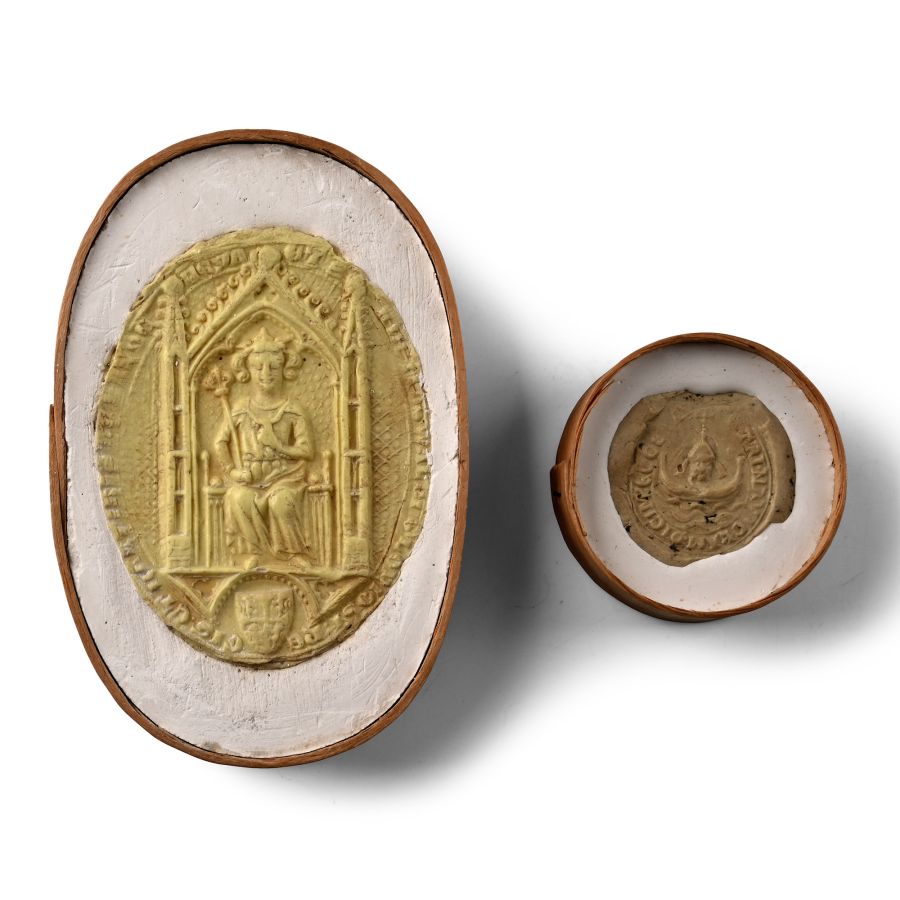
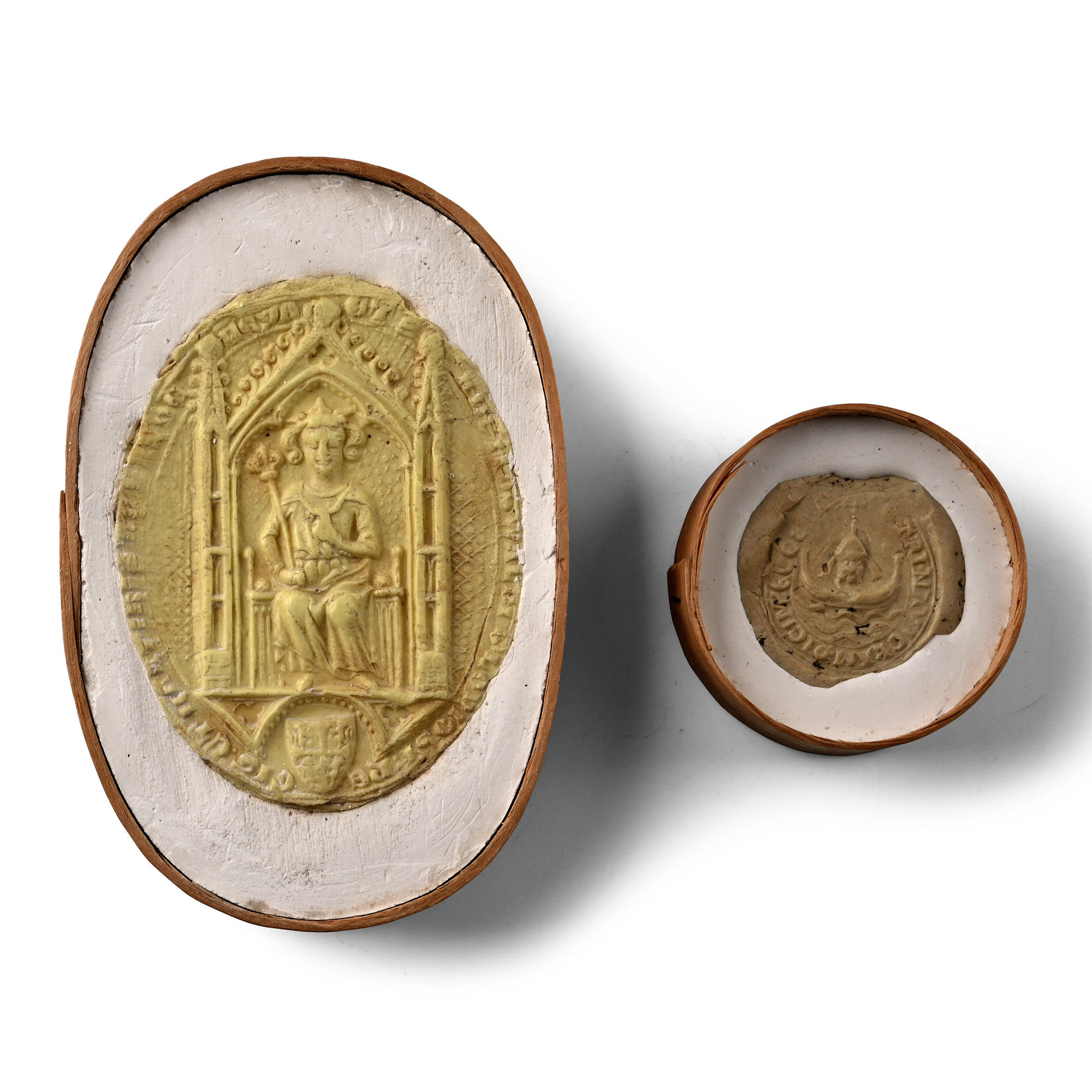
Seal Matrix Casting Group
19TH CENTURY A.D.
1 3/8 - 3 1/8 in. (165 grams total, 34-79 mm).
Comprising: two castings from moulds taken from a medieval seal, possibly of Edward I, set in plaster in a wooden frame: the smaller with a facing mask in a boat surmounted by a cross, the larger with a seated figure holding orb and sceptre within a lancet arch with a heater shield below. [2, No Reserve]
ProvenanceFrom the collection of a West London, UK, collector.
CONDITIONTimeLine Auctions follows a vetting process to ensure the authenticity and legality of all items, reinforcing our commitment to integrity and responsible trading. Each antiquity, antique, and coin lot undergoes thorough examination by a vetting committee of at least ten external specialists, professional trade association members, scientists, and archaeologists: Our Vetting Process
AUCTIONS:
TimeLine is a leading auction house specialising in antiquities, ancient art, collectables, natural history, coins, medals, and books. Our auctions offer museums, collectors, historians, and enthusiasts the opportunity to acquire unique and historically significant pieces.
-
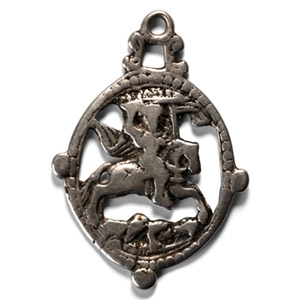
Post Medieval Silver Pendant with Saint James
Spain, circa 17th century A.D.Sold for (Inc. bp): £52
An openwork devotional pendant depicting Santiago Matamoros, Saint James the 'Moor-slayer', trampling a fallen opponent with his horse, brandishing a sword and a standard. 6.5 grams, 45 mm
From continental Europe. Acquired on the UK art market in the 1970s-1990s. Property of a Nottinghamshire, UK, gentleman. This lot is accompanied by an illustrated lot declaration signed by the Head of the Antiquities Department, Dr Raffaele D'Amato. -
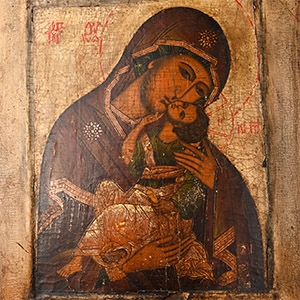
Painted Wooden Icon with the Virgin of Tenderness
Russia, 16th-17th centuries A.D.Estimate: £3,000 - 4,000 (+bp*)
Opening Bid: £1,500
Executed in oil and tempera with painted image of nimbate Mary embracing the nimbate infant Jesus; head of Mary with gilded nimbus and russet-coloured veil; the Virgin is shown in half length, wearing a red-gold fringed maphorion with elaborate golden saltires on the shoulders, over a dark blue robe, visible only on the gold embroidered cuffs; the child touching his mother's chin, holding a furled scroll in his left hand and dressed in blue tunic and wrapped in a gold-orange shawl; on upper left of the Virgin’s head Greek inscriptions 'ΜΡ ΘΥ' (Μήτηρ (τοῦ) Θεοῦ = Mother of God) and beside the Divine Child inscription in Greek letters 'ΙϹ ΧϹ' (ΙΗϹΟΥϹ ΧΡΙϹΤΟϹ = Jesus Christ); inside the nimbus of Christ three letters (only two visible) representing the continuous divine self-existence of Christ as God (O ѾN = The Only One who always exists); rectangular wooden board with mounting slots and bar to reverse. 1.78 kg, 45 x 35.5 cm
Acquired on the UK art market. Private collection, London, UK. Accompanied by an academic report by Dr Raffaele D'Amato. This lot has been checked against the Interpol Database of stolen works of art and is accompanied by search certificate number no.12928-246333.
This splendid specimen comes most probably from an ancient private aristocratic Russian household. It has a superb quality and consists in a refined representation of the Mother of God known as Eleousa (Umilyenie in Russian), in which the Virgin tenderly embraces the Christ Child. Characterised by an affectionate embrace of Mary and the Christ Child, the image combines the themes of maternal love and the Passion of Christ. -
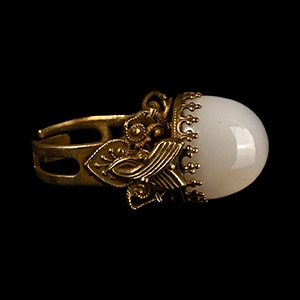
Post Medieval Brass Ring with Chrysoberyl Gemstone
19th-20th century A.D.Sold for (Inc. bp): £59
With openwork expanding hoop, floral detailing to shoulders, bezel with claw setting and inset ovoid gemstone displaying asterism. 10.31 grams, 36.00 mm overall, 17.40 x 19.00 mm internal diameter (approximate size British O, USA 7, Europe 14.98, Japan 14)
From the collection of William Kearney. From the property of a late Lincolnshire, UK, gentleman.
