
Loading, please wait...
LOT 0581
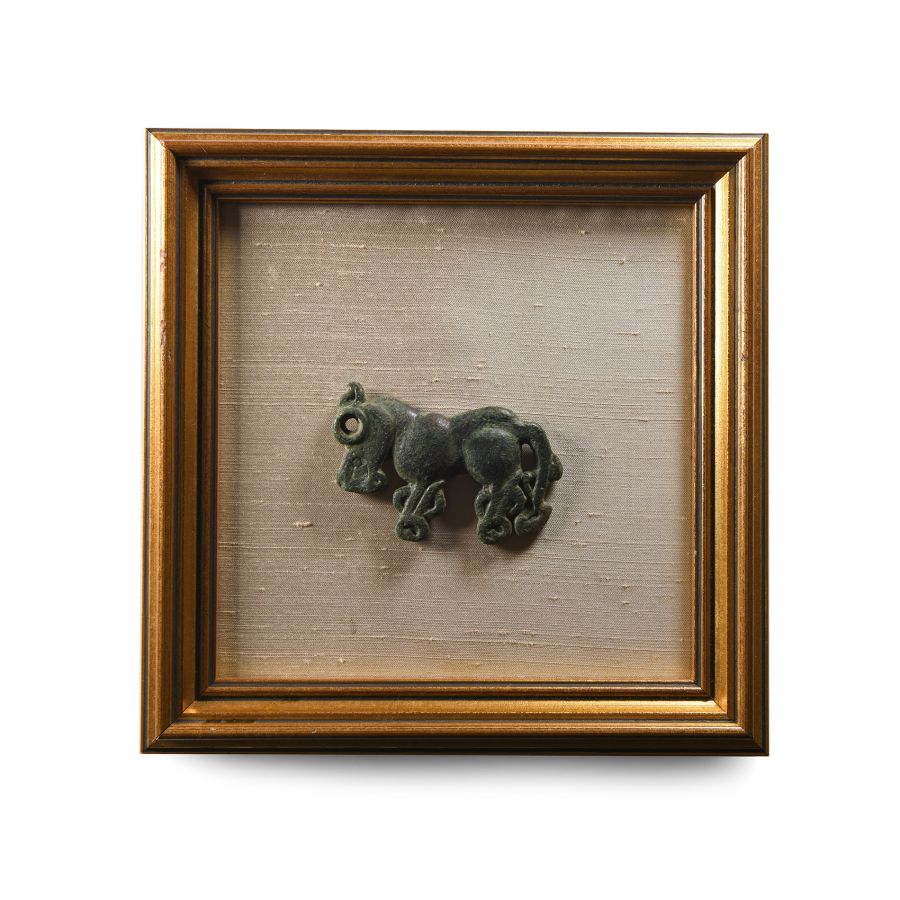
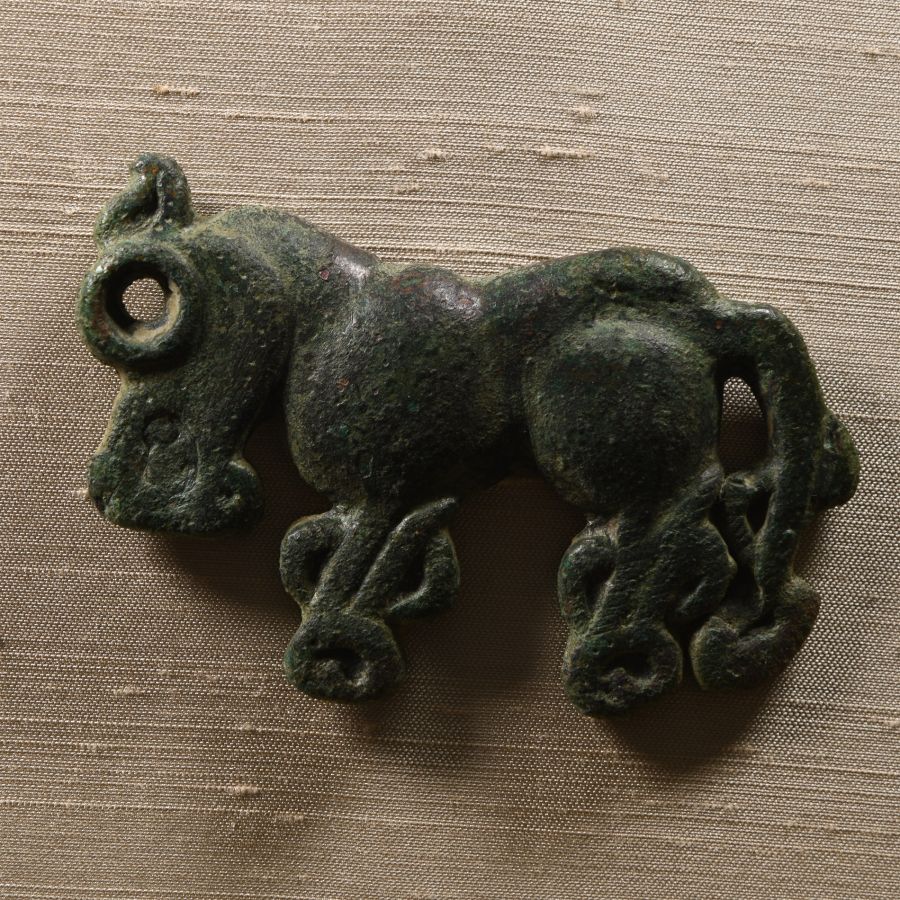
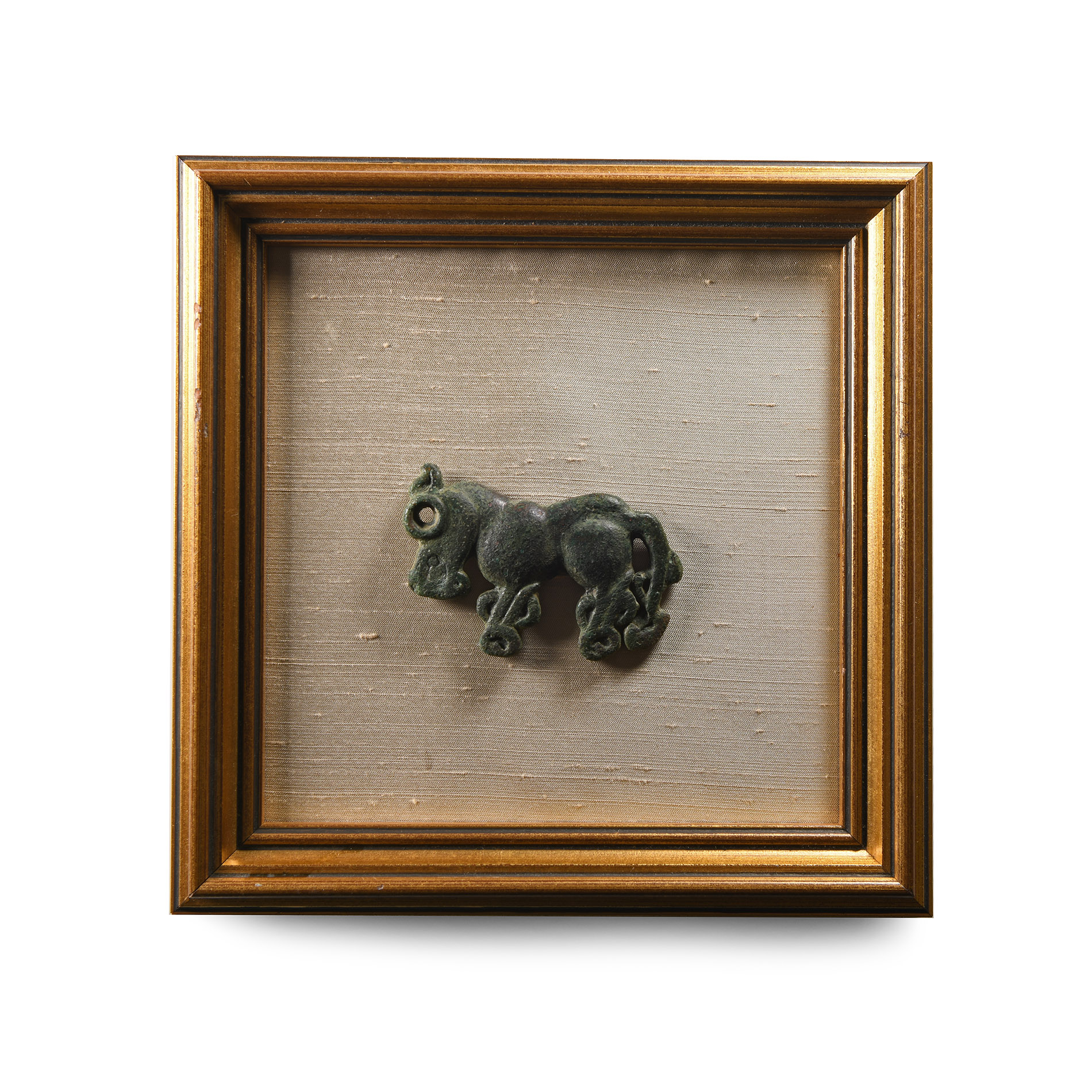
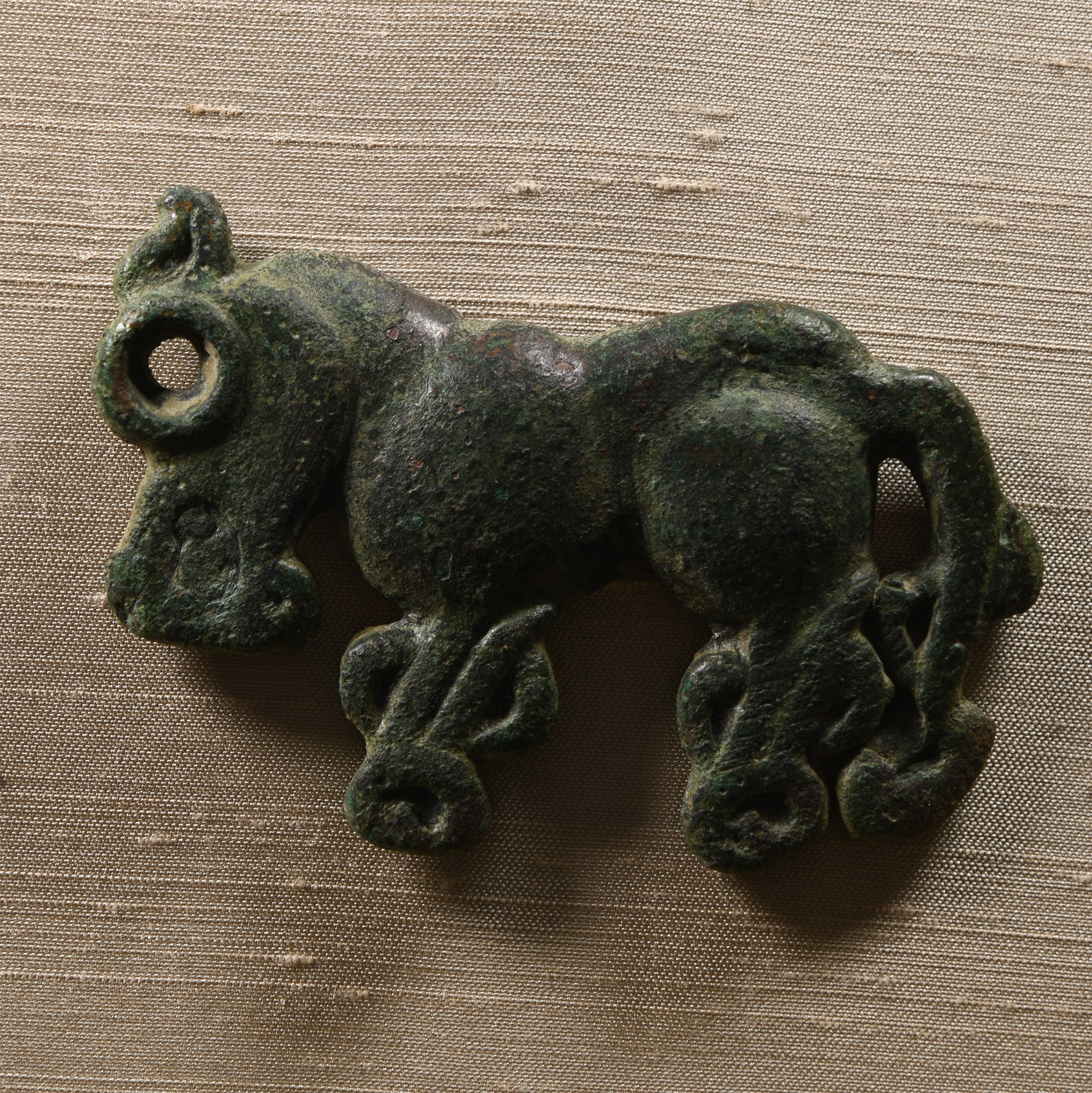
Scythian Standing bronze Horse Applique
5TH-3RD CENTURY B.C.
7 in. (254 grams total, 18 cm including frame).
A stylised horse in profile with ring to the voided eye, exaggerated musculature and hatched detailing; mounted in a custom-made frame.
Provenancewith Claude Boisgirard Archaelogie, Paris, 9 November 1999, no.56.
Property of a London, UK, gentleman.
Cf. Lebedinsky, I., Les Saces, Paris, 2006, p.212, for similar.
FootnotesThis applique was probably part of a horse harness and corresponds to various similar plaques produced by the Saka (Scythian) culture of the Pamir. Steppe art favoured animalistic representations, with a predilection for deer, horses, birds of prey and felines. The animals could be represented in series, or alone, or in combat with each other.
CONDITIONTimeLine Auctions follows a vetting process to ensure the authenticity and legality of all items, reinforcing our commitment to integrity and responsible trading. Each antiquity, antique, and coin lot undergoes thorough examination by a vetting committee of at least ten external specialists, professional trade association members, scientists, and archaeologists: Our Vetting Process
AUCTIONS:
TimeLine is a leading auction house specialising in antiquities, ancient art, collectables, natural history, coins, medals, and books. Our auctions offer museums, collectors, historians, and enthusiasts the opportunity to acquire unique and historically significant pieces.
-
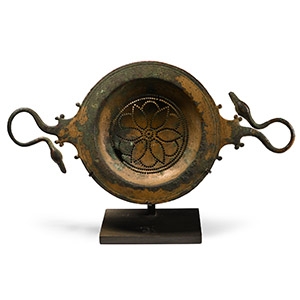
Greek Gilt Bronze Wine Strainer with Two Handles
4th-3rd century B.C.Estimate: £10,000 - 14,000 (‡+bp*)
Opening Bid: £4,444
Comprising a shallow bowl and broad flange rim, two integral scalloped handles with lateral scrolled flourishes, each tapering to a S-curved handle with swan-head terminals with incised eye and beak detailing; perforated whirl within roundel to interior base; accompanied by a custom-made display stand with mirror. 402 grams total, 19.7 cm including stand
with Hôtel des ventes de Belfort Sarl, October 2011, no.16. Acquired by the present owner at the above sale. Accompanied by an academic report by Dr Raffaele D'Amato. This lot has been checked against the Interpol Database of stolen works of art and is accompanied by search certificate number no.12209-222140.
Elaborate gilded strainers, such as this present example, were used at symposia and festive occasions for the purpose of preventing the dregs of wine from entering the wine cup. This and other related silver utensils became popular in the later 4th and 3rd century B.C. These highly decorated wine strainers were fitted with dual handles forming loops in the shape of twisting animals, here a swan. Usually they took the form of a shallow dish complete with four rings of perforations in the centre in order to drain the wine. Strainers of this type were used to separate out sediments which could be found in the thick Greek wine. Examples similar to this one have been found in royal tombs in northern Greece, as well as the tomb of a monarch in Sudan. -
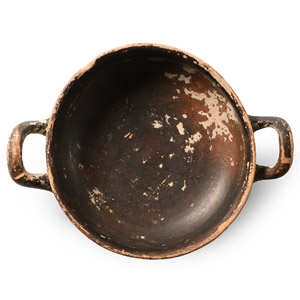
Greek Black-Glazed Cup
South Italian, 5th-4th century B.C.Estimate: £180 - 240 (‡+bp*)
Opening Bid: £100
Broad and squat with carination below the rim, two lateral loop handles, basal ring. 36 grams, 10.2 cm wide
Acquired in Münich in 2012. European private collection. -
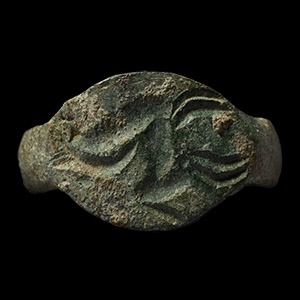
Greek Bronze Ring with Animal
4th-3rd century B.C.Sold for (Inc. bp): £39
With ellipsoid bezel, incuse image of a horse with long slender neck. 5.06 grams, 22.11 mm overall, 17.28 mm internal diameter (approximate size British M, USA 6, Europe 12.46, Japan 12)
Acquired 1980-2015. Ex Abelita family collection.
