
Loading, please wait...
LOT 0058
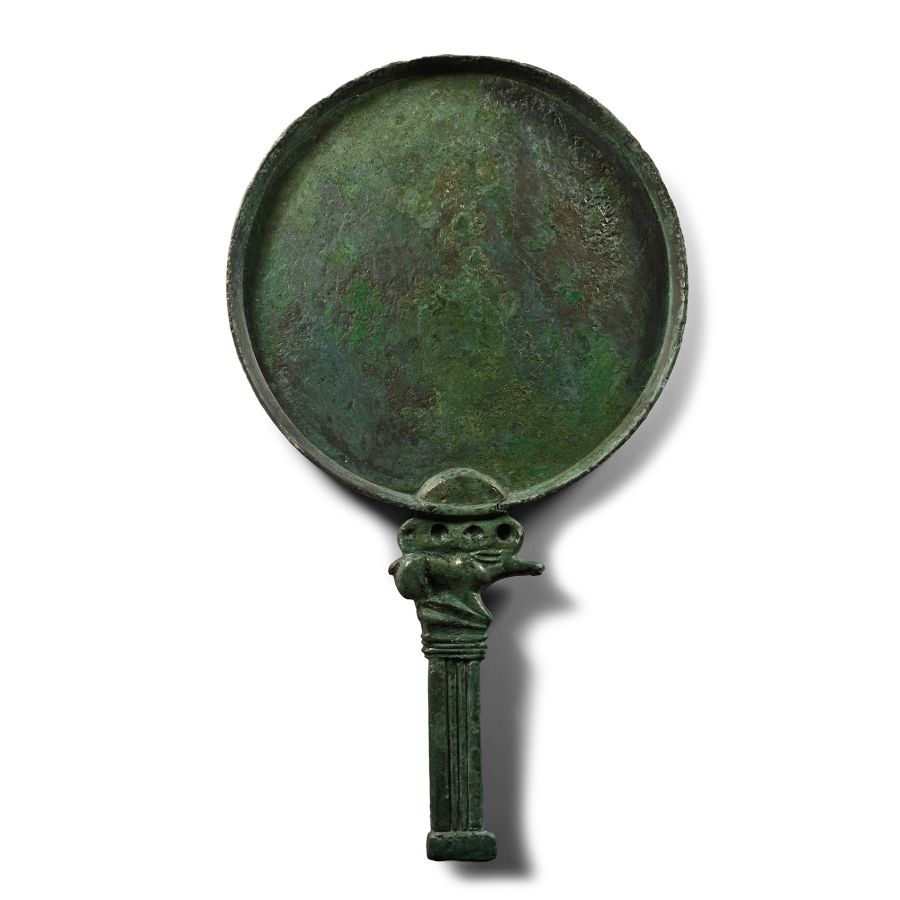
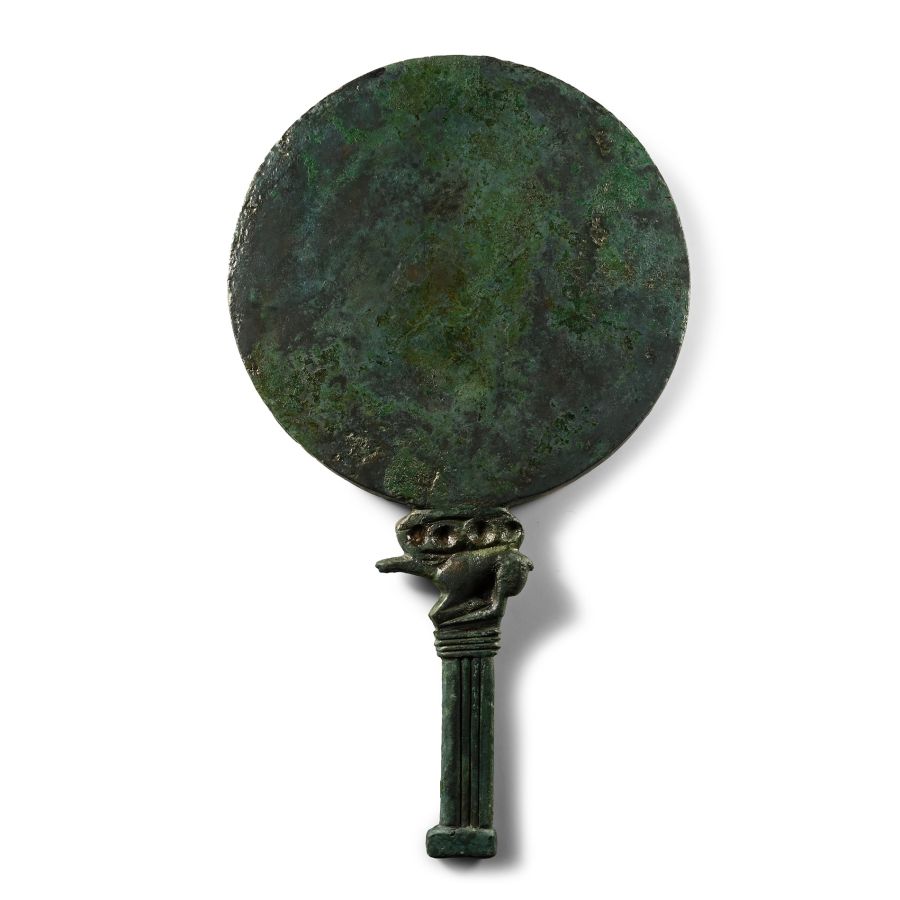
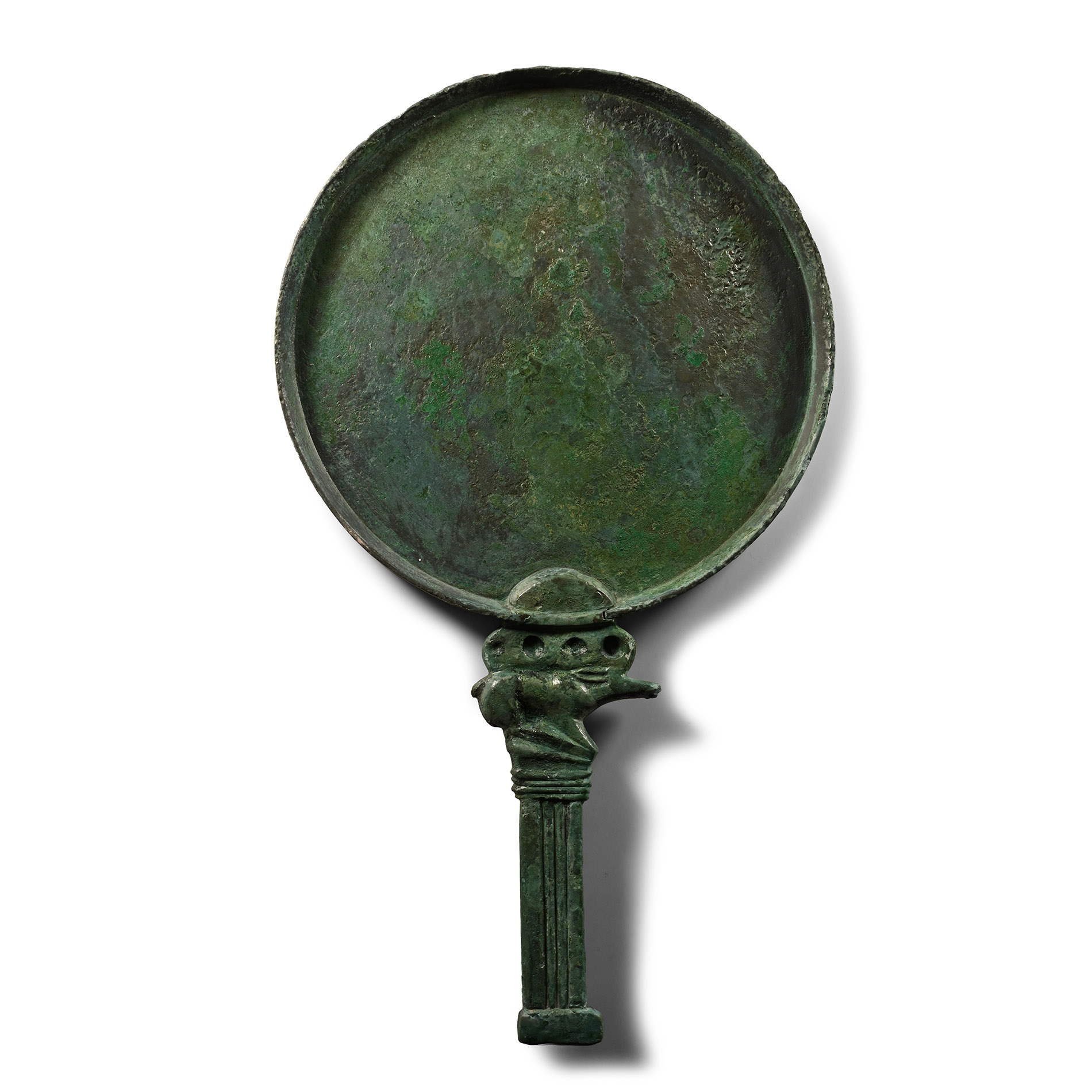
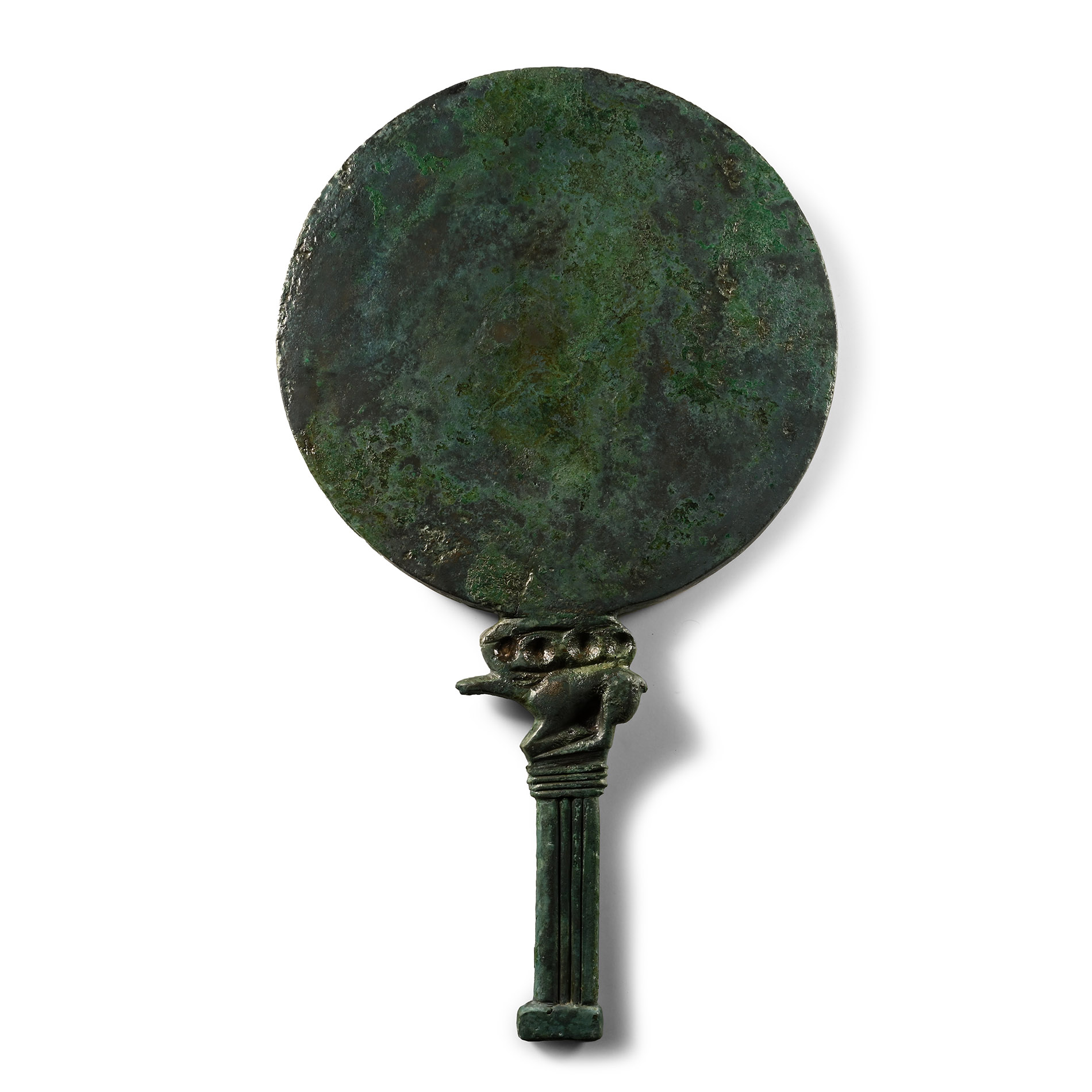
Scythian Mirror with Crouching Stag
5TH-4TH CENTURY B.C.
12 3/8 in. (570 grams, 31.5 cm).
Discoid body with raised rim; ribbed column-like handle with a kneeling stag above, supporting the mirror with its large antlers.
ProvenanceMr M.B., Mainz, Germany, since the 1960s.
Acquired from the above, 2007.
Private collection, London.
Accompanied by an academic report by Dr Raffaele D’Amato.
This lot has been checked against the Interpol Database of stolen works of art and is accompanied by search certificate no.12182-221464.
Cf. Loehr, M., ‘The Stag Image in Schythia and the Far East’ in Archives of the Chinese Art Society of America, Vol. 9 (1955), pp. 63-76; Trofimova, A., Greeks on the Black Sea: Ancient Art from the Hermitage, J. Paul Getty Museum, 2007, item 29j; see also Leypunskaya, N. A., Olbian-Scythian Trade: Exchange Issues in the Sixth to Fourth Centuries BC, Oxford, 2007.
FootnotesBronze mirrors of this type with zoomorphic handles, were widespread in the Scythian archaeology of the Northern Black Sea Region, Northern Caucasus and Carpathian Basin. Handles were often decorated with sculptured depictions of rams, feline predators or deer (stag). The similarity with Scythian art is clearly visible by comparing the stag of our mirror with the stags from the Scythian steppe culture (Loehr, 1955, figs.5,6,10,13-21).
CONDITIONTimeLine Auctions follows a vetting process to ensure the authenticity and legality of all items, reinforcing our commitment to integrity and responsible trading. Each antiquity, antique, and coin lot undergoes thorough examination by a vetting committee of at least ten external specialists, professional trade association members, scientists, and archaeologists: Our Vetting Process
AUCTIONS:
TimeLine is a leading auction house specialising in antiquities, ancient art, collectables, natural history, coins, medals, and books. Our auctions offer museums, collectors, historians, and enthusiasts the opportunity to acquire unique and historically significant pieces.
LOT 0058
Scythian Mirror with Crouching Stag
Estimate £2,000 - 3,000€2,320 - 3,480 (for guidance only)$2,700 - 4,050 (for guidance only)
-
East Greek Bronze Helmetted Head
3rd-2nd century B.C.Sold for (Inc. bp): £124
Modelled in the round, wearing a low crested helmet, stylised facial detailing; socket to the neck. 40.1 grams, 29 mm
Ex German art market, 2000s. Acquired from an EU collector living in London. From the collection of Surrey, UK, gentleman. -
South Italian Terracotta Painted Jug
4th-2nd century B.C.Estimate: £350 - 450 (‡+bp*)
Opening Bid: £180
Piriform with convex rim, lentoid-section handle and discoid foot; polychrome painted bands and lines decorating the equator and inner mouth, dash to handle. 227 grams, 13.5 cm high
Acquired in Europe before 1994. -
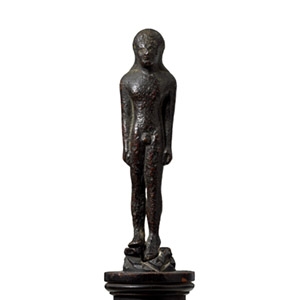
Greek Bronze Naked Youth Statuette
Archaic, circa 6th century B.C.Sold for (Inc. bp): £1,170
Effigy of a kouros standing nude with arms at his sides, left leg slightly advanced, the hair cut straight and draped across the shoulders and upper back; pegs beneath the feet; provided with an old custom-made base. 376 grams total, 20.5 cm including stand
Private collection, England. This lot has been checked against the Interpol Database of stolen works of art and is accompanied by search certificate number no.12203-215580.
