
Loading, please wait...
LOT 0616
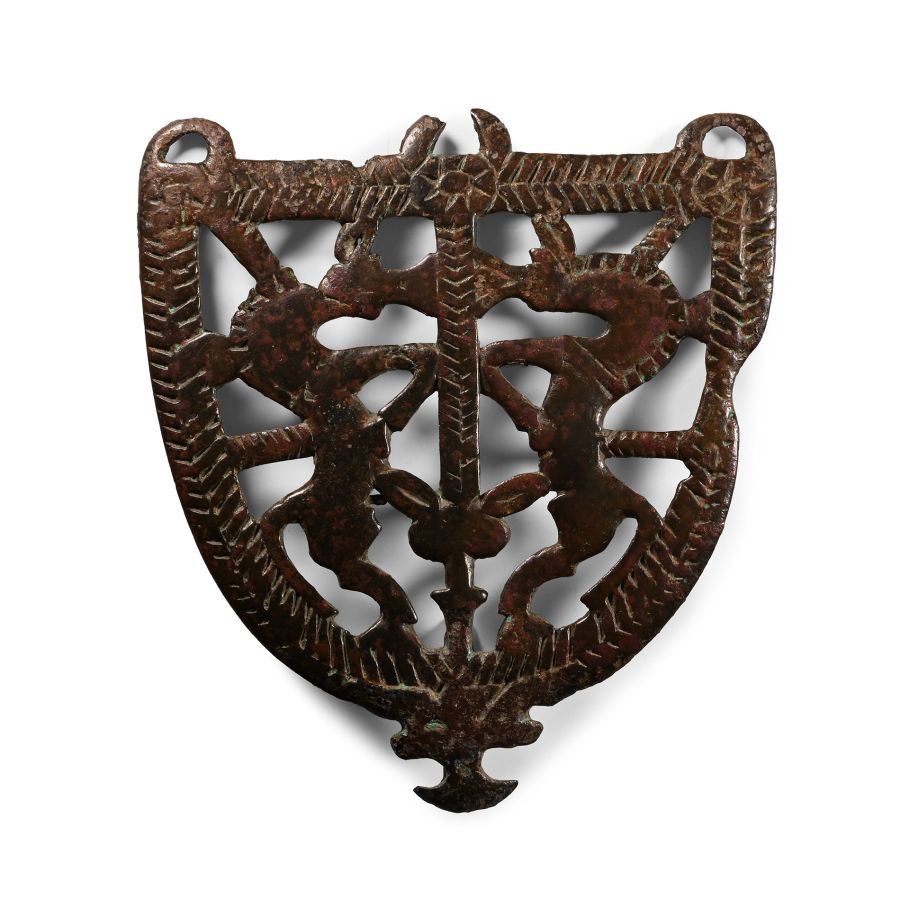
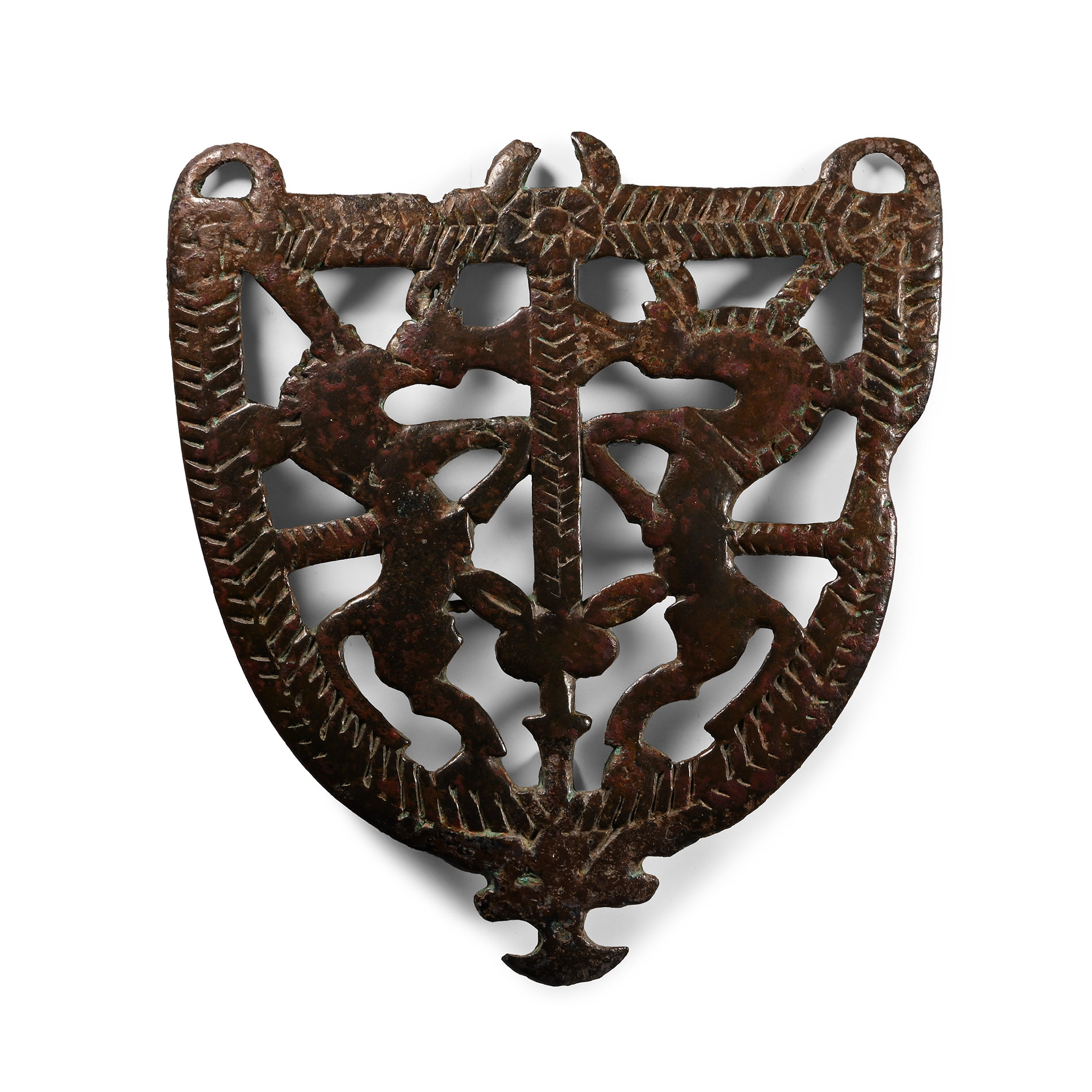
Scythian Bronze Plaque with Rearing Horses
1ST CENTURY B.C.-1ST CENTURY A.D.
4 3/8 in. (121 grams, 11.1 cm).
Heater-shaped openwork plaque with ropework border, opposed horses against a median staff; three loops to the upper edge.
Provenancewith Tajan Auctions, Paris, France, 15th April 2005, no.135.
Property of a London gentleman.
Accompanied by a copy of the Tajan Auctions invoice.
TimeLine Auctions follows a vetting process to ensure the authenticity and legality of all items, reinforcing our commitment to integrity and responsible trading. Each antiquity, antique, and coin lot undergoes thorough examination by a vetting committee of at least ten external specialists, professional trade association members, scientists, and archaeologists: Our Vetting Process
AUCTIONS:
TimeLine is a leading auction house specialising in antiquities, ancient art, collectables, natural history, coins, medals, and books. Our auctions offer museums, collectors, historians, and enthusiasts the opportunity to acquire unique and historically significant pieces.
-
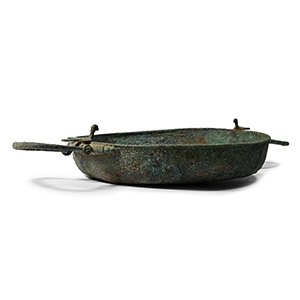
Greek Bronze Phiale with Handles
Archaic, 7th-6th century B.C.Estimate: £3,000 - 4,000 (‡+bp*)
Opening Bid: £1,111
Broad and squat in profile with thickened rim, two lateral omega-shaped drop handles each mounted below the rim on a crescentic bar surmounted by a model bird facing inwards; base damaged. 915 grams, 44 cm wide
Acquired in the mid 1980s-1990s. Private collection, Switzerland, thence by descent. Private collection, since the late 1990s. This lot has been checked against the Interpol Database of stolen works of art and is accompanied by search certificate number no.12210-222327. -
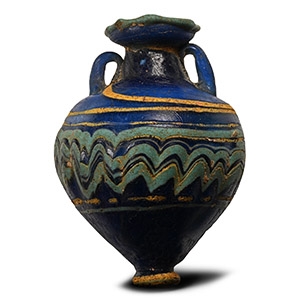
Greek Core-Formed Glass Aryballos
6th-5th century B.C.Sold for (Inc. bp): £1,404
Of squat piriform profile with applied ring to the foot and rim, applied strap handles o the shoulder; the equator with horizontal hoops and dragged marvered trail decoration. 50.1 grams, 71 mm
Private collection, England. -
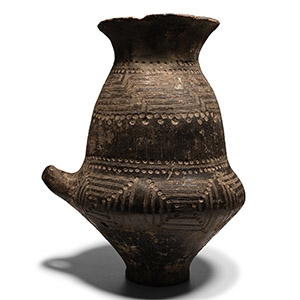
Villanovan Black-Glazed Vase
9th-8th century B.C.Estimate: £1,800 - 2,400 (‡+bp*)
Opening Bid: £1,000
Biconical impasto body with broad flaring rim, bell-shaped upper section with bands of incised geometric decoration and impressed roundels, lower section tiered and sharply funicular with narrow flat base, a lateral upturned loop handle; small hole beneath the carination, rim partly restored. 4.5 kg, 41 cm
Ex Feu Dr. Gonik Et/Ou Feu Me Wirth, Genève. European private collection. Accompanied by an academic report by Dr Raffaele D'Amato. This lot has been checked against the Interpol Database of stolen works of art and is accompanied by search certificate number no.12205-222203.
