Loading, please wait...

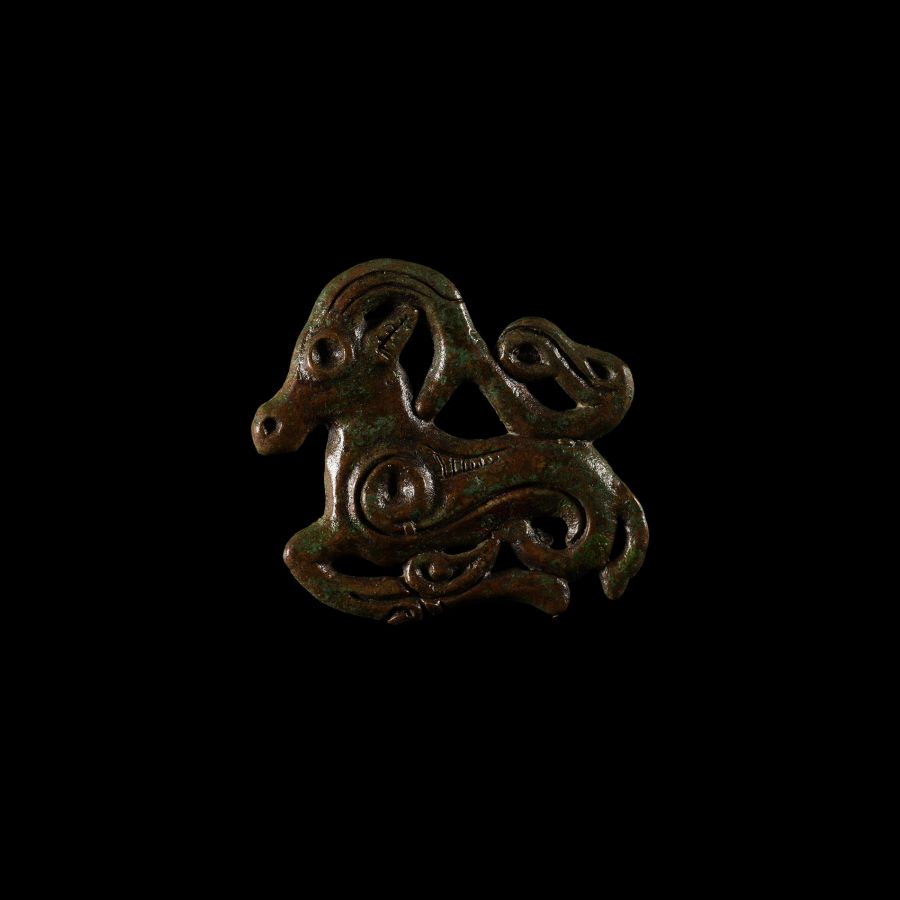
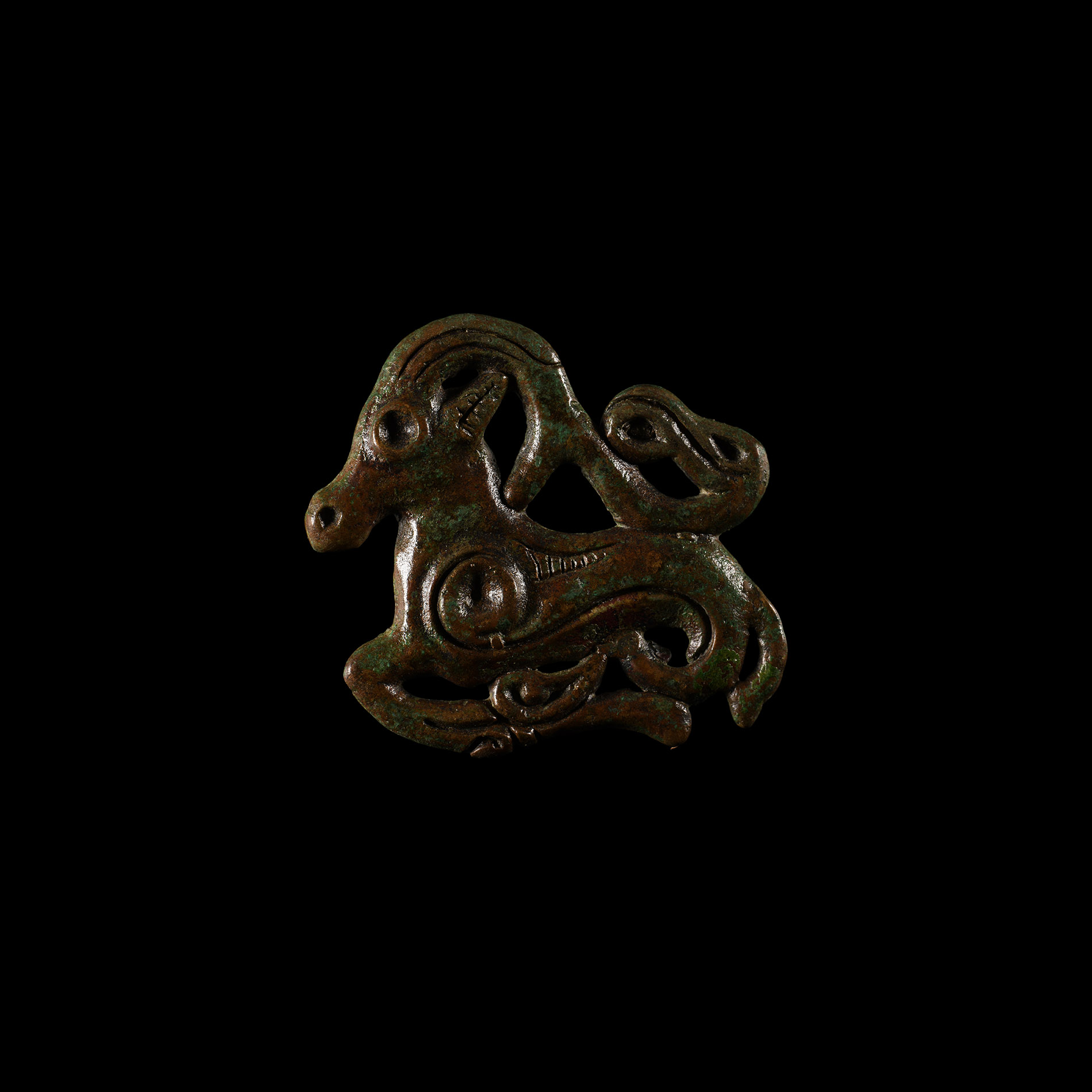
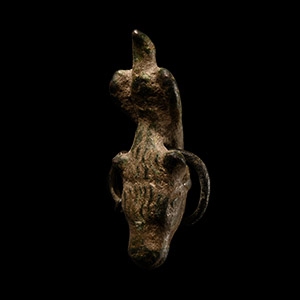
Scythian Bronze Galloping Stag Mount Scythian Bronze Galloping Stag Mount Scythian Bronze Galloping Stag Mount
Use mousewheel to zoom in and out, click to enlarge
Details

LOT 0535

Scythian Bronze Galloping Stag Mount

4TH-3RD CENTURY B.C.

2 7/8 in. (55 grams, 72 mm).

In the form of a stag or other horned quadruped facing left, shallow geometric cells forming the eyes and other stylised anatomical detailing; mounting lug to reverse.

Provenance

Acquired 1980-2015.
Ex Abelita family collection.

CONDITION
VETTING:

TimeLine Auctions follows a vetting process to ensure the authenticity and legality of all items, reinforcing our commitment to integrity and responsible trading. Each antiquity, antique, and coin lot undergoes thorough examination by a vetting committee of at least ten external specialists, professional trade association members, scientists, and archaeologists: Our Vetting Process


AUCTIONS:

TimeLine is a leading auction house specialising in antiquities, ancient art, collectables, natural history, coins, medals, and books. Our auctions offer museums, collectors, historians, and enthusiasts the opportunity to acquire unique and historically significant pieces.

LOT 0535

Scythian Bronze Galloping Stag Mount

Sold for (Inc. bp): £910

Print page

RELATED LOTS
  • Graeco-Roman Megarian Terracotta Cup with Nymphs
    Graeco-Roman Megarian Terracotta Cup with Nymphs
    2nd century B.C.

    Sold for (Inc. bp): £208

    Hemispherical in form with decoration in relief featuring fluting alternating with nymphs and symbols beneath an architectural border, cracked and chipped. 257 grams, 11.9 cm wide


    Private Dutch collection, 1970-2010. Ex private Dutch collection, 2010-2018.

    The term ‘Megarian’ bowl applied to this type of pottery is a modern convention for academic purposes. The name ‘Megarian’ was first given to this type of mould-made relief bowl in the late 19th century, because some of the first known examples were said to have come from the city of Megara. In reality, such terracotta items originated in Athens in the 3rd quarter of the 3rd century BC, and from that point were made in all major Greek cities for the duration of the Hellenistic period and into the Roman, especially in Alexandria. This relief-decorated pottery became more popular than painted pottery during the Hellenistic period. This class of hemispherical bowl was made in moulds and was characterised by decoration imitating metallic beakers. When the finished bowl was taken from the mould, it was probably dipped in varnish or dull paint and fired. According to Prof. P.V.C. Baur, the stamps used for making moulds were not produced in every manufacturing centre of ‘Megarian’ bowls, but were made only in important centres such as Athens, Pergamon, Antioch and Alexandria, and sold to potters throughout the Hellenistic world. The fact that the edge of the bowl is turned outwards suggests Athenian production, and a comparison with the decorative petals on the Delian Cup (no.1913.199 of the Rebecca Darlington collection) is also plausible.

    Lot Details

  • Hellenistic Gold Double Boss Brooch
    Hellenistic Gold Double Boss Brooch
    3rd-2nd century B.C.

    Sold for (Inc. bp): £585

    Or an attachment, comprising two conjoined conical bosses, each with a central knop and rim with two narrow bands of granulation; to the centre, a delicate granulated lozenge with scrolling details to the upper and lower points; to the reverse, an applied double hook for attachment; Alexandrian. 4.42 grams, 36 mm


    UK art market, acquired prior to 1985.

    Lot Details

  • Greek Terracotta Kantharos
    Greek Terracotta Kantharos
    4th-3rd century B.C.

    Estimate: £1,500 - 2,000 (+bp*)

    Opening Bid: £700

    Trumpet-shaped cup with narrow stem and flared foot, two elaborate scrolled loop handles with lateral spurs, Side A: painted female profile busts each with detailed stephane and drop earrings, the hair dressed in a kekryphalos, flanked by two white cross or sword symbols; Side B: similar but lacking the swords. 421 grams, 20 cm high


    From a German auction. Ex Paris gallery, 2000s.

    Lot Details

Stay up-to-date with the latest from TimeLine Auctions by joining our mailing list