
Loading, please wait...
LOT 1031
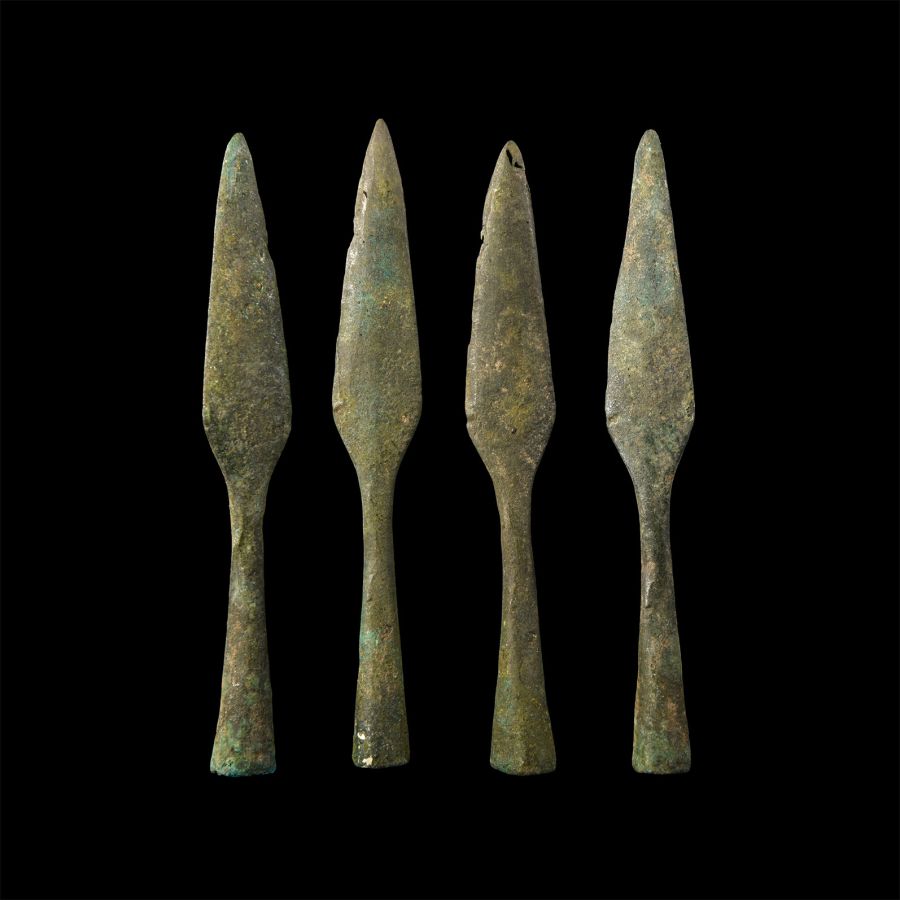
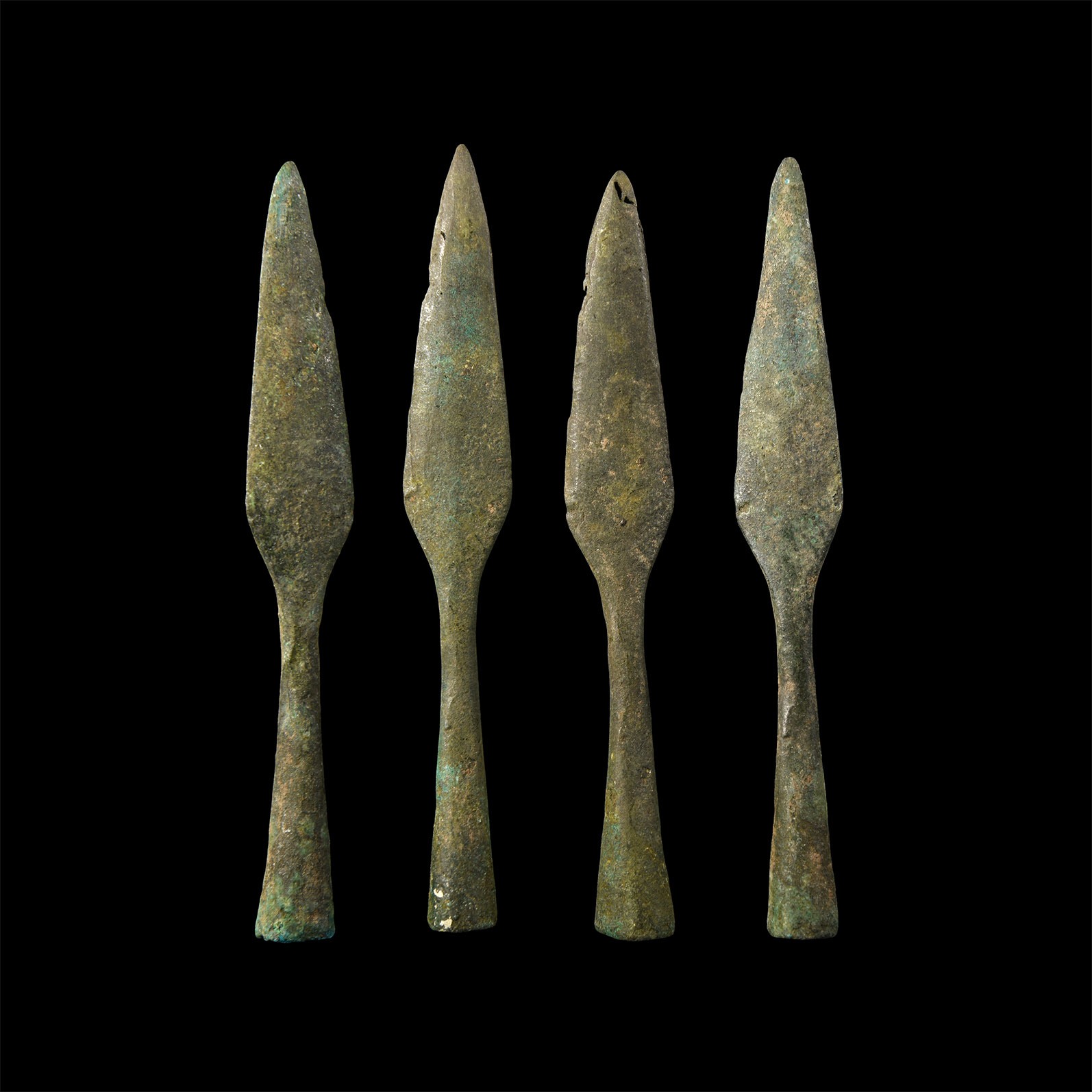
Scythian Bronze Arrowhead Group
5TH-3RD CENTURY B.C.
3 3/4 in. (64 grams total, 95-97 mm).
Composed of four socketted lanceolate arrowheads. [4]
ProvenanceAcquired on the EU art market around 2000.
From the collection of a North American gentleman.
TimeLine Auctions follows a vetting process to ensure the authenticity and legality of all items, reinforcing our commitment to integrity and responsible trading. Each antiquity, antique, and coin lot undergoes thorough examination by a vetting committee of at least ten external specialists, professional trade association members, scientists, and archaeologists: Our Vetting Process
AUCTIONS:
TimeLine is a leading auction house specialising in antiquities, ancient art, collectables, natural history, coins, medals, and books. Our auctions offer museums, collectors, historians, and enthusiasts the opportunity to acquire unique and historically significant pieces.
-
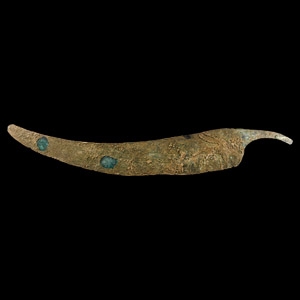
Western Asiatic Bronze Dagger
2nd-1st millennium B.C.Estimate: £100 - 140 (+bp*)
Opening Bid: £50
Single-edged, curved with scooped shoulder and flat tang. 78 grams, 31 cm
Ex German collection, Cologne, 1980-1990s.
In the middle of the 2nd millennium B.C., combat knives were widely used in Palestine and Syria. Some of them reproduced in local forms and constructions of the beginning of the 2nd millennium B.C., others had a concave blade with a humpbacked back or S-shaped blades which, apparently, should be associated with influences from Asia Minor influence. -
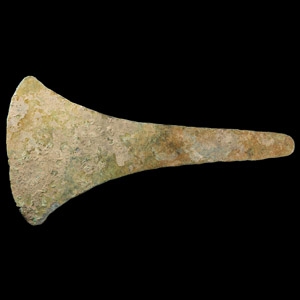
Luristan Bronze Axehead
2nd-1st millennium B.C.Sold for (Inc. bp): £130
The fan-shaped cheeks leading to a convex cutting edge; rounded butt and flat in section. 120 grams, 22 cm
Acquired 1980-2015. Ex Abelita family collection. -
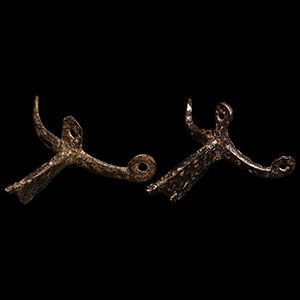
Roman Provincial Iron Spur Group
2nd-3rd century A.D.Sold for (Inc. bp): £143
With central barbed spike positioned under the pierced central hole, fitted on both sides with arms having circular shaped eyelet-like protuberances. 29.6 grams total, 54-62 mm
Acquired on the German art market around 2000. From the collection of a South African gentleman.
The prick spur was the first type of spur to be invented, and it consists of a goad or prick, more or less pointed, connected to side arms or a heel plate. They went around the rider’s heel and had a straight post on the back that was used to cue the horse. Often this was sharp, obviously intended to prick the horse, The type here represented seems to be a provincial variant of Roman Imperial prick spur fitted with three eyelets.
