
Loading, please wait...


LOT 1448
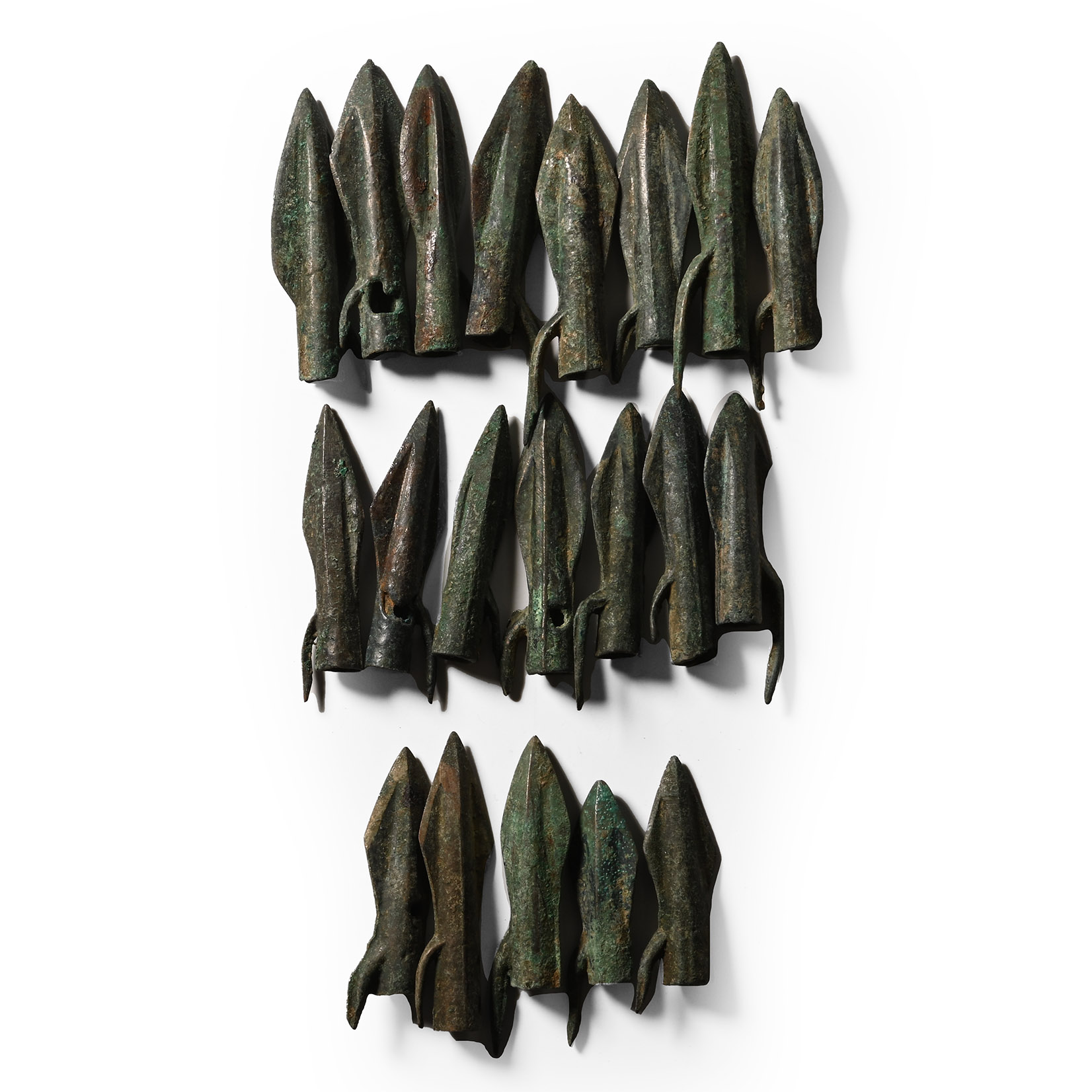
Scythian Bronze Arrowhead Collection
CIRCA 7TH-3RD CENTURY B.C.
1 3/8 - 2 1/4 in. (130 grams total, 37-57 mm).
Each with a slender, lozenge-shaped blade and a socket extending near the tip, base of the socket with a side lug. [20, No Reserve]
ProvenanceUK private collection before 2000.
Acquired on the UK art market.
Property of a London gentleman.
Cf. Gorelik, M., Weapons of Ancient East, IV millennium BC-IV century BC, Saint Petersburg, 2003, in Russian, for similar arrowheads from Eurasian sites (plate XLIV, nos.19,31,32,36,37,38,39,51,71).
FootnotesIn Greek warfare archery was mainly employed by Scythians and Cretans for the longer-ranks. Both used composite bows made of wood, horn, bone and sinew. This explains the great range of Scythian arrowheads found on the Greek sites.
CONDITIONTimeLine Auctions follows a vetting process to ensure the authenticity and legality of all items, reinforcing our commitment to integrity and responsible trading. Each antiquity, antique, and coin lot undergoes thorough examination by a vetting committee of at least ten external specialists, professional trade association members, scientists, and archaeologists: Our Vetting Process
AUCTIONS:
TimeLine is a leading auction house specialising in antiquities, ancient art, collectables, natural history, coins, medals, and books. Our auctions offer museums, collectors, historians, and enthusiasts the opportunity to acquire unique and historically significant pieces.
-
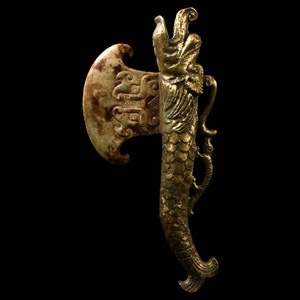
Chinese Serpentine and Gilt Bronze Ceremonial Axe
Qing Dynasty, 19th-early 20th century A.D.Sold for (Inc. bp): £98
Comprising a serpentine pelta-shaped blade with taotie motif, bronze socket formed as a stylised fish with a lizard on its back, open mouth to accept the staff; in archaic style. 513 grams, 23.5 cm
Acquired UK, in the 1980s. Property of a retired South West London doctor -
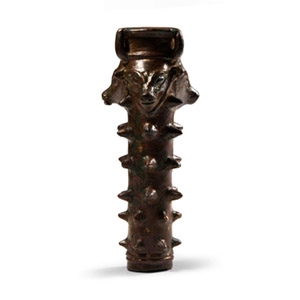
Elamite Spiked Bronze Macehead with Bulls
Late 2nd-early 1st millennium B.C.Estimate: £1,800 - 2,400 (+bp*)
Opening Bid: £1,000
With three adjoining bull heads in high relief to the top, with three ears and three horns serving all the three heads; the horns curving towards the rim of the the closed top; the shaft adorned with vertical rows of pointed spikes; hollow socket tube with ring collar at the base. 349 grams, 14.5 cm
with a London, UK gallery, 1971-early 2000s. Accompanied by an academic report by Dr Raffaele D'Amato. This lot has been checked against the Interpol Database of stolen works of art and is accompanied by search certificate number no.11997-22061. -
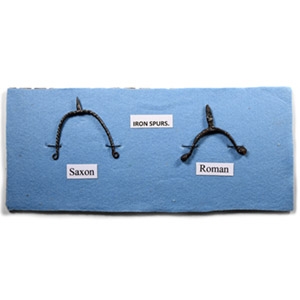
Saxon and Roman Iron Military Spur Display
Circa 2nd-10th century A.D.Sold for (Inc. bp): £286
Comprising a Roman U-shaped spur with lateral lugs and prick spur; an Anglo-Saxon iron spur with barley twist body and small terminals. 254 grams total, 82-83 mm
From the collection of the famous author, writer and speaker, Gordon Bailey, Essex, UK; formed since 1968.
The Romans employed a light spur (calcar) made of bronze or iron, U-shaped and barely covering the heel. To the rear of the spur was a small point, and this form continued to be in use through the early Medieval period. The Saxon spurs were very similar to the Roman examples, although slightly larger and with a more spiked point.
