
Loading, please wait...
LOT 0367
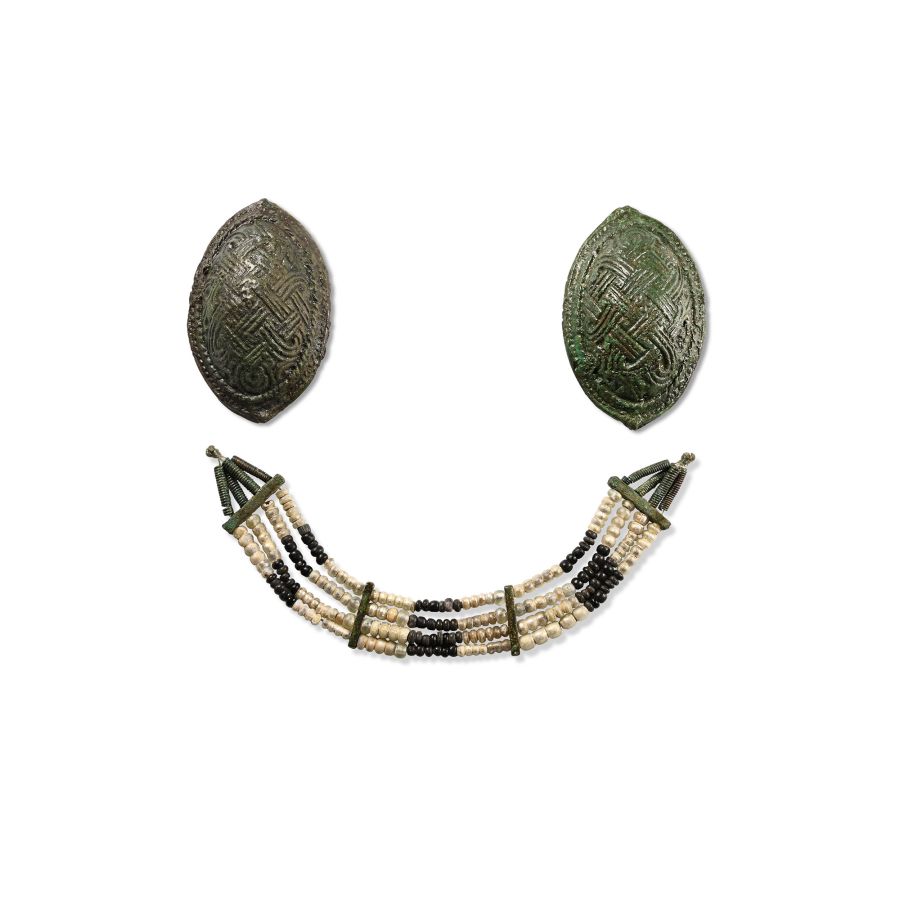
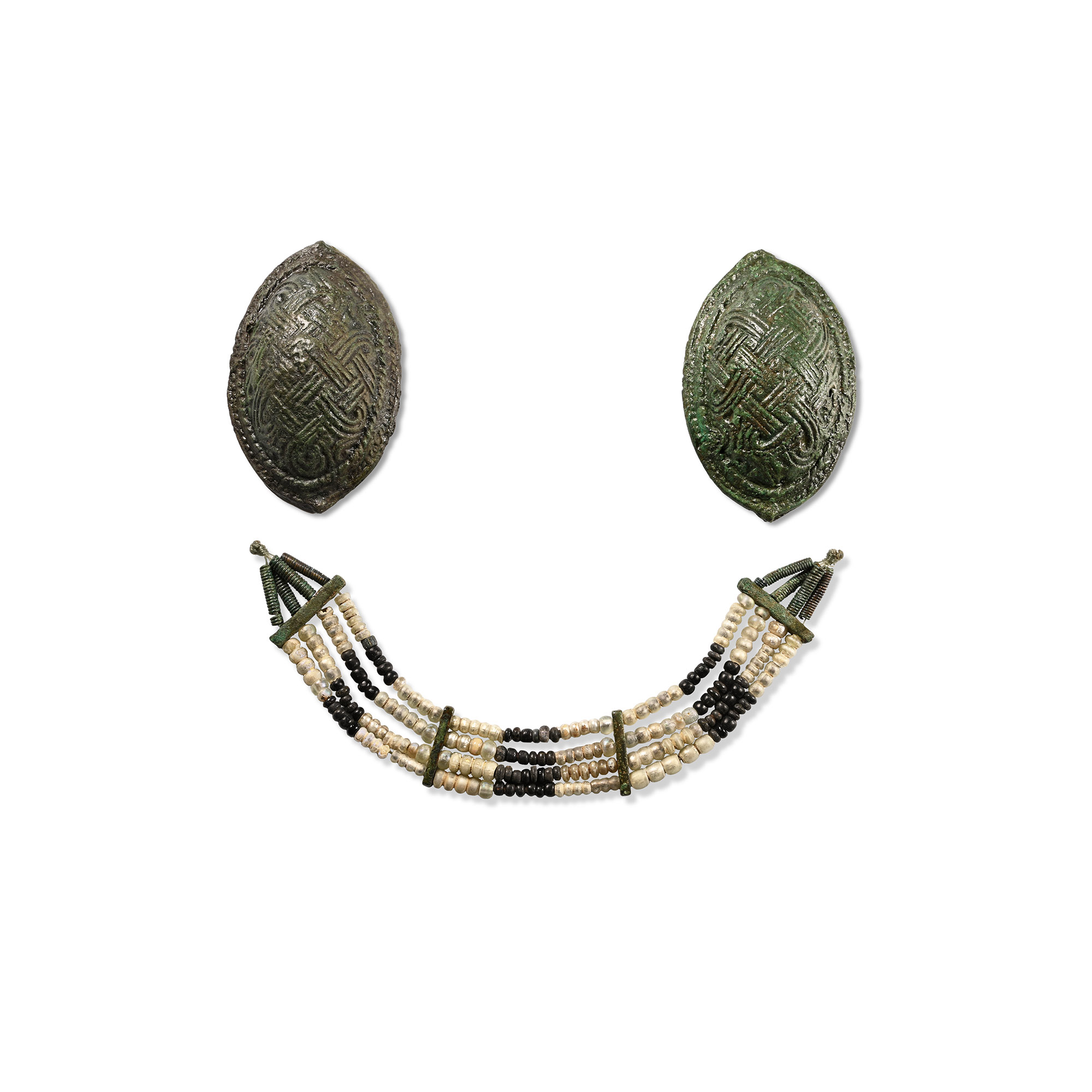
Scandinavian Viking Jellinge Style Bronze Oval Brooch Set
9TH-11TH CENTURY A.D.
3 - 7 7/8 in. (149 grams total, 7.7-20 cm).
Comprising: two elliptical bronze tortoise brooches, each domed with low-relief ornament of an interlaced panel, wide flange with bead detailing; catch, pin-hinge and pendant attachment bar to the reverse; three swags of graduated beads (restrung) - long tubular corrugated beads in pearlescent white flanking individual black seed beads, with spacer bar and wire coils to each end. [3]
ProvenanceFrom the private collection of a London gentleman, from his grandfather's collection formed before the early 1970s.
This lot is accompanied by an illustrated lot declaration signed by the Head of the Antiquities Department, Dr Raffaele D'Amato.
See Arbman, H., Birka I: Die Gräber, Uppsala, 1940, pls.58ff. and in particular 62-63, 67, for similar brooches; see also Graham-Campbell, J. & Kidd, D., The Vikings, London, 1980, figs.52-53, for similar brooches from Norway.
CONDITIONTimeLine Auctions follows a vetting process to ensure the authenticity and legality of all items, reinforcing our commitment to integrity and responsible trading. Each antiquity, antique, and coin lot undergoes thorough examination by a vetting committee of at least ten external specialists, professional trade association members, scientists, and archaeologists: Our Vetting Process
AUCTIONS:
TimeLine is a leading auction house specialising in antiquities, ancient art, collectables, natural history, coins, medals, and books. Our auctions offer museums, collectors, historians, and enthusiasts the opportunity to acquire unique and historically significant pieces.
LOT 0367
Scandinavian Viking Jellinge Style Bronze Oval Brooch Set
Estimate £1,000 - 1,400€1,160 - 1,620 (for guidance only)$1,350 - 1,890 (for guidance only)
-
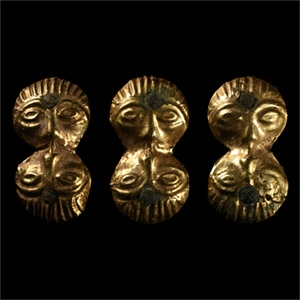
Scandinavian Pre-Viking Gold Double-Headed Mount Group
Circa 6th century A.D.Sold for (Inc. bp): £1,170
Each formed as a conjoined pair of facing masks sharing a mouth; pin to reverse. 2.48 grams total, 24.6-24.8 mm
From the private collection of a London gentleman, from his grandfather's collection formed before the early 1970s. This lot is accompanied by an illustrated lot declaration signed by the Head of the Antiquities Department, Dr Raffaele D'Amato. -
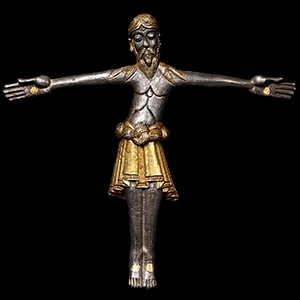
Scandinavian Viking Period Silver-Gilt Corpus Christi
Circa 11th century A.D.Estimate: £15,000 - 20,000 (+bp*)
Opening Bid: £7,500
Modelled in the half-round with elongated arms and exaggerated hands, head tilted and eyes downcast in solemn expression, long hair falling on his shoulders in hanks; wearing a knee-length pleated garment, secured to the waist with a thick knotted rope, gilt roundels to hands and feet to indicate wounds; attaches to lot 358. 70 grams, 11.7 cm wide
From the collection of an antiquarian and collector of medieval art. Acquired on the London art market. Private collection, London, UK. Accompanied by an academic report by Dr Raffaele D'Amato. This lot has been checked against the Interpol Database of stolen works of art and is accompanied by a search certificate number no.12731-234561. This lot has been cleared against the Art Loss Register database, and is accompanied by an illustrated lot declaration signed by the Head of the Antiquities Department, Dr Raffaele D'Amato.
The magnificent crucifix is paralleled by two wonderful crucifixes in the Danish Churches of Århus and Lisbjerg. In accordance with the old tradition derived from Byzantium, Christ is depicted as alive, standing in front of his cross, with nailed hands. It may have once been part of an altar decoration or rather have been placed above or in the chancel arch of a church. -
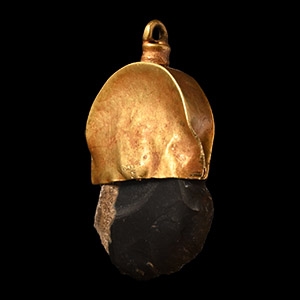
Viking Age Gold Elfshot Pendant
9th-11th century A.D. or earlierSold for (Inc. bp): £364
Comprising a D-shaped gold cap with integral loop above, inset knapped flint blade. 3.41 grams, 27 mm
Acquired 1980-2015. Ex Abelita family collection. This lot is accompanied by an illustrated lot declaration signed by the Head of the Antiquities Department, Dr Raffaele D'Amato.
This amulet was believed to offer protection against 'Elfshot'. The attack of elves was believed responsible for mysterious suffering in men and livestock: sudden shooting pains localised to a particular area of the body, such as in rheumatism, arthritis or muscle stitches or cramps. Elves were thought to shoot darts or arrows where such pains had no obvious external cause. Belief in elfshot persisted into the 20th century in rural areas, and as proof country folk would sometimes find small arrowheads (the remains of Neolithic or Mesolithic flints, or naturally-occurring spear-shaped stones) that were believed to be the magical weapons that caused the afflictions. Belief in elfshot began in the Pagan Germanic period.
