
Loading, please wait...
LOT 1636
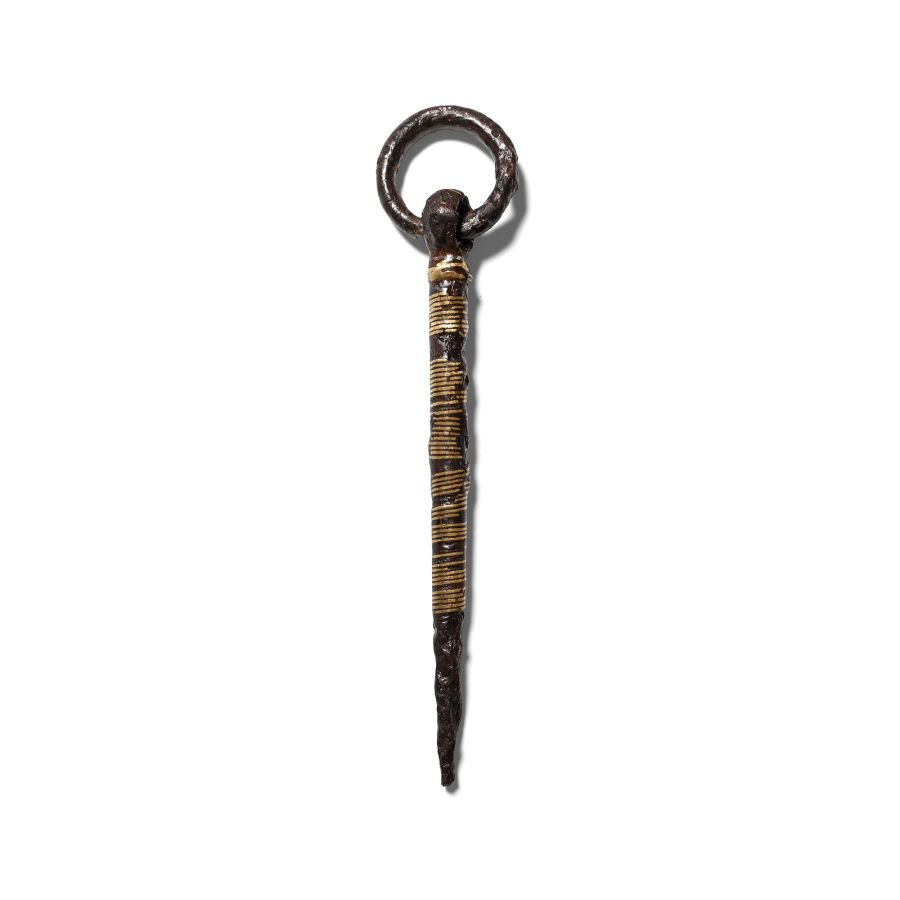
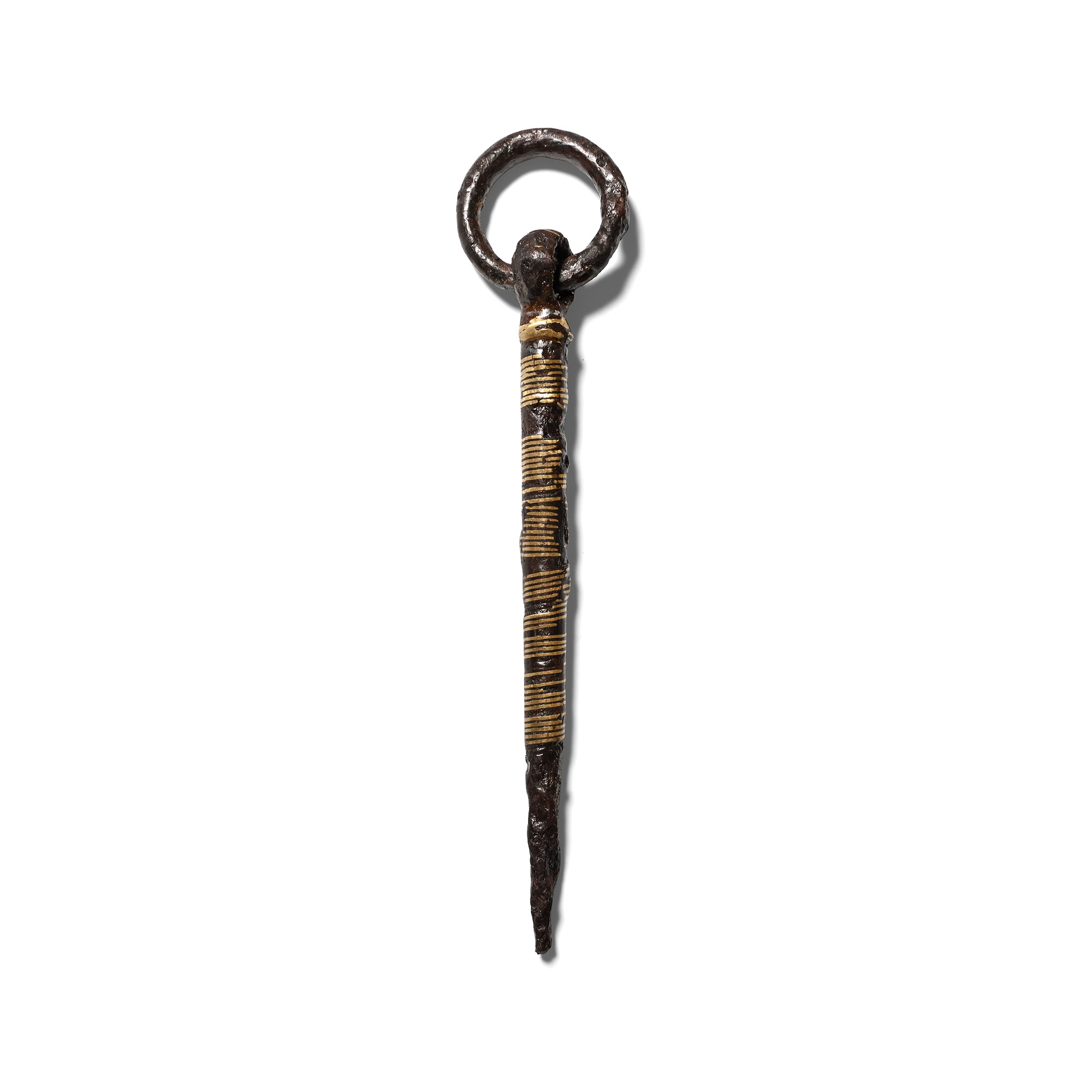
Scandinavian Viking Inlaid Iron Ring Pin
10TH-11TH CENTURY A.D.
6 1/8 in. (59 grams, 15.5 cm).
Ring-headed pin with tapering, round-section shank pierced laterally to accept round-section ring; upper shank inlaid with bands of silver wire.
ProvenanceFrom the private collection of a London gentleman, from his grandfather's collection formed before the early 1970s.
This lot is accompanied by an illustrated lot declaration signed by the Head of the Antiquities Department, Dr Raffaele D'Amato.
See Fanning, T., Viking Age Ringed Pins from Dublin, Royal Irish Academy, Dublin, 1994, for discussion.
CONDITIONTimeLine Auctions follows a vetting process to ensure the authenticity and legality of all items, reinforcing our commitment to integrity and responsible trading. Each antiquity, antique, and coin lot undergoes thorough examination by a vetting committee of at least ten external specialists, professional trade association members, scientists, and archaeologists: Our Vetting Process
AUCTIONS:
TimeLine is a leading auction house specialising in antiquities, ancient art, collectables, natural history, coins, medals, and books. Our auctions offer museums, collectors, historians, and enthusiasts the opportunity to acquire unique and historically significant pieces.
-
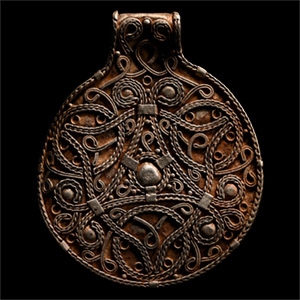
Viking Silver Interlaced Filigree Pendant
9th-11th century A.D.Sold for (Inc. bp): £1,235
Discoid in plan with braided wire rim, applied discs, filigree looped bands, granules and other detailing; loop folded to reverse. 4.33 grams, 39 mm
Private collection formed in Europe in the 1980s. Westminster collection, central London, UK. This lot is accompanied by an illustrated lot declaration signed by the Head of the Antiquities Department, Dr Raffaele D'Amato. -
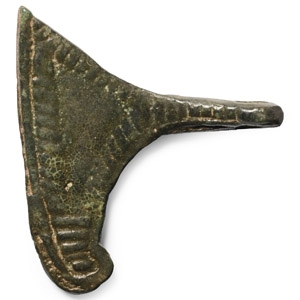
Viking Age Decorated Bronze Broad Axehead Pendant
9th-11th century A.D.Sold for (Inc. bp): £130
Formed with a ropework band to the edge of each cheek and the socket, doubling as the suspension loop. 5.2 grams, 33 mm wide
From the private collection of a London gentleman, from his grandfather's collection formed before the early 1970s. This lot is accompanied by an illustrated lot declaration signed by the Head of the Antiquities Department, Dr Raffaele D'Amato. -
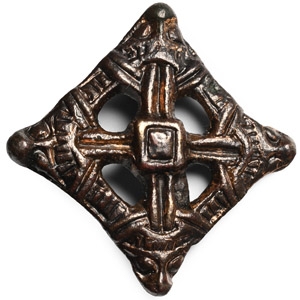
Viking Gilt Bronze Brooch with Beast Heads
9th-11th century A.D.Sold for (Inc. bp): £247
Lozengiform in plan with central cross, the arms with beast-heads, central rectangular boss; remains of pin-lugs and catchplate to the reverse. 7.38 grams, 25 mm
Private collection formed in Europe in the 1980s. Westminster collection, central London, UK. This lot is accompanied by an illustrated lot declaration signed by the Head of the Antiquities Department, Dr Raffaele D'Amato.
